Industrial hygiene, microbial management, and process cleanliness have become essential requirements across modern manufacturing sectors. Benzalkonium Chloride Solution (BKC 50%) is widely used by industries looking for effective control against unwanted microbial growth while maintaining operational efficiency. Its versatility allows it to be incorporated into various formulations designed for sanitation, cleaning, and water treatment programs. As industrial demand continues to grow, the market for BKC 50% Manufacturer & Supplier India services has expanded significantly. Organizations seek reliable sources that can provide consistent quality, stable compositions, and dependable supply chains...
Benzalkonium Chloride 50%: Concentration and Practical Use
Benzalkonium Chloride Solution (BKC 50%) is the concentrated liquid form of Benzalkonium Chloride that serves as the raw material in various formulations. The solution has antimicrobial property and cationic surfactant property making it applicable in those formulations where both of the two are important. As per Maxwell Additives, the BKC 50% is called Alkyl Dimethyl Benzyl Ammonium Chloride and consists of mainly C12-C14 alkyl groups having 50% active matter.
One should think about BKC 50% beyond the simple consideration of whether it is an antimicrobial compound or not. Being the substance at 50% concentration, it is the formulation substance which needs proper incorporation, diluting and balance with other ingredients and whose final product is determined by the behavior of concentrate after inclusion in the full formulation.
What is Benzalkonium Chloride 50%?
Benzalkonium Chloride 50% is an aqueous concentrate containing approximately 50% Benzalkonium Chloride by weight. It belongs to the quaternary ammonium compound family and is commonly abbreviated as BKC 50%. The material is supplied as a liquid and can be incorporated into different chemical formulations according to the desired final concentration and application.
The chemical is also known as Alkyl Dimethyl Benzyl Ammonium Chloride or ADBAC. Maxwell Additives specifies its BKC 50% product at 50.0 ± 1.0% w/w active matter and describes the alkyl distribution as chiefly C12/C14. The product information also states that it is soluble in water in all proportions.
The 50% concentration is particularly important from a formulation perspective. A manufacturer can use the concentrate as a starting material and develop a finished product with a lower active concentration suitable for its particular application. The quantity used should be calculated according to the required active level rather than simply adding the concentrate based on volume.
BKC 50% has a cationic character, which means its behavior can be affected by the other surfactants and additives present in a formulation. This makes compatibility testing important, especially when the finished product contains several functional ingredients.
The chemical’s usefulness comes from a combination of properties rather than one feature alone. It can provide antimicrobial activity, surface-active behavior, and formulation flexibility. The final performance, however, depends on concentration, contact conditions, other ingredients, water quality, and the purpose for which the finished product has been developed.
How BKC 50% Concentration Influences Formulation Design
The concentration of an active ingredient changes the way a formulation is designed. With Benzalkonium Chloride BKC 50%, the starting material already contains a substantial level of active chemical, so manufacturers need to account for the concentration when determining the composition of the finished product.
For example, a product developer may need to prepare a diluted formulation for a particular application. The required amount of BKC 50% should be determined from the target active concentration and the total batch size. This sounds straightforward, but other ingredients added to the formulation also affect the final composition. Water, solvents, surfactants, stabilizers, fragrances, dyes, and other additives can all change the physical and chemical behavior of the finished product.
This is why concentration should be considered as part of the complete formulation rather than as an isolated specification.
Another important point is that the 50% concentrate and the final diluted product are not necessarily going to behave in exactly the same way. Dilution changes viscosity, ionic environment, active concentration, and the relative proportion of other ingredients. A concentrate that remains stable during storage may therefore need separate evaluation after dilution.
Water quality can also influence the final product. If the formulation is prepared with water containing different levels of dissolved minerals, the appearance and stability of the finished chemical may vary. For products intended for use across multiple locations, this can become an important practical consideration.
Temperature is another variable. During storage and transportation, a chemical may experience conditions different from those in the manufacturing area. A formulation developer should therefore consider the expected temperature range when evaluating the physical appearance and stability of the product.
BKC 50% is also cationic, so the charge characteristics of other ingredients deserve attention. Maxwell’s product information notes compatibility with non-ionic, amphoteric, and cationic surface-active agents. Compatibility must always be considered with regard to the formulation and not be taken for granted since the ingredients are suitable for industrial application individually.
This implies that while it is possible to have different concentrations of BKC 50% in formulating the product, one should evaluate the final product at its actual use concentration. This will enable manufacturers to know whether the formulation is uniform, stable, and fit for its intended purpose.
Features of Benzalkonium Chloride 50%
1. 50% Active Concentration
BKC 50% contains approximately 50% Benzalkonium Chloride by weight. This concentrated format provides a practical starting point for manufacturers developing diluted or ready-to-use formulations.
2. Liquid Form
The product is supplied as a liquid, which makes it convenient for controlled incorporation into many liquid chemical products. Its physical form can simplify blending and dosing during formulation.
3. Water Solubility
BKC 50% is described as soluble in water in all proportions. This characteristic supports its use in aqueous formulations where the active material needs to be distributed throughout the liquid phase.
4. Cationic Nature
Benzalkonium Chloride has cationic surfactant characteristics. This influences how it interacts with other ingredients and makes charge compatibility an important consideration when designing multi-component formulations.
5. Antimicrobial Activity
BKC 50% is widely used where antimicrobial control is required. The actual effectiveness depends on factors such as concentration, contact time, target microorganisms, formulation composition, and the specific application.
6. Surface-Active Properties
Along with microbial-control functionality, BKC can contribute surface-active behavior. This gives it relevance in formulations where interaction between the chemical solution and a surface is part of the intended product performance.
7. Formulation Flexibility
The availability of a concentrated solution allows manufacturers to prepare different final concentrations according to the requirements of their products. Maxwell Additives lists BKC products in several concentrations, including 50%, 80%, and 90%.
Key Considerations for BKC 50% Formulation Development
The practical use of BKC 50% becomes clearer when the formulation is viewed as a complete system rather than a collection of individual chemicals.
Suppose a manufacturer is developing a liquid product containing BKC 50%, water, another surfactant, a fragrance, and a stabilizing ingredient. Each component may perform a different function, but the final product has to remain physically stable. If the mixture becomes cloudy, separates into layers, changes viscosity unexpectedly, or develops sediment, the problem may not be caused by BKC alone. It could result from an interaction between several components.
This is why formulation trials are useful.
The first consideration is the order in which ingredients are incorporated. Adding a concentrated raw material directly into a complex mixture may produce a different result from controlled dilution before blending. The exact procedure depends on the formulation, but the objective is to achieve uniform distribution without creating local areas of excessively high concentration.
The second consideration is pH. Changes in pH can influence the behavior of other ingredients and therefore affect the complete formulation. A product developer may need to examine whether the selected pH range maintains the desired appearance and stability throughout storage.
The third consideration is dilution. A concentrated BKC 50% solution can be transformed into a lower-strength finished product, but the diluted formulation should be checked independently. Clarity, viscosity, odor, appearance, and stability can change after dilution.
Storage testing also provides useful information. A formulation that looks perfect immediately after manufacturing may change after several weeks or months. Monitoring appearance and physical properties under expected storage conditions can reveal issues before the product reaches the market.
Packaging is another practical factor. The container used for the finished formulation should be suitable for the chemical composition and expected storage environment. A formulation should not be considered complete until its interaction with the intended packaging system has also been evaluated.
The final consideration is application. A product used as a concentrated industrial formulation will have different requirements from a product designed to be diluted by an end user. The manufacturer therefore needs to understand the complete path from raw material to actual application.
This approach makes BKC 50% easier to work with because it shifts attention from a single chemical property to the behavior of the entire product.
BKC 50% Across Different Product Formulations
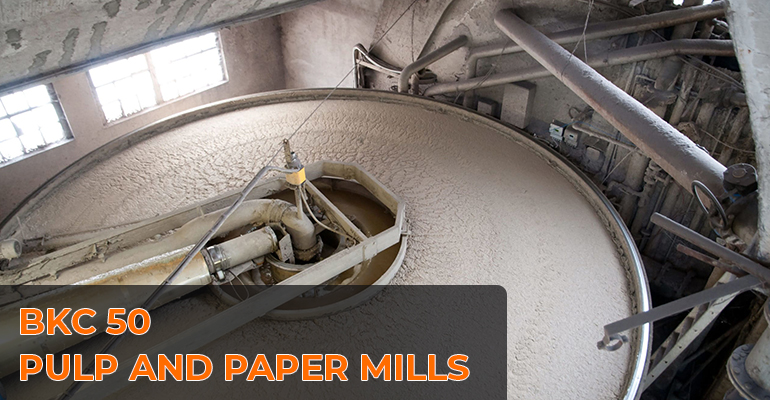
Benzalkonium Chloride BKC 50% can be incorporated into several types of products because its antimicrobial and surface-active properties are useful in different formulation environments. Maxwell’s product information lists applications involving disinfectants, hard-surface treatment, oil-field systems, paper-related processes, wood preservation, clay and pigment slurries, specialty boards, and swimming pools.
In a surface-care formulation, the developer may focus on contact and wetting behavior. In a preservation-oriented product, the emphasis may instead be on maintaining microbial control during storage or use. In an industrial formulation, the chemical may have to function alongside several other ingredients under specific process conditions.
This variety means there is no single formulation approach that applies to every BKC 50% product.
A manufacturer developing a new product should define the desired function first. Once the application is clear, BKC 50% can be evaluated according to the required active level, compatibility, dilution conditions, storage requirements, and expected contact environment.
This is also why Benzalkonium Chloride Solution (BKC 50%) can serve as a useful raw material for different industrial and commercial product categories. The same concentrated ingredient can be adapted into different formulations, provided the finished product is properly developed and tested for its intended use.
Benefits of Benzalkonium Chloride 50%
1. Convenient Concentrated Raw Material
BKC 50% gives formulators a concentrated liquid starting material containing a defined level of active Benzalkonium Chloride. This allows manufacturers to develop different final strengths without beginning with a very dilute raw material.
2. Easy Integration Into Aqueous Products
Its water-solubility makes BKC 50% practical for many water-based formulations. When properly incorporated, the liquid concentrate can be distributed through an aqueous system, supporting consistent composition in suitable finished products.
3. Supports Antimicrobial Formulations
BKC 50% offers the antimicrobial properties that are necessary for several disinfectants, preservatives, sanitisers and industrial applications. This depends on the strength of the solution as well as the target microorganisms.
4. Offers Surface-Active Functionality
The cationic surfactant nature of BKC gives it surface interaction in addition to microbial-control properties. This can be useful when a formulation requires an ingredient that contributes more than one functional characteristic.
5. Flexible for Product Development
A 50% concentrate can be incorporated into formulations designed for different active concentrations. This gives manufacturers flexibility when developing products with different specifications, provided each finished formulation is tested for stability and performance.
6. Suitable for Multiple Industrial Uses
BKC 50% has applications across several industrial areas, including cleaning, disinfection, water-related treatment, paper processes, wood preservation, and pigment or clay slurries. This broad utility makes it a versatile specialty chemical raw material.
7. Supports Controlled Formulation Planning
Because the active concentration is clearly defined, BKC 50% allows manufacturers to calculate the required quantity for a target formulation. This supports more controlled product development when batch size and desired active level are properly considered.
Maxwell Additives Pvt. Ltd. – BKC 50% Manufacturer & Supplier
Maxwell Additives Pvt. Ltd. provides Benzalkonium Chloride BKC 50% as a concentrated specialty chemical raw material for industrial and commercial formulations. Our BKC range is available in different concentrations, including 50%, 80%, and 90%, helping manufacturers select a suitable grade for their formulation requirements. With applications across disinfectants, surface treatment, water-related products, paper processes, wood preservation, and other industrial formulations, Maxwell Additives focuses on providing reliable BKC solutions supported by relevant product specifications and technical information.
Conclusion
Benzalkonium Chloride Solution (BKC 50%) is best understood as a concentrated formulation ingredient rather than simply as a disinfectant chemical. Its 50% active concentration, liquid form, water solubility, cationic character, and antimicrobial functionality give manufacturers several possibilities when developing industrial and commercial products.
The way BKC 50% performs depends on what surrounds it. Water quality, pH, dilution, other surfactants, storage conditions, packaging, and application method can all influence the final product. For this reason, evaluating the complete formulation is more useful than judging the raw material alone.
For businesses looking for Benzalkonium Chloride BKC 50 in India, the material can serve as a practical starting point for developing products that require controlled antimicrobial and surface-active functionality. Its concentrated form provides flexibility while allowing manufacturers to determine the final active level according to their formulation requirements.
A BKC 50% Manufacturer & Supplier India can provide the concentrated raw material, but successful product development ultimately depends on how that material is incorporated and evaluated within the finished formulation.
FAQs About Benzalkonium Chloride 50%
1. What does BKC 50% mean?
BKC 50% means that the Benzalkonium Chloride solution contains approximately 50% active Benzalkonium Chloride by weight. The remaining portion consists of the aqueous carrier and associated formulation components. Maxwell’s specification lists 50.0 ± 1.0% w/w active matter for its BKC 50% product.
2. Is Benzalkonium Chloride BKC 50% supplied as a liquid?
Yes. BKC 50% is supplied as a liquid solution. Its liquid form makes it convenient for incorporation into many aqueous formulations and allows manufacturers to use the concentrate as a starting material when preparing lower-strength finished products.
3. Can BKC 50% be diluted with water?
BKC 50% can be incorporated into water-based formulations, and Maxwell’s product information states that the material is soluble in water in all proportions. However, the appropriate dilution and final concentration depend on the intended product and application, so formulation-specific testing remains important.
4. What is the main advantage of using BKC 50% instead of a lower concentration?
A 50% concentrate provides a higher active content in the raw material, which can be useful when manufacturers need to prepare different final formulations. It allows the required amount of active BKC to be incorporated without handling a very dilute starting material.
5. Can BKC 50% be combined with other surfactants?
BKC 50% can be compatible with selected non-ionic, amphoteric, and cationic surface-active agents. However, compatibility should be checked for the complete formulation because concentration, pH, water quality, and other ingredients can change the behavior of the finished product.
6. What industries use Benzalkonium Chloride BKC 50%?
BKC 50% is used in several industrial and commercial areas, including disinfectant and cleaning formulations, water-related applications, paper processes, wood preservation, pigment and clay slurries, specialty boards, and other microbial-control applications.
7. Where can businesses source Benzalkonium Chloride BKC 50 in India?
Businesses looking for Benzalkonium Chloride BKC 50 in India can source the chemical from specialty-chemical manufacturers and suppliers offering the required concentration and technical specifications. The intended application, active concentration, handling requirements, and supporting technical documentation should be considered when purchasing the material.
Related Posts