Diethylene Triamine Penta Methylene Phosphonic Acid is one of the most trusted and widely…
Diethylene Triamine Penta Methylene Phosphonic Acid DTPMP – Ensure Qaulity with Us
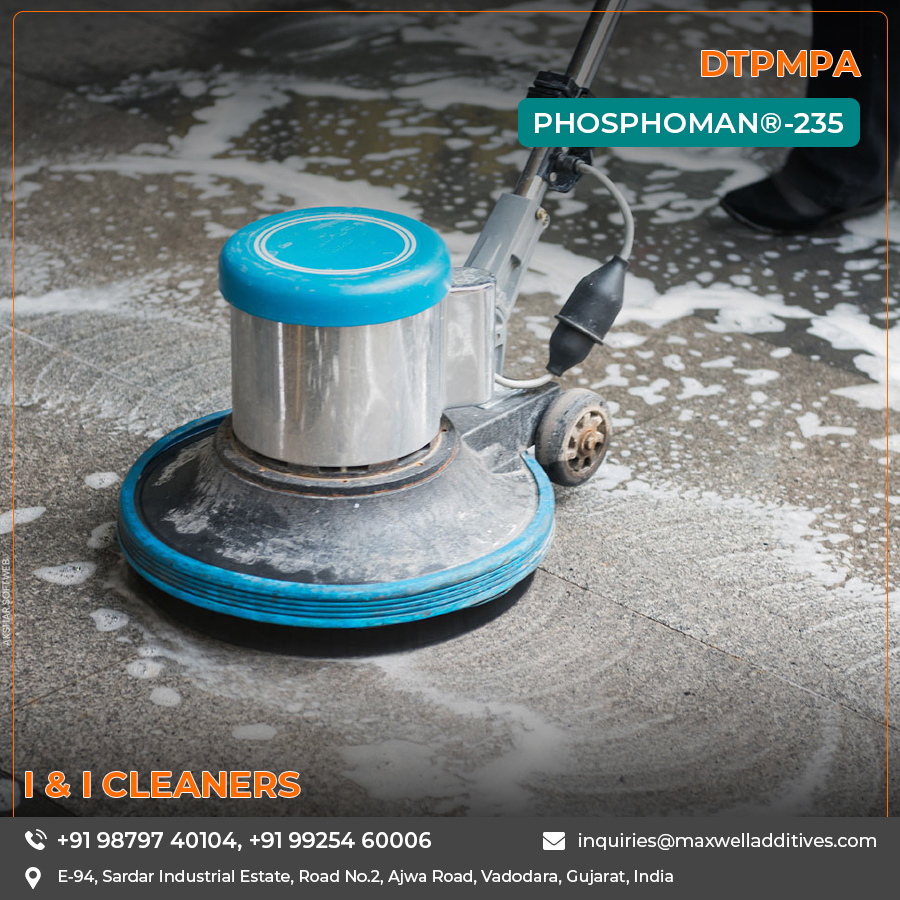 Diethylene Triamine Penta Methylene Phosphonic Acid DTPMP — commonly referred to as DTPMPA Chemical or DTPMP Chemical — is a high-performance phosphonate widely used in industrial cleaning and formulation of I & I (Industrial & Institutional) cleaners. DTPMPA acts as a strong chelating and scale-control agent: it binds hard-water metal ions, prevents precipitation, and stabilizes surfactants and other active ingredients. In cleaning formulations for kitchens, food plants, hospitals, and heavy-duty industrial degreasing, DTPMP helps keep mineral deposits dissolved and prevents spotting, streaking, and scale re-deposition on surfaces and in cleaning equipment.
Maxwell Additives, with its technical focus and manufacturing discipline, supplies consistent, application-focused grades of DTPMP suitable for many cleaning chemistries. Our grades are formulated to be compatible with alkalies, surfactants, sequestrants, and common stabilizers used in I & I cleaners. When formulating a concentrated detergent for hard-water regions, adding the right DTPMPA grade from Maxwell Additives improves cleaning efficiency, reduces rinsing cycles, and preserves equipment life by minimizing scale formation inside boilers, spray systems, piping, and heat exchangers.
Because DTPMPA Chemical works effectively at low dosages, product formulators can balance performance and cost: small additions prevent troublesome calcium, magnesium and iron salts from interfering with cleaning action. For manufacturers of institutional cleaners — where surface appearance, safety and regulatory compliance matter — DTPMP improves product robustness across variable water qualities and operating temperatures. Maxwell Additives supports customers with technical guidance on dosing, compatibility, and formulation tweaks to meet cleaning performance, safety and stability targets.
 Explore Maxwell Additives PVT. LTD.
Maxwell Additives PVT. LTD. stands as one of India’s most trusted specialty chemicals partners across industries. We combine manufacturing consistency, regulatory compliance, and hands-on technical support to help formulators, manufacturers and plant engineers. Whether it’s water treatment, cleaning formulation, metal finishing or construction additives, Maxwell Additives delivers reliable chemistry, timely logistics and application know-how — making us a dependable partner for businesses seeking repeatable performance and responsive service.
High Performance DTPMPA with Best Manufacturing Process
Maxwell Additives produces high-performance DTPMPA Chemical using controlled, quality-driven manufacturing processes to ensure consistent active content and low impurity levels. Our production emphasizes precise reaction control, efficient purification, and careful neutralization steps to obtain DTPMP grades that meet application-specific specifications. In practice, this means each batch is tested for chelating strength, phosphorus content, pH behavior, and thermal stability so formulators receive a predictable product that performs reliably across diverse water chemistries and temperatures.
Our manufacturing process also focuses on safety and environmental responsibility: plant waste streams are managed according to norms, and handling procedures minimize operator exposure. This disciplined approach reduces batch-to-batch variability and ensures that the DTPMP you receive integrates smoothly into cleaner formulations, scale-control applications and industrial processes. Maxwell Additives’ technical team works with customers to recommend optimal grade selection, concentration limits, and storage/handling guidance — supporting consistent product performance from lab to production.
Leading DTPMP Manufacturer
As a leading DTPMP Manufacturer, Maxwell Additives combines capacity with deep application expertise. We maintain production flexibility to supply both standard and custom grades of Diethylene Triamine Penta (Methylene Phosphonic) Acid, addressing needs from small-scale R&D quantities to large commercial shipments. Our labs support formulation trials, compatibility testing and tailored recommendations for I & I cleaners, water-treatment blends, and specialty formulations. By keeping strong analytical controls and traceability, we ensure every lot meets promised specifications. This focus on quality, technical service and timely delivery is why many formulators and industrial customers choose Maxwell Additives as their DTPMP partner.
Reliable DTPMP Supplier
Reliability goes beyond chemistry — it’s about on-time deliveries, consistent inventory, and responsive customer support. Maxwell Additives acts as a Reliable DTPMP Supplier by maintaining robust stock, flexible packaging (drums, IBCs, bulk), and a logistics network that serves plants across India and export customers. We provide complete documentation — certificates of analysis, safety data sheets and regulatory declarations — so procurement and compliance teams get the information they need. Our technical helpdesk assists with problem-solving during scale-ups, troubleshooting formulation compatibility issues, and recommending dosing strategies that minimize cost while protecting equipment and improving cleaner performance.
3. Let’s Know About Diethylene Triamine Penta (Methylene Phosphonic) Acid
What is DTPMP Chemical?
DTPMP Chemical stands for Diethylene Triamine Penta (Methylene Phosphonic) Acid — a multifunctional phosphonate with five phosphonic acid moieties attached to a polyamine backbone. This molecular architecture gives DTPMPA strong chelating ability for polyvalent metal ions (calcium, magnesium, iron) and excellent threshold inhibition against scale-forming salts. It acts as a sequestrant, dispersant and stabilizer in aqueous systems, remaining effective across a broad pH range and tolerating elevated temperatures. Because of these properties, DTPMP finds use in cleaning products, water-treatment formulations, metal finishing, and construction admixtures. Its utility at low dosages makes it economical and attractive for formulators seeking powerful anti-scaling and chelating performance.
Why DTPMP Chemical is Used in I & I Cleaners
Diethylene Triamine Penta Methylene Phosphonic Acid DTPMP is widely used in I & I cleaners because it directly addresses problems common in institutional and industrial cleaning: hard-water mineral interference, metal-ion staining, and redeposition of soils and scale. When cleaners are applied in regions with high calcium or iron, detergents alone struggle: minerals bind surfactants, reduce foam control, and leave residues. Adding DTPMPA prevents these issues by chelating metal ions and keeping them soluble, which lets surfactants do their job. In heavy-duty degreasing and CIP (clean-in-place) operations, DTPMP helps maintain spray nozzles, pumps and heat exchangers free from scaling and clogging. For acid or alkaline cleaner formulations, DTPMPA improves rinseability, reduces spotting, and enhances the visual finish of stainless steel, ceramic tiles, glass and other surfaces. Overall, DTPMP increases cleaner robustness, shortens rinsing cycles, and reduces repeat cleaning — benefits that matter to facilities managing operating costs and hygiene standards.
Other Uses
Water Treatment (Descaling & Sequestration)
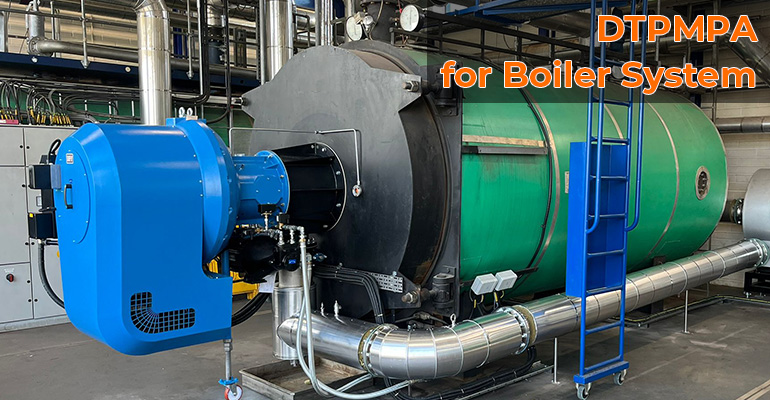
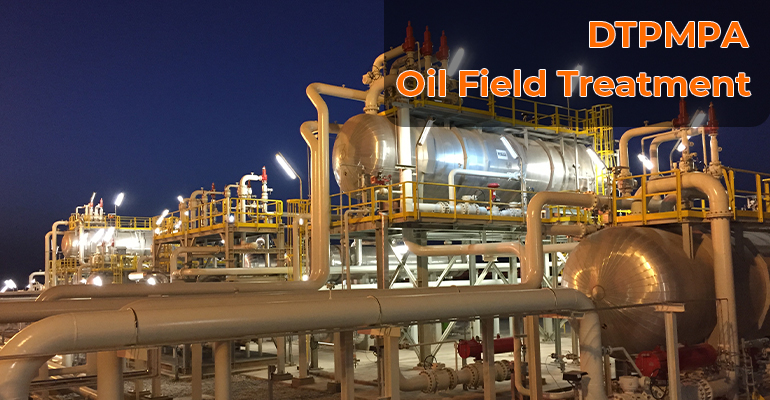
In industrial water treatment, DTPMPA Chemical acts as a potent scale inhibitor and sequestrant. It binds calcium, magnesium and iron ions, preventing precipitation of scale-forming salts like calcium carbonate and sulfate. This property is crucial in cooling towers, boilers, and reverse-osmosis pre-treatment, where scale reduces heat transfer and damages membranes. DTPMPA’s threshold inhibition capability means it prevents crystal growth at sub-stoichiometric dosages, reducing the need for aggressive mechanical cleaning. Its tolerance to high temperatures and varied pH makes it effective in many water circuits, improving equipment life and reducing maintenance costs.
Metal Surface Treatment & Plating
DTPMP is useful in metal finishing and plating operations as a chelating and stabilizing agent. It controls free metal ion concentrations in plating baths and rinse waters, preventing unwanted precipitation that could cause rough finishes or particulate contamination. By stabilizing the bath chemistry, DTPMP helps maintain consistent plating thickness, reduce staining or spotting on components, and extend bath life. In pickling or phosphating operations, DTPMP reduces re-deposition of metal salts on parts and inlines, improving process yield and surface quality.
Detergents & Personal Care (Formulation Aid)
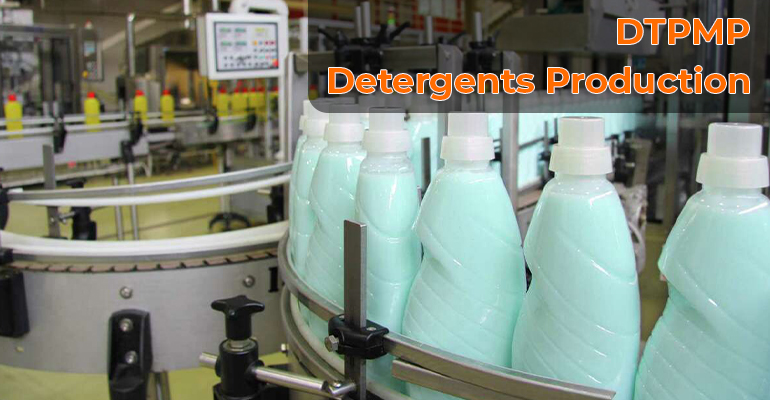
Beyond institutional cleaners, DTPMP finds niche use in certain detergent and formulation applications where water hardness causes performance loss. By sequestering calcium and magnesium ions, DTPMPA enables surfactants to remain active, improving foaming, detergency and soil removal. In some personal-care or household formulations (where permitted), DTPMP contributes to better product stability, prevents metal-catalyzed discoloration, and helps maintain aesthetic clarity of concentrated products. Its low-dose efficiency makes it a cost-effective additive for improving cleaner robustness in variable water qualities.
Construction & Concrete Admixtures (Water-Reducing Aid)
DTPMP can act as a dispersant and water-reducing agent in cementitious formulations. Its chelating and dispersing action helps separate cement particles, improving flow and workability at lower water contents. This results in stronger concrete with reduced bleeding and better surface finish. In specialty admixtures, DTPMP enhances pumpability and can contribute to reduced cracking by enabling lower water/cement ratios. Its chemical stability ensures consistent performance during mixing and placement.
Features
Feature 1 — Strong Chelation & Metal Sequestration
A defining feature of DTPMP Chemical is its strong chelating ability. The multiple phosphonic acid groups bind strongly to divalent and trivalent metal ions such as Ca²⁺, Mg²⁺, Fe³⁺ and other transition metals. This sequestration prevents these ions from reacting with anions to form insoluble scales or stains. In cleaning formulations and industrial water systems, effective chelation translates to fewer deposits, cleaner surfaces, and less interference with surfactant action. This also protects catalysts, enzymes, and sensitive finishes from metal-catalyzed degradation.
Feature 2 — Excellent Scale Inhibition (Threshold Effect)
DTPMP exhibits threshold inhibition — meaning it prevents scale formation at concentrations far below stoichiometric requirements. It interferes with crystal nucleation and growth, stopping scale before it becomes an adherent deposit. For systems such as boilers, cooling towers, and spray cleaners, this reduces downtime for mechanical cleaning and preserves heat-transfer efficiency. The threshold effect also makes DTPMP cost-effective: small dosages deliver meaningful protection, making it attractive for large-volume systems.
Feature 3 — High Thermal and Chemical Stability
DTPMPA Chemical remains effective across wide pH ranges and elevated temperatures, which is essential for industrial processes. It resists hydrolysis and retains chelating power under conditions that degrade lesser sequestering agents. This thermal and chemical stability ensures continuous protection in hot cleaning cycles, CIP procedures, and high-temperature water circuits. For formulators, DTPMP’s stability reduces the risk of performance loss during storage, processing, or use under harsh conditions.
Feature 4 — Versatile Compatibility with Formulation Chemistry
DTPMP is compatible with many classes of industrial chemicals — surfactants, builders, corrosion inhibitors, antifoams and more. That compatibility simplifies its integration into I & I cleaner recipes, water-treatment blends, and metal-treatment baths. Because it doesn’t antagonize common actives, formulators can add DTPMP to improve hardness tolerance without major reformulation. This versatility speeds product development and helps maintain cleaner performance in variable field conditions.
Feature 5 — Effective at Low Dosages (Cost Efficiency)
One of the most practical features is DTPMP’s effectiveness at low parts-per-million levels. The threshold and chelating mechanisms mean that small quantities yield measurable benefits, lowering raw-material costs and simplifying handling. For large-scale users such as institutional laundry services, food plants or industrial cleaning contractors, low dosing means reduced chemical consumption and lower logistics costs while still delivering robust anti-scale and sequestration performance.
Conclusion
Diethylene Triamine Penta Methylene Phosphonic Acid DTPMP — DTPMPA Chemical / DTPMP Chemical — is a powerful, versatile phosphonate that addresses common industrial problems: scale, metal staining, bath instability and poor cleaning performance in hard water. For I & I cleaners, DTPMP improves detergent efficiency by sequestering metal ions and preventing mineral interference, making formulations more forgiving across varied water qualities. Maxwell Additives supplies high-quality DTPMP grades backed by controlled manufacturing, analytical testing and technical support to help formulators and end-users optimize dosing and performance. Whether you’re developing an institutional cleaner, stabilizing a plating bath, or improving concrete admixtures, DTPMP offers cost-effective performance at low dosages and broad compatibility — a practical tool to increase product robustness and reduce operational hassles.
FAQs
Q1: What is DTPMP used for in cleaners?
A1: DTPMP chelates hardness ions and prevents scale, enhancing surfactant efficiency and improving rinsing and finish on surfaces, especially in hard-water conditions.
Q2: Is DTPMP the same as DTPMPA?
A2: Yes — DTPMP and DTPMPA both refer to Diethylene Triamine Penta (Methylene Phosphonic) Acid; the terms are used interchangeably in industry.
Q3: How much DTPMP should I add to an I & I cleaner?
A3: Typical concentrations depend on water hardness and formulation; low ppm-level additions often suffice. Laboratory trials and supplier guidance determine the precise dosage.
Q4: Is DTPMP compatible with surfactants and alkalis?
A4: Generally yes — DTPMP is compatible with common surfactants, builders and alkalis, making it straightforward to integrate into most cleaner formulations.
Q5: Can DTPMP help prevent staining from iron?
A5: Yes — DTPMP chelates iron ions and reduces iron-related staining and discoloration on surfaces when used at appropriate concentrations.
Q6: Is DTPMP safe to store on-site?
A6: When stored per SDS guidance — in original containers, cool dry area away from strong oxidizers — DTPMP is manageable; follow local handling rules.
Q7: Why choose Maxwell Additives for DTPMP supply?
A7: Maxwell Additives offers consistent grades, analytical support, timely delivery and technical guidance — helping customers scale formulations and meet performance goals.
Related Posts