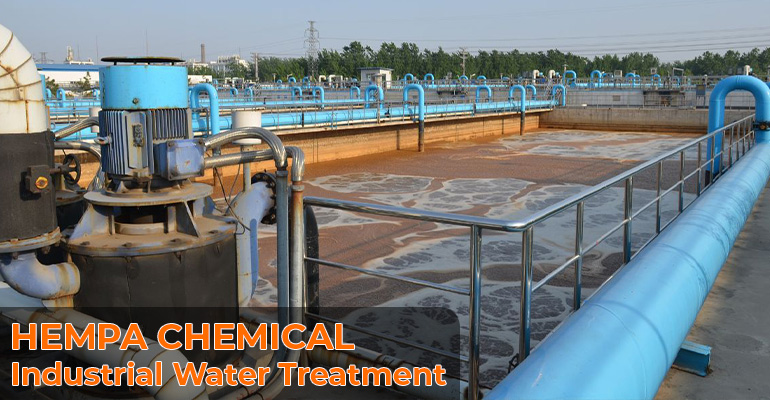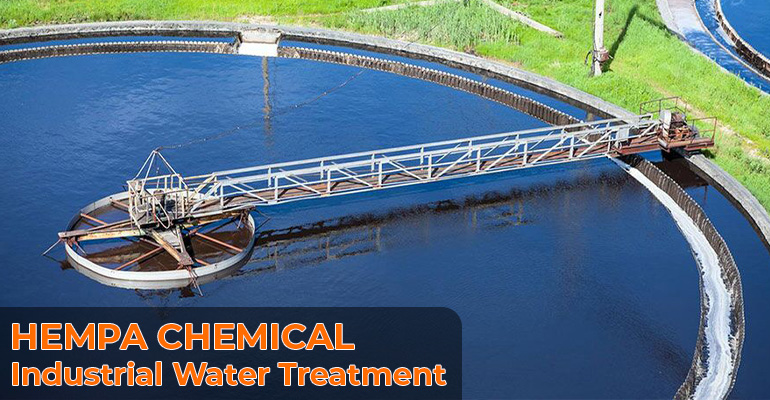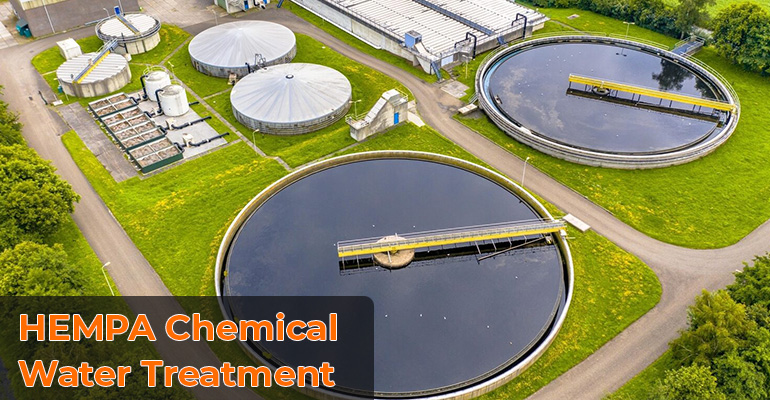
Hydroxyethylamino-Bis Methylene Phosphonic Acid or HEMPA is a chemical used in formulations to prevent scaling manage metal ions and prevent deposits in processes. The acid works by chelating dissolved cations such as calcium and magnesium. This means it binds to these metal ions and keeps them from forming buildup in systems. HEMPA is especially useful in water treatment and cooling systems where scaling can cause serious problems. It improves the efficiency of equipment. Reduces maintenance needs. Its ability to hold onto metal ions makes it a reliable choice, in chemical applications. Its mode of action makes it appropriate for use in systems, to deposits that may affect performance or equipment integrity...
Hydroxyethylamino-Bis Methylene Phosphonic Acid – HEMPA: A Versatile Phosphonate for Industrial Applications
 HEMPA (Hydroxyethylamino-Bis Methylene Phosphonic Acid) is a specialty phosphonate used in industrial formulations where metal-ion control, deposit management, and surface protection are important. Its chemical structure gives it useful complexing and dispersing characteristics, allowing it to support treatment programs in different operating environments.
The usefulness of HEMPA is not limited to one type of process. Depending on the formulation and treatment objective, it can be incorporated into water-treatment programs, cleaning products, metal-treatment processes, and other industrial formulations.
For businesses that purchase specialty chemicals regularly, selecting an experienced HEMPA Manufacturer is important for maintaining consistent product quality. A dependable HEMPA Manufacturer and supplier can also help industries manage regular supply requirements and application-specific expectations.
What is HEMPA?
HEMPA, or Hydroxyethylamino-Bis Methylene Phosphonic Acid, is an organophosphorus compound belonging to the phosphonate family. It contains phosphonic acid groups that can interact strongly with metal ions, giving the chemical useful complexing and deposit-control properties.
In practical industrial applications, HEMPA can help manage the behavior of minerals and dissolved metals in water-based systems. Instead of allowing certain ions to freely participate in unwanted deposit formation, the molecule interacts with them and helps keep the treatment environment more controlled.
This makes HEMPA useful when a formulation needs more than simple water conditioning. Its properties can contribute to scale management, dispersion, and metal-ion stabilization, depending on the overall treatment system.
HEMPA can also be incorporated into formulations alongside other compatible ingredients. This allows manufacturers to develop treatment programs according to water chemistry, operating temperature, equipment material, and the specific problem being addressed.
Industries looking for a consistent source generally work with a professional HEMPA Manufacturer and supplier that understands the quality and supply requirements associated with specialty phosphonate chemicals.
A Different Perspective: Why HEMPA Can Be Useful in High-Mineral Systems
Not every industrial water system has the same chemistry. Some processes contain comparatively high concentrations of calcium, iron, magnesium, or other dissolved components. In such conditions, a treatment chemical needs to remain useful while interacting with several competing substances.
HEMPA can be valuable in these situations because of its ability to complex with metal ions. This characteristic can help treatment formulators manage the behavior of dissolved metals and reduce their contribution to unwanted deposits.
The practical advantage is better control rather than simply removing every mineral from the water. In many industrial processes, completely changing the water chemistry is neither economical nor necessary. Instead, controlling how minerals behave within the system can be a more practical approach.
This makes HEMPA relevant to treatment programs where maintaining stable operating conditions is more important than using a single-purpose chemical.
A knowledgeable HEMPA Manufacturer can help businesses identify suitable grades and formulations according to the intended application rather than treating every water-treatment requirement in exactly the same way.
How HEMPA Supports Industrial Treatment Programs
A successful treatment program depends on more than the chemical itself. Water composition, temperature, circulation rate, dosage, equipment design, and the presence of other additives can all influence the final result.
HEMPA can contribute to such programs through its metal-binding and dispersing characteristics. In systems where mineral ions may participate in deposit formation, controlling their activity can help maintain more manageable operating conditions.
This is particularly useful when treatment systems experience repeated water circulation. As water is heated, evaporated, or reused, dissolved substances can become increasingly concentrated. Without suitable chemical management, this can make deposits more likely.
HEMPA can form part of a broader chemical strategy designed to manage these conditions. Rather than relying on one product to solve every problem, industries can combine compatible treatment ingredients according to their specific process requirements.
This approach gives manufacturers greater flexibility when developing formulations for industrial water management, cleaning, and metal-related applications.
Industrial Uses of HEMPA
HEMPA has applications across several industries because its chemical properties can support different formulation objectives. The exact use depends on the composition of the final product and the conditions under which it will operate.
In industrial water treatment, HEMPA can be incorporated into programs designed to manage mineral deposits and dissolved metal ions. This can be useful for systems where water is continuously circulated or reused.
In cleaning formulations, its ability to interact with hardness ions can support formulation performance in water containing significant mineral content. This can help formulators develop products designed for demanding cleaning environments.
Metal-related processes can also benefit from phosphonate chemistry. HEMPA may be incorporated into formulations where controlling interactions between metal ions, water, and treatment ingredients is important.
Other potential applications include industrial formulations associated with paper processing, oilfield operations, and specialized chemical treatment systems. The suitability of HEMPA should always be evaluated according to the actual process conditions and formulation requirements.
For companies sourcing the material for recurring production, choosing a dependable HEMPA Manufacturer and supplier can help maintain consistency between batches and support uninterrupted manufacturing.
Factors to Consider When Choosing a HEMPA Manufacturer
Buying a specialty chemical is not simply about finding the lowest quoted price. Product consistency, manufacturing controls, documentation, packaging, supply capacity, and technical understanding can all affect the value of a long-term supplier relationship.
An experienced HEMPA Manufacturer should be able to maintain consistent product characteristics from one batch to another. This is particularly important for formulators because changes in raw-material quality can influence the performance of the finished product.
Businesses should also consider whether the supplier can support regular quantities and delivery schedules. A reliable supply chain reduces the risk of production delays caused by unexpected chemical shortages.
Technical communication is another useful consideration. A supplier who understands the application can provide more meaningful information about product handling, compatibility, and suitable use conditions.
For Indian buyers, working with an established Hydroxyethylamino-Bis Methylene Phosphonic Acid Manufacturer and supplier in India can simplify procurement while providing access to locally available specialty chemical support.
Features of HEMPA
1. Strong Metal-Ion Interaction
HEMPA has phosphonate groups capable of interacting with various metal ions present in industrial water and formulations. This property makes it useful where controlling dissolved metals is necessary for maintaining formulation stability, managing mineral behavior, or supporting consistent performance in water-based industrial processes.
2. Useful Deposit-Control Capability
HEMPA can contribute to treatment programs designed to reduce unwanted mineral deposition. By interacting with ions involved in deposit formation, it helps formulators manage the conditions that encourage buildup on equipment or within water-based processes.
3. Effective Dispersing Support
HEMPA can work as part of a formulation where keeping mineral-related material better dispersed is important. This characteristic can complement other polymers or treatment ingredients, helping manufacturers develop more balanced solutions for challenging industrial water and cleaning applications.
4. Suitable for Variable Water Chemistry
Industrial water chemistry can change during operation because of evaporation, reuse, temperature changes, and incoming water quality. HEMPA provides useful chemical flexibility for formulations designed to operate where dissolved mineral concentrations are not completely constant.
5. Good Formulation Compatibility
HEMPA can be incorporated with suitable complementary ingredients when developing specialized treatment formulations. This allows formulators to build multi-component solutions rather than depending on a single active ingredient for every treatment objective.
6. Useful in Specialized Industrial Processes
HEMPA has relevance across water treatment, cleaning, metal-related, and other specialty chemical applications. Its multifunctional nature allows manufacturers to consider it when developing products that need metal-ion management alongside deposit or formulation control.
7. Consistent Specialty-Chemical Performance
When produced under appropriate manufacturing controls, HEMPA can provide consistent characteristics required by industrial formulators. Consistency is particularly important for businesses producing treatment chemicals at scale because predictable raw-material behavior supports more stable finished-product manufacturing.
Why HEMPA Is Valuable for Modern Industrial Formulations
Industrial chemical formulations are becoming more application-specific. Instead of using one general-purpose treatment chemical for every process, manufacturers increasingly select ingredients according to water chemistry, equipment conditions, temperature, and the type of deposit or contamination they need to manage.
HEMPA (Hydroxyethylamino-Bis Methylene Phosphonic Acid) can add value in this type of formulation approach because its phosphonate chemistry provides metal-ion interaction along with useful deposit-control characteristics. It can be incorporated into treatment systems where calcium, magnesium, iron, and other dissolved metals may influence process performance.
Another important consideration is system stability. Industrial water is rarely static. Evaporation, fresh-water addition, recycling, temperature changes, and concentration cycles can continuously alter its composition. A suitable phosphonate can help the formulation respond to these changing conditions more effectively.
HEMPA can therefore be considered as part of a broader treatment strategy rather than as an isolated chemical solution. Its final performance depends on dosage, water quality, formulation composition, operating conditions, and compatibility with other treatment ingredients.
For manufacturers purchasing this material in India, working with a reliable Hydroxyethylamino-Bis Methylene Phosphonic Acid Manufacturer and supplier in India can provide greater confidence in product consistency and regular availability.
HEMPA for Better Control of Mineral-Related Problems
Mineral-related problems are common in industrial systems that circulate, heat, reuse, or concentrate water. When dissolved salts become concentrated, they can begin interacting with equipment surfaces and form deposits.
These deposits can interfere with heat transfer, restrict water movement, and increase cleaning requirements. In severe cases, they may contribute to unplanned shutdowns and higher maintenance expenses.
HEMPA can support a treatment program by interacting with metal ions and influencing the conditions under which mineral deposits develop. This makes it useful for formulations designed around deposit management and water-system stability.
However, the best results depend on using the chemical as part of a properly designed treatment program. Water analysis and process evaluation should be carried out before deciding the appropriate treatment approach.
This application-focused method allows industries to make better use of specialty phosphonates while avoiding unnecessary chemical consumption.
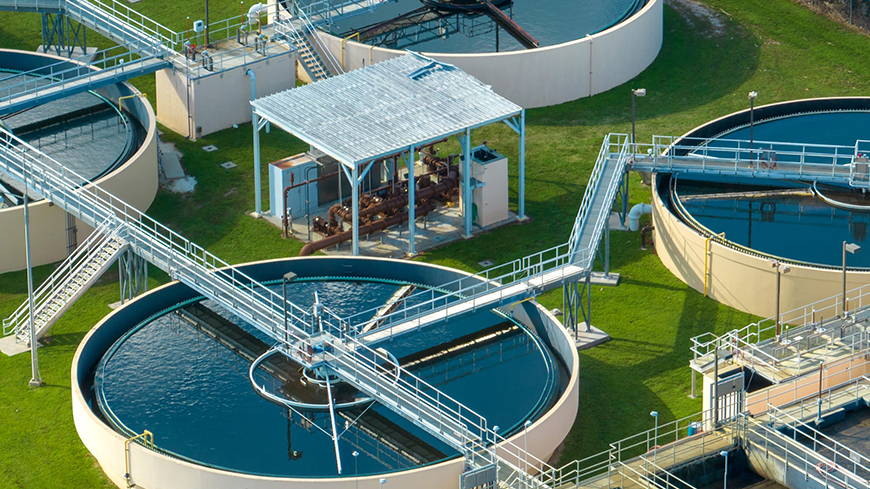 Benefits of HEMPA
1. Supports Effective Metal-Ion Management
HEMPA can interact with dissolved metal ions that may affect industrial water chemistry. Managing these ions helps formulators create more stable treatment conditions and can reduce their contribution to unwanted mineral reactions, making HEMPA useful for systems where water quality changes during continuous operation.
2. Helps Manage Mineral Deposits
HEMPA contributes to treatment programs aimed at controlling mineral buildup. By influencing the behavior of hardness-related ions, it can help reduce the tendency of deposits to develop on equipment surfaces, supporting cleaner operation and lowering the frequency of intensive cleaning activities.
3. Improves Formulation Flexibility
The multifunctional characteristics of HEMPA allow it to be considered alongside other compatible treatment ingredients. This gives formulators flexibility when developing products for different water qualities, industrial processes, and performance requirements without depending on a single treatment mechanism.
4. Supports Equipment Efficiency
Mineral buildup can interfere with equipment performance, particularly in systems involving heat transfer or continuous water circulation. By supporting deposit control, HEMPA can contribute to cleaner operating surfaces, helping equipment maintain more consistent performance throughout extended production cycles.
5. Suitable for Diverse Industrial Requirements
HEMPA can be considered for several industrial applications because its properties are relevant to water treatment, cleaning, metal-related processes, and specialty formulations. This versatility allows manufacturers to evaluate one phosphonate chemistry for different applications where metal-ion control is required.
6. Helps Reduce Maintenance Pressure
Uncontrolled mineral deposits can lead to frequent cleaning, inspection, and equipment servicing. Incorporating HEMPA into a suitable treatment program can help manage these problems, supporting longer operating intervals and allowing maintenance teams to focus on planned rather than unexpected intervention.
7. Supports Consistent Treatment Programs
A consistent specialty chemical is important when industrial formulations are produced repeatedly. Quality HEMPA with stable characteristics can help manufacturers maintain predictable formulation performance, simplify production control, and reduce variations that could otherwise affect the final treatment product.
Selecting HEMPA for Specific Industrial Conditions
Every industrial water system has its own chemistry and operating limitations. Two facilities using similar equipment may still require different treatment strategies because their water sources, temperatures, mineral concentrations, and operating cycles are not identical.
For this reason, HEMPA should be selected based on the actual treatment objective rather than simply choosing a chemical because it is widely used. Factors such as calcium hardness, alkalinity, iron content, pH, temperature, residence time, and other additives should be considered.
The dosage should also be determined through appropriate technical evaluation. Excessive chemical use does not automatically mean better performance, while insufficient treatment may not provide the desired protection.
Compatibility testing is equally important when HEMPA is combined with polymers, corrosion inhibitors, dispersants, or other formulation ingredients. Proper evaluation helps prevent unexpected interactions and allows the complete treatment program to work more effectively.
A knowledgeable HEMPA Manufacturer can be a valuable resource for businesses that need product information and application-oriented guidance before incorporating the chemical into a new or existing formulation.
Why Supplier Consistency Matters for HEMPA
For industrial manufacturers, changing raw-material quality can create challenges throughout the production process. A chemical that performs differently from batch to batch may affect formulation stability, dosage calculations, and the performance of the finished product.
This is why businesses should evaluate more than price when selecting a supplier. Manufacturing capability, quality control, packaging, documentation, production capacity, and delivery reliability all contribute to a dependable supply relationship.
A professional HEMPA Manufacturer and supplier can help customers maintain regular procurement schedules while reducing uncertainty around raw-material availability.
Indian manufacturers and formulators looking for a local source can also benefit from working with a Hydroxyethylamino-Bis Methylene Phosphonic Acid Manufacturer and supplier in India that understands domestic industrial requirements and can support ongoing supply needs.
Conclusion
HEMPA, or Hydroxyethylamino-Bis Methylene Phosphonic Acid, is a versatile phosphonate that can support industrial formulations requiring metal-ion management, mineral deposit control, and improved water-system stability.
Its value comes from its ability to interact with dissolved metal ions and contribute to broader treatment strategies. This makes it relevant to industrial water treatment, cleaning formulations, metal-related applications, and other specialty chemical processes.
HEMPA should not be viewed as a universal solution for every water-treatment problem. Its effectiveness depends on water chemistry, operating conditions, dosage, formulation design, and compatibility with other treatment chemicals. Proper technical evaluation is therefore important before selecting the product for a specific application.
For businesses seeking consistent raw materials, choosing an experienced HEMPA Manufacturer, dependable HEMPA Manufacturer and supplier, or qualified Hydroxyethylamino-Bis Methylene Phosphonic Acid Manufacturer and supplier in India can help maintain reliable production and treatment performance.
FAQs
1. What is HEMPA mainly used for?
HEMPA is mainly used in industrial formulations where metal-ion control and mineral deposit management are important. It can be incorporated into water-treatment programs, cleaning formulations, and other specialty chemical applications. Its phosphonate groups interact with metal ions, helping formulators manage water chemistry and reduce problems associated with mineral reactions under suitable operating conditions.
2. How does HEMPA help in industrial water treatment?
HEMPA can interact with dissolved metal ions such as calcium, magnesium, and iron. This interaction can influence the behavior of minerals in water and support treatment programs designed to control deposits. Its effectiveness depends on factors such as water chemistry, temperature, dosage, and the other chemicals used in the complete treatment formulation.
3. How should I choose a reliable HEMPA Manufacturer?
When selecting a HEMPA Manufacturer, businesses should check manufacturing capabilities, quality-control practices, product consistency, technical information, packaging, and supply capacity. It is also useful to consider whether the manufacturer can support regular industrial quantities and provide appropriate information for the intended application. A dependable supplier should focus on consistent quality rather than only offering a competitive price.
4. Why is Maxwell Additives PVT LTD considered for HEMPA requirements?
Maxwell Additives PVT LTD is involved in specialty chemical solutions for industrial applications. Businesses evaluating a HEMPA Manufacturer and supplier can consider suppliers based on product consistency, manufacturing capabilities, supply reliability, and application support. Before purchasing, customers should discuss their specific process conditions and product requirements with the supplier to determine suitability.
5. Can HEMPA be combined with other treatment chemicals?
HEMPA can be used as part of multi-component treatment formulations when the other ingredients are chemically compatible. It may be combined with suitable polymers, dispersants, or corrosion-control ingredients depending on the treatment objective. Compatibility and performance testing should be conducted before large-scale implementation to confirm that the complete formulation remains stable and performs as intended.
6. Why should I buy HEMPA from an Indian manufacturer and supplier?
Working with a Hydroxyethylamino-Bis Methylene Phosphonic Acid Manufacturer and supplier in India can simplify procurement, communication, logistics, and ongoing supply management for Indian industries. Local sourcing may also make it easier to discuss application requirements and arrange repeat orders. Businesses should still evaluate product quality, documentation, manufacturing standards, and supply consistency before finalizing a supplier.
7. What information should I provide before purchasing HEMPA?
Before purchasing HEMPA, customers should share the intended application, water chemistry if applicable, operating temperature, pH range, expected dosage, other treatment chemicals being used, and required quantity. Providing this information helps a supplier understand the application and recommend an appropriate product or treatment approach. Maxwell Additives PVT LTD can be contacted with specific industrial requirements so the product suitability can be evaluated according to the customer’s process.
Related Posts