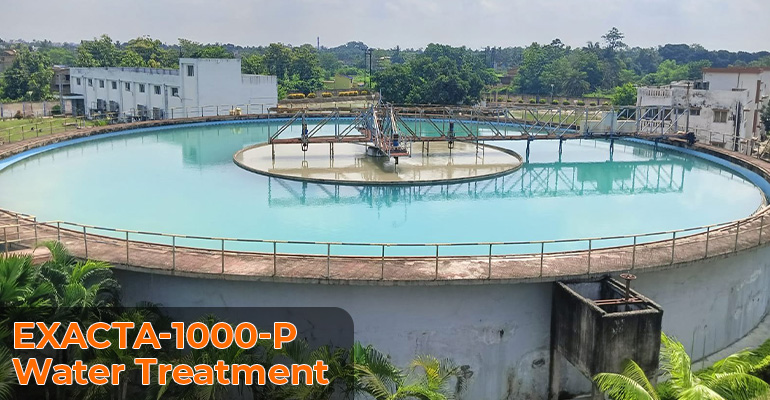
Corin-Polymer – EXACTA-1000-P is a phosphorus-carboxylate polymer listed by Maxwell Additives for aqueous systems. The product belongs to a specialty polymer category based on phosphorus and carboxylate chemistry. Maxwell's technical information describes it as an antiscalant and corrosion inhibitor for aqueous systems...
Phosphorus Carboxylate Corin Polymer-EXACTA-1000-P in India: A Practical Guide to Industrial Water Treatment
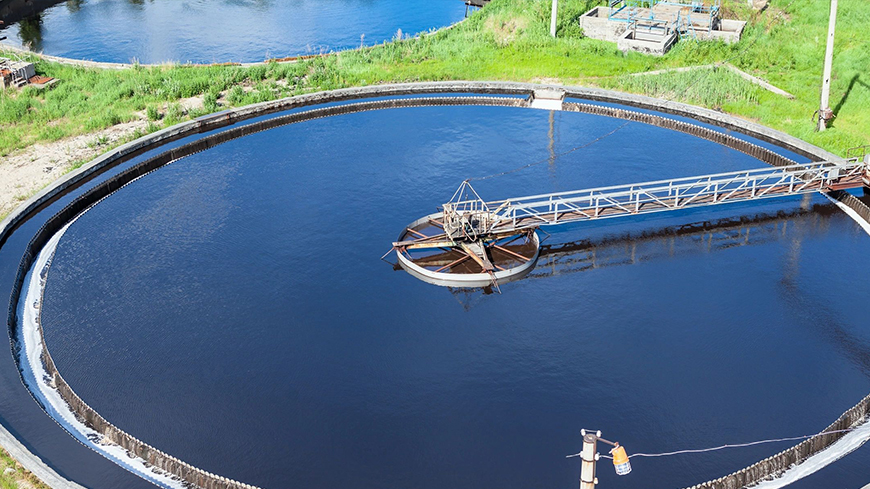 Polymer-based treatment chemicals are widely considered when industries need better control over mineral particles and unwanted deposits. Corin-Polymer – EXACTA-1000-P Phosphorus Carboxylate Corin Polymer is a specialty polymer that can be evaluated as part of industrial water-treatment formulations where dispersion and deposit management are important.
The performance of any polymer depends on the conditions in which it is used. Water hardness, pH, temperature, dissolved minerals, concentration cycles, and other treatment chemicals can all influence the final result. Therefore, understanding the chemistry and testing it under actual operating conditions are important before selecting a treatment program.
This article explains the role, features, applications, and benefits of EXACTA-1000-P in simple terms so formulators and industrial users can better understand where this type of polymer may fit into their water-treatment strategy.
What is Corin-Polymer – EXACTA-1000-P Phosphorus Carboxylate Corin Polymer?
Corin-Polymer – EXACTA-1000-P is a specialty phosphorus-carboxylate polymer intended for use in industrial water-treatment applications. Its polymeric structure contains functional groups that can interact with mineral particles and dissolved metal species, allowing it to be considered for formulations focused on deposit control and dispersion.
The term Phosphorus – Carboxylate Corin Polymer describes the general chemical character of this type of polymer. Instead of relying on only one type of functional group, phosphorus and carboxylate chemistry can provide multiple interaction points within a treatment formulation.
In circulating water, dissolved minerals can become increasingly concentrated because of evaporation and repeated recirculation. Under suitable conditions, these minerals may begin forming particles or deposits. A polymer such as EXACTA-1000-P can be evaluated to influence the behavior of these substances before they develop into larger operational problems.
The polymer does not simply remove minerals from water. Its role is more closely related to controlling how mineral particles interact, grow, and remain dispersed.
Because every industrial water system has a different chemical profile, the actual dosage and performance should be established through application testing rather than assuming one fixed treatment level will work everywhere.
How EXACTA-1000-P Works in Industrial Water Treatment
The main function of a polymeric water-treatment chemical is to influence the behavior of dissolved and suspended mineral substances.
During water circulation, evaporation can increase the concentration of calcium, magnesium, silica, and other dissolved components. Temperature changes can further affect the point at which certain minerals begin to form particles.
EXACTA-1000-P can be incorporated into a treatment formulation to interact with these mineral-containing particles.
Its phosphorus-carboxylate chemistry can provide interaction sites that influence particle surfaces. This can support a treatment approach aimed at limiting uncontrolled particle growth and improving dispersion.
The polymer’s role becomes particularly relevant when water contains multiple mineral species rather than one simple deposit-forming compound.
However, this does not mean that every mineral will respond in exactly the same way. The treatment result depends on the specific water chemistry.
Testing should therefore include the actual or representative water used in the industrial process.
Why Phosphorus-Carboxylate Chemistry is Important
The combination of phosphorus and carboxylate functionality gives this type of polymer a useful position within specialty water-treatment chemistry.
Carboxylate groups can interact with mineral surfaces and metal ions, while phosphorus-containing functionality can provide additional interaction with certain dissolved species.
This combination allows formulators to explore a polymer system with multiple chemical characteristics.
The term Phosphorus Carboxylate Corin Polymer in India is therefore relevant to industries searching for specialty polymers for water-treatment formulation development.
Instead of using a polymer simply because it is classified as a dispersant, formulators can evaluate how the complete chemistry performs against their specific mineral challenge.
This may involve comparing EXACTA-1000-P with other polymers, phosphonates, or combination treatment programs.
The goal is to select a treatment system that provides the required performance without unnecessary chemical consumption.
Features of Corin-Polymer – EXACTA-1000-P
1. Phosphorus-Carboxylate Polymer Structure
EXACTA-1000-P provides a phosphorus-carboxylate polymer chemistry that can be evaluated for industrial water-treatment applications. Its functional groups provide different interaction points with mineral-containing particles and dissolved species, making it useful for formulators looking for a polymer with broader chemical characteristics.
2. Supports Mineral Dispersion
The polymer can influence the interaction between mineral particles and the surrounding water. This can help formulators develop treatment systems where maintaining particle dispersion is important. Actual dispersion performance depends on mineral composition, temperature, pH, hardness, dosage, and the other chemicals included in the formulation.
3. Suitable for Industrial Treatment Formulations
EXACTA-1000-P can be incorporated into specialty water-treatment formulations designed around specific industrial requirements. Its use can be investigated in cooling-water and other circulating-water applications where deposit formation and particle behavior need to be managed through a controlled chemical treatment approach.
4. Multiple Functional Interactions
The combination of phosphorus and carboxylate groups provides more than one type of chemical interaction within the polymer structure. This characteristic allows formulators to investigate its performance against different mineral conditions and compare it with simpler polymer chemistries during laboratory formulation development.
5. Useful for Customized Treatment Programs
Industrial water conditions differ significantly from one facility to another. EXACTA-1000-P can be evaluated at different concentrations and with different supporting ingredients to create a treatment program suited to the actual water profile. This makes application testing important when developing customized chemical solutions.
6. Supports Formulation Flexibility
The polymer can be studied alongside other water-treatment ingredients, including compatible dispersants, scale-control chemicals, and corrosion-control components. Such flexibility allows formulators to develop combination treatment products rather than depending on one chemical to address every water-quality issue.
7. Suitable for Performance Evaluation
EXACTA-1000-P can be assessed through laboratory screening and controlled field trials. Testing different dosage levels allows users to understand its behavior under actual conditions. This makes it easier to determine whether the polymer provides a useful balance between treatment performance, compatibility, and chemical consumption.
EXACTA-1000-P and Water Chemistry
One of the most important factors in polymer selection is the composition of the water itself.
A water-treatment chemical does not operate in isolation. Calcium, magnesium, iron, silica, alkalinity, dissolved solids, suspended matter, and pH can all affect mineral formation.
For example, a system with high calcium hardness may behave very differently from one where silica or iron is the primary concern.
Temperature is another important factor. Mineral solubility and particle formation can change as water moves through heated equipment.
This means that a polymer should be tested under conditions that represent the actual industrial environment.
A practical evaluation can compare different concentrations of Corin-Polymer – EXACTA-1000-P and monitor particle dispersion, deposit formation, compatibility, and formulation stability.
The information collected during testing can then be used to develop a more suitable treatment program.
 Benefits of Corin-Polymer – EXACTA-1000-P
1. Helps Manage Mineral Deposition
EXACTA-1000-P can form part of a treatment strategy designed to manage mineral particles before they develop into larger deposits. By influencing particle behavior, the polymer may support more controlled water chemistry. Performance should be confirmed under the specific hardness, temperature, pH, and mineral conditions of the intended system.
2. Supports Better Particle Dispersion
Maintaining mineral particles in a dispersed condition can reduce their tendency to form larger agglomerates. EXACTA-1000-P can be evaluated where this type of dispersion support is required. The most suitable concentration depends on the water composition and the other chemicals used within the treatment program.
3. Useful for Cooling-Water Applications
Cooling systems continuously concentrate dissolved substances through evaporation and circulation. EXACTA-1000-P can be considered as one component of a chemical treatment program designed for these conditions. Laboratory testing can help determine whether the polymer provides suitable support for the system’s particular mineral-control requirements.
4. Provides an Alternative Polymer Chemistry
Formulators may need to compare several polymer families before selecting a treatment ingredient. EXACTA-1000-P provides a phosphorus-carboxylate approach that can be compared with other dispersant and scale-control chemistries. This gives manufacturers greater flexibility when developing products for different industrial water conditions.
5. Can Help Optimize Chemical Usage
Using the correct polymer concentration is important for both performance and treatment economics. By testing EXACTA-1000-P at several dosage levels, formulators can identify a practical operating range. This approach can help avoid unnecessary chemical consumption while maintaining the intended mineral-control and dispersion performance.
6. Supports Customized Water-Treatment Solutions
Industrial facilities rarely have identical water chemistry. EXACTA-1000-P can be evaluated according to individual hardness, pH, temperature, mineral concentration, and operating conditions. This makes it possible to develop a treatment approach around the customer’s actual requirements instead of applying a generalized chemical dosage.
7. Can Contribute to Equipment Maintenance
Uncontrolled deposits may interfere with heat transfer and increase cleaning requirements. When used as part of a suitable treatment program, EXACTA-1000-P can support mineral dispersion and deposit management. Maintaining appropriate water chemistry may help industrial operators manage equipment cleanliness and reduce unnecessary operational interruptions.
Conclusion
Corin-Polymer – EXACTA-1000-P Phosphorus Carboxylate Corin Polymer provides a specialty polymer option for industrial water-treatment formulations where mineral management and particle dispersion are important.
Its phosphorus-carboxylate chemistry gives formulators another approach for developing treatment systems around specific water conditions. It can be evaluated particularly where circulating water, mineral concentration, and deposit formation create ongoing treatment challenges.
However, the polymer should not be selected solely by its chemical name. Actual performance depends on water hardness, mineral composition, temperature, pH, dosage, operating conditions, and compatibility with other treatment chemicals.
Laboratory screening followed by controlled field evaluation is therefore a practical way to establish suitability.
For businesses exploring Phosphorus – Carboxylate Corin Polymer, the right product selection should combine chemical performance, technical support, consistent quality, and dependable supply.
FAQs
1. What is Corin-Polymer – EXACTA-1000-P?
Corin-Polymer – EXACTA-1000-P is a specialty phosphorus-carboxylate polymer used for industrial water-treatment formulation development. It can be evaluated where mineral dispersion and deposit management are required. Its actual application should be determined according to the water chemistry and operating conditions of the intended system.
2. What is Phosphorus – Carboxylate Corin Polymer used for?
A Phosphorus – Carboxylate Corin Polymer can be used as part of industrial water-treatment formulations designed to influence mineral-particle behavior. It may be considered for cooling-water and other circulating-water applications where scale and dispersion management are important.
3. Can EXACTA-1000-P be used in cooling towers?
EXACTA-1000-P can be evaluated for cooling-water and cooling-tower treatment programs. The appropriate dosage depends on water hardness, alkalinity, temperature, pH, dissolved minerals, concentration cycles, and other chemicals in the system. Testing representative water is recommended before establishing a final treatment level.
4. How should EXACTA-1000-P dosage be determined?
There is no universal dosage for every industrial application. The recommended concentration should be established through laboratory testing using representative water. Different dosage levels can be compared for dispersion, deposit-control performance, compatibility, and chemical consumption before selecting a practical operating range.
5. Can EXACTA-1000-P be combined with other treatment chemicals?
It may be compatible with selected water-treatment ingredients, but this should be confirmed through formulation testing. Combining polymers, phosphonates, corrosion inhibitors, or other chemicals can change stability and performance. Testing the complete formulation helps identify precipitation, viscosity changes, or other compatibility concerns.
6. Where can I purchase Phosphorus Carboxylate Corin Polymer in India?
Businesses looking for Phosphorus Carboxylate Corin Polymer in India should evaluate suppliers based on product consistency, technical information, manufacturing capability, documentation, packaging, and supply reliability. Maxwell Additives PVT LTD can be contacted directly for current product specifications, availability, and commercial requirements related to its specialty polymer range.
7. Why is water analysis important before using EXACTA-1000-P?
Water analysis helps identify the minerals and operating conditions that the polymer needs to work with. Parameters such as calcium hardness, alkalinity, pH, silica, iron, temperature, and dissolved solids can influence treatment performance. Using representative water for testing provides a more realistic basis for selecting the polymer and dosage.
Related Posts