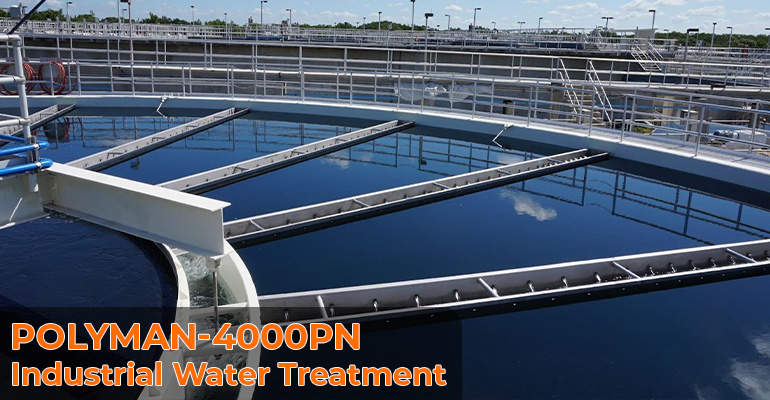

Industrial water systems face issues. Hardness, dissolved minerals, particles that float in the water changes in temperature and other conditions can slowly hurt equipment and the way things work. This is where chemicals made from polymers help. Poly Acrylic Homo-Polymer is one of these types of polymers used when keeping minerals spread out and stopping scale from forming is important...
Poly Acrylic Homo-Polymer: Supporting Dispersion and Mineral Control in Industry

An Acrylic Homopolymer is a type of polymer that comes from one kind of acrylic monomer. This means it is made up of one repeating unit unlike copolymers or terpolymers that mix different monomers. The way the Acrylic Homopolymer is built gives it traits. These traits matter a lot in chemistry especially when the Acrylic Homopolymer is used in a mixture. The structure of Acrylic Homopolymer can change how Acrylic Homopolymer reacts with things like suspended mineral particles, water and other ingredients. This makes the behavior of Acrylic Homopolymer different from polymers that use more, than one monomer.
Poly Acrylic Homo-Polymer can be used when an industrial process needs control over mineral particles, dispersion or unwanted buildup. In water-based systems, dissolved salts and mineral components can interact with each other when temperature, concentration and pH change. If these materials are not properly managed they may cause deposits on surfaces. Alter the consistency of the process.
Poly Acrylic Homo-Polymer does not simply remove minerals from a system. Instead the role of Poly Acrylic Homo-Polymer can involve changing particle behaviour and keeping a manageable dispersion under suitable conditions. This makes Acrylic Homopolymer chemistry relevant to treatment formulations where scale control and particle management’re part of the overall objective.
The term homopolymer is also useful when choosing a chemical for a formulation. A product based on one monomer type can behave differently from a multi-component polymer. Therefore formulators often compare polymer families according to their actual performance rather than choosing a material only by its chemical category.
An Acrylic Homopolymer manufacturer must consider consistency, polymer characteristics, application requirements and manufacturing controls when producing materials. Likewise an Acrylic Homopolymer supplier should be able to provide material quality for customers using Acrylic Homopolymer in recurring industrial processes.
For users comparing Polyacrylic Acid manufacturers the choice should also consider support, product consistency, application suitability and supply reliability. The correct Acrylic Homopolymer is ultimately the one that fits the chemistry and operating conditions of the intended process.
Role of Poly Acrylic Homo-Polymer in Industrial Formulations
Industrial formulations often contain ingredients that must work together under changing process conditions. Water hardness, dissolved minerals, suspended solids, temperature, pH and concentration can all affect the behaviour of a formulation. Poly Acrylic Homo-Polymer can become a component when the goal is to keep these materials under better control.
Poly Acrylic Homo-Polymer can be evaluated for applications where mineral particles need to stay dispersed of forming larger deposits. This is especially relevant in water-based processes where calcium, magnesium and other mineral componentsre present. Poly Acrylic Homo-Polymer interacts with the system in a way that can change particle behaviour and support the treatment strategy.
Another important consideration is compatibility. Poly Acrylic Homo-Polymer may be used alongside treatment chemicals depending on the formulation. These can include corrosion-control ingredients, phosphonates, surfactants, biocides or other dispersing materials. The final performance depends on how these components interact than on Poly Acrylic Homo-Polymer alone.
This is why laboratory testing can be valuable before introducing Acrylic Homopolymer into a process. Small-scale trials can help determine whether the selected grade provides the required dispersion or mineral-control performance and whether Acrylic Homopolymer remains compatible with the ingredients.
For manufacturers this approach can also reduce changes during production. Of selecting Poly Acrylic Homo-Polymer solely because it is commonly used technical teams can compare available options against the actual requirements of their formulation.
Features of Poly Acrylic Homo-Polymer
1. Single-Polymer Chemistry
Poly Acrylic Homo-Polymer is based on one acrylic monomer type. This gives it a structural profile from copolymers and terpolymers and allows formulators to evaluate a more focused acrylic polymer chemistry for specific industrial requirements.
2. Supports Dispersion
Poly Acrylic Homo-Polymer can help change how fine mineral and particulate matter behaves within formulations. Better particle distribution can be useful where aggregation or uncontrolled settling may affect process consistency, equipment condition or the quality of a formulation.
3. Relevant to Mineral Management
Acrylic Homopolymer chemistry can be used where dissolved mineral components create scale-related problems. Acrylic Homopolymer plays a role in supporting the treatment system by changing mineral-particle interactions than acting simply as a conventional mineral-removal chemical.
4. Suitable for Formulation Development
Poly Acrylic Homo-Polymer can be evaluated during the development of chemical formulations. Technical teams can adjust dosage. Combine Poly Acrylic Homo-Polymer with compatible ingredients to determine whether the resulting formulation meets the requirements of a particular process.
5. Useful, in Water-Based Systems
Many industrial processes use water that has dissolved salts, hardness ions and suspended material. Poly Acrylic Homo-Polymer may be used in water-based applications where the goal’s to control how these components behave.
6. Allows Application-Based Evaluation
The Acrylic Homopolymer can be tested under operating conditions instead of using broad assumptions. Factors such as water chemistry, temperature, pH, hardness, mineral concentration and other chemicals can be part of the evaluation.
7. Provides an Acrylic Polymer Option
For formulators comparing polymer technologies Acrylic Homopolymer offers another chemistry choice. Acrylic Homopolymer can be compared with polymer families to find the best material for the needed formulation and operating environment.
How Acrylic Homopolymer Selection Affects Industrial Performance
Choosing a polymer is not about picking the most familiar chemical name. Two treatment products can both be called polymers yet have molecular structures and performance traits. Therefore industrial buyers and formulators must link the Acrylic Homopolymer selection with the problem they wish to solve.
For example a process that has mineral build-up may need a treatment than a formulation where suspended particles are the main issue. Likewise a system that runs hot may behave differently from one that runs at temperatures. These differences can affect the Acrylic Homopolymer selection and dosage.
The amount of hardness ions is another factor. Calcium and magnesium can interact with components in water and alter how particles accumulate. A suitable Acrylic Homopolymer formulation can help manage these interactions when well designed and tested.
Choosing Acrylic Homopolymer can also affect how well a formulation works together. When many chemicals are mixed their separate properties do not always show how the whole mix behaves. Compatibility testing can spot changes in clarity, stability, viscosity, dispersion or other formulation traits before production.
Thus technical evaluation is a part of buying decisions. Companies seeking an Acrylic Homopolymer supplier should look beyond price. Reliable quality, production capacity, technical data, batch consistency and good communication can all shape long-term sourcing choices.
For Polyacrylic Acid manufacturers keeping production standards is equally important because industrial customers may need the same material over many cycles. Consistency lets formulators use a predictable raw material and make careful adjustments when developing or improving products.
Benefits of Acrylic Homopolymer
1. Helps Manage Mineral Particles
Acrylic Homopolymer can help formulations that control mineral particles in water-based systems. By changing how particles behave Acrylic Homopolymer can be part of a treatment that reduces build-up and keeps conditions more stable.
2. Supports Better Dispersion
Acrylic Homopolymer can aid in keeping particles evenly spread in suitable formulations. This can lower problems from clumping or uneven particle load especially when the material is used at the right dose.
3. Offers Formulation Flexibility
Acrylic Homopolymer gives formulators another chemistry to test during product development. Its dose and mix with compatible ingredients can be changed to fit the needs of the intended industrial process.
4. Can Support Scale-Control Programs
Where mineral depositsre an issue Acrylic Homopolymer can be part of a larger scale-control plan. Its success depends on the water chemistry, mineral load, temperature, dose and other parts of the treatment program.
5. Useful for Process Stability
Better control of suspended and mineral particles can give steady process conditions. When Acrylic Homopolymer is picked and dosed right it can help treatment plans that keep behavior during industrial work.
6. Provides an Alternative Polymer Chemistry
Acrylic Homopolymer offers manufacturers another choice next, to maleic polymers, copolymers and terpolymers. Comparing these chemistries under conditions can help teams pick a formulation that matches exact performance needs.
7. Supports Long-Term Treatment Planning
Acrylic Homopolymer can be part of a monitored treatment plan where water quality, dose and operating conditions are checked regularly. This lets the formulation change when process conditions shift of sticking to a fixed method forever.
What to Consider Before Buying an Acrylic Homopolymer
Before buying Acrylic Homopolymer industrial users should first set the problem that the material must solve. If the main worry is scale, the mineral mix and water hardness must be looked at. If dispersion is the need the particle traits and amount become more vital.
The operating environment must also be considered. Temperature, pH, circulation rate, residence time, concentration cycles and the presence of chemicals can influence Poly Acrylic Homo-Polymer performance. These details help suppliers and technical teams understand whether a particular grade of Poly Acrylic Homo-Polymer is appropriate.
Product documentation is another part of the buying process. Buyers can review specifications recommended handling information packaging details, quality parameters and application guidance before placing regular orders for Poly Acrylic Homo-Polymer.
For companies comparing an Acrylic Homopolymer manufacturer or Acrylic Homopolymer supplier supply continuity should also be considered. A material that performs well in a laboratory trial must remain consistent when purchased repeatedly for production of Poly Acrylic Homo-Polymer.
Testing remains the reliable way to confirm suitability. A representative sample of the actual process water or formulation can be used to compare dosage levels and observe the Poly Acrylic Homo-Polymer behaviour. This provides useful information than selecting a product based only on general application descriptions.
Maxwell Additives as a Specialty Chemical Partner
Maxwell Additives Pvt. Ltd. Operates in the specialty-chemical sector with a product portfolio that covers water-treatment chemicals, polymers, phosphonates, specialty chemicals and other industrial chemical solutions. The company also maintains manufacturing, quality assurance, research and development and qualified chemist capabilities as part of its operations.
For businesses sourcing Poly Acrylic Homo-Polymer or comparing Polyacrylic Acid manufacturers Maxwell Additives focuses on providing polymer solutions that match application requirements. Its approach can be useful for customers who need to discuss Poly Acrylic Homo-Polymer selection, product specifications, formulation compatibility and recurring supply than treating the purchase as a simple commodity transaction. The company’s polymer range includes acrylic homopolymer chemistry alongside polymer families giving industrial customers different options when evaluating treatment formulations.
Conclusion
Poly Acrylic Homo-Polymer is an acrylic-based polymer option for industrial formulations where mineral management and particle dispersion are important. Its homopolymer structure gives formulators a chemistry to evaluate when developing water-based treatment products and other industrial formulations of Poly Acrylic Homo-Polymer.
The performance of a homopolymer depends on the conditions in which it is used. Water hardness, mineral concentration, temperature, pH, dosage and compatibility with chemicals can all influence the final result for Poly Acrylic Homo-Polymer. Because of these variables application testing should be a part of product selection.
For buyers choosing the right Acrylic Homopolymer supplier involves looking beyond the product name or purchase price. Consistent quality, understanding, manufacturing capability, supply reliability and application support can all contribute to a dependable long-term sourcing relationship for Poly Acrylic Homo-Polymer.
FAQs
1. What is Poly Acrylic Homo-Polymer used for?
Poly Acrylic Homo-Polymer can be used in formulations where mineral-particle control and dispersion are required. It may be considered for water-treatment and other water-based applications. The exact use depends on the process conditions, formulation composition, mineral concentration, temperature and performance objective for Poly Acrylic Homo-Polymer.
2. What is the difference between an acrylic homopolymer and a copolymer?
An acrylic homopolymer is primarily produced from one monomer type while a copolymer contains two or more different monomer types. Because their molecular structures are different they can show behaviour when interacting with minerals suspended particles, water and other formulation ingredients of Poly Acrylic Homo-Polymer.
3. How do I choose an Acrylic Homopolymer supplier?
When choosing an Acrylic Homopolymer supplier businesses should review product consistency, technical specifications, manufacturing capabilities, quality-control practices, packaging, supply capacity and application support. It is also useful to discuss the intended process with the supplier so that the selected Poly Acrylic Homo-Polymer can be evaluated against operating requirements.
4. Can Poly Acrylic Homo-Polymer be used with water-treatment chemicals?
It may be incorporated into a treatment formulation with other compatible chemicals but compatibility should be established through testing. Phosphonates, corrosion-control chemicals, surfactants, biocides and other polymers can influence the formulation of Poly Acrylic Homo-Polymer so laboratory evaluation is recommended before commercial-scale use.
5. What factors affect homopolymer performance?
Several factors can affect performance, including water hardness, mineral concentration, pH, temperature, dosage suspended solids, circulation conditions and the presence of chemicals. A Poly Acrylic Homo-Polymer that performs under one set of conditions may require different dosage or formulation adjustments under another operating environment.
6. Why is product consistency important when buying from Polyacrylic Acid manufacturers?
Consistent raw-material quality is important when a polymer is used repeatedly in production. Significant variation between batches can affect formulation behaviour, dosage requirements and finished-product performance, for Poly Acrylic Homo-Polymer. Reliable Polyacrylic Acid manufacturers should therefore maintain quality controls and provide consistent material specifications.
7. Can an Acrylic Homopolymer be tested before industrial use?
Yes application testing is a step, before using an acrylic homopolymer in regular production. A representative water sample or formulation can be used to check dosage levels how the acrylic homopolymer disperses how well it works with other materials and how it behaves during treatment. When laboratory tests with the acrylic homopolymer show results the next step is to try controlled industrial trials.
Related Posts