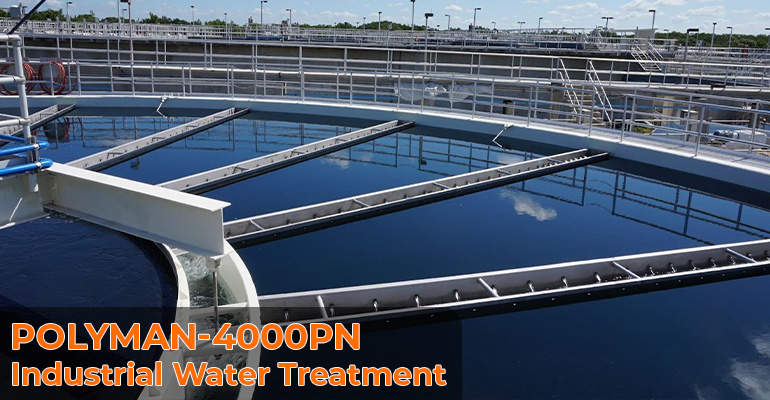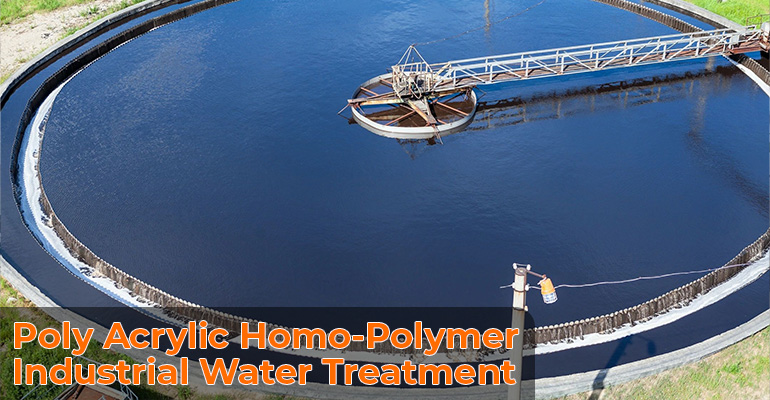
Industrial water systems face issues. Hardness, dissolved minerals, particles that float in the water changes in temperature and other conditions can slowly hurt equipment and the way things work. This is where chemicals made from polymers help. Poly Acrylic Homo-Polymer is one of these types of polymers used when keeping minerals spread out and stopping scale from forming is important...
Polyacrylic Homo Polymer-4000-PN for Scale Control
 A Polyacrylic Homo Polymer offers an effective approach for managing mineral particles and supporting dispersion without depending on a single treatment mechanism. At Maxwell Additives, we provide Polyacrylic Homo Polymer-4000-PN as an acrylic-based polymer for applications where scale control and particle management are important. Its partially neutralized form provides formulators with another option when developing water-treatment and industrial chemical systems.
For buyers comparing an Acrylic Polymer Manufacturer in India, it is important to consider more than just the product name. Molecular characteristics, consistency, application conditions, compatibility with other chemicals and technical support can all influence the final performance. The right polymer should be selected according to the actual water chemistry and process requirements rather than simply choosing the most commonly used material.
What is a Polyacrylic Homo Polymer-4000-PN?
Polyacrylic Homo Polymer-4000-PN is an acrylic homopolymer used in industrial formulations where mineral control and dispersion are required. We provide it in a partially neutralized form based on acrylic polymer chemistry. It is a low-molecular-weight polymer that can be used in areas such as water treatment, textile wet processing, paint formulations and detergent applications.
The term “homopolymer” refers to a polymer made from one principal monomer type. This gives it a different chemical structure from copolymers, terpolymers and other multi-component polymer systems. For formulators, this distinction is important because different polymer structures can behave differently when they come into contact with hardness ions, suspended solids and other ingredients.
POLYMAN-4000PN is particularly relevant where calcium, magnesium and other mineral species need to be managed during processing. Its role is not simply to remove minerals from water. Instead, the polymer can help influence how mineral particles behave, making it useful in treatment programs designed around scale control and dispersion.
The product is supplied as a liquid and is described as water-soluble. Our available product information lists a solid content of at least 48%, a pH range of 3.5–4.5 and an approximate average molecular weight of 4000. These characteristics provide useful starting points for formulation and dosage evaluation, although actual performance should always be confirmed under application-specific conditions.
Understanding the Practical Role of Polyacrylic Homo Polymer-4000-PN
A polymer does not work in isolation from the rest of an industrial treatment program. Its performance depends on the minerals present, water hardness, temperature, pH, concentration of dissolved substances, operating cycles and the other chemicals used alongside it.
Polyacrylic Homo Polymer-4000-PN can be considered when a formulation needs support in keeping mineral particles from developing into troublesome deposits. The polymer may interact with growing mineral particles and alter their behavior, helping reduce the tendency of deposits to form on process surfaces.
This makes the material relevant to industrial water-treatment formulations where scaling can become an operational concern. Cooling-water circuits, process-water systems and other applications may require carefully selected polymer chemistry to keep mineral matter under control.
The same principle can be useful outside conventional water treatment. In textile processing, for example, hardness-related deposits and unwanted particulate matter can interfere with processing quality. A suitable acrylic polymer can therefore become part of a broader formulation intended to maintain better process consistency.
Paint, detergent and other formulations may also use polymeric materials for dispersion-related purposes. However, the exact role of the polymer changes according to the formulation. A chemical that performs well in one application may require different dosage or supporting ingredients in another.
This is why testing is important before selecting a treatment program. Laboratory trials can help determine whether Polyacrylic Homo Polymer-4000-PN is compatible with the target formulation and whether its performance meets the required objective.
Features of Polyacrylic Homo Polymer-4000-PN
1. Acrylic-Based Homopolymer
Polyacrylic Homo Polymer-4000-PN belongs to the acrylic homopolymer family, giving it a comparatively straightforward polymer structure. We offer this material for formulators evaluating acrylic chemistry for mineral management, dispersion and industrial treatment applications where controlled polymer behavior is required.
2. Partial Neutralization
The material is supplied in a partially neutralized form, which can influence its handling and interaction within water-based formulations. This characteristic gives formulators an additional option when developing treatment blends that require an acrylic polymer with practical compatibility across specific operating conditions and chemical environments.
3. Low Molecular Weight
Its low-molecular-weight nature makes Polyacrylic Homo Polymer-4000-PN suitable for applications where polymer mobility and interaction with mineral particles are important. The material can be evaluated in systems where controlling particle behavior requires a polymer that can function throughout the treated water rather than simply remaining on equipment surfaces.
4. Water Solubility
Polyacrylic Homo Polymer-4000-PN is described as soluble in water in all proportions, which can simplify incorporation into suitable aqueous treatment formulations. Good water compatibility is particularly useful when the chemical must be blended into circulating-water systems or combined with other water-soluble treatment ingredients.
5. Non-Phosphorus Chemistry
The polymer provides a non-phosphorus option for formulations where phosphorus-free chemistry is preferred. This can be relevant to treatment developers who are reviewing different ingredient combinations and want to build a polymer-based approach around acrylic chemistry rather than relying entirely on phosphonate-containing materials.
6. Dispersion Support
The polymer can be considered where maintaining mineral particles in a more manageable dispersed condition is part of the treatment objective. By influencing particle interactions, it may help reduce uncontrolled aggregation and support smoother operation when used at an appropriate concentration within a properly designed treatment program.
7. Broad Application Potential
Polyacrylic Homo Polymer-4000-PN can be evaluated across several industrial formulation areas rather than being restricted to one process. Our product information identifies water treatment, textile wet processing, paint and detergent applications, allowing formulators to investigate its suitability according to their specific requirements.
A Meaningful Look at Its Industrial Use
Choosing a polymer should begin with the problem that needs to be solved. If an industrial system experiences mineral deposition, suspended-particle accumulation or formulation instability, simply increasing chemical dosage may not always be the best answer. The polymer chemistry itself needs to match the behavior of the system.
Polyacrylic Homo Polymer-4000-PN can be considered as part of a controlled treatment strategy where mineral particles need to be managed without excessive accumulation. Its value comes from how it interacts with the overall water chemistry rather than from a single isolated property.
For example, water containing high levels of calcium and other hardness ions can behave differently from relatively soft water. Temperature can also change mineral precipitation tendencies. In a continuously circulating system, concentration cycles may further alter the treatment environment. These variables should be considered when establishing the working dosage.
Another important point is compatibility. Industrial formulations frequently contain several ingredients, including corrosion inhibitors, phosphonates, surfactants, biocides or other polymers. A polymer that appears suitable on its own may behave differently after being combined with these materials. Small-scale compatibility testing therefore provides a safer basis for formulation decisions.
This approach is also useful for companies comparing an Acrylic Homopolymer supplier or evaluating Polyacrylic Acid manufacturers. Price and availability are important commercial considerations, but consistent quality and technical understanding can have a greater impact on long-term formulation performance.
A reliable raw-material selection process should consider product specifications, batch consistency, storage requirements, application data and technical support. This becomes especially important when the polymer is being incorporated into a commercial treatment product rather than used for a one-time industrial trial.
 Benefits of Polyacrylic Homo Polymer-4000-PN
1. Supports Scale Management
Polyacrylic Homo Polymer-4000-PN can support treatment programs designed to manage mineral scale in industrial water systems. Its polymeric action can influence mineral-particle development and reduce uncontrolled deposition when the chemistry, dosage and operating conditions are properly matched to the application.
2. Helps Improve Dispersion
The polymer can help maintain mineral and particulate matter in a more dispersed condition. Better dispersion may reduce the tendency of particles to gather into larger deposits, supporting cleaner circulation and more stable operation in suitable water-treatment and industrial formulation environments.
3. Useful in Hard-Water Conditions
Hard water can introduce significant quantities of calcium and magnesium into industrial systems. Polyacrylic Homo Polymer-4000-PN can be evaluated in such environments as part of a treatment strategy intended to manage hardness-related mineral behavior and reduce unwanted buildup under controlled operating conditions.
4. Supports Textile Processing
In textile wet processing, unwanted mineral deposits and particulate matter can affect equipment and processing consistency. Polyacrylic Homo Polymer-4000-PN can be incorporated into suitable formulations to help manage these challenges, particularly where water hardness and suspended material influence processing performance.
5. Suitable for Detergent Formulations
Acrylic polymers can have a useful role in detergent chemistry where water hardness and particulate dispersion need attention. Polyacrylic Homo Polymer-4000-PN may be evaluated as part of suitable detergent formulations, helping formulators develop products designed for more controlled mineral behavior during washing.
6. Offers Phosphorus-Free Polymer Chemistry
For formulators seeking a non-phosphorus polymer option, Polyacrylic Homo Polymer-4000-PN provides an alternative based on acrylic chemistry. This can be useful when developing treatment systems where the ingredient profile needs to avoid phosphorus-containing polymer chemistry while still addressing dispersion and mineral-management requirements.
7. Supports Flexible Formulation Development
The material can be tested in different industrial formulations according to the intended application. This flexibility allows technical teams to adjust dosage, supporting chemicals and process conditions during development, helping them identify a treatment combination that provides the required balance of performance, compatibility and operational practicality.
Application Considerations
The performance of Polyacrylic Homo Polymer-4000-PN should always be judged against the actual conditions in which it will be used. Industrial water is rarely identical from one plant to another. Calcium, magnesium, alkalinity, silica, suspended solids, temperature and pH can all affect polymer performance.
A treatment developer should therefore establish the key water parameters before deciding on dosage. A laboratory evaluation can compare different concentrations and observe mineral behavior under representative conditions. This approach can also reveal whether the polymer works well alongside other treatment ingredients.
The product information indicates that common doses can fall within a broad range, with the actual requirement depending on application conditions and the desired treatment effect. Rather than treating a general dosage as a fixed recommendation, users should determine the appropriate level through application testing.
Storage and handling should also be considered. The available product information states that the material is non-flammable and non-combustible and recommends storage under shade away from direct sunlight. Appropriate protective equipment and safe chemical-handling practices should be followed during use.
For companies sourcing from an Acrylic Homopolymer manufacturer, technical documentation should ideally be reviewed before purchase. Details such as solid content, pH, viscosity, molecular characteristics, packaging and storage conditions can help buyers compare materials more effectively.
Choosing an Acrylic Polymer for Industrial Formulations
Different polymer families solve different formulation problems. Acrylic homopolymers, maleic polymers, carboxylate copolymers and sulfonated terpolymers can each provide different interactions with mineral particles and water chemistry.
Polyacrylic Homo Polymer-4000-PN can be a practical choice when an acrylic homopolymer is appropriate for the intended application. Its selection should be based on measurable treatment requirements rather than on the polymer category alone.
A good purchasing decision also involves checking supply consistency. Industries that use polymers continuously need raw materials that can be incorporated into production without unexpected variation. This is why working with established Polyacrylic Acid suppliers can be valuable for manufacturers with recurring requirements.
The most effective approach is to combine product specifications with actual application testing. When these two areas agree, the polymer has a stronger basis for commercial use.
At Maxwell Additives, we provide POLYMAN-4000PN as an acrylic homopolymer for industrial applications involving scale inhibition, dispersion and mineral management. We manufacture and supply this partially neutralized polymer for different formulation requirements, including water treatment, textile wet processing and detergent applications. Our focus is on maintaining consistent product quality and supporting customers with suitable polymer solutions for their industrial needs. Since every application has different water chemistry and operating conditions, product selection and dosage should be evaluated according to the specific process requirements. With our experience in industrial chemical manufacturing, we aim to provide practical polymer solutions for diverse application needs.
Conclusion
Polyacrylic Homo Polymer-4000-PN is an acrylic-based homopolymer that can be considered for industrial applications involving mineral management, dispersion and water-based formulation requirements. Its partially neutralized form, water solubility and low-molecular-weight characteristics make it a useful option for technical teams evaluating polymer chemistry for different processes.
Its potential applications extend across water treatment, textile processing, detergents and other industrial formulations. However, successful use depends on understanding the complete operating environment. Water composition, temperature, pH, hardness, dosage and compatibility with other chemicals should all be assessed before final adoption.
For businesses comparing an Acrylic Polymer Manufacturer in India, the focus should therefore remain on product consistency, technical specifications, application suitability and dependable supply. A properly tested polymer can become a valuable part of a broader treatment strategy rather than simply another chemical added to the system.
FAQs
1. What is Polyacrylic Homo Polymer-4000-PN?
Polyacrylic Homo Polymer-4000-PN is an acrylic-based homopolymer supplied in a partially neutralized form. We provide it for applications involving mineral control and dispersion, including water treatment, textile processing, detergent and other industrial formulations.
2. Is Polyacrylic Homo Polymer-4000-PN the same as ordinary acrylic acid?
Not exactly. The product is a polymer based on acrylic chemistry rather than simply being the monomer acrylic acid. Its polymeric structure gives it different functional behavior and allows it to be evaluated for applications such as mineral-particle management and dispersion.
3. Where can Polyacrylic Homo Polymer-4000-PN be used?
It can be considered for industrial water treatment, textile wet processing, detergent formulations and certain other applications where dispersion or mineral management is required. The suitability of the product should be confirmed through application-specific testing before regular use.
4. Can it be used in hard water?
Yes, it can be evaluated for hard-water applications because calcium and magnesium management is one of the areas associated with this polymer. However, the required dosage depends on hardness level, temperature, pH, mineral composition and other chemicals present in the treatment system.
5. Is Polyacrylic Homo Polymer-4000-PN soluble in water?
Yes. Available product information states that POLYMAN-4000PN is soluble in water in all proportions. This characteristic can make incorporation into appropriate aqueous treatment formulations more convenient, although compatibility testing is still advisable when combining it with other ingredients.
6. How should the correct dosage be decided?
Dosage should be established according to the application rather than selected from a general value. Water chemistry, mineral concentration, temperature, operating conditions and the desired treatment result should be considered. Laboratory trials followed by controlled plant evaluation can provide a more reliable dosage basis.
7. How should the product be stored?
The product should be kept under suitable storage conditions and protected from direct sunlight. The available product information states that POLYMAN-4000PN is non-flammable and non-combustible and recommends storage under shade. Users should also follow the supplier’s latest safety, handling and storage documentation.
Related Posts