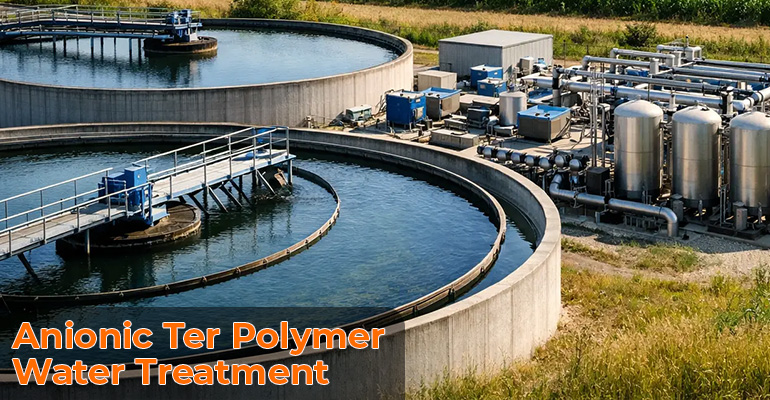
An Anionic Ter Polymer is a substance that has negative charged units and three distinct monomers in its chemical structure. This mix of three monomers gives the polymer many different chemical features when compared to a polymer that has just one monomer. This feature works well for a treatment solution that deals with minerals, tiny particles, in the water and different water conditions all at the same time...
POLYMAN-1240-A: Anionic Ter Polymer for Water Treatment
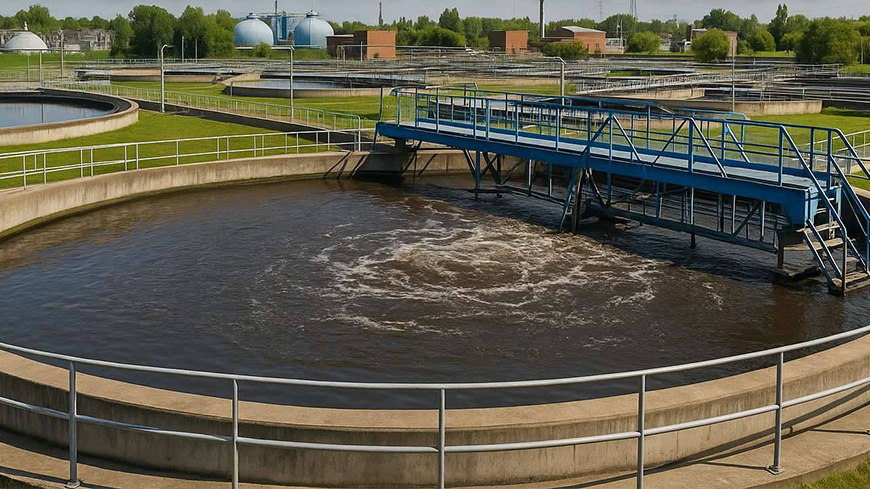 POLYMAN-1240-A is a specialized polymer designed for industrial water-treatment formulations where mineral deposition and particle management are important. It belongs to the ter-polymer family and provides formulators with an additional option when developing treatment programs for demanding water conditions. Maxwell Additives lists POLYMAN-1240-A as a Carboxylic Sulphonate Ter-Polymer.
What is a Carboxylic-Sulfonate Ter-Polymer – 1240-A?
POLYMAN-1240-A is a polymeric water-treatment chemical based on carboxylic and sulfonate functionality within a ter-polymer structure. A ter-polymer contains three different monomer components, allowing the resulting material to provide a broader combination of chemical characteristics than a polymer based on only one component. This makes the product useful for treatment formulations that need to manage more than one water-quality concern.
The term Carboxylic-Sulfonate Ter-Polymer describes the type of chemistry associated with POLYMAN-1240-A. In practical industrial use, such polymers are evaluated for their ability to influence the behavior of mineral particles and suspended matter in circulating water. The actual effectiveness depends on the water composition, treatment concentration, temperature, pH, hardness, and other chemicals present in the system.
A major reason polymer selection matters is that industrial water is rarely chemically simple. Calcium, magnesium, iron, manganese, zinc, and other dissolved or suspended materials may be present together. Their concentrations can change as water circulates, evaporates, or is replaced. A suitable polymer therefore needs to perform under the actual conditions rather than only under ideal laboratory conditions.
POLYMAN-1240-A can be considered when a treatment formulator needs a polymer capable of supporting deposit-control strategies while also contributing to dispersion. This makes it relevant to industrial water-treatment formulations where maintaining cleaner water and reducing unwanted mineral accumulation are important objectives.
The product can be evaluated for applications involving cooling-water systems, heat-transfer equipment, process-water circuits, and other industrial environments where mineral deposits and suspended solids can interfere with normal operation. The correct dosage should always be established through application-specific testing rather than using one fixed level for every system.
For companies looking for a Carboxylic-Sulfonate Ter-Polymer supplier in India, understanding the polymer’s chemistry is just as important as checking availability. Product consistency, technical information, formulation compatibility, and supply reliability can all influence the success of an industrial treatment program.
Understanding POLYMAN-1240-A from a Different Perspective
POLYMAN-1240-A can be viewed as a formulation-building component rather than simply a chemical added to water. This difference is important because industrial water treatment is usually a complete program involving several chemical and operational factors.
For example, a treatment formulator may need to consider water hardness, temperature, concentration cycles, pH, suspended solids, metal ions, and the presence of other treatment products. A polymer that performs well under one set of conditions may behave differently when the water chemistry changes.
The ter-polymer structure gives POLYMAN-1240-A a place in formulations where multiple performance requirements need to be considered together. Instead of selecting a material only by its chemical name, formulators can evaluate how it behaves against the specific minerals and particles found in their customer’s water.
Published testing from Maxwell Additives has compared POLYMAN-1240-A with other polymer types under different hardness conditions. That work indicates that polymer performance can change significantly as calcium concentration increases, highlighting why actual water chemistry should be considered during product selection.
This makes POLYMAN-1240-A particularly interesting for treatment developers who want to compare different polymer structures before finalizing a formulation. Laboratory screening can help identify a suitable concentration and determine compatibility with the other ingredients used in the treatment program.
Another practical point is that polymer performance should not be judged only by a single test. A formulation may need to perform over extended circulation, changing water concentration, temperature fluctuations, and varying mineral loads. A controlled trial therefore provides a more useful picture than relying only on theoretical expectations.
This approach can also help reduce unnecessary chemical consumption. When the appropriate dosage range is established through testing, users can avoid simply increasing chemical concentration whenever a water-quality problem appears. Instead, the treatment program can be adjusted according to measured operating conditions.
For an industrial user, the value of POLYMAN-1240-A is therefore connected not only with its polymer structure but also with how effectively it fits into the complete water-management strategy.
Features of POLYMAN-1240-A
1. Ter-Polymer Composition
POLYMAN-1240-A uses a ter-polymer structure that combines different functional characteristics within one polymeric material. This gives formulators an option for treatment programs where several water-quality challenges occur together. Its final performance depends on mineral concentration, temperature, pH, dosage, and interaction with other treatment ingredients.
2. Carboxylic-Sulfonate Chemistry
The carboxylic-sulfonate character of POLYMAN-1240-A makes it relevant to formulations designed for industrial deposit management. These functional groups can influence interactions with mineral particles and dissolved species in water. Application testing remains important because actual performance varies with hardness, suspended matter, concentration cycles, and complete formulation chemistry.
3. Dispersant Function
POLYMAN-1240-A can be evaluated when a treatment formulation needs to maintain better dispersion of unwanted particulate matter. By influencing particle interactions, the polymer may help reduce conditions that encourage accumulation on equipment surfaces. Suitable dosage and water chemistry must be established before selecting it for regular industrial operation.
4. Deposit-Control Support
Mineral deposits can become problematic when dissolved substances reach conditions that favor precipitation and surface accumulation. POLYMAN-1240-A can form part of a treatment strategy intended to influence this behavior. Its usefulness should be assessed against the particular mineral species, hardness level, operating temperature, and concentration conditions.
5. Adaptability to Industrial Conditions
Industrial water chemistry rarely remains completely constant during operation. Changes in evaporation, makeup water, temperature, and dissolved solids can affect treatment performance. POLYMAN-1240-A provides formulators with a polymer option that can be tested under these changing conditions to determine whether it fits the required treatment approach.
6. Suitable for Formulation Development
POLYMAN-1240-A can be incorporated into development studies where manufacturers compare different polymer technologies for water-treatment products. This allows formulators to examine dosage, dispersion, stability, and compatibility alongside other ingredients. Such testing helps identify whether the polymer provides the desired balance under the customer’s actual operating conditions.
7. Useful for Customized Treatment Programs
No two industrial water systems are exactly alike, so a universal dosage or formulation may not provide consistent results. POLYMAN-1240-A can be evaluated as part of a customized treatment program based on water analysis and process requirements. This supports a more application-focused approach to polymer selection.
Why Water Chemistry Matters When Using POLYMAN-1240-A
A polymer cannot be separated from the water environment in which it operates. The concentration of calcium, magnesium, iron, manganese, zinc, and other ions can change how a dispersant behaves. Temperature and pH can also influence mineral precipitation and polymer performance.
Calcium hardness is particularly important when assessing dispersant behavior. Maxwell Additives’ published testing found that POLYMAN-1240-A retained stronger iron-oxide dispersancy than the tested homopolymer under increasing calcium hardness conditions. This demonstrates why polymer comparisons should be made under realistic water conditions rather than relying on a generic product category alone.
This also explains why an experienced Carboxylic-Sulfonate Ter-Polymer manufacturer in India can be valuable to industrial customers. Product selection is only the first step. The user may also need information about handling, formulation compatibility, dosage evaluation, and testing methodology.
A simple laboratory screening program can compare different concentrations and observe how the polymer behaves with the customer’s actual water sample. If the initial results are positive, a controlled plant trial can provide additional information before the chemical becomes part of routine treatment.
 Benefits of POLYMAN-1240-A
1. Supports Mineral Deposit Management
POLYMAN-1240-A can contribute to treatment programs developed to control unwanted mineral accumulation. By influencing mineral-particle behavior, it gives formulators another tool for managing deposits that may interfere with industrial equipment. Performance should be confirmed using representative water samples and operating conditions before routine application.
2. Helps Improve Particle Dispersion
Suspended particles can become difficult to manage when they aggregate and settle on equipment surfaces. POLYMAN-1240-A can be evaluated for its dispersing contribution, helping treatment developers maintain better particle distribution. This can support cleaner operation when the selected concentration matches the water chemistry.
3. Useful for Cooling-Water Formulations
Cooling-water circuits experience continuous circulation, evaporation, concentration changes, and temperature variation. POLYMAN-1240-A can be considered when developing treatment formulations for these conditions. Proper testing helps determine whether its chemistry can provide the required deposit-management performance throughout the operating cycle.
4. Offers an Alternative Polymer Structure
Treatment developers may need to compare several polymer families before choosing a formulation. POLYMAN-1240-A offers a ter-polymer structure that can be assessed alongside homopolymers and copolymers. This broader comparison helps manufacturers select chemistry based on measured performance rather than relying solely on product classification.
5. Supports Dosage Optimization
The amount of polymer used can influence both treatment performance and operating cost. POLYMAN-1240-A can be tested across different concentrations to identify a practical dosage range. Such evaluation helps users avoid excessive chemical use while maintaining the level of performance required for their specific water system.
6. Helps Address More Than One Water Challenge
Industrial water may contain mineral-forming substances and suspended particles at the same time. A ter-polymer can be useful when a treatment formulation needs to consider both conditions. POLYMAN-1240-A provides a polymer option for developing a broader treatment strategy around the actual characteristics of the water.
7. Supports More Reliable Treatment Planning
Regular monitoring can show whether a water-treatment program is working as expected. POLYMAN-1240-A can be evaluated alongside water testing, deposit observations, and operating data. This allows treatment teams to make informed dosage adjustments and develop a more controlled approach to long-term industrial water management.
Conclusion
POLYMAN-1240-A is a Carboxylic-Sulfonate Ter-Polymer designed for consideration in industrial water-treatment formulations where mineral deposition and particulate dispersion need to be managed. Its ter-polymer structure gives treatment developers another chemistry to evaluate when designing products for demanding water conditions.
The most effective way to use this type of polymer is to consider the entire operating environment. Water hardness, pH, temperature, dissolved ions, suspended solids, dosage, and compatibility with other chemicals can all affect the final result.
For formulators and industrial users, laboratory evaluation followed by controlled application testing can provide a practical basis for selecting the right treatment concentration. This approach can improve confidence in the final formulation and help avoid unnecessary chemical consumption.
Businesses searching for Carboxylic-Sulfonate Ter-Polymer in India can therefore evaluate POLYMAN-1240-A not simply as another polymer, but as a potential component of a carefully designed water-treatment program.
Frequently Asked Questions
1. What is POLYMAN-1240-A used for?
POLYMAN-1240-A is used as a specialty polymer in industrial water-treatment formulations where mineral deposit management and particle dispersion are required. Its suitability depends on the water chemistry and the complete treatment formulation. Testing is recommended to determine the appropriate concentration for a particular application.
2. Is POLYMAN-1240-A a Carboxylic-Sulfonate Ter-Polymer?
Yes. POLYMAN-1240-A belongs to the Carboxylic-Sulfonate Ter-Polymer category. Its ter-polymer structure combines different functional characteristics that can be useful in industrial water-treatment formulations. The actual performance should be assessed according to the minerals, ions, temperature, pH, and other conditions present in the customer’s system.
3. Can POLYMAN-1240-A be used in cooling-water treatment?
It can be evaluated for cooling-water treatment where mineral deposits and suspended particles are concerned. Since cooling systems vary considerably in hardness, temperature, concentration, and operating cycles, users should conduct laboratory and field testing to establish whether the product meets their specific treatment requirements.
4. What affects the performance of POLYMAN-1240-A?
Water hardness, calcium concentration, pH, temperature, dissolved metals, suspended particles, dosage, and interaction with other chemicals can all influence polymer performance. This is why a treatment program should be evaluated using representative water conditions rather than selecting dosage solely from general application assumptions.
5. How should the correct dosage be selected?
There is no single dosage that is suitable for every industrial system. The appropriate concentration should be determined through laboratory screening and, where appropriate, a controlled plant trial. Water analysis and operating data can then be used to refine the treatment level.
6. What should I check before choosing a Carboxylic-Sulfonate Ter-Polymer manufacturer in India?
Customers should review product consistency, technical documentation, manufacturing capabilities, supply reliability, packaging, delivery schedules, and technical assistance. It is also useful to confirm that the supplier can provide information needed for formulation testing and application-specific evaluation.
7. Can POLYMAN-1240-A be mixed with other treatment chemicals?
It may be incorporated into a broader treatment formulation, but compatibility should be checked before commercial application. Other chemicals can influence polymer stability and performance. A complete formulation trial can help identify unwanted interactions and establish whether the combination remains suitable under actual operating conditions.
Related Posts