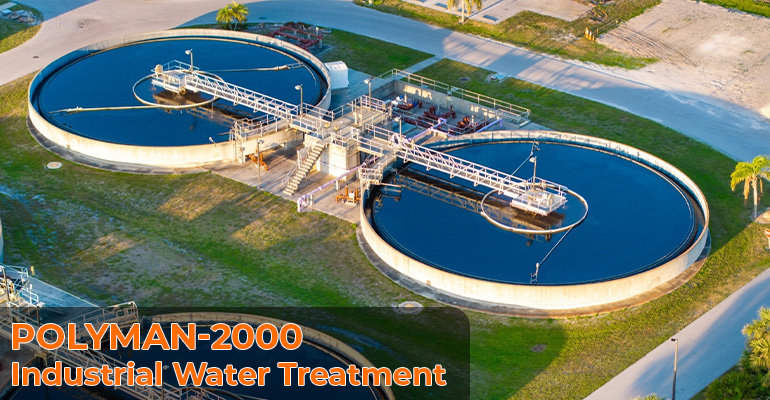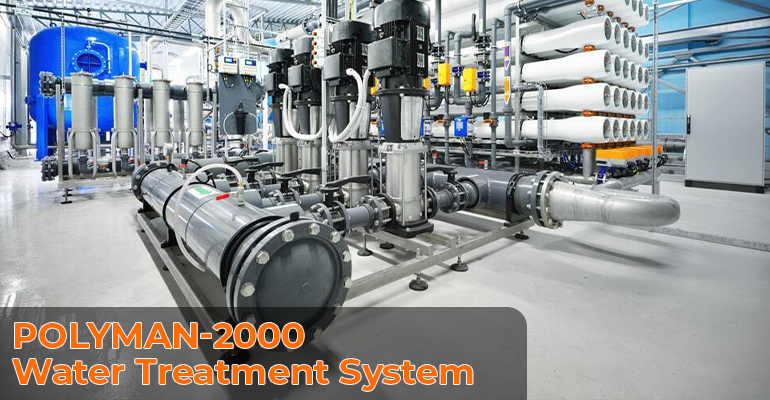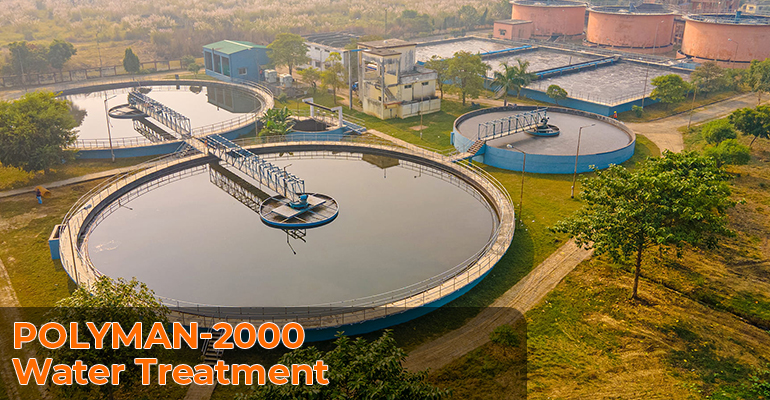
Poly Maleic Acid Homopolymer is one type of specialty polymer used in water-treatment formulations where mineral control and deposit management are important. POLYMAN-2000 belongs to this polymer category. Can be considered when a treatment formulation requires a polymaleic acid-based chemistry...
POLYMAN-2000: Effective Water Chemistry Management
 What is Polymaleic Acid POLYMAN-2000?
Polymaleic acid POLYMAN-2000 is a polymer-based water treatment chemical designed to help manage mineral deposits and unwanted particulate matter in industrial water systems. It belongs to the family of low-molecular-weight polymers derived from maleic acid and is valued for its ability to interact with mineral particles present in circulating water. Rather than allowing these particles to easily gather and form hard deposits, the polymer helps keep them dispersed so that the operating surfaces remain cleaner.
The performance of this material becomes particularly useful when water contains calcium, magnesium, iron, and other dissolved or suspended components that can create operational problems. As water moves through equipment, changes in temperature, concentration, and evaporation can encourage minerals to separate from the water. A suitable polymer program can help control this tendency and maintain more consistent system operation.
For industries searching for polymaleic acid India solutions, POLYMAN-2000 can be considered where polymeric deposit control is required. Its role is not simply to remove an existing deposit; instead, it can be incorporated into a treatment strategy intended to reduce the conditions that allow deposits and dispersed solids to interfere with equipment performance.
The chemical can be relevant to cooling-water circuits, industrial process systems, heat-transfer equipment, and other applications where water quality changes during operation. Its suitability depends on the chemistry of the individual system, dosage requirements, operating temperature, and the type and concentration of minerals involved. Therefore, technical evaluation is important before selecting a treatment program.
For buyers comparing polymaleic acid manufacturers, product consistency is another important consideration. Industrial water treatment requires predictable performance because fluctuations in product quality can affect dosing and overall treatment results. A reliable supply program therefore needs to consider technical specifications, application requirements, packaging, handling, and compatibility with other chemicals used in the same system.
POLYMAN-2000: Supporting Effective Water Chemistry and Deposit Control in Industrial Systems
The practical value of POLYMAN-2000 lies in how it supports water chemistry management rather than functioning as a one-purpose cleaning agent. Industrial water is rarely chemically simple. It can contain several dissolved salts, suspended particles, corrosion products, and other substances that behave differently as operating conditions change.
A polymaleic-acid-based polymer can help influence the behavior of these materials in water. When mineral particles begin forming or growing, appropriate polymer treatment can interfere with their tendency to develop into large, strongly attached deposits. The result can be easier control of particulate matter within a properly designed treatment program.
This approach can be especially useful in equipment where water continuously circulates. Heat exchangers, cooling loops, condensers, and process-water lines can experience repeated concentration cycles. As water is reused, certain dissolved substances may become increasingly concentrated. Without suitable control, this can increase the possibility of mineral deposition.
POLYMAN-2000 can therefore form part of a broader strategy involving water analysis, controlled chemical dosing, filtration, blowdown, corrosion management, and regular monitoring. The polymer should not be viewed as a replacement for every part of a treatment program. Its purpose is to address a specific area of water chemistry where polymeric control can provide value.
This also explains why industries evaluating polymaleic acid suppliers should look beyond product availability alone. Application knowledge matters because the same chemical may behave differently under different water conditions. Understanding hardness, alkalinity, temperature, concentration cycles, and the presence of other treatment chemicals can help determine whether a product is suitable for a particular process.
Another practical consideration is operating consistency. A treatment program needs to remain stable over time, especially in systems that operate continuously. Consistent chemical quality allows users to maintain their intended dosing strategy without unnecessary adjustments caused by variations in the supplied material.
For customers looking at polymaleic acid manufacturers in India, local availability can also simplify procurement and supply planning. Shorter supply chains may help industries maintain regular inventory, coordinate repeat orders, and respond more quickly to production requirements.
Ultimately, POLYMAN-2000 should be selected according to the actual conditions of the application. Laboratory testing, compatibility checks, and controlled plant trials can provide useful information before full-scale implementation.
Features of Polymaleic Acid POLYMAN-2000
1. Deposit Control Support
POLYMAN-2000 provides polymeric support for controlling mineral deposition in industrial water systems. Its chemical structure allows it to interact with developing mineral particles and influence their growth behavior. This makes the material useful where unwanted deposits could reduce heat transfer, restrict flow passages, or increase equipment maintenance requirements.
2. Dispersion Assistance
The polymer can help maintain fine mineral particles in a more manageable dispersed state instead of allowing them to rapidly gather into larger deposits. This characteristic can support cleaner operating surfaces and improve the overall handling of suspended material when incorporated into a properly balanced water-treatment program.
3. Suitable for Circulating Water Programs
POLYMAN-2000 can be considered for treatment programs involving continuously circulating industrial water. Such systems experience repeated heating, cooling, evaporation, and concentration changes. A polymeric additive can help manage the resulting mineral behavior and contribute to more stable operating conditions when dosing is selected according to system chemistry.
4. Polymer-Based Water Treatment
Unlike a simple mineral acid or cleaning agent, POLYMAN-2000 works through polymeric action within the water-treatment process. This makes it suitable for preventive treatment strategies where controlling particle behavior is important. Its application can be coordinated with other chemicals depending on the water composition and equipment requirements.
5. Support for Heat-Transfer Equipment
Mineral deposits on heat-transfer surfaces can act as an unwanted insulating layer and may affect equipment efficiency. POLYMAN-2000 can support deposit-management programs intended for such environments. Keeping mineral growth under control can help operators maintain more predictable equipment performance and reduce the frequency of deposit-related intervention.
6. Compatibility with Treatment Programs
POLYMAN-2000 can be incorporated into broader chemical treatment systems rather than being considered in isolation. Its use may be combined with other water-treatment products selected for corrosion, microbiological control, or additional deposit management. Compatibility should always be confirmed under the actual operating conditions before routine use.
7. Consistent Industrial Application
A polymer used in industrial treatment needs predictable behavior from batch to batch. POLYMAN-2000 is intended for controlled chemical application where dosing and monitoring are part of routine operations. Consistency can make it easier for plant teams to establish treatment practices and maintain the desired level of water-quality control.
How to Evaluate Polymaleic Acid POLYMAN-2000 for Application-Specific Water Treatment
Choosing a water-treatment polymer is not only about finding a chemical that can control deposits. The real question is whether the selected material fits the chemistry and operating pattern of the entire system. Two plants may use similar equipment but require different treatment approaches because their incoming water, temperatures, concentration cycles, and mineral levels are not identical.
Polymaleic acid POLYMAN-2000 can be evaluated as part of this application-specific approach. For example, a cooling circuit operating with hard water may experience a different deposit risk from a process system supplied with comparatively soft water. Likewise, a plant with frequent water replacement may behave differently from a closed loop where the same water circulates for extended periods.
A useful evaluation can begin with water analysis. Calcium hardness, magnesium, alkalinity, conductivity, pH, temperature, and suspended solids can provide valuable information about the conditions under which mineral deposits may develop. Reviewing these parameters alongside operating data gives technical teams a clearer picture of the role a polymer should play.
Dosing strategy is equally important. Using more chemical does not automatically mean better performance. Excessive or poorly controlled dosing can create unnecessary chemical consumption, while insufficient treatment may fail to provide the expected deposit-control effect. The appropriate dosage should therefore be determined through technical assessment and, where appropriate, plant trials.
Another important point is the relationship between deposit control and maintenance planning. When mineral accumulation is better managed, operators may be able to reduce the frequency of interventions associated with heavily fouled surfaces. However, routine inspection remains necessary because water chemistry can change over time.
For procurement teams, this broader viewpoint is valuable when comparing polymaleic acid suppliers. A supplier should be assessed on technical consistency, documentation, supply reliability, packaging, and the ability to provide material appropriate to the intended application.
 Benefits of Polymaleic Acid POLYMAN-2000
1. Helps Manage Mineral Deposits
POLYMAN-2000 can support treatment programs aimed at reducing unwanted mineral accumulation on industrial equipment. Better control of deposit formation can help keep operating surfaces more manageable, particularly in systems where hardness and concentration cycles create recurring fouling concerns.
2. Supports Stable Heat Transfer
When mineral deposits accumulate on heat-transfer surfaces, thermal performance may gradually become less consistent. Using an appropriate polymer treatment can help manage this risk. POLYMAN-2000 may contribute to maintaining cleaner surfaces, supporting dependable heat exchange during routine plant operation.
3. Can Reduce Deposit-Related Maintenance Pressure
Recurring deposits often require inspection, cleaning, and occasional equipment intervention. A preventive polymer approach can help reduce the conditions that encourage heavy accumulation. This may support more predictable maintenance planning and reduce the disruption caused by frequent deposit-related cleaning activities.
4. Improves Control of Suspended Mineral Matter
Fine particles can become difficult to manage when they are allowed to gather or attach to equipment surfaces. POLYMAN-2000 can assist with dispersive control within a suitable treatment system, helping operators manage mineral matter more effectively and maintain better control over circulating water quality.
5. Supports Continuous Treatment Strategies
POLYMAN-2000 is suitable for consideration in ongoing water-treatment programs rather than only occasional cleaning operations. Regular monitoring and controlled dosing can provide a structured approach to deposit management, helping plant personnel respond to changing water conditions before they develop into larger operational concerns.
6. Helps Optimize Chemical Management
A properly selected polymer can make a water-treatment program more targeted. Instead of relying entirely on reactive cleaning after deposits appear, operators can incorporate deposit-control chemistry into routine management. This can improve chemical planning when dosing is established through water analysis and operating experience.
7. Useful for Different Industrial Water Conditions
Industrial water quality can vary significantly between facilities, and polymer treatment needs to be assessed accordingly. POLYMAN-2000 can be considered across applications where mineral-control requirements exist, subject to compatibility testing, dosage evaluation, and the specific characteristics of the operating water.
Conclusion
Polymaleic acid POLYMAN-2000 is a polymeric water-treatment material that can support industrial programs focused on mineral deposit and particulate control. Its value comes from helping influence the behavior of mineral matter before it becomes a serious operational problem.
For industries considering polymaleic acid manufacturers in India, the selection process should include more than product specifications. Water chemistry, equipment type, operating temperature, concentration cycles, dosing requirements, and compatibility with existing treatment chemicals all deserve attention.
Frequently Asked Questions
1. What is POLYMAN-2000 used for?
POLYMAN-2000 is a polymeric water-treatment chemical used to support mineral deposit and particulate control in suitable industrial water systems. Its application can be considered in cooling circuits, heat-transfer equipment, and process-water systems where mineral accumulation is a concern. The exact use and dosage should be established according to water chemistry and operating conditions.
2. Is POLYMAN-2000 suitable for cooling-water treatment?
It can be considered for cooling-water treatment where polymeric control of mineral deposits is required. Cooling systems can experience concentration changes because of evaporation and repeated circulation. A technical evaluation can determine whether POLYMAN-2000 fits the system and how it should be incorporated with other treatment chemicals.
3. How is the correct dosage of POLYMAN-2000 determined?
Dosage should not be selected only from a general recommendation because every industrial water system has different chemistry. Factors such as hardness, alkalinity, temperature, concentration cycles, and other chemicals influence performance. Laboratory testing or controlled plant trials can help establish an appropriate treatment level.
4. Can POLYMAN-2000 be used with other water-treatment chemicals?
Potentially, but compatibility should be checked before combining it with other products. Industrial treatment programs may contain corrosion-control chemicals, microbiological treatments, and additional deposit-control materials. Technical evaluation helps confirm that the complete chemical program works together without creating unwanted interactions.
5. What should buyers check when selecting polymaleic acid manufacturers?
Buyers should review product consistency, technical specifications, quality documentation, packaging, supply reliability, and application support. It is also useful to understand whether the material is appropriate for the intended water chemistry. Comparing polymaleic acid manufacturers on these practical factors can help support a more dependable procurement decision.
6. Can POLYMAN-2000 completely remove existing scale?
A polymeric deposit-control product should not automatically be treated as a replacement for a dedicated descaling or cleaning chemical. Its primary role is generally associated with managing mineral deposition and particle behavior within a treatment program. Existing heavy scale may require a separate cleaning procedure selected according to the deposit type.
7. How should POLYMAN-2000 be stored and handled?
Storage and handling should follow the supplier’s current technical and safety documentation. Containers should remain properly closed and protected from unsuitable environmental conditions. Before routine use, users should review the product’s safety data sheet, recommended handling practices, storage requirements, and applicable workplace procedures.
Related Posts