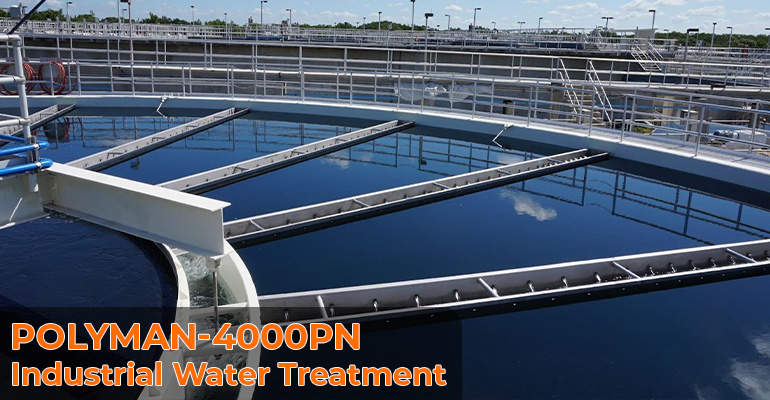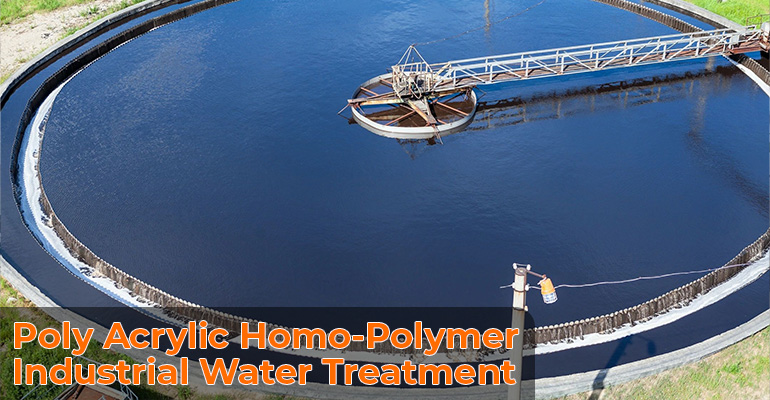

Industrial water systems face issues. Hardness, dissolved minerals, particles that float in the water changes in temperature and other conditions can slowly hurt equipment and the way things work. This is where chemicals made from polymers help. Poly Acrylic Homo-Polymer is one of these types of polymers used when keeping minerals spread out and stopping scale from forming is important...
POLYMAN-4000PN Acrylic Homopolymer Guide

Acrylic homopolymers are widely used in industrial formulations where controlling suspended particles, mineral deposits, and formulation stability is important. Among these materials, POLYMAN-4000PN is an acrylic homo-polymer designed for applications where a dependable dispersing and scale-control solution is required. It is a partially neutralized polymer that can fit into different water-based industrial formulations.
The information below has been written as new blog content with a different structure and wording, rather than reproducing the existing Maxwell Additives product-page or blog language. Product characteristics have been cross-checked against the available Maxwell Additives information.
What is Acrylic Homopolymer-Homo-Polymers – POLYMAN-4000PN?
Acrylic Homopolymer-Homo-Polymers are polymers produced from acrylic-based monomers and are valued for their ability to manage dispersed materials in industrial systems. POLYMAN-4000PN is a partially neutralized acrylic homopolymer supplied in liquid form. Its low molecular weight makes it suitable for formulations where mineral particles need to remain controlled instead of collecting together and forming unwanted deposits.
In practical use, POLYMAN-4000PN can support industrial water treatment, textile processing, detergent formulations, and other water-based systems. Its performance becomes particularly useful when calcium, magnesium, or other mineral ions are present because uncontrolled mineral interaction can affect equipment, processing quality, and product consistency. The material is also described as water-soluble and non-phosphorus, making it useful for formulations where phosphorus-free chemistry is preferred.
For companies evaluating Acrylic Homopolymer manufacturer options, understanding the polymer’s actual operating role is more useful than simply comparing product names. The right selection depends on water chemistry, temperature, hardness, dosage, formulation composition, and the desired level of dispersion or scale control.
Features of Acrylic Homopolymer-Homo-Polymers – POLYMAN-4000PN
1. Partially Neutralized Polymer
POLYMAN-4000PN is a partially neutralized acrylic homopolymer supplied as a liquid material. This form can make it convenient for industrial dosing and formulation work. Its polymeric structure allows it to interact with dispersed mineral matter and support better control in water-based systems where particle aggregation may otherwise become a processing concern.
2. Low Molecular Weight
The relatively low molecular weight of POLYMAN-4000PN contributes to its usefulness as a dispersing material. Instead of relying on heavy polymer structures, the product is designed for applications where mineral particles need to remain manageable within the liquid phase. This characteristic can support consistent formulation behavior across suitable industrial operating conditions.
3. Broad Formulation Compatibility
Acrylic-based polymers can be incorporated into different water-based formulations when their chemistry matches the surrounding ingredients. POLYMAN-4000PN is suitable for applications spanning water treatment, textile processing, and detergent formulations. This gives formulators flexibility when developing products that require particle control without introducing a completely different chemical system.
4. Water Solubility
Water solubility is an important practical feature for industrial chemicals used in aqueous processes. POLYMAN-4000PN is reported to be soluble in water in all proportions, which can simplify preparation and dosing. This property allows users to incorporate the material into water-based systems without dealing with insoluble polymer particles during normal formulation.
5. Non-Phosphorus Chemistry
POLYMAN-4000PN is a non-phosphorus polymer, which can be advantageous when manufacturers are developing formulations where phosphorus-containing ingredients need to be reduced or avoided. This characteristic gives the material a distinct position among water-treatment and formulation additives and may help companies design chemistry around specific environmental or formulation requirements.
6. Non-Foaming Character
Excessive foam can create practical difficulties in industrial processing, particularly during circulation, cleaning, mixing, and dosing. POLYMAN-4000PN is described as a non-foaming dispersant, allowing it to be considered for processes where uncontrolled foam is undesirable. This can help maintain smoother operation when the overall formulation is properly designed.
7. Stability in Demanding Conditions
Industrial systems do not always operate under mild conditions. Temperature, hardness, oxidizing chemicals, and changing water chemistry can influence additive performance. POLYMAN-4000PN is reported to offer thermal stability and stability toward oxidizing agents such as chlorine, making it suitable for consideration in demanding applications where chemical durability matters.
Why Acrylic Homopolymer Can Be Useful in Modern Industrial Formulations
Industrial processes are becoming more focused on efficiency, controlled chemical consumption, and reliable operation. This has increased interest in functional polymers that can perform specific supporting roles without unnecessarily complicating a formulation.
Acrylic homopolymers are relevant because they can help manage the behavior of mineral particles and deposits in water-based systems. Their value is not limited to one industry. Depending on the formulation, they can contribute to water treatment, cleaning products, textile processing, and other industrial applications.
POLYMAN-4000PN is particularly suited to applications where a partially neutralized, low-molecular-weight acrylic polymer is required. Its reported combination of water solubility, non-phosphorus chemistry, non-foaming behavior, and stability characteristics makes it a practical material for evaluation in appropriate formulations.
Benefits of Acrylic Homopolymer-Homo-Polymers – POLYMAN-4000PN
1. Helps Control Mineral Deposits
POLYMAN-4000PN can help manage mineral behavior in industrial water systems by supporting dispersion and scale-control mechanisms. This can be useful in processes where calcium and other hardness-related minerals may gradually contribute to unwanted deposits. Better control can help maintain smoother operation and reduce mineral-related process interruptions.
2. Supports Industrial Water Treatment
Water-treatment systems often need additives that can work alongside other treatment chemicals. POLYMAN-4000PN can be considered as part of a treatment program where dispersion and scale management are required. Its polymeric action provides an additional way to manage suspended mineral matter under appropriate process conditions.
3. Useful in Textile Processing
Textile wet processing depends heavily on water quality and controlled chemical conditions. Mineral hardness can interfere with different stages of processing. POLYMAN-4000PN can help manage these effects by supporting dispersion and reducing the tendency of mineral matter to create processing problems, helping manufacturers maintain more consistent production conditions.
4. Suitable for Detergent Formulations
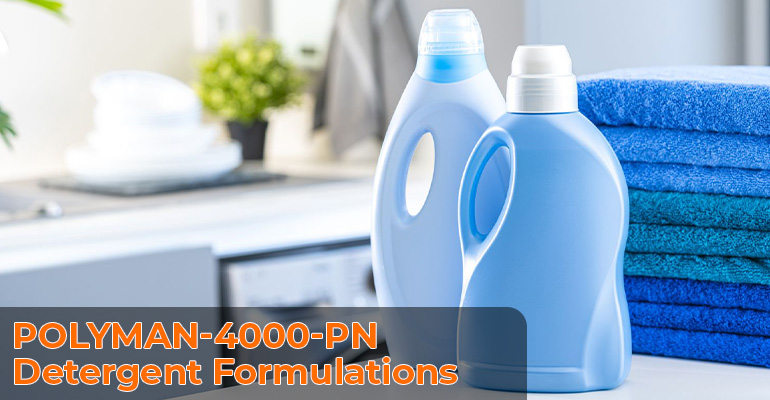
Detergent manufacturers can use acrylic homopolymer chemistry when mineral control and water-softening support are needed. POLYMAN-4000PN can be incorporated into suitable detergent systems as a polymeric additive. Its non-phosphorus nature can also be useful when developing formulations that aim to limit conventional phosphorus-containing builder chemistry.
5. Supports Better Process Consistency
In industrial manufacturing, consistency is often as important as individual product performance. Changes in water hardness or mineral concentration can affect different batches differently. Using a suitable polymer can help make mineral behavior more predictable, supporting more stable processing when the dosage and formulation are properly optimized.
6. Works Across Different Industrial Uses
One advantage of POLYMAN-4000PN is its relevance to more than one application area. Its use in water treatment, textile processing, and detergent formulations gives manufacturers flexibility when evaluating a polymer for different production requirements. This versatility can simplify chemical selection for businesses serving multiple industrial markets.
7. Can Support Phosphorus-Reduction Goals
Companies looking to reduce phosphorus-containing components may consider non-phosphorus polymer alternatives as part of their formulation strategy. POLYMAN-4000PN provides a polymer-based option for applications requiring dispersion and scale management without adding phosphorus to the formulation. The final environmental suitability should always be assessed for the complete formulation and process.
Conclusion
POLYMAN-4000PN is an acrylic homopolymer designed to support mineral dispersion and scale-control requirements across several industrial applications. Its partially neutralized form, water solubility, low molecular weight, and non-phosphorus composition make it different from many conventional formulation additives.
From industrial water treatment to textile wet processing and detergent manufacturing, its usefulness depends on the conditions in which it is applied. Proper dosage selection, compatibility testing, and process evaluation remain important before commercial use.
For companies searching for an Acrylic Homopolymer manufacturer or comparing Polyacrylic Acid manufacturers, the focus should be on consistent quality, application suitability, technical information, and reliable supply rather than simply selecting a product based on its name.
FAQs
1. What is POLYMAN-4000PN used for?
POLYMAN-4000PN is an acrylic homopolymer used in suitable industrial formulations for dispersion and mineral scale control. It can be considered for applications including industrial water treatment, textile wet processing, and detergent formulations. The exact application and dosage should be determined according to water chemistry, formulation composition, temperature, and other operating conditions.
2. Is POLYMAN-4000PN a Polyacrylic Acid product?
POLYMAN-4000PN is an acrylic homopolymer and is commonly associated with polyacrylic acid-based polymer chemistry. It is supplied as a partially neutralized material. Customers looking for Polyacrylic Acid suppliers should confirm the exact grade, specifications, and intended application before selecting a product.
3. Can POLYMAN-4000PN be used in water treatment?
Yes, it can be considered for industrial water-treatment applications where dispersion and scale control are required. Its suitability depends on the specific water chemistry and treatment program. Testing under actual operating conditions is recommended before deciding on the final dosage and treatment combination.
4. Is POLYMAN-4000PN suitable for detergent formulations?
POLYMAN-4000PN can be used in appropriate detergent formulations where polymeric support for mineral control and water-softening performance is required. Formulators should evaluate compatibility with surfactants, builders, enzymes, fragrances, and other ingredients before commercial production.
5. Does POLYMAN-4000PN contain phosphorus?
POLYMAN-4000PN is described as a non-phosphorus polymer. This can make it relevant to formulations where phosphorus-containing ingredients are being reduced or avoided. However, manufacturers should evaluate the complete formulation rather than judging environmental performance from one ingredient alone.
6. How should the correct dosage of POLYMAN-4000PN be selected?
There is no universal dosage that works for every application. The appropriate quantity depends on factors such as water hardness, mineral concentration, temperature, process conditions, and the desired result. Maxwell Additives lists commonly used doses in the range of 1–10 ppm, while also noting that dosage varies with application conditions.
7. Why should I choose Maxwell Additives for POLYMAN-4000PN?
Maxwell Additives PVT LTD provides POLYMAN-4000PN for industrial applications and publishes technical information covering its physical characteristics, applications, handling, storage, and packaging. Buyers can use these details as a starting point when evaluating whether the product matches their specific process requirements.
Related Posts