Benzalkonium Chloride, commonly known as BKC, is a widely used quaternary ammonium compound recognized for its antimicrobial properties and versatile applications. Its ability to control unwanted microorganisms makes it an important ingredient in various formulations where cleanliness and protection are required...
Quaternary ammonium compounds: Industrial Uses and Safety Guide
Can be added to surface active chemical mixtures, conditioning agents, or phase transfer catalysts in chemical mixtures. Can be used as disinfectants.
Can be added to surface active chemical mixtures to give chemical and antimicrobial properties.
Used in cleaning, food processing, cleaning in healthcare and education, and some water treatments.
May be found in other algal control agents, textile treatments and surface treatments.
Effectiveness will depend on composition, concentration, formulation and environmental conditions.
If you understand what types of ammonium compounds there are, what properties they have, what they can be used for, their benefits and safety considerations, choosing the right compound for application will be easier.
Summary of ammonium compounds. Contains key properties, key chemical properties, key industrial applications, disinfectant properties, key points in food industry (algaecide), and considerations in choosing a manufacturer of Quaternary Ammonium compounds.
Quaternary Ammonium Compounds
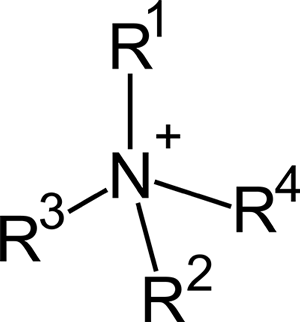
Nitrogen with 4 substituents. Positive charged nitrogen with a negatively charged counter ion.
General Formula
[ N R 4+]XWhere:
- N = Nitrogen
- R = Organic group attached to the nitrogen
- X = Negative counter ion
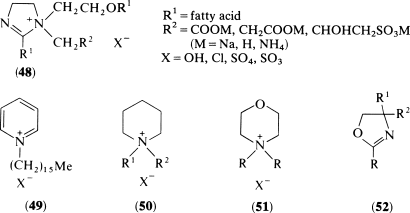
Types
Depending on the R group, physical and chemical properties will vary. If the quaternary ammonium compound contains a hydrocarbon chain, the properties will change. Similarly, interaction with microbes and surfaces will vary.
Industrial/Commercial Applications.
There are 2 types of ammonium compounds in products.
Disinfectants, Sanitisers, Cleaning agents, Algaecides, Fabric softening agents and some chemicals.
Variation
Depending on the ammonium compound used, different properties and applications will occur.
The correct type of quaternary ammonium compound will depend on the configuration, formulation and application.
Understanding Quaternary Ammonium Salts
Quaternary ammonium salts are compounds containing quaternary ammonium cations and corresponding anions.
The positively charged nitrogen centre is an important characteristic of these chemicals.
Common counterions include chloride and bromide, although other counterions may also be present.
The term quaternary ammonium salts covers many different chemical substances.
Some products contain long alkyl chains that contribute to surface-active properties.
Other compounds have different structures and may be used for specialised chemical functions.
Important Characteristics of Quaternary Ammonium Salts
They contain a positively charged quaternary nitrogen centre.
They are associated with a negatively charged counterion.
Their properties depend on the organic groups attached to nitrogen.
Some exhibit cationic surfactant behaviour.
Certain compounds have antimicrobial activity.
Solubility and compatibility vary between products.
Different formulations are suitable for different industrial applications.
The chemical identity of the compound should be considered before selecting it for an industrial process.
Key properties of Quaternary Ammonium Salts.
Contain ammonium ions and negative ions.
Positive charge on central nitrogen atom.
Common negative ions include chloride, bromide. These are not the only possible negative ions.
Variation
Some contain an alkyl chain within the ammonium salt. This means they are surface active. Others have a certain shape to allow chemical properties.
Key Properties
- Nitrogen.
- Counter ion.
- Depending on the groups attached to the nitrogen atoms, different properties will be shown.
- Some will have surface properties.
- Certain properties.
- Solubility and compatibility will be important.
- Depending on the recipe, certain compounds will be best in products.
Consider what chemical you would like to use in order to choose the best compound.
Chemical Properties
The function of the ammonium compounds will depend on their chemical properties.
Molecular Structure
Must contain a nitrogen atom and 4 different substituents.
Substituents may be alkyl, aryl or other organic.
Depending on the molecular structure, solubility, surface activity and compatibility with materials will vary.
Positive Charge
Central nitrogen has a charge. Depending on the compound, interaction with surfaces can occur. This is important for functionality and surface treatment.
Length of hydrocarbon chain
Depending on chain length or ordering, surface activity, solubility and antimicrobial properties can change. Changing the shape of the hydrocarbon chains can have effects on each of these properties.
Solubility
Solubility will depend on the structure and formulation. Some quaternary ammonium salts will be very soluble in water. Others may be very insoluble in water and will require a certain formulation.
Surface Activity
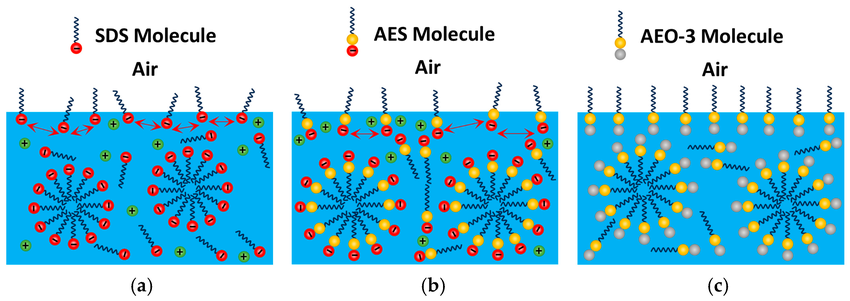
Surface Tension. Quaternary ammonium compounds can change the surface tension of materials. Quaternary ammonium compounds can interact with interfaces of materials. Quaternary ammonium compounds can be used in cleaning and conditioning applications, along with other chemical applications. They are known to be effective in cleaning applications.
Chemical Compatibility
Quaternary ammonium compounds may interact with chemicals within formulations. For example, some disinfectants containing quaternary ammonium compounds may lose their activity in the presence of certain anionic surfactants. Compatibility should be considered when combining products. It has been noted that chemical compatibility is very important.
Thermal Stability
Thermal stability and performance may be affected. Appropriate temperatures will depend on the chemical and formulation.
pH
Despite having a charged central nitrogen atom, pH may affect formulation stability, interaction with surfaces and antimicrobial activity.
Concentration
Depending on concentration of chemical, effects may be seen. Different concentrations may be required depending on application. Appropriate conditions of use for a product should be chosen depending on information from data sheets and relevant legislation.
Variation
Depending on chemical composition and application, quaternary ammonium compounds can be divided into different types. Quaternary ammonium compounds have a wide variety of applications.
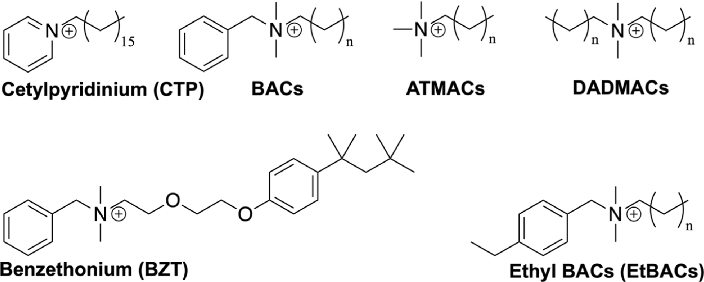 Benzalkonium Chloride
A variety of Chlorides. Can be used in a variety of disinfectants, preservatives and specialist chemical formulations. Due to variation in chain distribution, quantity and formulation, properties will vary.
Didecyldimethylammonium Chloride (DDAC)
This is an ammonium compound. May be used in some disinfectants and antimicrobials. Whether it is appropriate for this application will depend on product registration. Whether it is required for the application.
Alkyl Dimethyl Benzyl Ammonium Chloride (ADBAC)
Contains a variety of ammonium compounds depending on chain length. Some formulations of ADBAC may be appropriate for surface disinfecting and sanitising applications.
Alkyl Dimethyl Ethylbenzyl Ammonium Chloride
Products may be formulated into registered disinfectant products. Can be combined with products in some registered disinfectants.
Cetyltrimethylammonium Bromide (CTAB)
CTAB is a surfactant. CTAB can be provided for research laboratories, research and some industrial applications. CTAB may be used in applications where surface activity and micelle formation occurs. The applications of CTAB and safety issues involved are different to disinfectant applications.
Other specialist Quaternary Ammonium Salts.
Some quaternary ammonium salts may be used in synthesis reactions, phase transfer catalysis, material processing and specialist formulations. They must be assessed to determine whether they will have activity, or whether activity is encouraged depending on the chemical structure. Properties will be specific to the chemical structure.
Function
Depending on the structure, these chemicals can have many functions. In formulation, QACs may be ingredients in products. Or, they may be one of many surfactants in one of many specialist chemical formulations. It is very interesting to see what these chemicals can do.
Interactions with Microbial Surfaces
As microbial surfaces have charges, charges in the chemical (such as in ammonium compounds) may be attracted to these. This may increase the effectiveness of the compound.
Membrane Disruption
Several quaternary ammonium compounds contain lipids. Under suitable conditions, interactions can occur with cell membranes containing lipids. This disrupts organisation and function of the cell membranes, disrupting cellular processes. The activity will depend on micro formulation, concentration and exposure conditions.
Surface Activity
As these compounds contain both charges and hydrophobic components, some quaternary ammonium compounds may accumulate at interfaces. This is useful in some cleaning and surfactant applications.
Adsorption
Some quaternary ammonium compounds may adsorb onto charged surfaces.
Phase Transfer
A few quaternary ammonium salts can be used as phase transfer catalysts. This helps chemical reactions occur between chemicals in different phases. This application is different to disinfectant applications.
Quaternary Ammonium Disinfectants
Quaternary ammonium compounds are used as disinfectants and antimicrobial agents in quaternary ammonium disinfectants. They are suitable for use in cleaning within institutions. I use these in cleaning.
Following the instructions, the ingredients may be able to kill germs on surfaces.
Applications
Quaternary ammonium disinfectants may be used in:
- Buildings.
- Industrial sites.
- Cleaning.
- Healthcare environments (approved).
- Food processing sites.
- Equipment sanitisation.
- Disinfection of selected non-surfaces. It is great to have these in healthcare environments.
Approved applications will depend on the product.
May not be suitable for a surface or area.
Considerations for Effectiveness
Effectiveness of quaternary ammonium disinfectants may be affected by:
- Chemical.
- Concentration.
- Formulation.
- Surface.
- Presence of matter.
- Hardness of water.
- Exposure time.
- Temperature.
- Target microorganism.
- Compatibility with cleaning chemicals.
May be less effective in presence of dirt and matter.
Disinfectants may need to be cleaned before use.
Apply the product to the surface and leave for the time indicated on the product.
Limitations
Quaternary Ammonium Disinfectants may only kill some germs.
Commonly purchased QACs may be active against bacterial and enveloped viruses (if used at full strength and as instructed by manufacturer).
However, quaternary ammonium disinfectants may not be active against spores, mycobacteria or some non-enveloped viruses. In this case, it may be necessary to use a different product. It is important to know which types of microorganisms you wish to kill, and what the product states it can kill.
Industrial Applications of Quaternary Ammonium Compound Disinfectants
Quaternary Ammonium Compound Disinfectants (QACs)
May be applied to areas at risk of microbial contamination.
Sanitising Surfaces
Using some disinfectants, non-surfaces can be sanitised.
These include but are not limited to: work surfaces, floors and other surfaces on label.
Sanitising Equipment
Applying the correct disinfectant formulation to equipment surfaces.
Consider how the equipment is structured and the correct method of cleaning.
Institutional Sanitisation
A few organisations use Quaternary Ammonium Disinfectants.
Industrial Hygiene
Disinfectant may be used in factories to make premises cleaner. Approved disinfectants.
Considerations
Consider:
- Composition.
- Approved uses.
- Targeted germs.
- Dilution.
- Contact time.
- Compatibility with surface.
- Cleaning required.
- Rinsing required.
- Safety information.
- Regulations.
Not every disinfectant containing ammonium compounds will be suitable for this application.
Use of QACs in Food Industry
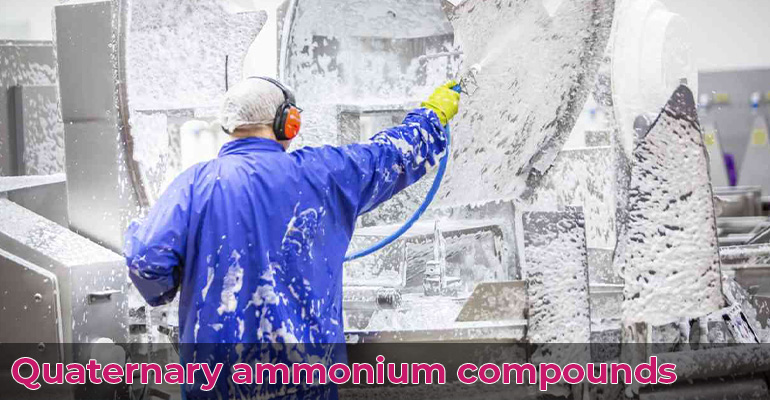
Quaternary ammonium compounds are mainly used for surface sanitisation in food processing.
Good hygiene procedures should be in place in food factories to reduce risk of contamination.
Some disinfectants/sanitisers containing ammonium compounds may be used on surfaces of food processing equipment. Ensure that the product is approved and follows regulations.
Equipment in Food Processing
Some products containing QACs may be approved to sanitise equipment surfaces in food processing.
Ensure product is appropriate for this purpose.
Food Contact Surface
Some sanitisers are allowed to be used on food contact surfaces.
Strength, preparation, contact time, drainage time and rinsing may depend on product and location. Not all quaternary ammonium disinfectants may be approved to be used on food contact surfaces.
Non Food Contact Surfaces
Some QAC products may be used on non-food contact surfaces. For example, floors, walls and other suitable locations.
Food & Drink Manufacturing
Products suitable for keeping food and drink manufacturing areas clean.
Considerations for Food Safety
Consider:
- Approved for use in food processing locations.
- Approved strength of chemical.
- Contact time.
- Limits on food contact surfaces.
- Rinsing required.
- Residue.
- Compatibility with equipment.
- Staff safety.
- Food safety regulations.
QAC Residues in Food Processing
Residues may remain on surfaces if sanitation chemicals are used incorrectly.
Residue management is particularly important where surfaces may contact food.
Facilities should follow validated sanitation procedures and applicable residue requirements.
QACs should not be added directly to food unless a specific substance and use are expressly authorised by the relevant regulations.
Conclusion
Quaternary ammonium compounds are a broad group of industrial chemicals with important applications in sanitation, cleaning, water treatment, textile processing and specialty chemical manufacturing.
Their chemical structure, particularly the positively charged nitrogen centre, influences how they interact with surfaces, particles and other materials.
Certain quaternary ammonium salts are used as active ingredients in disinfectants and sanitizers.
Others are used in algaecides, surfactant formulations, conditioning products and specialty chemical processes.
However, different compounds have different performance characteristics and regulatory requirements.
Industrial buyers should review product specifications, chemical compatibility, safety documentation and intended applications before selecting a QAC product.
Choosing a suitable Quaternary Ammonium Compound Manufacturer can help businesses obtain chemicals that meet their technical and operational requirements.
Explore our specialty chemical products or contact our team to discuss your product specifications, application requirements and chemical supply needs.
Image 6: Quaternary Ammonium Compound Manufacturer (Maxwell Additives specialty chemical manufacturing and quality control facility in India )
Frequently Asked Questions About Quaternary Ammonium Compounds
1. What are quaternary ammonium compounds?
Quaternary ammonium compounds are organic compounds containing a positively charged nitrogen atom bonded to four organic groups. Different QACs are used in disinfectants, surfactants and specialty chemical formulations.
2. What are quaternary ammonium salts?
Quaternary ammonium salts contain positively charged quaternary ammonium ions and negatively charged counterions. Their properties depend on their chemical structure.
3. What are quaternary ammonium compounds used for?
They are used in selected disinfectants, sanitizers, cleaning products, textile formulations, algaecides, chemical manufacturing and specialty industrial applications.
4. Are quaternary ammonium compounds disinfectants?
Certain quaternary ammonium compounds are used as active ingredients in disinfectants. However, not every quaternary ammonium compound is a disinfectant.
5. What are Quaternary Ammonium Compounds (QACs) in Food processing?
In food-processing environments, selected approved QAC formulations may be used for sanitation of suitable equipment and surfaces. Their use must comply with applicable food safety requirements.
6. Can quaternary ammonium compounds be used on food-contact surfaces?
Certain approved QAC sanitizers may be used on specified food-contact surfaces. The product’s approved concentration, contact time and rinsing instructions must be followed.
7. What are Quaternary Ammonium Algaecides?
Quaternary ammonium algaecides are formulations containing suitable QAC ingredients used for algae control in authorised applications.
8. What is the difference between quaternary ammonium compounds and chlorine disinfectants?
They have different chemical structures and antimicrobial mechanisms. Their suitability depends on the application, target microorganisms and product-specific requirements.
9. Are quaternary ammonium compounds safe?
Safety depends on the specific chemical and formulation. Concentrated products may present health and environmental hazards. The Safety Data Sheet and product instructions should be followed.
10. How do I select a Quaternary Ammonium Compound Manufacturer in India?
Evaluate the manufacturer’s product specifications, quality systems, technical documentation, relevant regulatory information and ability to supply chemicals suitable for your application.
11. Are quaternary ammonium compounds biodegradable?
Biodegradability varies depending on the chemical structure and environmental conditions. Product-specific environmental information should be reviewed.
12. What is the difference between quats and quaternary ammonium compounds?
Quats is a commonly used shortened name for quaternary ammonium compounds. Both terms refer to the same broad chemical category.
Related Posts