
Triazines in Industrial Chemistry: Uses, Benefits and Applications
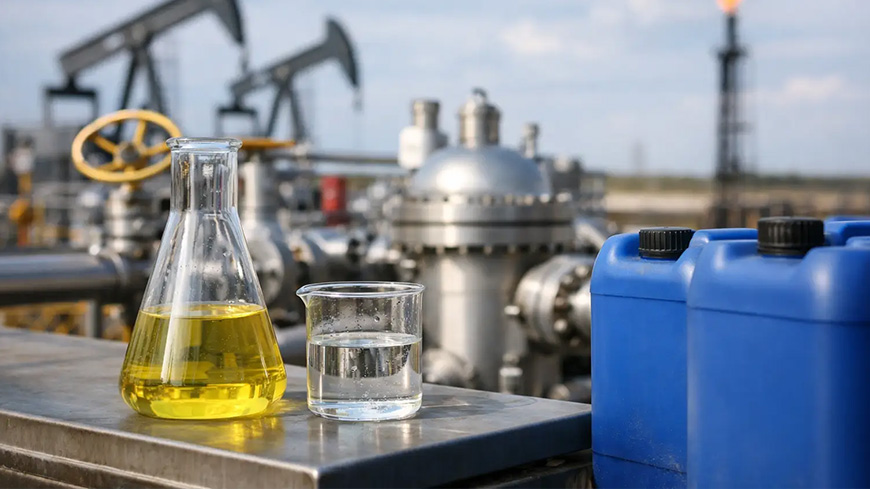
Triazines can be used within a variety of industrial applications. This includes chemical manufacture, agrochemicals, water treatment and oil and gas.
There are variations of Triazine compounds. As a result, different properties and applications can be seen.
Some Triazine based chemicals can be used to remove hydrogen sulphide in oil and gas, whilst others can be used as intermediates, or to produce products.
Understanding these variations can help you select the correct chemical.
Overview
This article discusses what Triazines are, common applications, benefits and considerations to make when selecting a product.
What are Triazines?
Triazines are nitrogen containing heterocyclic compounds.
They consist of a six membered ring containing three Nitrogen atoms and three Carbon atoms.
The molecular formula is C 3H 3N 3.
Variations
Depending on the position of Nitrogen atoms in the ring, different variations of Triazines can be formed.
Common variations include 1,2,3-Triazine, 1,2,4-Triazine and 1,3,5-Triazine.
Depending on chemical groups added to these Triazines, compounds with varying properties can be formed.
As a result, Triazines can be used for a wide range of applications.
Some derivatives of Triazines can be used as intermediates in chemical manufacture, or in formulations.
Understanding the Variations
There are many variations of Triazine Chemicals.
Despite all chemicals containing a ring structure, properties and applications may vary.
1,2,3-Triazines
As the name suggests, there are 3 nitrogen atoms adjacent to each other in this Triazine.
Generally, these compounds are used in research and specialist organic chemistry.
Depending on the chemical groups attached, properties can vary.
1,2,4-Triazines
In these Triazines there is a specific arrangement of Nitrogen atoms.
Some derivatives of Triazines can be used in synthesis.
They can be used as starting materials or intermediates in complex chemical synthesis.
1,3,5-Triazines
These Triazines are also known as Triazines or s-Triazines.
They are very significant in chemistry.
Many useful chemical compounds contain this ring structure.
Melamine contains a 1,3,5-Triazine ring. It can be used to produce resins and other materials.
Some agrochemicals also contain this ring structure.
Hydrogen Sulphide Scavengers
Some Triazine based compounds can be used to scavenge hydrogen sulphide in oil and gas applications.
These products differ to those used in other industries.
They are often made from amines and aldehydes.
They are a suitable option for this application due to their ability to react with hydrogen sulphide under these conditions.
The effectiveness of these products depends on formulation and application conditions.
Why are Triazines important in Industrial Chemistry?
In chemical manufacture, chemicals with specific structures and properties may be required. Triazines can be useful in this as different derivatives can be produced with specific properties.
As Triazine rings can be incorporated into molecules, a range of compounds with specific properties can be created.
In certain industries, Triazines can be useful as intermediates in manufacture.
In other applications Triazines based chemicals can be used to perform a specific function, such as reacting with hydrogen sulphide.
Therefore, Triazine chemistry can be useful in many industrial applications.
The correct compound must be selected depending on required application.
Triazines used in agriculture should not be assumed to be equivalent to those used as hydrogen sulphide scavengers in oil and gas.
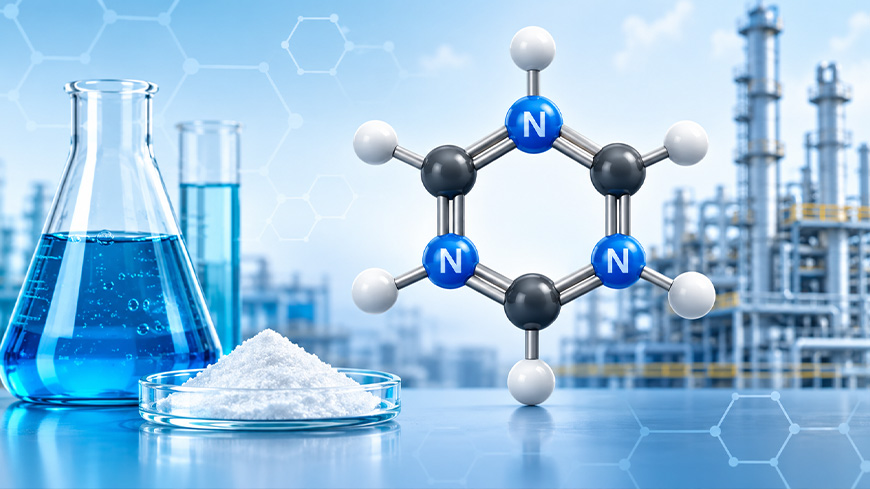
Key applications of Triazines in industry.
1. Oil and Gas
Triazine based compounds can be useful to manage hydrogen sulphide.
Hydrogen sulphide (H 2S) can be present in oil and gas processes.
It can be a safety risk and in certain conditions, can cause corrosion.
In some applications, Triazine based hydrogen sulphide scavengers are used to reduce the levels of hydrogen sulphide. They will react with H 2S.
Scavengers can be used in production, processing and treatment processes.
The effectiveness of this product depends on:
- Concentration of H 2S, temperature, contact time with the fluid, composition of the fluid and the quantity of chemical added.
By selecting an appropriate treatment programme, issues with H 2S can be managed.
2. Agrochemical Manufacture
Some Triazine derivatives can be found in chemical products.
Certain herbicides contain Triazine rings.
These products can be used to manage weeds in accordance with legal requirements.
Triazines used in agrochemicals are subject to regulation. Regulations will vary depending on the country and specific compound.
Manufacturers/user should ensure that products are approved for use in accordance with regulations.
3. Special Chemicals
Certain triazine derivatives can be used as intermediates in the synthesis of special chemicals. Therefore, chemical companies can create particular chemicals to suit their needs.
The correct choice of Triazine derivative will depend upon the structure, purity, stability and reaction conditions.
4. Resins/Polymer
Certain triazine ring containing compounds can be used in resins.
Melamine is one example of a triazine ring containing compound.
Resins derived from melamine can be used to make laminates, coatings, adhesives and moulded items depending on composition.
Not all triazine compounds will be suitable for creating resins/polymers.
5. Research
Triazine compounds can be used in research.
This allows scientists to understand the structure, reactivity and potential uses of the compounds. Depending on what functional group is attached to the triazine ring, different properties can be observed. Therefore, triazine chemistry is useful at creating chemical intermediates and special materials.
6. Water/Process Treatment in Industry
Some Triazine based products can be used in water/Process Treatment.
Triazine based scavengers can be used to control the presence of hydrogen sulphide in aqueous systems. However, these products are very different to general water treatment chemicals.
They cannot act as scale or corrosion inhibitors.
Therefore, depending on what treatment is desired and composition of the chemical, these products can be used accordingly.
How do Triazine based H 2S scavengers work?
In some oil and gas applications, managing hydrogen sulphide is an issue.
Hydrogen sulphide can be dangerous for staff and can cause issues with equipment.
Some Triazine based scavengers have been developed to react with hydrogen sulphide.
When the scavenger reacts with H 2S, it forms sulphur containing compounds.
This reduces the quantity of hydrogen sulphide present in the treated stream.
The products of the reaction and effectiveness will depend on formulation.
Factors affecting scavenging performance
Concentration of H 2S
The concentration of H 2S will impact selection of product.
If the concentration is high, more chemical may be required, or a different treatment system may be appropriate.
Contact Time
Sufficient contact time must be given with the stream.
If contact time is short, the effectiveness of treatment may be reduced.
Temperature
Temperature effects reaction speed and chemical stability. The conditions of operation should be considered when selecting a product.
Chemical Composition
The composition of the fluid (oil, gas, water and other components) may effect scavenger performance.
Products suitable for one system may not be suitable for another system.
Chemical Quantity
The correct quantity of chemical will depend on the objective, scavenging capacity of the chemical and conditions of operation.
Testing and evaluating should be undertaken to determine the correct quantity.
By-products of Reaction
Issues may occur in handling and disposal of spent scavenger and reaction by-products. In some systems solid deposits may form.
This should be considered when designing a treatment program.
Key properties of Triazines
Depending on structure, Triazines will have different properties.
Properties will vary between Triazine compounds.
Chemical Structure
Triazines contain 6 atoms in a ring, 3 of which are Nitrogen.
Depending on the positions of Nitrogen atoms in the ring, and what groups are attached, different chemical properties can be seen.
Appearance
Depending on the chemical, Triazine compounds can be solid, liquid or solution.
Solubility
Depending on derivative, solubility varies.
Some are water soluble, and others are more soluble in solvents.
Before selection, check product specification to determine suitable solvent/formulation.
Stability
Chemical stability will depend on the compound and surrounding conditions. Temperature, pH, moisture and chemical interactions can all affect stability.
Reactivity
Some Triazine derivatives are useful due to their reactivity. Or, they may be selected due to their role in a molecule. Reactivity of the product should be considered.
Purity
If Triazines are used as intermediates, purity is important. Impurities may affect reaction, consistency and final product quality.
The required level of purity will depend on the application.
Benefits of Triazines in Industrial Applications
If the correct Triazine is selected, they can be useful in industrial applications.
Useful in Specialty Chemical Manufacture
Some derivatives of Triazines can be used as intermediates in specialty chemical manufacture. Due to their structures, chemists can produce compounds for specific applications.
Relevant to H 2S Management
Some formulations containing Triazines can be used to reduce H 2S in oil and gas. If the correct product is selected for the application, they can be useful in H 2S management programmes.
Useful in Resin Chemistry
Compounds containing Triazines (such as melamine) are important in certain resin production processes. These materials can be used in both industrial and consumer products.
Variety of Chemical Structures
Triazines contain a variety of derivatives. Due to this, manufacturers have a variety of choices for synthesis or product development.
Useful in Research and Development
Triazine chemistry can be useful in understanding chemical reactions and structures, allowing for development of industrial chemicals.
The benefits will depend on the Triazine and application.
Comparison with other industrial chemicals
When selecting chemical products for industrial applications, it is common to compare between different chemical families. However, consideration should be given to the function of the chemical, rather than just the family name.
1. Triazines
Nitrogen containing compounds.
Certain derivatives are used in synthesis, agrochemical products, resins and H 2S scavenging formulations.
2. Phosphonates
A family of chemicals.
Certain phosphonate compounds can be used in water treatment applications in industry. They can be used to manage scaling and metal ions.
However, they are not suitable alternatives to Triazine based H 2S scavengers.
3. Polyamines
Compounds containing amine groups. Depending on structure, polyamines can be used in chemical manufacture, water treatment and other industrial applications. The function of these chemicals will differ to Triazines.
4. Quaternary Ammonium Compounds
Quaternary ammonium compounds (quats) are another family of nitrogen containing compounds. Certain quats can be used in disinfectants, antimicrobial formulations and industrial cleaning products. They should not be confused with Triazines.
5. Dispersant Polymers
Dispersant polymers can be used in certain systems to manage suspended particles/deposits. They perform a different function to Triazine based H 2S scavengers.
Understanding the differences between these chemicals can be useful in selecting the correct chemical for treatment requirements.
How to Select the Correct Triazines for Industrial Applications
To select the correct Triazine product for an industrial application, more than identifying the chemical family is needed. Consideration should be given to the chemical itself, application and requirements.
Application
Consider why a chemical is required.
This could be for:
- H 2S Scavenging.
- Specialty chemical synthesis.
- Resin manufacture.
- Development.
- Approved agrochemical manufacture.
- Specific industrial treatment processes.
Depending on the application, a different Triazine derivative may be required.
Chemical Specification
Consider the information given by the supplier.
Key information to consider includes:
- Chemical name.
- CAS number.
- Molecular formula.
- Concentration.
- Purity.
- Appearance.
- Solubility.
- Storage requirements.
- Safety Information.
This information will allow the correct product to be selected.
Chemical Compatibility
Chemical compatibility is important in manufacture.
Depending on other chemicals in the process, a Triazine based product may behave differently. In H 2S scavenging applications, compatibility with the process stream and other treatment chemicals should be considered.
Consider Conditions
Conditions such as temperature, pressure, pH, contact time and fluid composition may impact performance. Not all of these factors may be as important for different applications. Consider the conditions before selecting a product.
Product Quality
It is important to ensure consistent product quality. Considerations should be made on specifications given by the supplier, quality control measures in place and technical information available.
Safety Considerations
Depending on the chemical, Triazine compounds may pose health and/or environmental risks. Before handling and using a product, the Safety Data Sheet should be reviewed.
Supplier Selection
A supplier should be able to clearly identify products, give technical specifications and relevant safety information. If the application requires it, technical support from a supplier may be important.
Factors Affecting Performance of Triazine Chemicals
Several factors can effect performance of Triazine Chemicals.
Temperature
May effect stability and reaction rate. The suitable operating temperature range will depend on the product.
pH
Some formulations of Triazines may be sensitive to alkaline conditions. The effect of pH should be considered.
Concentration
The concentration of product may effect dosing requirements and processing. Industrial users should check the concentration of formulated products.
Contact Time
Depending on the reactivity of treatment chemical, sufficient contact time may be required. This is particularly relevant in H 2S scavenging applications.
Chemical Compatibility
Other chemicals in a process may effect performance/stability of treatment. Compatibility testing may be appropriate.
Storage
Incorrect storage may affect product quality. Manufacturers should ensure products are stored at the recommended temperature, in the correct packaging and handled correctly.
Safety
Depending on the compound, Triazines may pose a risk. Risks may be inhaled, through contact with skin, or environmental risk. Certain H 2S scavenging formulations may also contain ingredients or produce hazardous by-products. Therefore safety requirements for one Triazine should not be assumed to be the same as another.
Key Safety Considerations
- Review Safety Data Sheet.
- Wear PPE.
- Store as recommended.
- Avoid exposure.
- Ensure adequate ventilation.
- Store separately.
- Dispose of waste in an approved manner.
- Take control measures when handling hydrogen sulphide.
- Comply with safety regulations in place at work and for the environment.
In applications relating to H 2S, chemical treatment should not replace monitoring of gases, ventilation, emergency procedures and other safety measures.
Why Triazines are important in modern industry
Chemicals for industrial applications are continually being sought to meet processing requirements. Due to their chemistry, Triazines are still important in industry. In oil and gas applications, certain Triazine based products can be used to manage H 2S. In specialty chemical manufacturing, some derivatives are useful as intermediates. In resin chemistry, Triazine containing compounds (such as melamine) are used in established manufacturing processes. Although these applications are very different, they all involve Triazine related chemistry. The correct product will depend on the process, chemical structure, operating conditions and safety requirements. Understanding these differences can help industrial buyers avoid incorrectly selecting products.
Conclusion
Triazines are a family of chemicals used in a variety of industrial applications. Due to their chemical structure, they are relevant in specialty chemical manufacture, resin chemistry, agrochemicals and specific treatment processes in oil and gas. Certain formulations of Triazines can be very useful in H 2S scavenging applications. However, different Triazine compounds will have different properties, and cannot be assumed to be interchangeable. When choosing a product, consideration should be given to chemical identity, purity, compatibility, conditions and safety. Working with a specialist chemical manufacturer/supplier can help industrial buyers find suitable products for their applications.
Are you looking for Triazines or specialty chemicals for your applications? Take a look at our range of chemical products. Get in touch with our team to discuss your requirements.
Frequently Asked Questions
1. What are Triazines used for?
Triazines are used in certain chemical manufacture processes, agrochemical products, resin chemistry and H 2S scavenging applications. The application will depend on the compound.
2. What are Triazines in chemistry?
Triazines are nitrogen containing compounds. They have a six membered ring containing 3 carbon atoms and 3 nitrogen atoms.
3. Are Triazines used in oil and gas?
Yes. Certain Triazine formulations can be used as H 2S scavengers in oil and gas.
4. How do Triazine H 2S scavengers work?
Appropriate Triazine based scavengers will react with H 2S to produce sulphur containing compounds. Effectiveness of the product will depend on formulation and conditions.
5. Are all Triazines the same?
No. There are many variations of Triazine compounds. Different chemical structures, properties and applications can be seen.
6. Are Triazines used in water treatment?
Certain Triazine based products may be used in treatment processes. Particularly to manage H 2S. However, they are not suitable alternatives to general water treatment chemicals.
7. What should I consider when purchasing Triazines?
Consider chemical name, CAS number, concentration, purity, application, technical specifications, storage and safety information.
8. Are Triazines safe to handle?
Depending on compound/formulation, Triazines may pose health/environmental risks. The Safety Data Sheet should be reviewed. Follow the correct safety precautions.
9. What factors effect performance of Triazine scavengers?
Key factors include concentration of H 2S, contact time, temperature, quantity of chemical, chemical composition and by-products.
10. How do I choose a manufacturer/supplier for Triazines?
Choose a manufacturer/supplier who can clearly identify chemicals, provide consistent specifications, suitable quality information and technical support for the application.