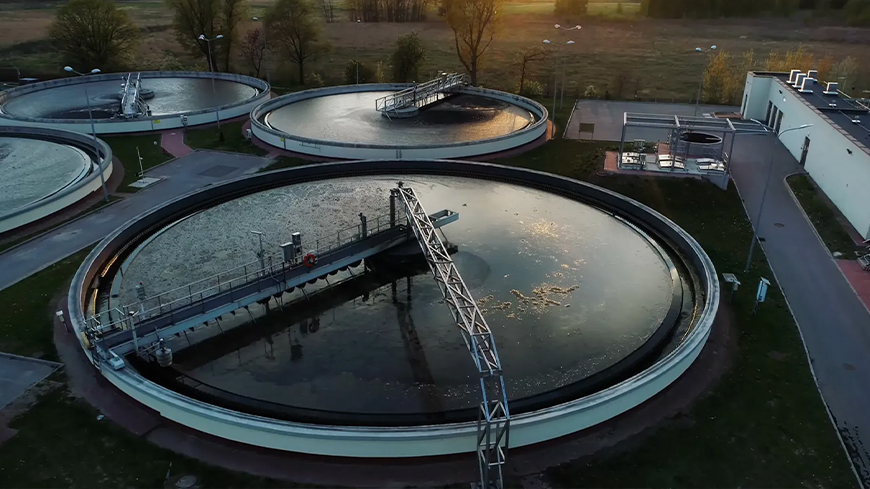
ATMP (Amino Trimethylene Phosphonic Acid) is a highly effective phosphonate-based chemical widely used for scale inhibition, corrosion control, and water treatment applications. Due to its strong chelating ability and excellent stability, ATMP has become an important choice for industries that need reliable chemical performance...
ATMP – Amino Trimethylene Phosphonic Acid: A Practical Guide for Industrial Applications
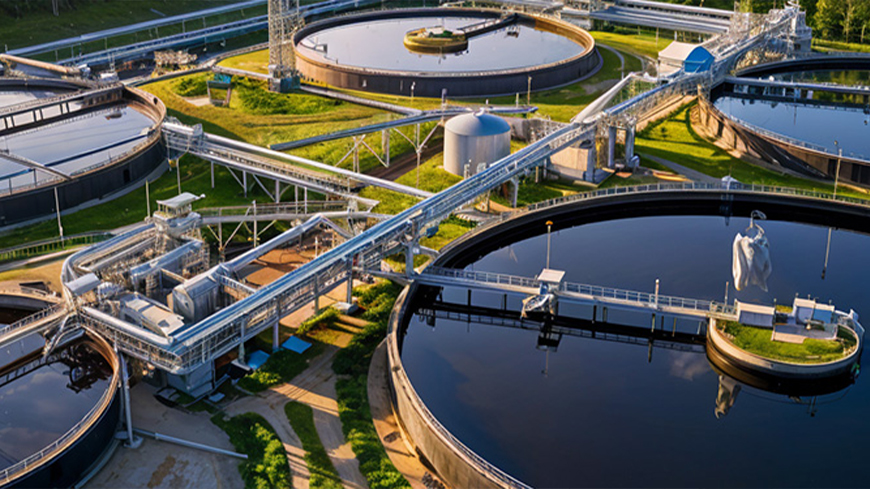 What is ATMP – Amino Trimethylene Phosphonic Acid?
ATMP stands for Amino Trimethylene Phosphonic Acid, an organophosphonic acid used in industrial chemical formulations where control of dissolved metal ions and mineral deposits is important. It is commonly supplied as a liquid and can be incorporated into water-treatment and other process formulations through controlled dosing.
In practical terms, ATMP works by interacting with metal ions present in water and process streams. This makes it useful when calcium, magnesium, iron, and other minerals may interfere with equipment operation or contribute to unwanted deposits. Its chemical structure also allows it to remain useful in demanding operating environments.
For buyers searching for an Amino Trimethylene Phosphonic Acid supplier in India, understanding the product grade is important. Concentration, appearance, pH, density, packaging, and application requirements should be checked before procurement rather than choosing a material only by its product name.
A commonly supplied commercial grade is ATMP 50%. Maxwell Additives lists its ATMP product as a clear aqueous liquid with an active-content specification of 49–51%, along with defined pH and specific-gravity ranges.
Why ATMP Is More Than a Scale-Control Chemical
ATMP is often discussed mainly in connection with scale prevention, but its practical value is broader. In an industrial water system, dissolved metals can create several problems at the same time. They can participate in deposit formation, interfere with other treatment chemicals, and contribute to changes in process-water behavior.
This is where the chemistry of ATMP becomes useful. Instead of simply reacting with minerals and removing them from the system, ATMP can keep certain metal ions under control at relatively low treatment levels. This approach can help treatment programs manage mineral activity without requiring excessive quantities of chemicals.
Another useful aspect is formulation flexibility. ATMP can be combined with other water-treatment ingredients when the complete treatment program requires more than one mechanism. The final formulation, however, should always be tested because compatibility depends on concentration, water chemistry, pH, temperature, and the other chemicals present.
For an ATMP – Amino Trimethylene Phosphonic Acid Manufacturer in India, maintaining consistent product characteristics is therefore important. A formulation engineer needs predictable raw material behavior when designing a treatment program for repeated industrial operation.
Understanding the Role of ATMP in Industrial Water Chemistry
Industrial water is rarely chemically simple. Depending on its source and treatment history, it can contain different concentrations of calcium, magnesium, iron, silica, phosphates, and other dissolved or suspended materials. When operating conditions change, these components can behave differently and create deposits or interfere with equipment performance.
ATMP is useful because its phosphonate groups have a strong affinity for certain metal ions. Rather than looking at the chemical simply as a conventional additive, it is better to understand ATMP as part of a broader water-management strategy.
The amount required can vary significantly between applications. A cooling-water circuit, boiler program, reverse-osmosis pretreatment system, or industrial cleaner may have completely different water chemistry and operating conditions. Therefore, dosage should be established through technical evaluation rather than copied from another application.
This is also why choosing an ATMP Acid Manufacturer in India should involve more than checking availability. Buyers should consider technical documentation, batch consistency, packaging options, quality testing, and the supplier’s ability to understand the intended application.
Features of ATMP
1. Strong Metal-Ion Interaction
ATMP has a useful ability to interact with dissolved metal ions, which is one of the reasons it is valued in industrial treatment formulations. This property can help control the behavior of hardness-forming minerals and other metals that may otherwise participate in unwanted deposits or interfere with process stability.
2. Effective at Low Treatment Levels
One notable characteristic of ATMP is its threshold activity. The chemical can influence precipitation behavior without necessarily requiring an amount equivalent to every mineral ion present. This makes it useful in carefully designed treatment programs where controlled dosing is important and chemical consumption needs to be managed.
3. Good Chemical Stability
ATMP is valued for its stability in water-based industrial environments. Its resistance to hydrolysis supports continued functionality during storage and application. This characteristic is particularly useful when treatment chemicals must remain dependable while exposed to changing process conditions rather than being used immediately after preparation.
4. Useful for Scale Management
ATMP can interfere with the formation and growth of mineral deposits, helping treatment programs manage scale-forming conditions. This is especially relevant where water circulates repeatedly through industrial equipment. Its role should be considered alongside water chemistry, operating temperature, flow conditions, and the other chemicals used in the treatment system.
5. Liquid Form for Controlled Dosing
Commercial ATMP is commonly supplied as a liquid solution, making it convenient for metering and blending into suitable formulations. Liquid handling can simplify dosing arrangements in continuous industrial processes. Proper storage, transfer equipment, and handling procedures should still be selected according to the product’s technical and safety documentation.
6. Suitable for Formulation Development
ATMP can be incorporated into broader chemical programs rather than being limited to standalone use. Formulators may combine it with other compatible ingredients when multiple treatment objectives need to be addressed. Laboratory trials remain important because performance depends on the complete formulation and the chemistry of the application.
7. Useful Across Different Operating Conditions
ATMP can be considered for industrial environments where variations in temperature, pH, and mineral concentration create treatment challenges. Its practical performance will depend on the specific system, but its chemical stability makes it a useful candidate for applications that require dependable metal-ion and deposit control.
A Practical Point About ATMP Selection
Choosing the right ATMP grade should begin with the application rather than the supplier’s product name. A buyer should first understand the water composition, operating temperature, pH range, expected mineral load, treatment objective, and dosing method.
For example, a plant dealing with hard-water circulation may have different requirements from a facility treating process water with elevated iron levels. Even when both applications use ATMP, the formulation strategy and dosage may be different.
The concentration of the supplied material also matters. A 50% liquid grade may be convenient for many industrial formulations, but the final treatment program must account for its active concentration when calculating the required dose.
A technical data sheet and certificate of analysis should therefore be reviewed before approval. For large-volume procurement, a trial batch can provide additional confidence that the material behaves as expected in the actual process.
Applications of ATMP – Amino Trimethylene Phosphonic Acid
Amino Trimethylene Phosphonic Acid has a broad industrial application profile because metal-ion control is relevant to many processes.
Cooling-water treatment: ATMP can be incorporated into treatment programs designed to manage mineral deposition in recirculating cooling systems. This can be useful for maintaining heat-transfer surfaces and reducing problems associated with scale.
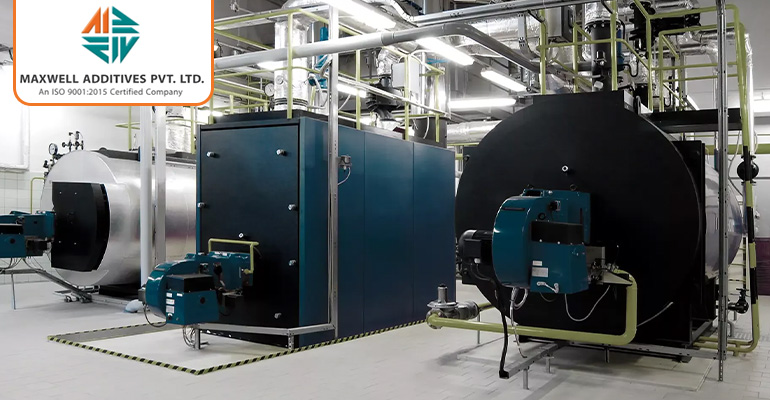
Boiler-water treatment: Boiler systems require careful control of dissolved minerals because deposits can affect heat-transfer surfaces. ATMP can form part of a broader chemical program where metal-ion management and scale control are required.
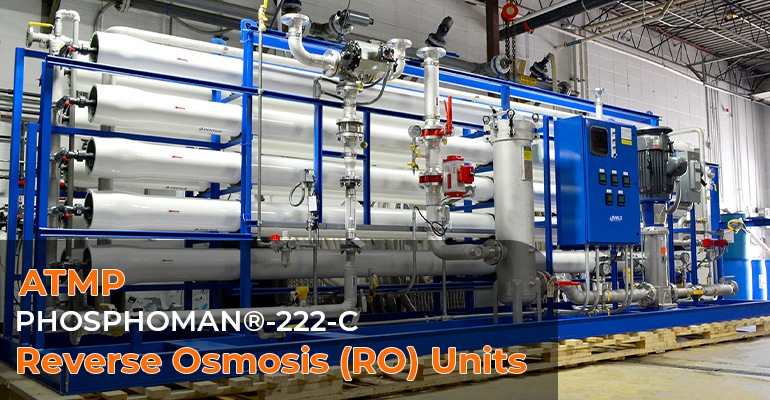
Reverse-osmosis systems: In suitable RO treatment programs, phosphonate-based chemicals can be used to help manage scaling risks. Actual selection and dosage should be based on feed-water analysis and membrane-system requirements.
Industrial cleaning: ATMP can be used in selected cleaning formulations where metal ions and mineral residues affect cleaning performance. Its ability to interact with metals can complement other ingredients used in specialized cleaning products.
Textile processing: ATMP can be considered in certain textile chemical formulations where metal-ion control is required. Its role depends on the process stage and the other auxiliaries used.
Detergent formulations: The chemical can support formulations that require control of hardness-related metal ions. The final detergent system should be tested for compatibility with surfactants, builders, and other additives.
Sugar processing: ATMP may be considered in selected sugar-processing treatment programs where mineral deposition and metal-ion activity need to be managed.
These applications are not interchangeable. Each industry should establish its own formulation and dosage requirements through testing and process evaluation. Maxwell Additives’ product information lists applications including cooling-water treatment, boiler treatment, industrial cleaning, RO desalination, textile processing, sugar refining, and several other industrial uses.
Benefits of ATMP – Amino Trimethylene Phosphonic Acid
1. Helps Control Mineral Deposits
ATMP can help reduce the tendency of certain dissolved minerals to participate in scale formation. By influencing metal-ion behavior, it supports treatment programs designed to keep equipment surfaces cleaner. This can be particularly valuable in systems where repeated water circulation increases the opportunity for mineral buildup.
2. Supports Equipment Efficiency
Uncontrolled deposits can interfere with heat transfer and fluid movement. By helping manage scale-forming conditions, ATMP can contribute to smoother operation of suitable industrial systems. Its value is therefore connected not only to chemical treatment but also to maintaining the working condition of equipment over longer operating periods.
3. Helps Manage Hard-Water Chemistry
Hard water contains minerals that can create treatment challenges when operating conditions change. ATMP provides a way to address part of this problem through metal-ion interaction. When properly dosed, it can complement other treatment chemicals and help create a more controlled chemical environment within the process.
4. Useful in Combined Treatment Programs
Industrial water treatment rarely depends on one chemical alone. ATMP can be included in carefully developed multi-component formulations where different ingredients perform different functions. This gives formulators flexibility when designing treatment programs for specific water chemistry, provided compatibility and performance are confirmed through appropriate testing.
5. Convenient for Industrial Dosing
The liquid form of ATMP can make it practical for metered addition to suitable systems. Automated dosing equipment can be used when the application requires controlled and repeatable chemical input. This can help operators maintain a consistent treatment approach instead of relying on irregular manual addition.
6. Supports Consistent Process Management
A well-designed ATMP treatment program can help plants maintain more predictable mineral-control conditions. Consistency is particularly important in continuous operations, where sudden changes in water chemistry may lead to deposits or treatment problems. Regular monitoring remains necessary to confirm that the chemical program is working as intended.
7. Offers Broad Formulation Flexibility
ATMP is not limited to one industrial sector. Its chemistry allows it to be considered for water treatment, cleaning, textile, detergent, and other specialty applications. This flexibility can be useful for chemical formulators and industrial users who need one phosphonate raw material for multiple technically suitable product systems.
Choosing an Amino Trimethylene Phosphonic Acid Supplier in India
A reliable supplier should be able to provide more than a product quotation. Buyers should look for clear specifications, appropriate documentation, dependable packaging, consistent batch quality, and responsive technical communication.
When evaluating an Amino Trimethylene Phosphonic Acid supplier in India, it is useful to ask for the product specification before finalizing the purchase. Important parameters may include active content, appearance, pH, density or specific gravity, physical state, packaging, and storage recommendations.
For regular industrial consumption, supply continuity is equally important. A treatment plant cannot easily change its chemical program every time a raw material becomes unavailable. Long-term sourcing should therefore consider manufacturing capacity and the supplier’s ability to maintain consistent product quality.
Companies searching for an ATMP – Amino Trimethylene Phosphonic Acid supplier in India should also compare technical support. A supplier who understands the intended use can help buyers identify relevant product information and avoid selecting a grade simply because it is available at a lower price.
What Buyers Should Check Before Bulk Procurement
Before approving a large quantity of ATMP, procurement and technical teams should review the following points:
- Product identity and concentration
- Current technical specification
- Certificate of analysis
- Appearance and physical state
- pH and specific gravity
- Packaging and transportation requirements
- Recommended storage conditions
- Batch-to-batch consistency
- Compatibility with the existing formulation
- Supplier production and delivery capability
This approach helps separate a suitable industrial raw material from a product that only appears similar on paper.
Conclusion
ATMP – Amino Trimethylene Phosphonic Acid is a versatile phosphonate compound that can play an important role in industrial formulations requiring metal-ion management and control of mineral deposition. Its liquid form, chemical stability, and ability to interact with metal ions make it suitable for evaluation across several water-treatment and specialty chemical applications.
The best results come from treating ATMP as part of a complete chemical program rather than as a standalone solution. Water composition, operating conditions, concentration, dosage, and compatibility with other ingredients all influence the final performance.
For businesses sourcing from an ATMP – Amino Trimethylene Phosphonic Acid Manufacturer in India, technical consistency should be given the same importance as commercial pricing. Product documentation, sample evaluation, quality controls, and dependable supply can help create a stronger long-term procurement strategy.
Maxwell Additives lists ATMP 50% as PHOSPHOMAN®-222-C and specifies it as a clear aqueous solution with an active content of 49–51%.
Frequently Asked Questions About ATMP
1. What is ATMP – Amino Trimethylene Phosphonic Acid mainly used for?
ATMP is mainly considered for industrial applications where scale formation and metal-ion activity need to be controlled. Common areas include cooling-water treatment, boiler treatment, RO systems, industrial cleaning, detergents, textile processing, and other specialty formulations. The appropriate dosage depends on the specific application and water chemistry.
2. Is ATMP available in liquid form?
Yes. Commercial ATMP is commonly supplied as a liquid aqueous solution. For example, Maxwell Additives specifies its ATMP 50% product as a clear aqueous solution with a liquid physical state. The exact concentration, appearance, pH, and other parameters should be confirmed from the current batch documentation before use.
3. What should I consider when selecting an ATMP supplier?
Buyers should consider active concentration, product consistency, technical documentation, packaging, storage requirements, delivery reliability, and technical support. It is also advisable to test a representative sample in the intended formulation. Choosing an Amino Trimethylene Phosphonic Acid supplier in India should therefore involve both commercial and technical evaluation.
4. Can ATMP be used in RO water-treatment systems?
ATMP can be considered as part of suitable RO treatment programs for managing scaling conditions. However, the correct chemical and dosage depend on feed-water composition, membrane type, recovery rate, temperature, and other operating parameters. A technical evaluation should be completed before introducing ATMP into an operating RO system.
5. Is ATMP suitable for high-temperature industrial systems?
ATMP is valued for its chemical stability and can be considered for industrial processes involving elevated temperatures. However, performance depends on the complete chemical environment. Operators should review the product specification and conduct application-specific testing before using ATMP in high-temperature systems.
6. What is the difference between ATMP and ATMP 50%?
ATMP refers to the chemical itself, while ATMP 50% generally refers to a commercial liquid grade containing approximately 50% active ATMP. Maxwell Additives specifies its ATMP product with an active-content range of 49–51%. Buyers should use the actual certificate of analysis when calculating formulation quantities.
7. Where can I source ATMP in India?
Industrial buyers can compare established manufacturers and suppliers according to quality specifications, documentation, manufacturing capacity, packaging, and delivery requirements. Maxwell Additives PVT LTD is an Indian manufacturer that lists ATMP 50% under the PHOSPHOMAN®-222-C brand. Buyers should contact the supplier directly for current availability, specifications, and commercial requirements.
Related Posts