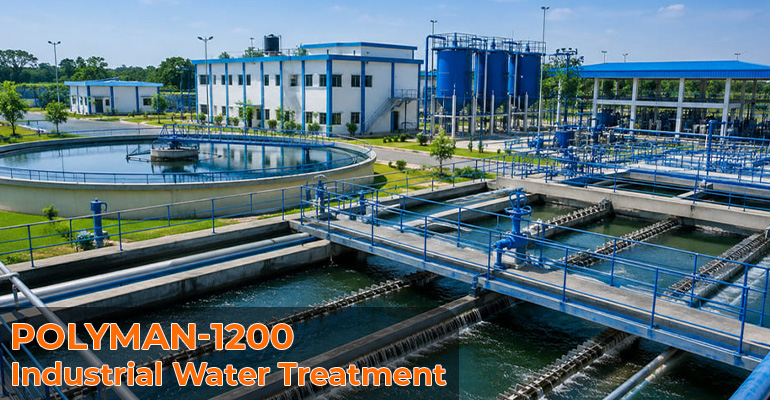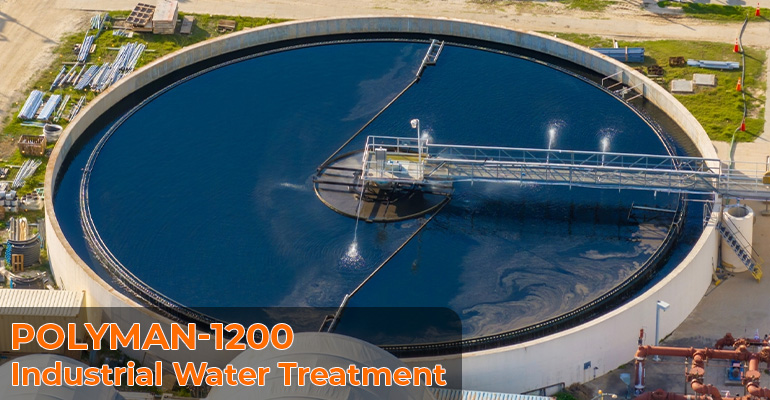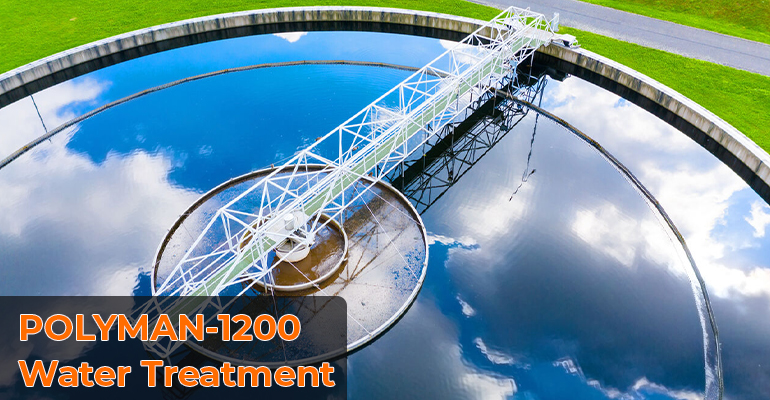

POLYMAN-1200 is a Carboxylic Co-Polymer used in water-treatment and water-based formulations where mineral management, particle dispersion and deposit control play an important role. Maxwell Additives lists POLYMAN-1200 within its co- range as a carboxylic co-polymer...
Carboxylic Co-Polymer Supplier in India – POLYMAN-1200 for Industrial Water Treatment
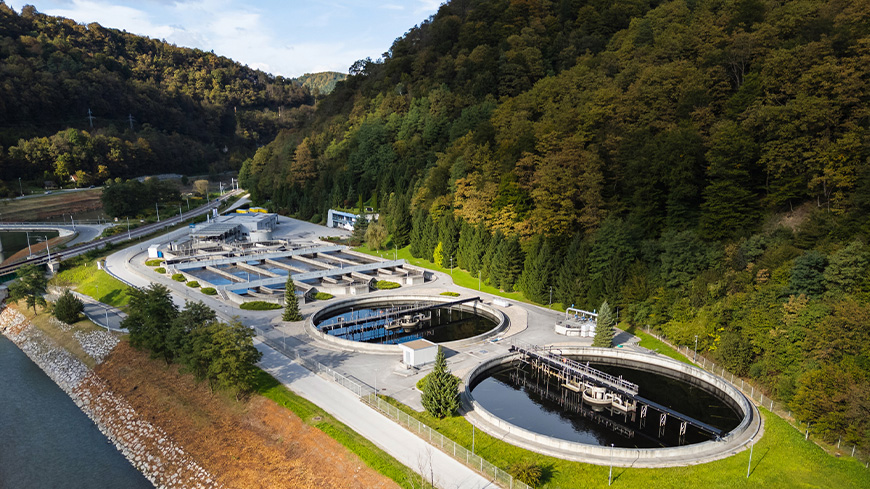
Industrial water systems rarely operate under completely fixed conditions. Hardness, mineral concentration, temperature, pH, evaporation and water reuse can all change during operation. This is where choosing the right polymer becomes important. Maxwell Additives is a Carboxylic Co-Polymer supplier in India offering POLYMAN-1200, a specialty co-polymer used in industrial formulations where mineral management, particle dispersion and deposit control are required.
What Is Carboxylic Co-Polymer – POLYMAN-1200?
POLYMAN-1200 is a specialty polymer that Maxwell Additives lists under its Co-Polymers range as a Carboxylic Co-Polymer. It is intended for industrial formulations where mineral behavior, suspended matter and unwanted deposits need to be managed.
The practical value of POLYMAN-1200 is therefore not simply its chemical name. Its usefulness depends on how well it matches the water chemistry, treatment objective, dosage and other chemicals present in the formulation.
Why Are Carboxylic Co-Polymers Used in Water Treatment?
Water can carry a mixture of dissolved minerals and suspended particles. When operating conditions change, substances that were previously stable may begin to form crystals, agglomerate or deposit on equipment surfaces.
A suitable polymer can influence how mineral particles behave. Depending on the chemistry of the system, it may help modify crystal development and keep fine particles dispersed instead of allowing them to readily join together and settle.
The objective is not simply to remove minerals from water. In many applications, the more practical goal is to control how those minerals behave while the system continues operating.
How Does POLYMAN-1200 Work?
POLYMAN-1200 can be incorporated into treatment formulations where mineral deposition and particle dispersion are concerns.
For example, consider a circulating-water system where evaporation gradually increases the concentration of dissolved substances. As concentration rises, certain minerals may become more likely to form deposits. A polymeric treatment can be introduced as part of a program intended to control this behavior.
This is why laboratory evaluation and application testing are valuable before establishing a final commercial dosage.
Key Features of POLYMAN-1200
1. Carboxylic Polymer Chemistry
POLYMAN-1200 belongs to the carboxylic co-polymer category. Its polymer structure provides a functional option for formulations where mineral management and dispersion are required.
2. Supports Mineral Deposit Control
The polymer can be evaluated in systems where mineral deposits create operational difficulties. Its action can influence mineral particle behavior and crystal development, potentially helping reduce unwanted accumulation under appropriate conditions.
3. Dispersion Support
Fine mineral particles can become difficult to control when they agglomerate or settle. POLYMAN-1200 can support formulations that require improved dispersion of such particles.
4. Suitable for Industrial Water-Based Formulations
POLYMAN-1200 can be considered for water-based industrial treatment formulations where polymeric mineral-control and dispersion properties are required.
5. Useful Across Changing Operating Conditions
Industrial water chemistry does not always remain constant. Temperature, concentration, hardness and pH may change during operation.
6. Supports Preventive Treatment Strategies
Mineral deposits are often easier to manage when their formation is addressed before accumulation becomes severe.
7. Can Be Evaluated With Other Treatment Chemicals
Industrial formulations may contain several components, including other polymers and treatment chemicals.
Benefits of Using POLYMAN-1200
The benefits of a carboxylic co-polymer depend on the application, but several practical advantages can be considered when the product is correctly matched to the treatment system.
1. Helps Manage Mineral Deposits
Mineral accumulation can affect equipment surfaces, flow paths and heat-transfer areas. A suitable polymer treatment can help control mineral behavior and reduce the tendency toward unwanted deposits.
2. Supports Particle Dispersion
When fine particles remain better dispersed, they may be less likely to agglomerate and settle in unwanted locations.
3. Supports Preventive Water Treatment
A preventive approach allows operators to address deposit-forming conditions before they develop into more difficult maintenance problems.
4. Helps Formulators Develop Application-Specific Solutions
Different industries can have very different water chemistry. A polymer that performs well in one system may require a different dosage or formulation approach in another.
5. May Support More Consistent Operating Conditions
Uncontrolled mineral accumulation can interfere with process surfaces and equipment operation.
The actual benefit should always be confirmed through application-specific testing.
Applications of POLYMAN-1200
POLYMAN-1200 can be considered for industrial applications where mineral management and particle dispersion are important.
1. Cooling Water Treatment
Cooling-water systems can experience increasing mineral concentration because water is continuously circulated and may lose water through evaporation.
2. Industrial Process Water
Process-water systems may contain dissolved minerals and suspended matter originating from the incoming water or manufacturing process.
3. Water-Treatment Formulations
POLYMAN-1200 can be used as a polymeric ingredient in compatible treatment formulations where dispersion and mineral management are required.
4. Industrial Formulation Development
Chemical manufacturers developing water-treatment products can evaluate POLYMAN-1200 alongside other compatible ingredients to determine whether it provides the required balance of performance for a particular formulation.
Industries That May Use Carboxylic Co-Polymer Formulations
Carboxylic co-polymers can be relevant across industries where water chemistry and mineral deposits need to be managed.
Factors That Affect POLYMAN-1200 Performance
A common mistake when selecting a water-treatment polymer is to focus only on the product and overlook the water in which it will operate.
Several factors can influence polymer performance.
1. Water Hardness
Calcium and magnesium levels can influence the formation and behavior of mineral deposits. Hardness testing should therefore be part of the initial evaluation.
2. Mineral Concentration
The concentration and type of dissolved minerals can change the treatment requirement. A polymer should be evaluated against the actual mineral profile rather than a generic water sample.
3. pH
pH can influence mineral solubility, particle behavior and the interaction between treatment chemicals. The operating pH should be considered during formulation development.
4. Temperature
Temperature can affect mineral precipitation and the behavior of treatment chemicals. Testing should represent the actual temperature range of the process wherever possible.
5. Dosage
More polymer does not automatically mean better performance. An appropriate dosage depends on the treatment objective and water chemistry.
6. Compatibility With Other Chemicals
A water-treatment formulation may contain several chemical components. The compatibility of POLYMAN-1200 with other polymers, phosphonates, corrosion inhibitors, biocides or other formulation ingredients should be tested before combining them.
How Should You Select a Carboxylic Co-Polymer?
Product selection should begin with the problem rather than the product name.
This approach is more reliable than selecting a polymer solely because it belongs to a particular chemical category.
Why Product Consistency Matters When Buying Carboxylic Co-Polymer
For industrial chemical manufacturers, consistency is not a minor purchasing consideration.
When selecting a Carboxylic Co-Polymer supplier, buyers should therefore consider:
- Product specifications
- Batch consistency
- Quality-control practices
- Technical documentation
- Packaging
- Supply reliability
- Technical communication
- Application support
For long-term procurement, customers may also establish an agreed product specification and carry out periodic quality checks.
Why Choose Maxwell Additives?
Maxwell Additives Pvt. Ltd. manufactures and supplies specialty chemicals, including polymers used in industrial applications. Its current product portfolio lists POLYMAN-1200 specifically as a Carboxylic Co-Polymer within its Co-Polymers range.
Specialty Chemical Product Range
Maxwell Additives has a dedicated specialty-chemical portfolio that includes polymers, phosphonates and other industrial chemical products. This gives customers access to a broader range of treatment-chemistry options when developing industrial formulations.
Manufacturing Capability
The company’s website states that Maxwell Additives was established in 1988 and currently operates three manufacturing units in and around Vadodara, with a stated manufacturing facility of 4,000 MT per annum.
Focus on Industrial Applications
Maxwell Additives works across specialty chemicals, water-treatment chemicals and other industrial chemical categories. Its POLYMAN range is positioned for applications including water treatment and dispersing functions.
Technical and Application-Oriented Approach
Selecting a polymer requires more than matching a chemical name to an application. Water chemistry, dosage and compatibility need to be considered together.
Domestic Supply From India
Maxwell Additives is based in Vadodara, Gujarat, India, and provides specialty chemical products for industrial customers. Its website also lists a Delhi branch.
What Should You Ask a Carboxylic Co-Polymer Supplier?
Before placing a regular order, industrial buyers can ask the supplier for information such as:
- Product specification
- Available packaging
- Batch information
- Recommended storage conditions
- Safety Data Sheet
- Technical Data Sheet
- Application guidance
- Sample availability for testing
- Compatibility information
- Commercial supply terms
A good supplier relationship should make it easier to understand how the polymer fits into the intended formulation.
Practical Considerations Before Using POLYMAN-1200
Before introducing POLYMAN-1200 into an operating system, it is useful to establish a baseline of the water chemistry.
Next, identify the existing treatment program. If another polymer or scale-control chemical is already being used, compatibility should be evaluated instead of simply adding POLYMAN-1200 to the system.
This step is particularly useful when the system has unusual water chemistry or when several treatment chemicals are being combined.
Storage and Handling
Industrial chemical handling should always follow the current supplier documentation and Safety Data Sheet.
Conclusion
POLYMAN-1200 is a Carboxylic Co-Polymer used in industrial formulations where mineral management, particle dispersion and deposit control are important. Its value comes from its role as a polymeric treatment ingredient that can be evaluated against the specific chemistry and operating conditions of a water-based system.
Maxwell Additives offers POLYMAN-1200 within its specialty polymer portfolio and provides industrial customers with access to its broader range of specialty and water-treatment chemicals. The appropriate dosage and formulation should always be established through application-specific evaluation rather than relying on a universal recommendation.
Frequently Asked Questions
1. What is POLYMAN-1200?
POLYMAN-1200 is a specialty Carboxylic Co-Polymer listed by Maxwell Additives under its Co-Polymers range. It can be considered for industrial formulations where mineral management, particle dispersion and deposit control are required.
2. Can POLYMAN-1200 be used in cooling-water treatment?
POLYMAN-1200 can be evaluated for cooling-water applications where mineral deposition and particle dispersion are concerns. The suitability and dosage should be established using the actual water chemistry and operating conditions.
3. Can POLYMAN-1200 be combined with other treatment chemicals?
It may be possible to use POLYMAN-1200 with compatible polymers or other treatment chemicals. However, compatibility should be confirmed through laboratory testing before commercial-scale formulation.
4. Where can I source Carboxylic Co-Polymer in India?
Industrial buyers can contact specialty chemical manufacturers and suppliers in India for product specifications, samples, packaging and supply information. Maxwell Additives lists POLYMAN-1200 as a Carboxylic Co-Polymer in its specialty chemical portfolio.
5. Is POLYMAN-1200 the same as every other carboxylic polymer?
No. Products within the broad carboxylic polymer category can differ in composition, molecular characteristics and application performance. Selection should therefore be based on the specific product specification and application testing rather than the generic chemical category alone.
Related Posts