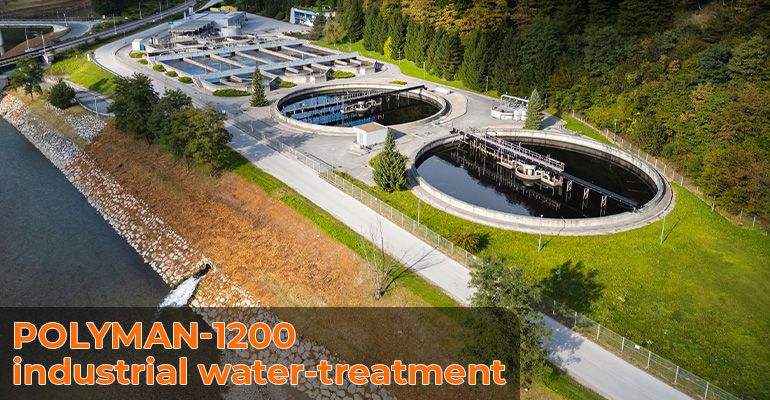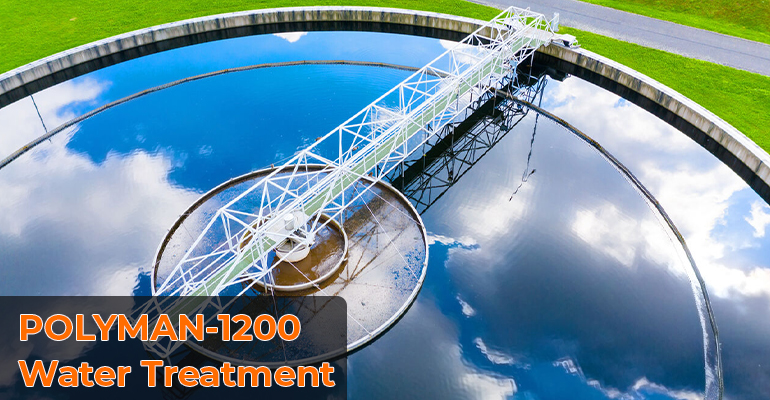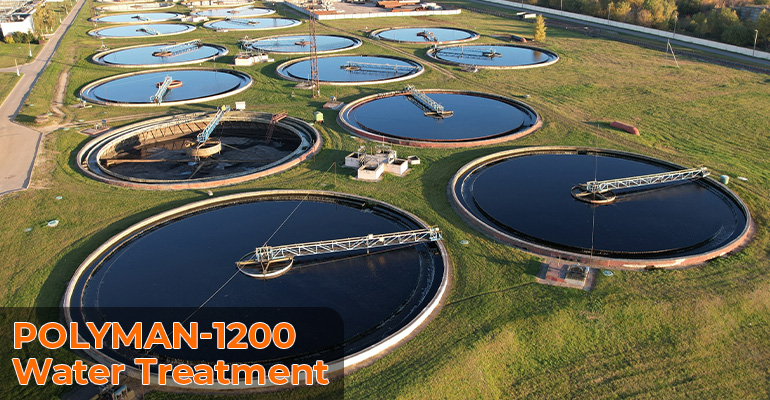
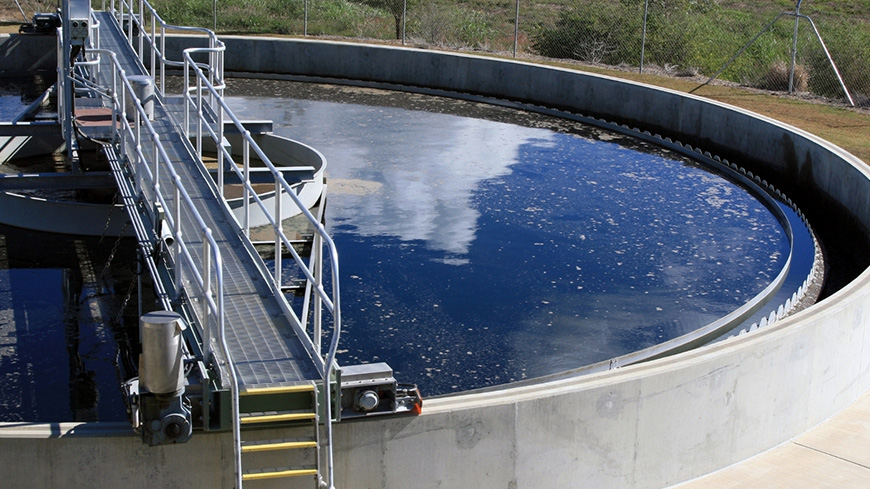
Industrial water systems rarely operate under completely fixed conditions. Hardness, mineral concentration, temperature, pH, evaporation and water reuse can all change during operation. This is where choosing the right polymer becomes important. Maxwell Additives is a Carboxylic Co-Polymer supplier in India offering POLYMAN-1200, a specialty co-polymer used in industrial formulations where mineral management, particle dispersion and deposit control are required...
POLYMAN-1200: Understanding Carboxylic Co-Polymer for Industrial Water Treatment
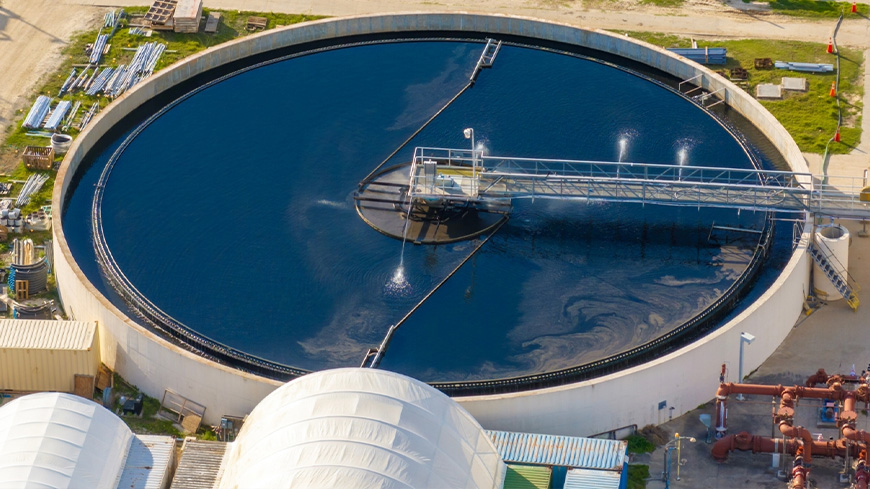
When a treatment formulation needs help with mineral management and particle dispersion a Carboxylic Co-Polymer like POLYMAN-1200 can be a choice. Maxwell Additives includes POLYMAN-1200 in its -polymer line and specifically labels it as a Carboxylic Co-Polymer.
A polymer’s value is not just about its name. Its usefulness depends on how it works in water chemistry with other chemicals under operating conditions and based on the goal of the treatment.
For buyers this makes product selection important. Companies looking for a Carboxylic CoPolymer supplier in India should consider more than just price. Product consistency, technical information, application support, supply capability and quality control can all shape long-term decisions.
What Is POLYMAN-1200?
POLYMAN-1200 is a specialty polymer used in formulations where mineral control, particle dispersion and water chemistry management are key. Maxwell Additives classifies it as a Carboxylic Co-Polymer in its range.
This polymer can be tested as part of water-treatment formulations where unwanted mineral buildup or particle accumulation must be managed.
POLYMAN-1200 is not a one-size-fits-all solution. It works best as part of a broader treatment plan. Its performance depends on water composition, dosage, temperature, pH and compatibility with chemicals.
This application-focused approach matters. Two industrial water systems may look similar at first. Their treatment needs can be very different.
Understanding Carboxylic Co-Polymer Chemistry
A co-polymer has than one type of building block. In a co-polymer the structure gives it functions that can interact with minerals and suspended matter.
For formulators this is useful. Mineral particles don’t stay inactive in water.
Depending on conditions they may:
- Start forming crystals.
- Combine with particles.
- Stay suspended in the water.
- Settle in areas.
- Build up on equipment surfaces.
- React with dissolved substances.
The polymer’s job is to affect how these behaviors happen, as part of the treatment mix.
This is one reason a Carboxylic Co-Polymer can be useful when both dispersion and deposit control are needed.
Why Polymer Selection Matters in Water Treatment
Choosing a polymer by its category can lead to incomplete results.
A practical selection should look at what’s really happening inside the water system.
For example a formulator should understand:
1. Mineral Composition
The type and amount of dissolved minerals affect treatment needs. Calcium systems, phosphate systems and other minerals can behave differently depending on the conditions.
2. Water Hardness
Hardness matters in industrial water programs. Changes in hardness can change how much mineral deposit forms and how much treatment is needed.
3. Temperature
Temperature affects solubility, crystal formation and chemical reactions. A formulation that works at one temperature should be tested under operating conditions.
4. pH
The pH of the system affects how dissolved minerals and treatment chemicals interact. This makes pH a factor in lab and field testing.
5. Concentration
Recirculating systems see changes as water is reused and evaporates. The polymer should be tested under concentration levels not just with fresh water.
POLYMAN-1200 and Dispersion
One important role of water-treatment chemistry is dispersion.
When mineral particles or other suspended matter start clumping they can lead to unwanted deposits.
A dispersant-focused polymer helps keep particles in a state in the water.
Maxwell Additives describes the POLYMAN range as having dispersion-related properties. Identifies POLYMAN-1200 as a Carboxylic Co-Polymer.
In practice the goal is not to make particles disappear.
Instead the formulation is designed to change how particles act so the treatment system can manage them better.
From Mineral Particles to Equipment Deposits
Mineral deposits can cause problems when particles or precipitated materials build up on equipment.
Depending on the system deposits can interfere with:
- Heat-transfer surfaces
- Water flow
- Equipment cleanliness
- Process consistency
- maintenance
- Overall treatment efficiency
Because of this deposit control is often part of a full chemical-treatment strategy.
POLYMAN-1200 can be tested as a component in such a strategy where its carboxylic co-polymer traitsre relevant.
The final result should come from application testing, not assumptions based on the chemical category.
Where Can POLYMAN-1200 Be Considered?
POLYMAN-1200 can be tested for water-treatment and related formulations where mineral behavior and particle dispersion are concerns.
Possible areas for evaluation include:
1. Cooling Water Systems
Cooling-water systems circulate water continuously through equipment. Temperature and concentration changes affect dissolved minerals. Make deposit control more important.
Maxwell Additives’ earlier product details list POLYMAN-1200 for water-treatment use and describe it as a dispersant and scale inhibitor for cooling-water treatment.
2. Industrial Water Treatment
Industrial water often has mixes of dissolved minerals suspended particles and other substances. A polymer can be added to a treatment when better control of mineral behavior and dispersion is needed.
3. Water-Based Chemical Formulations
The polymer can also be considered when polymeric dispersion and mineral-management are needed in a water-based formulation.
The exact formulation should be tested for compatibility and performance.
What Makes POLYMAN-1200 Different From a Simple Treatment Additive?
It helps to see a polymer as part of a system not as a chemical.
A treatment formulation usually has ingredients, each with a role.
For example:
- One ingredient may control scale.
- Another may protect against corrosion.
- Another may support dispersion.
- Another may control growth.
- The polymer may help manage minerals and particles.
This approach lets the formulation fit the conditions.
POLYMAN-1200 can be tested based on the role it needs to play in the formulation.
How to Evaluate POLYMAN-1200 Before Commercial Use
Testing the polymer in a controlled way can show if it fits an use.
Step 1: Understand the Water
Gather all data on the water being treated.
This may include:
- pH
- Hardness
- Calcium
- Magnesium
- Dissolved solids
- Mineral concentration
- Temperature
- Suspended matter
The accurate the water chemistry the more meaningful the test.
Step 2: Identify the Actual Problem
Don’t assume every system has the needs.
Determine if the main issue is:
- Mineral deposits
- Suspended particles
- dispersion
- Changing water chemistry
- Or a mix of problems
This gives the trial a clear goal.
Step 3: Test the Polymer
Evaluate POLYMAN-1200 at treatment levels under real conditions.
The goal is to see how it performs in the formulation environment.
Step 4: Check Compatibility
If the treatment has polymers, phosphonates, corrosion inhibitors or other chemicals check for compatibility.
A polymer that works alone may behave differently when combined with others.
Step 5: Compare the Results
The test should look at what matters for the application.
Depending on the system this can include:
- Deposit formation
- Dispersion behavior
- Water clarity
- Mineral control
- Compatibility
- Stability
- Formulation handling
Only after these factors are checked should the product be considered for use.
Why Application Testing Is Important
No single condition fits all water systems.
Two facilities with similar equipment can differ in:
- Makeup-water sources
- Hardness levels
- Operating temperatures
- Concentration cycles
- Chemical programs
- Maintenance schedules
For this reason the right dosage and formulation must come from actual application.
Maxwell Additives’ information on POLYMAN-1200 also says that usefulness depends on water composition, operation, dosage and other ingredients in the program.
Carboxylic Co-Polymer in India: What Should Buyers Consider?
Companies looking for Carboxylic Co-Polymer in India may find suppliers offering polymeric materials for industrial use.
Selection should go beyond comparing product names.
A buyer can consider:
1. Product Identification
Make sure the material matches the required polymer grade and specification.
2. Quality Consistency
Repeated use needs materials that stay the same from batch to batch. Changes in materials can affect the final product and require process changes.
3. Technical Information
Product specs, handling instructions, application notes and other documents make evaluation easier.
4. Supply Capability
Long-term users should check if the supplier can meet expected purchasing needs consistently.
5. Application Support
Technical help can be useful when introducing a polymer into a formulation or adjusting an existing one.
Choosing a Carboxylic Co-Polymer Supplier
A Carboxylic CoPolymer supplier should be judged by full needs, not just price.
Before choosing a supplier industrial buyers can ask:
- What product specification is provided?
- Is the material, between batches?
- What technical documentation is available?
- Is application guidance offered?
- What packaging options are there?
- What is the expected supply lead time?
- Can the supplier support industrial needs?
- Can samples be tested before buying?
Finding a Carboxylic Co-Polymer Supplier in India
For businesses looking for a Carboxylic Co- supplier in India, local manufacturing and supply capability can make a big difference in ongoing procurement. When you need a supply of a specialty chemical having a supplier close by helps with faster delivery, better communication and consistent support.
Maxwell Additives lists POLYMAN-1200 in its speciality-chemical portfolio. The company says it is a manufacturer of speciality chemicals located in Vadodara, Gujarat, India. Its polymer range includes co-polymers, ter-polymers homo-polymers and other polymer types. This shows the company has a base of polymer technologies, which can be useful for different industrial needs.
For a buyer the key step is to check the current product specification, availability, packaging and application suitability directly with the supplier before placing regular orders. You cannot rely on data or outdated information. What worked year may not work today.
Why Choose Maxwell Additives for POLYMAN-1200?
Maxwell Additives has listed POLYMAN-1200 as a Carboxylic Co-Polymer in its speciality-chemical portfolio. The companys published polymer range covers categories that are used in water-treatment and industrial applications. This means the product is designed for real-world use in environments.
According to Maxwells company information the business was established in India in 1988. It operates manufacturing facilities around Vadodara, Gujarat. The company also says it has laboratory, quality-assurance, R&D and manufacturing capabilities. These are signs of an capable supplier.
For buyers evaluating POLYMAN-1200 these capabilities can start a technical discussion. You can talk about product specifications formulation needs and supply plans. You can also get help with testing, adjustments and long-term support.. The final decision must be based on your specific application, technical evaluation and confirmed product requirements.
Product Consistency and Long-Term Procurement
A polymer may be used repeatedly in a treatment formulation for months or years. That makes consistency especially important. If the raw material changes between batches the finished product may behave differently. This can cause problems in your process.
Production teams may need to investigate the change or adjust processing conditions. That wastes time. Can affect quality. To avoid this a practical procurement approach includes:
- Establishing an approved product specification.
- Checking material against agreed parameters.
- Maintaining communication with the supplier.
- Reviewing application performance periodically.
- Re-evaluating the formulation if operating conditions change.
This approach can make the use of a specialty polymer predictable over time. You know what to expect each time you get a shipment.
Storage and Handling Considerations
Industrial polymers should be handled according to the manufacturers product documentation. This includes storage, transport and safety procedures. Before using POLYMAN-1200 buyers should review the supplied safety information. This includes:
- Recommended storage conditions
- Packaging
- Handling precautions
- Product stability
- Transportation requirements
- Personal protective equipment
Exact handling requirements should always be confirmed from the documentation supplied with the product. Do not assume. Always check the version.
Conclusion
Carboxylic Co-Polymer chemistry can be a part of industrial formulations where mineral management and particle dispersion need to be considered together. These polymers help keep minerals from forming scale and keep particles from clumping. That improves system efficiency. Reduces downtime.
POLYMAN-1200 is listed by Maxwell Additives as a Carboxylic Co-Polymer within its speciality polymer range. The product can be evaluated for water-treatment applications where mineral behavior, suspended matter and deposit control are relevant.
The useful approach is to begin with the actual water chemistry. Identify the treatment objective. Test the polymer under conditions. Then establish the formulation. This way you are not guessing. You are testing with data.
For companies looking for Carboxylic Co-Polymer in India supplier selection should also include product consistency, technical documentation, application support and long-term supply considerations. A good supplier helps you solve problems not create them.
Frequently Asked Questions About POLYMAN-1200
1. What is POLYMAN-1200?
POLYMAN-1200 is a specialty polymer identified by Maxwell Additives as a Carboxylic Co-Polymer. It is included in the companys speciality-chemical polymer range. It can be evaluated for water-treatment and related formulations.
2. What is a Carboxylic Co-Polymer used for?
A Carboxylic Co-Polymer can be used in formulations where mineral control, particle dispersion and deposit management’re important. The actual application depends on water chemistry, operating conditions and the complete treatment formulation.
3. Is POLYMAN-1200 used in water treatment?
Yes. Maxwell Additives lists POLYMAN-1200 within its polymer range for water-treatment and industrial applications. Its published material describes its role in dispersion and scale-inhibitor applications.
4. Can POLYMAN-1200 be used for cooling-water treatment?
POLYMAN-1200 has been described by Maxwell Additives for water-treatment applications including cooling-water treatment. The suitability and dosage should be established according to the cooling-water chemistry and treatment program.
5. How is POLYMAN-1200 different from a ter-polymer?
A co-polymer and a ter-polymer are polymer categories based on their polymer building blocks. Maxwell Additives separately categorizes POLYMAN-1200 under Co-Polymers and products such as POLYMAN-1624 under Ter-Polymers.
6. How should POLYMAN-1200 dosage be determined?
There is no dosage that can be applied to every industrial system. The appropriate level should be determined through application- testing while considering water composition, mineral concentration, temperature, pH and other treatment chemicals.
7. What should I check when selecting a Carboxylic Co- supplier?
Buyers should review product specifications, batch consistency, quality documentation, packaging, technical support, supply capability and application suitability before establishing procurement.
8. Where can I find a Carboxylic CoPolymer supplier in India?
Maxwell Additives lists POLYMAN-1200 as a Carboxylic Co-Polymer. Identifies its speciality-chemical manufacturing operations in Vadodara, Gujarat, India. Buyers can contact the manufacturer for specifications, availability and application information.
Related Posts