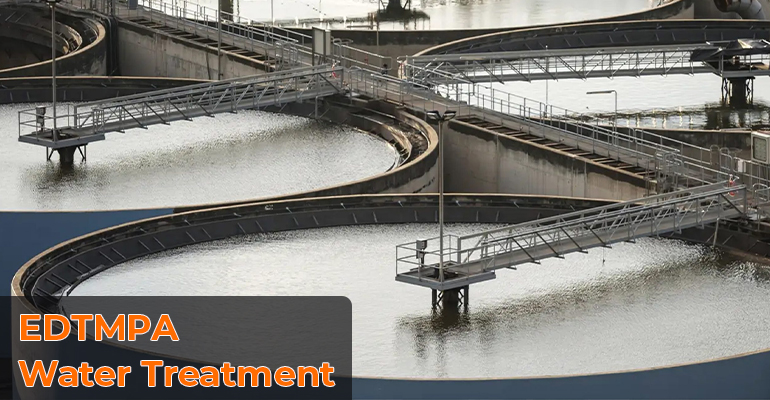


Ethylenediamine Tetra(Methylenephosphonic) Acid - EDTMP is an organophosphonic acid that can be considered in formulations where metal-ion management and mineral-control properties are required. Maxwell Additives lists PHOSPHOMAN-124 as EDTMPA with multiple properties including sequestration, deflocculation, threshold inhibition, and hydrolytic stability...
EDTMP Chemical: Formulation Selection, Product Consistency and Industrial Use
What Is an EDTMP Chemical?
Ethylenediamine Tetra(Methylenephosphonic) Acid – EDTMP, also known as EDTMPA or EDTMP Acid, is a specialty organophosphonic acid that is used in industrial formulations with specific requirements about metal ion interaction and chemical stability. EDTMP contains several phosphonic acid groups that are attached to an ethylenediamine structure, which gives this compound certain formulation properties.
EDTMP Chemical is not selected arbitrarily since manufacturers have to consider its compatibility with other ingredients, the final physical state of this substance and the conditions in which a formulation will be prepared or used. A chemical producer may decide to use EDTMP in an acidic formulation, within a water solution, in high-temperature environments or together with multiple dissolved minerals. A key purchasing consideration is the choice between the acid or salt form of EDTMP, which involves differences in the physical state, content and formulation properties of this specialty chemical. Maxwell Additives lists PHOSPHOMAN ®-124 as an EDTMP product and offers PHOSPHOMAN ®-124(S5), a penta-sodium salt, as an alternative. The selection of one product or the other is an important purchasing consideration in the field of specialized chemical manufacturing.
The acid form is a crystalline powder and the penta-sodium salt is a liquid product since these two variations of EDTMP are manufactured differently and must be evaluated separately. The choice between one formulation and the other depends on the conditions of the production process, storage availability, dilution methods and other requirements of the end user. An industrial manufacturer should analyze the current product specification before deciding on one variation of EDTMP.
EDTMPA can be considered for a formulation that requires a controlled mineral interaction or a defined behaviour of dissolved metal ions, but its final efficacy depends on factors such as the dosage and the presence of other chemicals. The formulation feasibility of EDTMPA must be analyzed in laboratory conditions before it is incorporated into a commercial production process.
When a company looks for an EDTMPA supplier, it should take into consideration the formulation possibilities, documentation, product packing and overall supply chain reliability in addition to the intended application of this specialty chemical.
EDTMP Chemical and Its Role in Formulation Development
The formulation of an industrial product is not done by choosing raw materials arbitrarily since each component contributes to the final properties of this substance, which will determine its field of application. EDTMP Chemical can be taken into consideration in formulation development when a manufacturer wants to obtain a controlled behaviour of selected metal ions or a reduced undesired interaction between minerals.
A reliable starting point for formulation research is the intended purpose of EDTMPA. A manufacturer can be developing a novel product, replacing a formulation component, looking for a more stable reaction or adapting a chemical process to a new production environment. All these scenarios require a different evaluation approach since the intended application defines the essential quality requirements for this substance. The physical state of EDTMP Acid is also relevant to formulation development since a powder and a liquid product will have to be incorporated into the production process differently. A formulation developer should decide on the grade and specification of EDTMPA based on the equipment, personnel and technical limitations of the production facility.
The compatibility of EDTMP Chemical with other substances is another significant consideration in formulation development. EDTMPA may have to be combined with polymers, surfactants and other treatment agents or used in an acidic solution with various salts. However, a formulation developer cannot assume that EDTMP will be compatible with other raw materials since the combination of two or more chemicals can lead to unexpected changes in colour, viscosity, pH or other properties. A chemical manufacturer can conduct trials to obtain accurate information about the behaviour of EDTMP in a formulation.
The most important aspect of formulation development is the selection of an adequate dosage. EDTMPA has to be added in excessive amounts to a solution to ensure that it will counteract the undesired reaction of metal ions. However, a formulation developer should conduct trials to define an appropriate range of dosages and observe the changes that EDTMPA will induce in its solution. The results of these trials should be compared to the intended application to select an ideal percentage amount and prepare this substance for the production process.
A formulation specialist should also take the current quality of EDTMP into consideration when defining the most reliable method of incorporation. Slight variations in active content, product appearance, packaging or other aspects of the raw material can affect the behaviour of EDTMPA when this substance is added to a solution. A reliable EDTMP supplier should offer comprehensive documentation and be available for discussion with the formulation developer.
The quality and consistency of the produced batch is equally important to formulation development since a manufacturer will have to repeat the same procedure multiple times to obtain identical results. EDTMP Chemical should be included in the production process with defined instructions for material verification, preparation, mixing and quality control. The verification of the incoming material starts with the examination of the product name, batch number, packing condition and certificate of analysis, and continues with the comparison between the observed specifications and the values indicated in the product documentation.
A formulation developer will have to define the most reliable procedure for the addition of EDTMP to a formulation. The sequence and rate of addition can affect the uniformity of this substance in a mixture, so the most appropriate method depends on the equipment and personnel of the production facility. A reliable EDTMPA supplier should assist the formulation developer in the selection of an adequate procedure for the addition and preparation of EDTMP.
EDTMPA should also be incorporated into a controlled procedure for the preparation and storage of a formulation batch. Trials will help a formulation developer determine the ideal temperature, time and pressure for the production process. The physical appearance of EDTMPA can change considerably under different conditions, so it is advisable to examine this substance after it has been subjected to heat, pressure or other factors.
A formulation developer should document all the observed changes and use this information to standardize the production process. It can be challenging to determine the impact that EDTMP will have on a solution when this chemical is combined with other substances. However, EDTMPA will always have to be incorporated in a production process in which the material, temperature, pressure, product mixing and other factors will be kept at the same levels throughout the runs of a batch.
The Main Advantages of EDTMP Chemical
- Multiple phosphonic acid groups: EDTMPA has to be used in excessive amounts to counteract the undesired reaction of metal ions, but its formulation properties make it a reliable option for a controlled mineral interaction.
- Acid and salt form availability: EDTMP is available in different commercial forms that must be evaluated separately since they have different formulation and manufacturing requirements.
- Technical evaluation: EDTMP chemical can be tested in laboratory conditions prior to its incorporation into a production process.
- Metal ion management: EDTMPA will affect the behaviour of selected metal ions in a solution.
- Formulation-specific: EDTMP can be applied in various production processes, but its application has to be evaluated for each product.
- Physical state availability: The acid and the penta-sodium salt of EDTMP have to be considered as separate substances with different formulation and manufacturing requirements.
- Raw material planning: EDTMP can be incorporated into a standardized procedure for the production of a formulation batch.
Choosing Between EDTMP Acid and EDTMP Salt Form
The choice between EDTMP and EDTMP penta-sodium salt is a crucial purchasing consideration for a manufacturer that wants to achieve reliable formulation results without unnecessary changes to the production process. Although EDTMP Acid and EDTMP salt are similar, their different physical properties will have to be taken into consideration when a manufacturer selects the most appropriate product for its production process. The selection of EDTMP should be based on the intended application, not on the product name.
The first step in the EDTMP selection process is the examination of the incorporation method. EDTMP Acid will require a separate procedure for its dissolution, so a formulation developer will have to examine the equipment and technical limitations of the production facility. A liquid EDTMP formulation may be more appropriate for a production process that uses liquid raw materials, but its concentration and pH will have to be considered when it is incorporated into a solution.
The second step in the EDTMP selection process is the examination of the final product. EDTMPA will have to be evaluated in accordance with the intended application, but the salt form of this chemical will introduce sodium ions into the solution. The EDTMP Acid form might be more appropriate for a formulation that does not require a specific ionic environment, but a formulation developer should conduct trials to determine if this assumption is correct.
The conditions of storage and transportation should also be taken into consideration when EDTMP is selected. The physical appearance and formulation properties of EDTMP Acid and EDTMP salt will have to be examined alongside the available space, equipment, personnel and purchasing volume.
Another important aspect of EDTMP selection is the calculation of active content. Different grades of EDTMP can only be compared on the basis of their acid content, solid content or product concentration. The comparison of two grades of EDTMP on the basis of their price per kilogram can be misleading since the actual volume of the active substance and its formulation properties will affect the cost-benefit ratio of a product.
A reliable EDTMP supplier can help a manufacturer compare the technical specifications, usable concentration, dosage, formulation properties and other aspects of EDTMP Acid and EDTMP salt. The active content of this substance will also have to be taken into consideration when the appropriate grade is selected. A formulation developer should obtain comprehensive documentation from the EDTMP supplier and use this information to compare the differences between EDTMP Acid, EDTMP salt and other products that can be applied in a similar formulation.
Developing a More Consistent EDTMP-Based Process
Consistency is an essential aspect of formulation production since even the slightest change in the amount of a raw material or the rate at which it is added to a solution can affect the outcome of a batch. The application of EDTMP in a production process has to be considered when a standardized procedure for the production of a formulation is developed. The verification of the incoming material, its preparation and the rate and order of its addition to a solution are some of the aspects that have to be taken into consideration when a consistent EDTMP-based process is developed.
The verification of the incoming EDTMP material should be the first step in the production process since it will help a manufacturer determine if the received product corresponds to the ordered grade and specification. A formulation developer will have to examine the product name, batch number, packing condition, certificate of analysis and other relevant documentation. It will then have to compare the observed characteristics of this substance to the information provided by the EDTMP supplier.
The next step is the development of a standardized procedure for the addition of EDTMP. The rate and order of addition will affect the uniformity of this substance in a solution, so a formulation developer will have to determine the most appropriate method in accordance with the equipment and personnel of the production facility. Laboratory or pilot-scale trials can help a formulation developer determine the most appropriate procedure for the addition of EDTMP to a solution.
A formulation developer will then have to create a procedure for the standardization of a formulation batch. This procedure will involve the selection of the appropriate temperature, time, pressure and other conditions of the production process. The formulation developer will have to examine the impact that EDTMP will have on the appearance of a solution and conduct trials to observe the potential changes to viscosity, precipitation, colour, pH and other properties of a formulation.
The documentation of all the observed changes will be necessary to develop a consistent EDTMP-based process. A formulation developer will have to keep track of the product batch, the quantity of EDTMP, the rate and order of its addition, the duration of the production process and any other observed changes. This procedure will have to be repeated for every formulation run to ensure that the same results are obtained every time. A formulation developer will also have to keep records of all the technical aspects of the production process.
The role of an EDTMP supplier goes beyond the simple supply chain management of this specialty chemical. A reliable supplier should provide the necessary technical information, respond to inquiries with regards to product availability and assist the manufacturer in the process of repeat orders. This aspect is especially relevant for a formulation developer that has to incorporate EDTMP into a large-scale production process.
The Main Advantages of EDTMP Chemical in Process Development
- Better grade selection: EDTMP is available in different commercial forms that have to be evaluated separately since they have different formulation and manufacturing requirements.
- Formulation variables: EDTMPA can be incorporated into a formulation in which metal ions will have a specific behaviour.
- Consistent batch: A clearly defined EDTMP product will help to develop standardized procedures for the verification of the incoming material and the addition of this substance to a formulation.
- Process development: The laboratory or pilot-scale application of EDTMP will help a formulation developer determine the changes that this chemical will induce in a solution.
- Formulation flexibility: The different physical states of EDTMP will have to be analyzed separately since they will have to be incorporated into a production process differently.
- Improved procurement planning: A reliable EDTMP supplier will support the repeat purchase of this specialty chemical.
- Formulation-specific evaluation: EDTMP can be applied in various production processes, but its application has to be evaluated for each product.
Maxwell Additives PVT. LTD. as an EDTMP Chemical Supplier
Maxwell Additives PVT. LTD. is a specialty chemical manufacturer and supplier that offers EDTMP as part of its phosphonate product range. This company’s product portfolio includes EDTMP Acid and EDTMP penta-sodium salt, so a buyer can discuss the preferred physical state of EDTMP and the technical requirements of its application. Maxwell Additives has over 35 years of experience in the field of specialty chemical manufacturing, so it focuses on product consistency, manufacturing reliability, technical documentation and customer-oriented supply chain management. A manufacturer interested in the application of EDTMP should contact this supplier to discuss the intended application, the required grade of EDTMP and the purchasing and packaging requirements prior to the finalization of a purchase agreement.
Conclusion
Ethylenediamine Tetra(Methylenephosphonic) Acid – EDTMP is a specialty phosphonate chemical that can be applied in the field of industrial formulation when a controlled interaction between metal ions and minerals is required. The compatibility of EDTMP with other substances, its physical state and the intended application will affect the decision of a formulation developer.
The choice between EDTMP Acid and EDTMP penta-sodium salt is a crucial purchasing consideration since the properties of these two products are different. The application of EDTMP in a production process will require trials in laboratory conditions to determine the most appropriate rate of addition and the most reliable method of incorporation. The selection of the appropriate grade of EDTMP will also have to be based on the requirements of a production facility and the availability of this substance.
A consistent supply of EDTMP is equally important to a formulation developer that wants to obtain the same results in every production run. The selection of an appropriate product grade, clear documentation of the produced batch and the discussion with an EDTMP supplier are some of the factors that will contribute to a more reliable production process.
For a manufacturer interested in the application of EDTMP, the most appropriate strategy is the combination of the selection of an appropriate product form, the evaluation of EDTMP compatibility with a formulation and the establishment of a long-term supply agreement with an EDTMP supplier.
Frequently Asked Questions (FAQs)
1. What is EDTMP Chemical used for?
EDTMP Chemical, also known as EDTMPA or EDTMP Acid, is used in specialty industrial formulations where the interaction of metal ions and mineral-related compounds needs to be controlled. The application of EDTMP depends on the formulation, the operating conditions, the selected product form and the technical requirements of the intended application. A manufacturer must evaluate this substance in laboratory conditions prior to its incorporation into a production process.
2. What is the difference between EDTMP Acid and EDTMP penta-sodium salt?
EDTMP Acid and EDTMP penta-sodium salt are two different products, so their application in formulation processes should be analyzed separately. The two variations of EDTMP have to be analyzed in terms of their physical state, content, formulation properties and other aspects. EDTMP Acid is a crystalline powder and EDTMP penta-sodium salt is a liquid product, so their application in a formulation process will have to be considered separately. A buyer should examine the current specification of EDTMP prior to the purchase of this specialty chemical.
3. How can I select the correct EDTMPA grade for my formulation?
The selection of the correct EDTMPA grade depends on the physical state of this substance, its active content, the required dose, the process of formulation and other specifications of the intended application. A manufacturer should discuss the intended application of EDTMP with a supplier and conduct trials in laboratory conditions prior to the selection of the appropriate product grade.
4. What should I ask an EDTMP Chemical supplier before ordering?
Prior to the purchase of EDTMP, a buyer should ask about the product specification, the physical state of this substance, its active content, the packaging, the documentation, the requirements of storage, the lead time and the availability of the product. If EDTMP will be incorporated into a formulation batch, the buyer should discuss the compatibility and technical requirements of this formulation with the supplier.
5. Can EDTMPA be used with other phosphonates or polymers?
EDTMPA can be applied with other phosphonates, polymers and formulation agents, but its compatibility with other substances should not be assumed since it will depend on the pH, the concentration, the presence of other ions, the temperature and the order of addition. It is advisable to conduct trials in laboratory conditions prior to the incorporation of EDTMP into a formulation.
6. Why is active content comparison important when purchasing EDTMP?
The comparison of the active content is important to an EDTMP buyer since it will provide this purchaser with relevant information about the most reliable product option. The evaluation of two products on the basis of their price per kilogram can be misleading since the actual volume of the active content and its formulation properties will define the cost-benefit ratio of a product.
7. Where can I purchase EDTMPA from a supplier in India?
A business interested in the purchase of EDTMP should contact a specialty chemical supplier in India that offers this product. Maxwell Additives PVT. LTD. has EDTMP Acid and EDTMP penta-sodium salt in its product portfolio. A customer should discuss the current product grade, the packaging and the technical specification of EDTMP prior to the placement of an order.
Related Posts