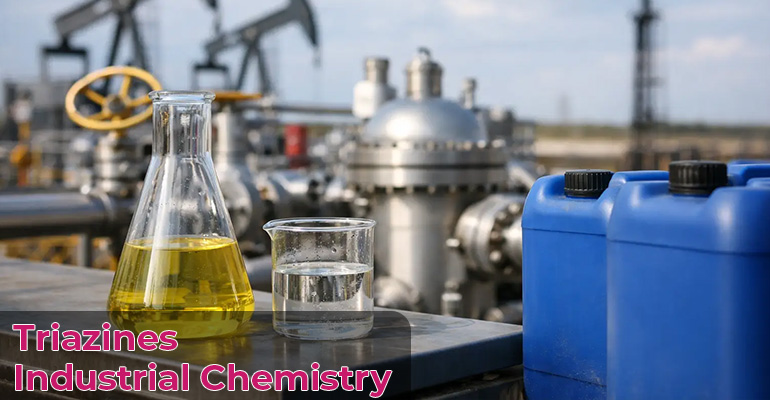
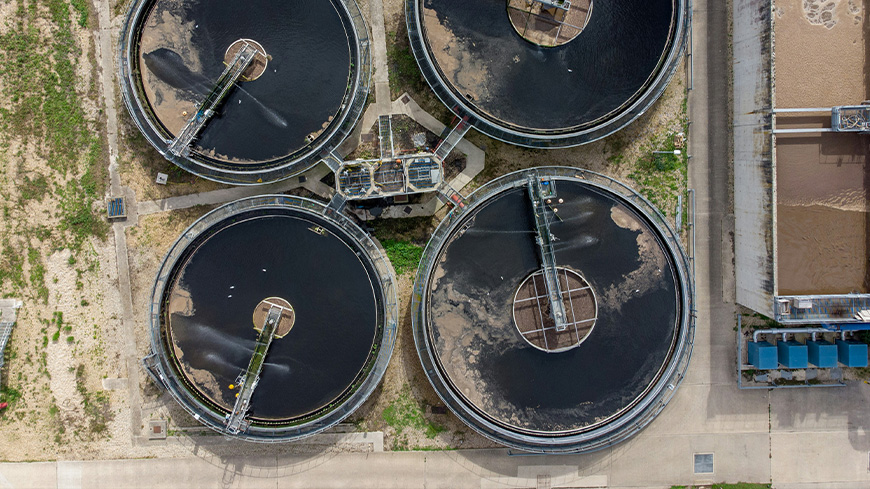
Triazines can be used within a variety of industrial applications. This includes chemical manufacture, agrochemicals, water treatment and oil and gas...
Functional Polymers: Industrial Polymer Chemicals and Their Uses
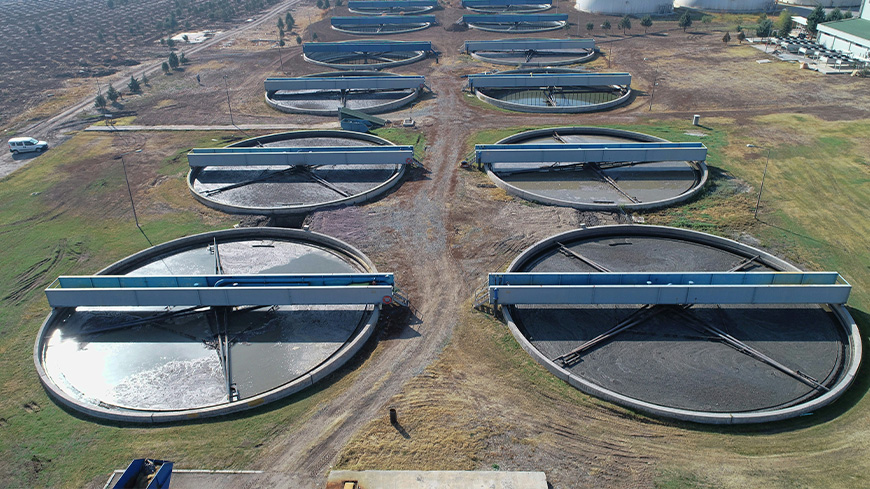
Functional polymers are used across a variety of industrial applications. They can be used in water treatment, chemical processing, textiles, coatings, adhesives and construction. By altering the properties of polymers, functional polymers can be used within processes and products.
Some functional polymers provide mechanical properties, such as flexibility or strength. Others provide chemical or physical functions such as the control of mineral scale, dispersion of particles, adhesion, aiding flocculation or altering the properties of industrial formulations.
Functional polymers are very important within the category of industrial polymer chemicals. As the polymer can be specifically designed, the properties of the polymer can be tailored by altering the molecular structure, groups and chemistry.
Within industrial water treatment, functional polymers can be used to control mineral scaling and dispersed particle content. Other functional polymers can be used to aid in coagulation or flocculation to make it easier to remove solid particles from water.
Functional polymers can be found in paints, coatings, adhesives, textiles, paper, oil and gas processes and other speciality chemical applications.
If manufacturers understand the function, type, chemical properties and applications of functional polymers, products can be selected for processes.
This article outlines functional polymers, differences between functional polymers and polymers, the chemistry, main types, applications, benefits, limitations and key considerations when selecting polymer chemicals.
Functional Polymers
Functional polymers are polymers that have been designed/selected to provide chemical, physical or surface functions.
Functional polymers are made up of repeating units of molecules (monomers).
The monomers are linked together during polymerisation to create long chains.
The properties of the polymers are determined by the chemical composition, molar mass, functional groups and molecular structure.
Functional polymers may contain functional groups that can interact with water, minerals, particles, surfaces or other substances.
As a result, functional polymers can be used to perform various functions within industrial processes.
Some functional polymers can cause dispersion of suspended particles to facilitate their removal from water.
Other functional polymers can cause dispersion of particles or hinder crystal growth of minerals.
Some polymers can alter viscosity, increase adhesion, improve performance of surfaces or alter the properties of industrial formulations.
There are many Different Types of functional polymers. It is therefore important to select the correct product based on the intended purpose.
Industrial Polymer Chemicals
Industrial polymer chemicals are polymer based products used within processes, treatments and speciality chemical formulations.
Industrial polymer chemicals can be used as process aids, treatment chemicals, formulation components or components of industrial products.
Industrial polymer chemicals can be synthetic or naturally derived.
Some water soluble polymers are used within industrial water treatments.
Other polymer emulsions, resins, dispersions and speciality materials are used within coatings, adhesives and construction chemicals.
Industrial polymer chemicals may be selected to perform functions such as:
- Coagulation.
- Dispersion of particles.
- Control mineral scale.
- Condition sludge.
- Alter viscosity.
- Improve adhesion.
- Form films.
- Control rheology.
- Binding.
- Stabilisation.
- Form speciality chemical formulations.
Different polymer products can be used to perform different functions.
Wastewater clarification polymers may not be suitable for scale control.
Similarly, polymers designed for use in coatings may not have appropriate properties for industrial water treatment.
It is important to understand the chemical make-up of the polymer in relation to the conditions within the process in order to select an appropriate polymer for the application.
Chemistry of Functional Polymers
The chemical structure of functional polymers determines their performance in industrial applications. The following properties will impact the performance of a polymer.
Monomer Composition
Monomers are molecules that combine to create polymers.
Depending on the monomers used in polymerisation, different chemical structures and functional groups will be present in the polymer.
Using different monomers will determine the physical properties of the polymer.
Acrylic acid can be used to create water soluble polymers for industrial water treatment. Other monomers may be used to create charged polymers, hydrophobic properties or specific mechanical properties.
Functional Groups
Functional groups can be attached to or incorporated in polymeric molecules to alter the interaction with other materials.
Common functional groups in polymers include:
- Carboxylic acid.
- Carboxylate.
- Amine.
- Quaternary Ammonium.
- Hydroxyl.
- Sulphonate.
- Ester.
- Amide.
The presence and arrangement of functional groups can alter polymer performance.
Polymers containing carboxylate functional groups can interact with mineral surfaces during water treatment.
Cationic polymers, containing charged functional groups, can interact with negatively charged suspended particles.
Charge Properties
Functional polymers can be positively charged, charged or neutral. This property of the polymer will influence how it interacts with particles, ions and surfaces.
Cationic polymers may interact with charged suspended particles.
Anionic polymers may interact with mineral surfaces and be used in certain flocculation processes.
The appropriate charge properties of polymers will depend on the application.
Molecular Structure
Functional polymers may have a linear, branched or cross-linked molecular structure.
This can affect solubility of the polymer, viscosity, performance and chemical properties.
Solubility
Some functional polymers are soluble in water. Some may be soluble in solvents or may be in emulsions or dispersions. This will effect how the polymer can be prepared, handled and applied.
Chemical Stability
The chemical stability of functional polymers may depend on the chemical make-up and conditions within which they are used. Temperature, pH, chemical exposure and other factors may affect polymer performance. Therefore, it is important to select a polymer which is appropriate for the conditions within the process.
Function of Functional Polymers
Functional polymers perform functions based on their molecular structure and what they interact with.
Charge Neutralisation
Very small particles within water may have a charge. This may prevent the particles from aggregating. Cationic functional polymers may interact with charged particles to reduce the electrostatic repulsion between particles. This may aid in breaking the particles apart.
Bridging
Polymers with high molecular weights may interact with many suspended particles. This causes aggregation of particles to form larger flocs.
Formation of flocs can aid in separation of solid particles during treatment.
Particle Dispersion
Some functional polymers can be used to keep particles suspended within liquids. This may reduce the tendency of particles to deposit or settle. It is important to disperse particles in some water systems within manufacturing and chemical formulations.
Inhibition of Crystal Growth
Mineral scale can form as dissolved materials crystallise. Some functional polymers may interact with growing mineral crystals. Under these conditions this may inhibit crystal growth. As a result, mineral scale may be controlled.
Modification of Crystal Growth
Some polymers can alter the shape or growth of mineral crystals. This can affect how crystals form and deposit on surfaces. How effective this is will depend on chemistry of polymers and make-up of water.
Interaction with Surfaces
Functional polymers may interact with surfaces by binding to the surface, attraction or other methods. This is important in coatings, adhesives and speciality chemical applications.
Viscosity Alteration
Some polymers can alter the flow of liquids. They may be used to increase viscosity, alter flow or control viscosity. How effective they are will depend on concentration, molecular weight and conditions of the mix.
Formation of Films
Some functional polymers can form films on surfaces under certain conditions. This property is useful in coatings, adhesives and protection.
Main Applications of Functional Polymers Within Industry
Functional polymers can be used in many industries as their properties can be tailored for specific applications.
Industrial Water Treatment
Minerals, suspended particles and other impurities may be present in water within industry. This can lead to scale formation, fouling and deposition. Some functional polymers may be used to manage these issues. Low molecular weight acrylic polymers may be used to control mineral scale and disperse particles. Other polymers may be used to cause aggregation, floc formation or conditioning of sludge. The correct polymer will depend on chemical make-up of water and requirements of treatment.
Industrial Wastewater Treatment
Suspended solids, colour causing compounds and other impurities may be present in industrial wastewater. Some functional polymers may be used to cause aggregation and flocculation. Suspended particles may be caused to form flocs and be removed from water. Different polymers may be used depending on what is present within wastewater. Industries that may use polymer based wastewater treatments include textiles, chemical processing, paper and food processing.
Cooling Water Treatment
Cooling water systems are used in industry, power stations and processing. Over time dissolved minerals may become more concentrated in the system. This can increase the risk of mineral scaling. Suspended particles may also accumulate on surfaces within equipment. Some functional polymers may be included in cooling water treatment formulations to control mineral scaling and disperse suspended particles. They may be combined with phosphonates, corrosion inhibitors and other treatment chemicals.
Boiler Water Treatment
To operate efficiently, water quality within boilers is important. Mineral scaling may cause issues with heat transfer and performance of equipment. Some functional polymers may be included in certain boilerFunctional Polymers
Functional polymers are used across a variety of industrial applications. They can be used in water treatment, chemical processing, textiles, coatings, adhesives and construction. By altering the properties of polymers, functional polymers can be used within processes and products.
Functional Polymers and Conventional Polymers
Polymers and conventional polymers both consist of repeating molecular structures. However, they may be used for different purposes.
Conventional Polymers
Many conventional polymers are selected based on structural properties. They may possess good mechanical properties including strength, flexibility, toughness, heat resistance and durability. They are often used in packaging, containers, automotive parts and other manufactured items.
Functional Polymers
Functional polymers can be used to perform certain functions within processes. These may include:
Coagulation, scale control, dispersion, flocculation, adhesion and viscosity control.
The effectiveness of functional polymers will depend on functional groups and polymer structure.
Differences
Functionality
Conventional Polymers
Specific function
Often provide structural properties
Important Features
Functional Groups, charge characteristics, molecular weight and reactivity
Strength, flexibility, durability and ease of processing
Common Applications
Water treatment, coatings and specialty formulations
Packaging, moulded components and structural materials
Product Choice
Based on functionality required
Based on material and processing requirements
These categories may be overlapping.
Polymers may have functional properties based on both the chemical composition and application.
Common Issues with Functional Polymers
Choosing the incorrect polymer or using the polymer incorrectly may cause issues with performance.
Incorrect Polymer
A polymer may not be suitable for the application. The correct polymer must be selected.
Incorrect Dosing
Incorrect dosing may reduce performance or increase costs. The correct dosage should be determined by testing.
Chemical Incompatibility
Some polymers will react with other components in the formulation. Check for chemical compatibility.
Changes in Conditions
Changes in temperature, pH and water composition may effect Polymer Performance.
Incorrect Preparation
Some polymer products may require dilution, mixing or preparation. Incorrect preparation may reduce performance.
Incorrect Storage
Poor storage may reduce product quality. Follow manufacturers recommendations.
Insufficient Testing
If polymers are selected without testing, performance may be poor. Testing in the laboratory and in processes can help identify suitable products.
Safety
The safety of functional polymers depends on the polymer and formulation. Different functional polymers may have different chemical compositions and therefore different safety risks.
Some polymer solutions may be irritating to skin and eyes.
Powdered polymer products may produce dust.
Polymer solutions may cause slippery surfaces.
Some products may contain residual monomers, preservatives or other components requiring care.
Before handling any polymer, industrial users should refer to the Safety Data Sheet.
Key Safety Considerations
Refer to Safety Data Sheet
Wear PPE
Avoid skin/eye contact.
Ensure adequate ventilation.
Prevent dust formation.
Store under recommended conditions.
Remove spills.
Use mixing and dosing equipment.
Keep incompatible chemicals separate.
Provide training on safe handling.
Follow appropriate disposal procedures.
The exact considerations will depend on the product and process.
Environmental Considerations
Consider environmental factors when choosing polymer chemicals.
Depending on the functional polymer, different environmental properties may be present.
Depending on the polymer chemistry, molecular weight and other properties, synthetic polymers may be difficult to degrade in external environments.
Product Selection
Consider environmental properties in addition to performance of polymer in the application.
Wastewater Disposal
Industrial sites must follow the correct wastewater disposal regulations. Simply using a polymer does not mean regulations are followed.
Residual Polymers
Consider the amount of residual polymer in treated water/wastewater.
Sludge Management
Sludge containing residual polymer must be managed appropriately, depending on its composition and regulations.
Storage and Handling
Chemicals can be stored and handled appropriately to reduce spillage.
Product Specific Considerations
Environmental Considerations should be based on the specific product and not assumptions based on the polymer group.
Role in Modern Chemical Manufacturing
Functional polymers are important in chemical manufacturing as they allow specific properties to be added to industrial formulations.
By varying the monomers, polymerisation conditions and structure of polymers, manufacturers can create products suitable for industrial applications. For example, some polymers may be used to treat water and separate solid matter. Others may be used to prevent the build up of minerals in water systems. Different functional polymers can be used in specialty formulations to allow adhesion, dispersion, stability and viscosity control. As processes in industry become more specific, it has become increasingly important to select polymers based on performance. However, no single functional polymer will suit every application. The correct polymer should be selected based on the required function, chemical properties and conditions.
Conclusion
Functional polymers are a type of industrial polymer chemical used within manufacturing and processing processes. Depending on the chemical composition, polymers can be used to perform different functions. These functions depend on molecular weight, functional groups, charge characteristics and polymer structure. Functional polymers can be used in water treatment processes to perform functions including flocculation, settling, particle dispersion and mineral scaling control. Functional polymers can be used in coatings, adhesives, textiles, construction chemicals, paper production and specialty chemical formulations. Different polymer properties are required for different industrial applications. To select the correct product consider required function, conditions and compatibility with other chemicals. Before selecting a polymer, industrial customers should refer to product details, perform the correct testing and consider the performance of the product. Working with a specialist chemical manufacturer or supplier can help businesses find suitable polymers for their application. Find functional polymers and industrial polymer chemicals for you .
Frequently Asked Questions
1. What are functional polymers?
Functional polymers are polymers that have been designed or selected to perform specific chemical and/or physical functions. They may be used to perform coagulation, flocculation, dispersion, scale control, adhesion, viscosity control and other functions in industrial applications.
2. What Are Industrial Polymer Chemicals?
Industrial polymer chemicals are polymer-based substances used in manufacturing, processing, water treatment and specialty chemical formulations.
3. What are common types of functional polymers?
Common types include acrylic polymers, cationic polymers, anionic polymers, non-ionic polymers, polyacrylamides, polyamines and specialty copolymers.
4. What are functional polymers used for in water treatment?
Functional polymers can be used for coagulation, flocculation, conditioning sludge, particle dispersion and controlling mineral scaling.
5. What is the Difference Between Functional Polymers and conventional polymers?
Functional polymers are selected based on the chemical/physical function required. Many conventional polymers are selected based on structural properties. However, some polymers may have both structural and functional properties.
6. Are functional polymers used in Wastewater Treatment?
Yes. Functional polymers can be used as a coagulant and flocculant in Wastewater Treatment processes to allow separation of solids in water.
7. Can functional polymers be used to Prevent Scale Formation?
Yes. Depending on polymer chemistry and water composition, functional polymers may be able to reduce/minimise mineral scaling. However, this depends on polymer chemistry and water composition.
8. What role do acrylic polymers play in industry?
Acrylic polymers have many applications in industry. They can be used in water treatment, coatings, adhesives, detergents and other specialty formulations. The application depends on chemical composition and molecular weight.
9. Are functional polymers used in cooling water treatment?
Yes. Dispersant and scale prevention polymers may be included in cooling water treatments to allow control of mineral build up and suspended particles.
10. What factors influence the performance of functional polymers?
Molecular weight, functional groups, charge characteristics, pH, temperature, concentration and chemical compatibility.
Related Posts