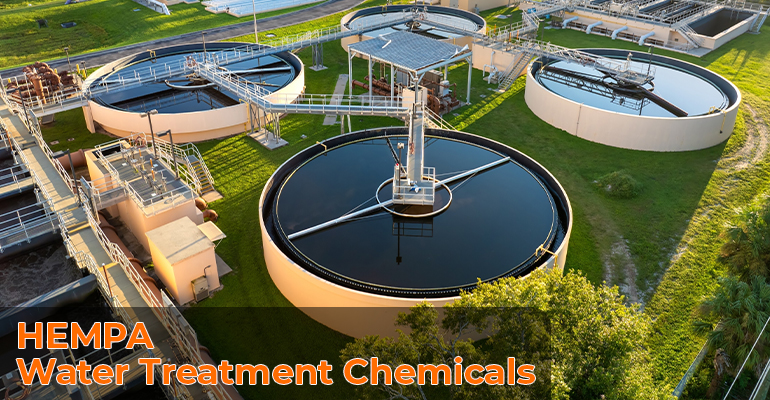

Hydroxyethylamino-Bis Methylene Phosphonic Acid, commonly known as HEMPA, is a phosphonate-based specialty chemical used in industrial formulations where mineral deposits, dissolved metal ions, and surface-related problems need better control. Its chemical structure contains phosphonic acid groups that allow it to interact with metal ions in water and process environments. This makes HEMPA useful when formulators need a chemical that can support cleaner operations without making the overall formulation unnecessarily complicated...
HEMPA Chemical in Industrial Applications
 What is HEMPA Chemical?
HEMPA Chemical stands for Hydroxyethylamino-Bis Methylene Phosphonic Acid. It is an organophosphonic acid used in industrial formulations where control of dissolved metal ions, mineral deposits, and formulation stability is important. The molecule contains phosphonic acid groups that can interact with metal ions, making HEMPA useful in chemical treatment systems that face problems caused by hardness and mineral accumulation.
In practical applications, HEMPA can become part of a treatment program rather than working as a standalone solution. Industrial water and process formulations may contain calcium, magnesium, iron, manganese, and other dissolved substances. When these materials interact under changing temperature, concentration, or pH conditions, unwanted deposits or chemical instability can develop. HEMPA can help manage some of these interactions through its complexing properties.
Another reason HEMPA attracts attention is its flexibility across different industrial formulations. It can be considered in applications involving water treatment, cleaning formulations, metal treatment, detergents, and other chemical processes. The actual performance depends on the formulation, concentration, operating conditions, and the other ingredients present in the system.
For businesses looking for a dependable HEMPA – Hydroxyethylamino-Bis Methylene Phosphonic Acid Manufacturer and supplier in India, quality consistency is an important consideration. Maxwell Additives identifies HEMPA as PHOSPHOMAN-224 in its phosphonate range and lists it as Hydroxyethylamino-Bis Methylene Phosphonic Acid.
HEMPA is particularly relevant when a formulation needs controlled interaction with mineral-forming ions. Instead of simply addressing deposits after they appear, a suitable treatment program can be designed to influence the conditions that encourage their development. This preventive approach can help industrial users maintain more predictable processing conditions.
The material can also be useful where metal ions affect the performance of other formulation ingredients. By interacting with selected ions, phosphonate chemistry can reduce their availability for unwanted reactions. This can help maintain more consistent chemical behavior in carefully designed formulations.
The selection of a HEMPA – Hydroxyethylamino-Bis Methylene Phosphonic Acid Manufacturer in India should therefore involve more than checking availability. Buyers should consider specification, concentration, batch consistency, packaging, technical information, and the suitability of the material for the intended process.
Understanding the Industrial Role of HEMPA
Industrial systems rarely operate under completely fixed conditions. Water composition can change, temperatures can rise or fall, and mineral concentrations may vary between batches. Such changes can influence the formation of deposits and the interaction of metal ions with other ingredients.
HEMPA Chemical can support treatment strategies by providing phosphonate functionality that interacts with these metal ions. This makes it useful in systems where mineral control is an important part of maintaining operational stability.
For example, a water-based process may contain calcium or magnesium that can contribute to unwanted deposits under particular conditions. A suitable phosphonate can influence the behavior of these ions and help reduce the tendency toward problematic mineral formation. The result depends on the complete treatment program rather than the chemical alone.
HEMPA can also be considered in formulations where iron or other transition metals create difficulties. Metal ions can sometimes participate in unwanted reactions, discoloration, or deposit formation. Properly selected chelating chemistry can help control their behavior.
This makes HEMPA a useful ingredient for formulators who need a chemical that can perform multiple supporting roles within an industrial system.
Features of HEMPA Chemical
1. Effective Metal-Ion Interaction
HEMPA contains phosphonic acid functionality that enables interaction with several dissolved metal ions. This property makes it suitable for formulations where calcium, magnesium, iron, or similar ions need to be controlled. Its complexing behavior can support industrial systems that require better management of mineral-related chemical reactions.
2. Supports Scale Management
HEMPA can contribute to treatment programs designed to manage mineral deposits. By interacting with scale-forming ions and influencing their availability, it can help control unwanted precipitation under suitable conditions. This makes the chemical relevant for industrial processes where mineral buildup may affect equipment performance, cleaning requirements, or continuous operation.
3. Useful Dispersing Support
HEMPA can support formulations where maintaining dispersed mineral particles is important. Its chemical functionality can complement polymeric dispersants and other treatment ingredients. When used as part of a balanced formulation, it may help prevent particles from coming together and forming larger deposits on equipment or process surfaces.
4. Suitable for Demanding Formulations
Industrial chemicals often experience changing temperature, pH, and mineral conditions. HEMPA can be considered for formulations exposed to such variations because of its phosphonate structure. Its suitability should always be confirmed through application testing, especially when the operating environment involves elevated temperature or complex water chemistry.
5. Broad Formulation Potential
HEMPA can be evaluated in several industrial sectors because metal-ion management is required in many processes. Its potential applications include water treatment, detergents, cleaning formulations, metal treatment, and other chemical systems. This gives formulators flexibility when developing treatment programs around phosphonate-based chemistry.
6. Compatibility With Treatment Systems
HEMPA can work alongside selected polymers, dispersants, and other water-treatment ingredients when the overall formulation is properly designed. This allows technical teams to build multi-component treatment programs rather than depending on a single active material for every requirement.
7. Helps Maintain Chemical Control
Uncontrolled metal ions can interfere with other ingredients and change the behavior of an industrial formulation. HEMPA provides a way to manage selected ions through phosphonate chemistry. This can contribute to more predictable formulation performance when dosage and operating conditions are properly established.
Applications and Uses of HEMPA Chemical
HEMPA has potential applications in industries where mineral deposits and dissolved metal ions can affect production or product performance. Its exact use depends on the formulation objective and the conditions in which the chemical will operate.
1. Water Treatment
Water treatment is one of the important areas where phosphonate chemistry is considered. Industrial water can contain varying levels of hardness ions and metals. HEMPA can be incorporated into treatment programs designed to control mineral formation and maintain better water-system performance.
In circulating water systems, mineral deposits can gradually build up on surfaces. These deposits may interfere with heat transfer or water circulation. A properly designed chemical program can help manage such problems before they become severe.
2. Detergent and Cleaning Formulations
Hard water can create challenges for cleaning formulations because calcium and magnesium can interact with detergent ingredients. HEMPA can be considered as part of a formulation where metal-ion control is needed.
Its role can help support consistent cleaning chemistry by influencing the availability of hardness ions. However, the final formulation should always be tested to determine the appropriate dosage and compatibility with surfactants, builders, and other ingredients.
3. Metal Treatment
Metal-processing environments can encounter dissolved ions and surface-related chemical challenges. HEMPA can be evaluated where controlled interaction with metal ions is required.
Its phosphonate functionality makes it suitable for formulations designed around metal-ion management. The precise application depends on the metal involved, process conditions, concentration, and desired treatment result.
4. Industrial Cleaning
Industrial cleaning processes often deal with mineral deposits, hard-water residues, and metal contamination. HEMPA can support cleaning formulations by helping manage mineral-forming ions.
This can be especially useful when cleaning performance depends on maintaining the right chemical conditions throughout the process rather than simply removing visible deposits at the end.
5. Oilfield and Process Applications
Phosphonate-based chemistry is also relevant to demanding process environments where mineral deposition and water chemistry can create operational difficulties. HEMPA may be evaluated as part of specialized treatment programs, provided its performance is confirmed for the particular process conditions.
Why Product Quality Matters When Buying HEMPA
Choosing a chemical supplier is an important decision for manufacturers using HEMPA in regular production. Even when two materials carry the same chemical name, differences in concentration, quality parameters, impurities, packaging, and batch consistency can affect formulation results.
A reliable HEMPA – Hydroxyethylamino-Bis Methylene Phosphonic Acid supplier in India should be able to provide appropriate product information and maintain consistency between batches. Buyers should also check storage recommendations, handling requirements, available grades, and technical documentation before placing large-volume orders.
For companies sourcing from India, working with an experienced HEMPA – Hydroxyethylamino-Bis Methylene Phosphonic Acid supplier can also make procurement planning easier. Maxwell Additives lists PHOSPHOMAN-224 as HEMPA in its specialty-chemical portfolio.
The company’s published specialty-chemical information identifies HEMPA as a phosphonate product, while its product brochure describes HEMPA as a dispersant for calcium-based deposits and notes its use in cleaning-related formulations.
A Practical Approach to Using HEMPA in Formulations
Using HEMPA effectively requires understanding the complete system rather than selecting a dosage based only on a general recommendation. Water hardness, metal concentration, temperature, pH, residence time, and other treatment chemicals can all influence performance.
A formulation developer should first identify the main problem. If mineral deposition is the concern, the type of mineral and the conditions encouraging its formation should be studied. If metal-ion interference is the issue, the concentration and type of metals should be considered.
After identifying these factors, HEMPA can be evaluated alongside compatible treatment ingredients. Laboratory testing can help determine how the chemical behaves with the actual process water or formulation.
This approach is more reliable than assuming the same treatment level will work across different plants. Two facilities may use similar equipment but have completely different water compositions, making their chemical requirements different.
Benefits of HEMPA Chemical
1. Helps Control Mineral Formation
HEMPA can support treatment programs where mineral deposits are a concern. Its interaction with selected metal ions can influence the conditions that contribute to precipitation. This can help industrial users manage deposits more effectively and maintain cleaner process surfaces under suitable operating conditions.
2. Supports Hard-Water Treatment
Hard water contains calcium and magnesium that can interfere with several industrial formulations. HEMPA can help manage these ions as part of a suitable treatment program. This makes it useful when manufacturers need better control over water chemistry during cleaning, processing, or circulation.
3. Helps Improve Process Consistency
Changes in dissolved metal levels can cause variations in industrial processes. HEMPA provides a chemical tool for managing selected ions and reducing their unwanted interactions. With proper formulation, this can contribute to more consistent operating conditions and reduce chemistry-related variations during production.
4. Useful With Other Treatment Ingredients
HEMPA can be incorporated into broader chemical programs containing compatible polymers, dispersants, or other treatment agents. This allows formulators to address multiple problems together. Proper compatibility testing is important to ensure that the combined ingredients provide the intended result without creating unwanted reactions.
5. Supports Cleaner Equipment Conditions
Mineral deposits can gradually accumulate on industrial surfaces and make cleaning more difficult. By helping control deposit-forming conditions, HEMPA can support cleaner equipment operation. This may contribute to easier maintenance and more predictable performance when included in a properly designed treatment strategy.
6. Offers Multiple Industrial Applications
The chemical can be considered across water treatment, cleaning, detergent, metal-treatment, and selected process applications. Its versatility comes from its phosphonate functionality and interaction with metal ions. This gives industrial formulators another option when designing products for mineral and metal-control requirements.
7. Can Support Efficient Treatment Programs
A well-designed HEMPA-based formulation can help address mineral and metal-ion challenges without relying solely on mechanical cleaning or corrective treatment. When the dosage matches the actual process conditions, it can become a useful part of preventive chemical management.
Conclusion
HEMPA, or Hydroxyethylamino-Bis Methylene Phosphonic Acid, is a versatile phosphonate that can support industrial formulations requiring control of metal ions and mineral-related problems. Its usefulness comes from its ability to interact with dissolved metals and contribute to scale-management and formulation-stability strategies.
From water treatment and industrial cleaning to detergent and metal-treatment applications, HEMPA can be evaluated wherever mineral behavior and metal-ion control influence process performance. The most suitable application and dosage should always be determined according to the actual formulation and operating environment.
For businesses searching for a HEMPA – Hydroxyethylamino-Bis Methylene Phosphonic Acid Manufacturer in India or a dependable supplier, product consistency, technical specifications, documentation, and application support should be considered alongside commercial factors. Maxwell Additives currently lists HEMPA as PHOSPHOMAN-224 within its phosphonate product range.
Frequently Asked Questions About HEMPA Chemical
1. What is HEMPA Chemical used for?
HEMPA Chemical is used in industrial formulations where metal-ion management, mineral control, and deposit management are required. It can be evaluated for water treatment, cleaning formulations, detergents, metal treatment, and other applications depending on the process chemistry.
2. Is HEMPA suitable for hard-water systems?
HEMPA can be considered for hard-water systems because its phosphonate groups can interact with calcium and other metal ions. The actual dosage and performance depend on water hardness, temperature, pH, mineral composition, and the other chemicals present in the treatment program.
3. Can HEMPA be used with other polymers?
Yes, HEMPA can be evaluated with compatible polymers and dispersants as part of a combined treatment program. Compatibility testing is recommended because the performance of a mixture depends on the specific grades, concentrations, water chemistry, and operating conditions involved.
4. Is HEMPA used in cleaning formulations?
Yes, HEMPA can be considered for cleaning and detergent formulations where mineral deposits or hardness ions affect performance. Its role is generally related to controlling metal ions and mineral behavior, helping the overall formulation work more consistently under suitable conditions.
5. What should I consider before purchasing HEMPA?
Before purchasing, buyers should check concentration, product specifications, physical form, packaging, storage requirements, quality consistency, and suitability for the intended application. It is also useful to discuss the process conditions with the supplier so the appropriate commercial grade can be selected.
6. Where can I find a HEMPA supplier in India?
Companies looking for a HEMPA – Hydroxyethylamino-Bis Methylene Phosphonic Acid supplier in India can compare manufacturers based on product consistency, supply capacity, technical information, and service. Maxwell Additives PVT LTD lists HEMPA under its PHOSPHOMAN-224 phosphonate product range.
7. Can HEMPA help with calcium-based deposits?
HEMPA can be considered in formulations designed to manage calcium-based deposits. Its interaction with calcium ions can influence mineral formation and dispersion. Maxwell Additives’ product brochure describes HEMPA as a dispersant for calcium-based deposits, although actual performance depends on the complete formulation and operating conditions.
Related Posts