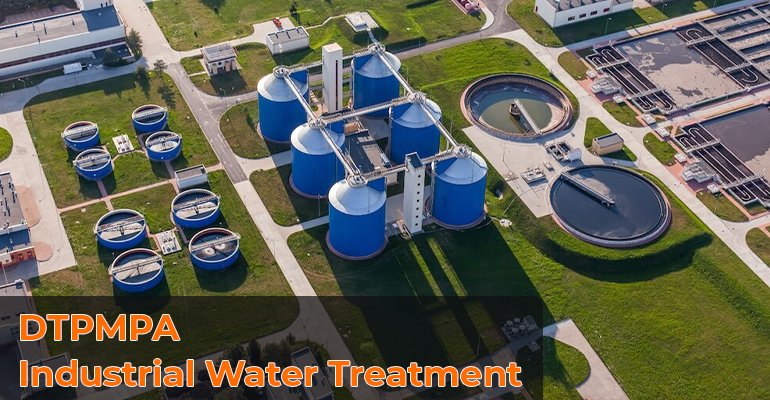
Diethylene Triamine Penta (Methylene Phosphonic) Acid, commonly known as DTPMPA, is one of the most effective phosphonate-based chemicals used in industrial water treatment applications. Its excellent chelating ability, thermal stability, and scale control properties make it suitable for demanding environments where water quality management is critical...
Organo Phosphates: DTPMP Phosphonate for Industrial Scale Control
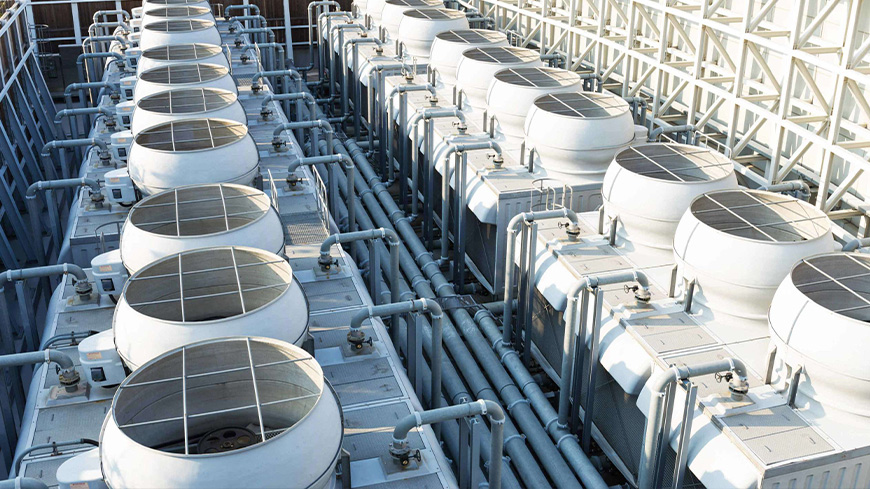
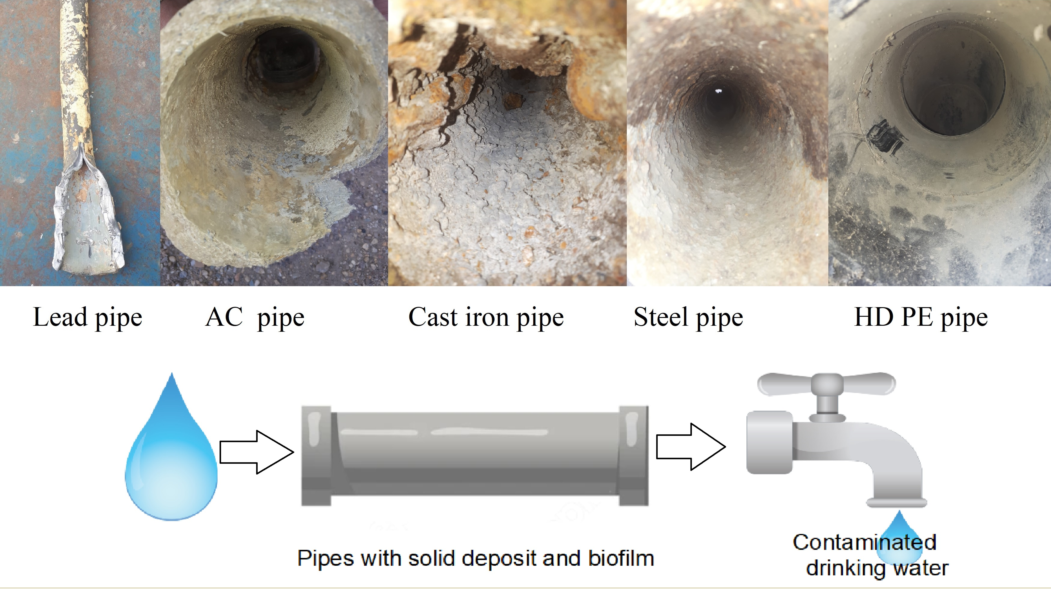
Industrial water systems often experience issues with minerals in the water. These can then deposit and form scale on the relevant equipment. Deposits can reduce heat transfer efficiency, restrict water flow and increase energy usage. They can also cause further maintenance issues.
Organophosphates, and organophosphorus compounds can be used to alleviate these issues. Of particular importance is DTPMP Phosphonate which is used in industry to inhibit scale and complex metal ions.
DTPMP (diethylenetriamine penta(methylene acid)) is an aminophosphonate. It can be utilised within selected industrial water treatment schemes to help control scale formation.
DTPMP has the ability to facilitate Threshold Scale Inhibition. This is where a small dose of inhibitor can prevent crystal formation.
Phosphonates can be used within a variety of industrial water applications, including cooling towers, industrial water circulation and membranes.
An understanding of the chemical properties, function and application of DTPMP will allow organisations to decide on an appropriate water treatment chemical.
What Are Organo Phosphates?
Whilst ‘organo phosphates’ is often discussed, organophosphates and organophosphonates are two sub-groups of organophosphorus compounds.
Typically, organo-phosphates have phosphorous attached to other groups by an oxygen bridge. However, organophosphonates have a carbon-phosphorus bond.
This is significant as it alters the chemical’s stability and reactivity and can influence its industrial applicability.
Whilst DTPMP is an organophosphonate, it is not a standard organo-phosphate ester.
Within water treatment, organophosphonates are of great importance as they can complex with metal ions and so prevent mineral scale formation.
Important Features Of Organophosphonates
- Have phosphorous groups.
- Are able to complex with metal ions.
- Have scale inhibiting properties (depending on conditions).
- May be used to control scale.
- Can be formulated into water treatment chemicals.
- Have differing properties dependent on their molecular structure.
- Selection of an appropriate chemical should be based on application.
Organophosphonates can be applied within various industrial areas where water chemistry is important.
What Is DTPMP?
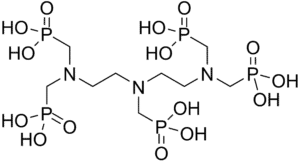
DTPMP is an aminophosphonate with phosphonic acid groups attached to a diethylenetriamine core.
It is also known as diethylenetriamine penta(methylene phosphonic acid).
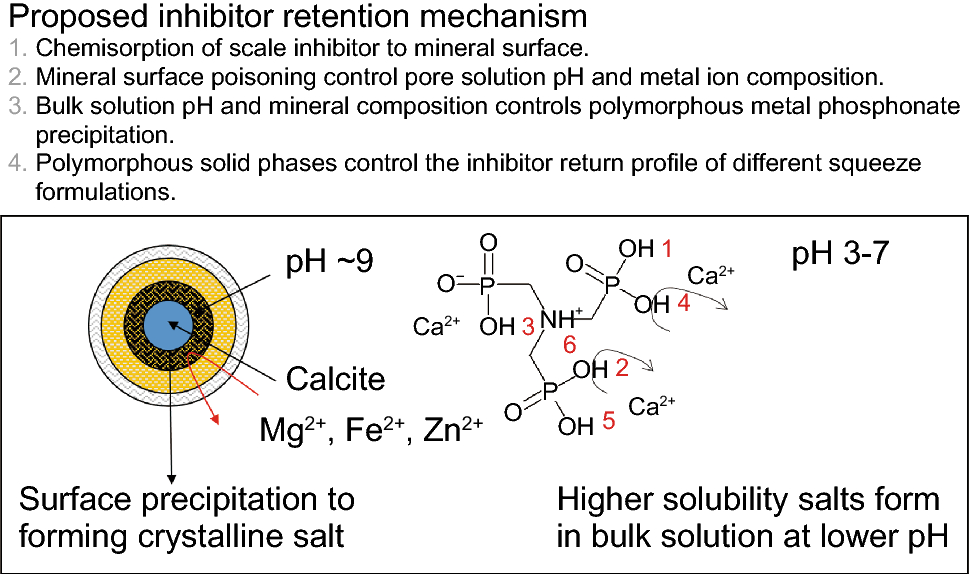
As it has numerous phosphonic acid groups, DTPMP can complex with metal ions and with mineral crystal faces.
Therefore it can be utilised within water treatment to control scale and metal ion complexation. It is also used within specialist chemical applications.
DTPMP can also be supplied in different abbreviated forms such as DTPMPA or DETPMPA. This will vary between manufacturers and their nomenclature guidance.
Chemicals can be provided in acidic form and/or partially or fully neutralised salt versions.
Depending on the chemical’s concentration, form and combination, its functionality and handling can vary.
Chemical Information For DTPMP
| Chemical Property | Information |
| Common Name | DTPMP |
| Other Names | DTPMPA, DETPMPA |
| Full Chemical Name | Diethylenetriamine penta(methylene phosphonic acid) |
| Chemical Group | Aminophosphonates |
| CAS Number | 15827-60-8 |
| Molecular Formula | C9H28N3O15P5 |
| Molecular Weight | Around 573.20g/mol |
| Functional Groups | Phophonic acid groups and amines |
| Chemical Grouping | Organophosphonate |
| Solubility | Water soluble |
| Industrial Application | Scale inhibition and metal ion complexation |
| Chemical Forms | Acid and selected neutralised salt versions |
Alongside the base acid version, commercial chemical formulations can contain varying active content and pH. Density and physical properties can also differ.
Industry should consult a manufacturer’s Technical Data Sheet and certificate of analysis to obtain information on a product.
Understanding The Chemical Structure Of DTPMP Phosphonate
The chemical structure of DTPMP Phosphonate allows it to have good industrial properties.
DTPMP has a diethylenetriamine core and five phosphonic acid groups.
These groups allow DTPMP to complex with metal ions and mineral crystal faces.
 Function Of Phosphonic Acid Groups
Phosphonic acid groups can complex with metal ions provided suitable conditions exist.
Whether phosphonic acid groups are ionised will depend on the surrounding chemical environment.
Such complexation can assist DTPMP in preventing mineral scale formation and influencing crystal growth.
Function Of Diethylenetriamine Core
The diethylenetriamine core provides structural support for the phosphonic acid groups.
Arrangement of phosphonic acid groups can influence a chemical’s functionality and complexation ability.
Function Of Carbon-Phosphorus Bonds
Carbon-phosphorus bonds are found within organophosphonates.
Compared to standard organic phosphate esters, this is distinctive to organophosphonates and leads to unique chemical functionality for DTPMP.
Nevertheless, despite having carbon-phosphorus bonds, DTPMP is not completely resistant to environmental degradation.
Multiple Points Of Interaction
As DTPMP contains phosphonic acid groups, it can complex with various metal ions and interact with mineral crystal faces.
Such interactions are integral in controlling scale and facilitating complexation.
Chemical Properties Of DTPMP Phosphonate
The water treatment functionality of DTPMP is influenced by both its molecular properties and application conditions.
1. Water Solubility
DTPMP is water soluble and can be formulated into aqueous chemical products.
Depending on both the concentration and neutralisation extent of DTPMP, its handling and formulation can vary.
2. Metal Ion Complexation
DTPMP can complex with selected metal ions.
Such complexation can influence the availability and behaviour of metal ions within water.
The extent of DTPMP complexation is affected by pH, metal type and other ions.
3. Scale Inhibition
DTPMP can affect mineral crystal formation and growth.
Hence it can be formulated into products to control mineral scale.
4. Crystal Face Interaction
DTPMP can interact with mineral crystal growth sites.
Such interaction can influence crystal growth. It can also help to minimise the accumulation of some mineral scales.
5. Thermal Stability
DTPMP can be used within high temperature industrial water systems.
Nevertheless, both the stability and functionality of DTPMP will be temperature and time dependant. They will also be influenced by the water chemistry and other chemicals used within water treatment.
6. pH Dependance
As noted above, ionisation of phosphonic acid groups will vary with pH.
Consequently, DTPMP’s complexing and scale inhibiting properties may differ in neutral and alkaline environments.
7. Chemical Compatibility
DTPMP can be formulated into chemical products which also contain other water treatment chemicals.
Prior to formulating, it is important to assess DTPMP’s compatibility with dispersant polymers, corrosion inhibitors, biocides and oxidising agents.
8. Calcium Tolerance
Calcium tolerance is important when deciding on a phosphonate based scale inhibitor.
Under certain conditions, phosphonates can form calcium-phosphonate soluble compounds.
Thus, formulation and application conditions are important in avoiding any unwanted mineral scale precipitation.
Why Does Industrial Water Form Scale?
Industrial water often includes calcium, magnesium, sulphate, bicarbonate and other minerals.
Alterations to temperature, pH and mineral content, and/or application conditions can cause such water borne minerals to become supersaturated.
Supersaturation can lead to mineral crystal formation and growth.
Over time, these crystals can then accumulate on equipment and form scale.
Common Causes Of Industrial Water Scale Formation
- Water hardness.
- High levels of dissolved minerals.
- Increased water temperature.
- Altered water pH.
- Water evaporation and consequent water concentration.
- High levels of concentration in cooling water systems.
- Poor water treatment.
- Localised water concentration.
- Changes in pressure and/or chemical equilibrium.
- Unsuitable application conditions.
Despite water hardness, the water chemistry and application conditions must be analysed to control scale.
Common Scale Types Within Industrial Water Systems
Industrial water can suffer from a variety of mineral scale formation issues.
| Type Of Scale | Chemical Formula | Common Associated Conditions |
| Calcium Carbonate | CaCO3 | Hard water, pH and heated equipment |
| Calcium Sulphate | CaSO4 | High calcium and sulphate content |
| Barium Sulphate | BaSO4 | Water containing both barium and sulphate |
| Strontium Sulphate | SrSO4 | Selected industrial and oilfield waters |
| Calcium Phosphate | Various calcium phosphate types | Calcium rich water with phosphate |
| Magnesium Hydroxide | Mg(OH)2 | Selected high pH water systems |
| Silica | SiO2 and associated silicate types | Water concentration and complex silica chemistry |
Different scale inhibitors can be more or less effective at controlling these scale types.
It should not be assumed that a phosphonate scale inhibitor will be effective against all mineral scale.
What Is Threshold Scale Inhibition
is where a small amount of inhibitor can affect mineral crystal formation and growth.
Unlike stoichiometric sequestration, threshold inhibition does not necessitate an inhibitor to complex with all of the dissolved mineral ions within water.
Rather, it can interact with stages of the mineral scale formation process including nucleation and crystal growth.
Such inhibition is highly beneficial within water treatment as under suitable application conditions, dissolved minerals can often remain in solution for extended periods.
DTPMP phosphonate is one organophosphonate which can be formulated into products to implement threshold scale control.
Why Is Threshold Scale Inhibition Important?
Whilst industrial water will often contain dissolved minerals, it may not be feasible to attempt to complex all such ions.
Threshold inhibition provides an alternative to achieve scale control. It can do so with less inhibitor than would be required for full stoichiometric complexation.
Threshold inhibition effectiveness will depend on the mineral type, inhibitor quantity, water chemistry and application conditions.
Key Features Of Threshold Scale Inhibition
- Threshold inhibition can be carried out at low inhibitor levels.
- Threshold inhibition can affect mineral nucleation and crystal growth.
- Where conditions are suitable, threshold inhibition can also postpone mineral scale formation.
- Threshold inhibition may also help to minimise equipment scale deposition.
- Threshold inhibition can improve water treatment efficiency.
- Selection and monitoring of an appropriate inhibitor is required.
- Threshold inhibition does not extract minerals from water.
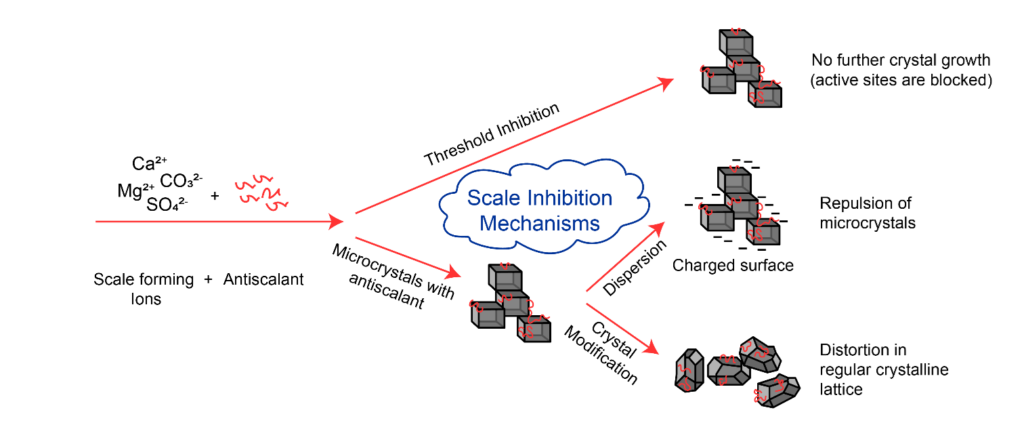
Threshold inhibition can be limited. If supersaturation and/or unsuitable application conditions exist, an inhibitor may be unable to successfully control scale.
How Does DTPMP Act As A Phosphonate Scale Inhibitor?
DTPMP utilises various chemical mechanisms to exert its effect.
These in turn influence mineral behaviour and mineral crystal face development.
Stage 1: Dissolved Minerals
Industrial water contains ions such as calcium, magnesium and sulphate.
Typically, these ions can remain in solution.
Stage 2: Water Becomes Supersaturated
Alterations to both temperature and mineral content can cause water to become supersaturated in relation to a specific mineral.
Such supersaturation will often result in thermodynamically favourable conditions for mineral precipitation.
Stage 3: Mineral Nucleation
Within water, small mineral clusters can form.
Some of these clusters can develop further to form crystal nuclei.
Stage 4: DTPMP Interacts With Crystal Growth Sites
DTPMP can attach itself to specified mineral crystal growth sites.
Such attachment can hinder the addition of mineral ions to a crystal.
Stage 5: Crystal Growth Is Altered
With the presence of a phosphonate scale inhibitor, crystal growth can be slowed and/or modified.
This can then reduce the rate of equipment scale deposition.
Stage 6: Deposit Control Enhances System Performance
Good water treatment can utilise threshold inhibition to maintain heat transfer and water flow areas in a clean state.
Alongside threshold inhibition, further deposit control measures such as dispersant polymers, filtration and blowdown may also be necessary.
Threshold Inhibition, Chelation And Dispersion
Threshold inhibition, chelation and dispersion are three separate approaches which can be implemented within industrial water treatment.
An awareness of the distinctions between them will enable industry to select appropriate chemical products.
| Feature | Threshold Inhibition | Chelation | Dispersion |
| Main Purpose | Affect mineral scale formation | Form metal ion complexes | Keep particles dispersed |
| Core Interaction | Mineral scale nuclei and crystal growth sites | Dissolved metal ions | Dispersed particles and scale |
| Chemical Requirement | Can be applied at low levels | Usually dependent upon complexation requirements | Dependent on particle loading and surface properties |
| Typical Chemicals | DTPMP, HEDP and ATMP | EDTA and selected chelating agents | Polyacrylates and dispersant polymers |
| Industrial Aim | Minimise mineral scale formation | Control behaviour of dissolved metal ions | Minimise particle loading and scale formation |
Although DTPMP has threshold inhibitory and chelating properties, it should not automatically be used in place of dispersant polymers.
What Are Scale Inhibitors?
Scale inhibitors are chemicals that are formulated to prevent mineral scale formation, crystal growth and/or deposition.
They are typically used within systems where there is a risk of mineral scale formation which can adversely affect equipment.
There are many types of scale inhibitor. Each will have distinct chemical properties and differing application requirements.
Main Types Of Scale Inhibitor
Phosphonate Based Scale Inhibitors
Phosphonate inhibitors incorporate acid groups. For example:
- DTPMP.
- HEDP.
- ATMP.
- PBTC which also has carboxylate groups.
- HMDTMPA.
Such inhibitors can be formulated into products to control mineral scale.
Polymer Based Scale Inhibitors
Some water soluble polymers can inhibit mineral crystal growth and also assist in the dispersion of particles.
Polyacrylates, polymaleates and selected copolymers are examples.
Phosphonate And Polymer Combinations
Sometimes, water treatment products combine phosphonates and dispersant polymers. Such combinations can offer enhanced threshold inhibitory and deposit control properties.
Specialist Scale Inhibitors
Specialised inhibitors may be formulated for certain mineral, application temperature, water chemistry and/or process.
Testing will be necessary to assess suitability.
Major Industrial Uses for DTPMP Phosphonate
There are a number of industries which need to control both scale and solute content.
1. Industrial Cooling Water
Mineral scale can often be an issue in industrial cooling water.
During evaporation, solutes are retained in the recirculating water.
If not controlled, minerals can then accumulate on heat exchangers, cooling tower components and on recirculation systems.
DTPMP can be included in cooling water treatment to help control scale.
Alongside scale control, other treatments such as anti-corrosion, dispersant and microbiological treatments may also be required within an efficient cooling water treatment scheme. Blowdown can also need to be controlled.
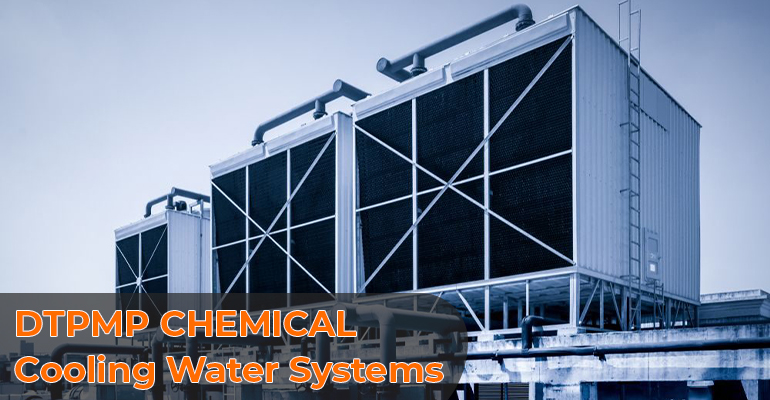
2. Cooling Towers
Cooling towers dissipate heat, typically by means of evaporation.
Evaporation can cause an increase in the concentration of calcium, sulphate and other solutes.
When appropriate, phosphonate-based scale inhibitors can be used to control mineral scale.
Cycle concentration, pH, temperature and hardness will all influence the effectiveness of Phosphonate-based scale inhibitors.
3. Heat Exchangers
Scaling on heat exchanger surfaces can act as an insulating layer and thus impair heat exchange.
Mineral scale can also increase energy consumption and impact upon process efficiency.
DTPMP can be part of a treatment which helps to control scale.
Ensuring heat exchanger surfaces are free from scale can help to promote uniform system performance.
4. Industrial Water Recirculation
Mineral scale can also be an issue in closed and open recirculation systems.
Appropriate water treatment can assist in controlling this.
DTPMP suitability is influenced by system design, water chemistry, materials used and other treatment components.
5. Reverse Osmosis and Membrane Processing
During reverse osmosis, purified water passes through a membrane and solutes are concentrated.
High solute concentration can increase the likelihood of mineral scale forming on membranes.
Membrane-specific antiscalants can also be based on phosphonates.
Only those formulations that are compatible with the membrane, feed water and system are suitable for use with DTPMP.
Although there is a specific phosphonate for industrial applications, this is not always appropriate for all reverse osmosis systems.
6. Oilfield Water Treatment
Oilfield water can contain calcium, barium, strontium and sulphate solutes.
Alterations in the water’s chemical profile and in temperature and pressure can trigger mineral scale formation.
Phosphonate-based inhibitors are often used as part of suitable oilfield water treatment schemes.
DTPMP effectiveness should be analysed according to the type of mineral scale and to system and/or production environment.
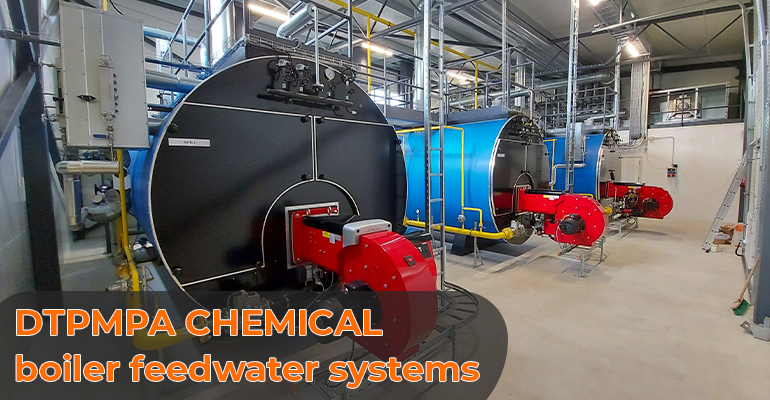
7. Boiler Water Treatment
Water and solute content must be controlled within a boiler system.
Certain phosphonate-based treatments can be used in appropriate boiler water treatment.
Alongside assessing water chemistry, boiler pressure, temperature and thermal stability, consideration should also be given to the treatment components.
It is important to recognise that DTPMP is not an alternative to feedwater softening, demineralisation or approved boiler treatment components.
8. Textile Industry
Hardness and solute metal ion content can both impact on textile industry processes.
Appropriate phosphonate-based treatment components can be included in formulations to address these influences.
Phosphonate-based treatment suitability will depend on the textile process, formulation and the desired product quality.
9. Industrial Cleaning
Cleaning treatments can incorporate both chelating and dispersing components.
DTPMP can be used within appropriate formulations to control metals.
DTPMP compatibility with surfactants, acids, alkalis and other components must be analysed.
10. Detergent Manufacture
Phosphonates can be incorporated into selected detergent formulations to control interactions with water hardness and to manage mineral scale.
Whether phosphonates are suitable will depend on formulation and relevant environmental legislation.
11. Chemical Manufacture
Within specialised chemical manufacture, phosphonates can be used to control metal ion chelation and mineral scale.
Depending on the application, commercial phosphonate-based components may be used.
12. Industrial Water Recirculation
Many manufacturing sites utilise process water for a number of purposes including processing, cooling and cleaning, as well as for system operation.
Controlling mineral scale can aid system operation.
Appropriately designed water treatment can help to achieve these outcomes.
DTPMP and Phosphonate-based Scale Inhibitors
A variety of organophosphonates can be used for industrial water treatment.
These differ in molecular structure and usage.
| Chemical | Full Chemical Name | Structural Features |
| DTPMP | Diethylenetriamine penta(methylene acid) | Five phosphonic acid groups |
| ATMP | Aminotris(methylene phosphonic acid) | Three phosphonic acid groups |
| HEDP | 1-Hydroxyethylidene-1,1-diphosphonic acid | Two phosphonic acid groups |
| PBTC | 2-Phosphonobutane-1,2,4-tricarboxylic acid | One phosphonic acid group and three carboxylic acid groups |
| HMDTMPA | Hexamethylenediamine tetra(methylene phosphonic acid) | Four phosphonic acid groups |
Whilst the number of acid groups is an important feature, it is not always the case that phosphonates with acid groups are most suitable for all uses.
Alongside analysing water chemistry, mineral type and system conditions, formulation compatibility should also be investigated.
DTPMP and ATMP
ATMP and DTPMP are both members of the aminophosphonate family.
Whilst both share the same family classification, their molecular backbones differ and they also vary in the number of phosphonic acid groups.
| Parameter | DTPMP | ATMP |
| Chemical Name | Diethylenetriamine penta(methylene acid) | Aminotris(methylene acid) |
| CAS Number | 15827-60-8 | 6419-19-8 |
| Number of Phosphonic Acid Groups | 5 | 3 |
| Number of Nitrogen Atoms | 3 | 1 |
| Molecular Weight of Parent Acid | 573.20g/mol | 299.05g/mol |
| Scale Inhibition | Application dependent | Application dependent |
| Metal Ion Chelation | Condition dependent | Condition dependent |
Both these chemicals can be used in industrial water treatment.
Selection should be made according to water chemistry, potential mineral scale and temperature, as well as formulation compatibility.
Analysis of Dtpmpa Chemical Products
Dtpmpa chemical products can be in commercial forms and may be based upon DTPMP acid or neutralised derivatives.
Products are developed to satisfy different requirements.
Commercial distinctions between products can include active content, pH, density and impurity profile. Neutralisation extent can also differ.
Key Information to Analyse for DTPMPA Products
Customers should analyse a range of product features. These include:
- Chemical type.
- CAS number.
- Active acid content.
- Physical appearance.
- pH.
- Specific gravity.
- Iron content.
- Chloride content.
- Relevant phosphorus impurities.
- Neutralisation extent.
- Water solubility.
- Stability.
- Packaging information.
- Shelf life.
- Formulation compatibility.
Whilst the analyses and testing methods that manufacturers use to analyse these aspects can differ, all should identify the relevant criteria.
Prior to purchasing, it is advisable to request a supplier’s Technical Data Sheet and batch Certificate of Analysis.
Variables Influencing DTPMP Scale Inhibition Effectiveness
A number of factors will influence the effectiveness of a phosphonate-based scale inhibitor.
Water Hardness
Water hardness, in terms of calcium and magnesium content, can influence the propensity of water to produce mineral scale.
Water of high hardness may necessitate different treatment to that for low hardness water.
Water pH
pH will influence mineral solubility, ionisation and metal ion chelation.
Variation in pH can significantly affect scale inhibition effectiveness.
Operating Temperature
Temperature can influence mineral solubility, precipitation rates and the stability of treatment components.
Tests for treatment components should be performed at operating temperatures.
Total Dissolved Solids
Total dissolved solids can affect ion interaction and mineral saturation.
Water of high TDS may require specific treatment approaches.
Mineral Type
Calcium carbonate, calcium sulphate, barium sulphate and other minerals can all produce scale.
An inhibitor should be suitable for the primary mineral scale type.
Supersaturation Level
The degree of supersaturation will influence the ease with which scale can be controlled.
Excessive supersaturation can exceed the capability of a particular inhibitor.
Chemical Concentration
The concentration of inhibitor will affect its interaction with mineral surfaces.
Optimal concentration should be determined through water analysis, technical analysis and product-specific guidance.
Contact Time
Water contact time can influence mineral nucleation and growth.
Systems with differing contact times may require differing treatment approaches.
Other Chemicals
Treatment components such as anti-corrosion, dispersant, oxidising biocides and others can interact with phosphonates.
Such interactions can in turn affect treatment effectiveness.
System Design
Flow rate, heat exchange surfaces, stagnant areas and local system conditions can all affect mineral scale formation.
System design should therefore be analysed in conjunction with treatment components and system management.
How to Select the Right DTPMP Manufacturer in India
Choosing a suitable DTPMP manufacturer in India is an important decision for industrial customers seeking consistent chemical quality and reliable supply.
Product selection should consider technical requirements as well as commercial factors.
Manufacturing Capabilities
The manufacturer’s production capabilities and process controls can influence product consistency and supply reliability.
Chemical Quality
DTPMP products should meet agreed chemical specifications.
Active content, impurity levels and other important parameters should be evaluated.
Batch Consistency
Consistent chemical quality is essential for industrial processes that require predictable treatment performance.
Batch-specific Certificates of Analysis can help customers assess product conformity.
Technical Documentation
A reliable manufacturer should provide relevant technical and safety documentation.
This may include:
- Technical Data Sheet.
- Safety Data Sheet.
- Certificate of Analysis.
- Product specifications.
- Storage recommendations.
- Handling information.
- Relevant regulatory documentation.
Application Support
Industrial water treatment requirements differ between systems.
Technical support can help customers evaluate product suitability, formulation compatibility and application requirements.
Packaging and Supply Reliability
Appropriate packaging and dependable supply are important considerations for industrial procurement.
Packaging should be compatible with the chemical product and applicable transport requirements.
Environmental and Safety Responsibility
Chemical manufacturers should comply with applicable workplace safety, environmental and regulatory requirements.
Product Traceability
Batch identification and traceability can support quality management and investigation of product-related concerns.
Selecting a manufacturer solely on the basis of price may overlook important differences in active content, chemical quality and technical support.
Conclusion
Organo phosphates and related organophosphorus chemicals play an important role in modern industrial water management.
Among these chemicals, DTPMP Phosphonate is a valuable aminophosphonate used in selected formulations for mineral scale inhibition and metal ion management.
Its chemical structure, containing multiple phosphonic acid groups, contributes to its ability to interact with dissolved metals and mineral crystal surfaces.
Through mechanisms such as Threshold Scale Inhibition, DTPMP can help manage mineral precipitation and support industrial deposit control under appropriate operating conditions.
Water chemistry, mineral composition, equipment design, operating temperature, formulation compatibility and environmental requirements must all be considered.
Selecting a reliable DTPMP manufacturer in India can help industrial customers obtain products with appropriate chemical specifications, consistent quality and relevant technical documentation.
Whether your business requires Scale inhibitors, a phosphonate scale inhibitor, DTPMP acid or other specialty chemical products, careful product evaluation is essential for developing an effective industrial water treatment programme.
Contact Maxwell Additives to discuss your industrial chemical requirements, product specifications and suitable specialty chemical solutions for your application.
Frequently Asked Questions About DTPMP and Organo Phosphates
1. What is DTPMP?
DTPMP is an aminophosphonate compound used in selected industrial water treatment and specialty chemical formulations. It is relevant to scale inhibition and metal ion complexation.
2. What is the full form of DTPMP?
DTPMP stands for diethylenetriamine penta(methylene phosphonic acid).
3. What is DTPMP Phosphonate used for?
DTPMP Phosphonate is used in selected cooling water treatment, industrial circulation systems, specialty scale inhibitors and other chemical formulations requiring mineral deposit control or metal ion management.
4. What is the CAS number of DTPMP?
The CAS number of the parent DTPMP acid is 15827-60-8.
5. Is DTPMP an organophosphate?
DTPMP is technically an organophosphonate. It contains direct carbon–phosphorus bonds, which distinguish it from conventional organic phosphate esters.
6. What is Threshold Scale Inhibition?
Threshold Scale Inhibition is a mechanism through which an inhibitor interferes with mineral nucleation and crystal growth at concentrations below those required for complete stoichiometric complexation.
7. How does a phosphonate scale inhibitor work?
A phosphonate scale inhibitor can interact with mineral crystal surfaces and influence nucleation or crystal growth, helping delay precipitation and reduce deposit formation under suitable conditions.
8. Can DTPMP remove existing scale deposits?
DTPMP is primarily used for scale prevention and control. Removing established deposits generally requires a separately evaluated cleaning procedure.
9. Can DTPMP be used in cooling towers?
Yes, DTPMP can be incorporated into suitable cooling water treatment formulations. Its performance depends on water chemistry, temperature, concentration and compatibility with other treatment chemicals.
10. What is the difference between DTPMP and HEDP?
DTPMP contains five phosphonic acid groups and a nitrogen-containing backbone, whereas HEDP contains two phosphonic acid groups and no nitrogen. Their relative performance depends on application conditions.
11. Are DTPMP and DTPMPA the same?
These abbreviations are commonly used for diethylenetriamine penta(methylene phosphonic acid). However, commercial product identity, chemical form and active content should always be confirmed.
12. Can DTPMP be combined with dispersant polymers?
Yes, suitable DTPMP and dispersant polymer combinations may provide complementary scale inhibition and deposit control properties. Formulation compatibility should be evaluated.
13. Is DTPMP a corrosion inhibitor?
DTPMP may contribute to corrosion control in certain formulated treatment programmes. However, scale inhibition does not automatically provide adequate corrosion protection.
Related Posts