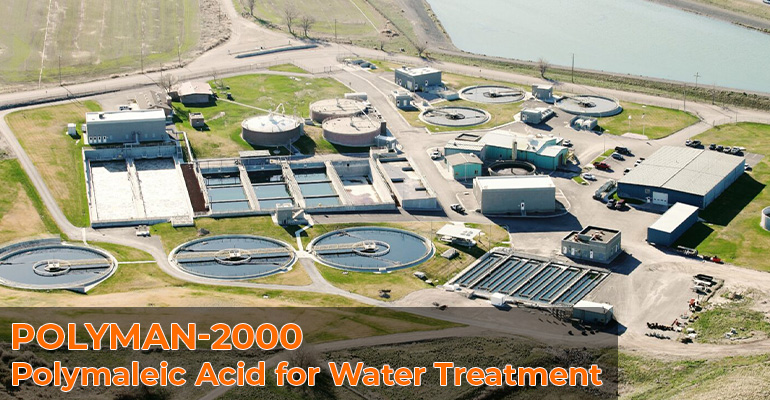
Polymaleic acid is an acidic polymer used in blends to control the behavior of minerals and dispersed particles and prevent undesirable deposits from forming. Maxwell Additives has categorized POLYMAN-2000 Poly Maleic Acid Homopolymer into its Homo-Polymer range. The company differentiates polymers with homopolymer structures from those with copolymer and terpolymer compositions. Homopolymer materials are different from copolymer and terpolymer materials in that they have only one main monomer unit, rather than two or more...
Polymaleic Acid: Industrial Polymer for Water Treatment and Scale Management
Polymaleic Acid is a material made from maleic acid chemistry. Polymaleic Acid is used in formulations when it is important to control mineral deposits and suspended matter. Polymaleic Acid is not a water-treatment chemical that performs only one direct function. Polymaleic Acid works by influencing how dissolved and dispersed substances behave inside a system. Polymaleic Acid is therefore useful for industries that need control over water chemistry during continuous operation.
Polymaleic Acid is a homopolymer meaning it contains one primary type of monomeric building block in its polymer structure. Polymaleic Acid is therefore distinct from copolymers and terpolymers that combine monomer chemistries. In applications Polymaleic Acid can interact with mineral particles and help reduce the tendency of certain deposits to accumulate on equipment surfaces.
Industrial water can contain calcium, magnesium, silica, iron and other dissolved or suspended materials. Changes in temperature, concentration, evaporation, pressure and flow conditions can alter the behaviour of these materials. If these components begin forming deposits heat-transfer surfaces, pipelines, membranes and other operating areas may be affected. Polymaleic Acid can therefore be incorporated into a treatment program to support controlled mineral behaviour.
The actual performance of Polymaleic Acid depends on the conditions of the application. Water composition, operating temperature, pH, hardness, dosage, residence time and the presence of treatment chemicals should all be considered before selecting a formulation. This makes application-specific evaluation important for industries looking for treatment performance.
Where Polymaleic Acid Fits in Industrial Water Treatment
Water-treatment systems rarely face one operating condition. A cooling circuit, boiler system, process-water line or other industrial installation may experience changes in temperature and dissolved mineral concentration. These changes can influence the way particles and minerals move through the system. Polymaleic Acid as a treatment can become useful as part of a broader chemical program designed around those conditions.
One important role of Polymaleic Acid is supporting deposit control. When mineral components start interacting and forming particles keeping them manageable within the circulating water becomes increasingly important. Polymaleic Acid can assist with dispersing particulate matter and modifying the way deposits develop helping treatment programs maintain stable operating conditions.
Polymaleic Acid can also be considered when formulators develop combinations of polymers, phosphonates, corrosion-control chemicals or other water-treatment ingredients. Than treating every chemical as an independent product formulators can evaluate how different components work together under actual process conditions. This approach is particularly useful for systems where water chemistry changes throughout the operating cycle.
For companies sourcing Polymaleic Acid, the role of Polymaleic Acid manufacturers extends beyond supplying a chemical material. Product quality, application understanding, technical communication and the ability to match Polymaleic Acid with the intended process are important parts of industrial chemical sourcing. Similarly reliable Polymaleic Acid suppliers can help customers maintain continuity when Polymaleic Acid is part of a treatment program.
Features of Polymaleic Acid
1. Maleic Acid-Based Polymer Structure
Polymaleic Acid is built around maleic acid chemistry. Polymaleic Acid can be supplied as a homopolymer for applications that require control of mineral and particulate behaviour. Polymaleic Acid’s defined polymer structure makes it distinct from multi-component copolymer systems.
2. Supports Mineral Deposit Management
Polymaleic Acid can be incorporated into treatment formulations where mineral accumulation is an operational concern. Polymaleic Acid’s interaction with mineral particles can help reduce deposit development under suitable water-treatment conditions.
3. For Dispersant Formulations
Polymaleic Acid can support the dispersion of fine particles within industrial water systems. Keeping particles distributed can reduce their tendency to gather in concentrated locations and contribute to unwanted deposits.
4. Compatible with Broader Treatment Programs
Depending on the formulation Polymaleic Acid may be evaluated alongside treatment chemicals. This gives formulators flexibility when developing a chemical program for water quality operating temperature, hardness and process requirements.
5. Suitable for Continuous Industrial Systems
Polymaleic Acid’s function makes it relevant to systems where water continuously circulates through equipment. Such systems require control rather than occasional treatment because operating conditions can change throughout the process.
6. Application-Dependent Performance
Polymaleic Acid’s performance should be assessed against the process rather than assumed to be identical, across every installation. Water chemistry, dosage, temperature, mineral concentration and other chemicals can influence the result.
How Polymaleic Acid Supports Better Process Control
The value of acid is often seen in how it helps keep the whole process stable not just by one clear action. When mineral particles are better controlled operators can manage circulating water and keep equipment in condition with more flexibility.
For example a cooling system may see mineral concentration rise as water circulates and evaporates. If there is no control this change in chemistry can lead to deposits on heat-transfer surfaces. A suitable polymer such as acid can become part of the chemical plan that manages these conditions. The goal is not just to add chemical but to choose a treatment plan that matches the system’s real needs.
Polymaleic acid can also be useful when fine particles must stay dispersed of settling or collecting. This property helps in formulations where managing particles is tied to preventing deposits.. The best dose and mix of chemicals must be found through testing and evaluation that fits the specific process.
That is why picking between polymer technologies needs more than just comparing product names. A treatment specialist must look at hardness, alkalinity, temperature, concentration cycles, equipment design and the other chemicals in use. This review helps decide if a polymaleic acid homopolymer fits the intended application.
Benefits of Polymaleic Acid
1. Helps Control Mineral Deposits
Polymaleic acid can support treatment programs by affecting mineral particles and lowering their tendency to form troublesome deposits. This helps equipment where clean surfaces are important for efficient operation.
2. Supports Particle Dispersion
Polymaleic acid can keep particles better spread in suitable water-treatment formulations. Better dispersion can lessen buildup and aid in more controlled circulation.
3. Assists Continuous Water Treatment
Industrial circulation systems run for periods and see water chemistry change. Polymaleic acid can be added to treatment programs that give support instead of only occasional fixes.
4. Offers Formulation Flexibility
A polymaleic acid homopolymer can be tested with chemicals based on application needs. This gives formulators another polymer choice when creating tailored water-treatment programs.
5. Supports Equipment Protection Strategies
Uncontrolled mineral buildup can damage surfaces and operating areas. By helping with deposit-management programs polymaleic acid can support efforts to keep equipment in good operating condition.
6. Useful Across Industrial Applications
Its polymeric properties make acid useful for many water-based industrial formulations. The exact use should still be checked against system chemistry, operating conditions and treatment goals.
7. Helps Improve Treatment Planning
Using acid as part of a well-designed chemical program lets treatment choices be based on real water conditions. This makes chemical management more systematic. Cuts down on using general assumptions.
Maxwell Additives as a Specialty Chemical Partner
Maxwell Additives Pvt. Ltd. Works in the sector and offers product categories that include water-treatment chemicals, phosphonates, polymers, sugar-processing chemicals and oil, gas and refinery chemicals. Its current polymer portfolio has homo-polymers, co-polymers, ter-polymers, quad-polymers and other polymer technologies. The company says it has over 35 years of experience in specialty chemicals and is based in Vadodara, Gujarat.
For customers looking for acid manufacturers or polymaleic acid suppliers this wide product range can help because choosing a polymer often depends on the chemistry of the whole treatment program. Maxwell Additives offers POLYMAN-2000 in its Homo-Polymer range letting customers discuss polymer needs for their industrial application instead of treating all water-treatment problems the same way.
Conclusion
Polymaleic acid is a polymer choice for industrial formulations where mineral control, particle dispersion and steady water chemistry matter. Its homopolymer structure makes it different from polymers that use monomers and gives formulators another option when creating treatment programs.
Good results come from using acid according to the real process conditions. Factors such as water chemistry, temperature, hardness, dosage and chemical compatibility must be looked at before using it. With evaluation polymaleic acid can become a practical part of industrial water-treatment plans that focus on deposit control and reliable operation.
FAQs About Polymaleic Acid
1. What is polymaleic acid mainly used for in industry?
Polymaleic acid is mainly used in formulations where mineral deposits and suspended particles must be managed. It is especially useful in water-treatment programs where circulating water can have changing mineral levels and conditions that encourage deposits.
2. What is the difference, between acid and a polymaleic acid homopolymer?
Polymaleic acid is the chemical. A polymaleic acid homopolymer is a polymer chain made from polymaleic acid units. Because the chain is uniform it shows behavior while other polymers that mix different units can behave differently.
Polymaleic acid is a polymer made from acid chemistry. Polymaleic acid homopolymer is a polymer that uses one main monomer type. Polymaleic acid is therefore different from copolymers and terpolymers that use monomer chemistries.
3. Can polymaleic acid be used with water-treatment chemicals?
Polymaleic acid can be examined as part of a chemical treatment plan depending on the specific use. Compatibility with phosphonates, corrosion inhibitors, dispersants and other components should be examined according to the water chemistry and operating conditions of the industrial system.
4. How should polymaleic acid dosage be determined?
There is no dosage that applies to every industrial system. The amount of acid needed can depend on hardness, mineral concentration, temperature, pH, circulation conditions and other chemicals present in the formulation. Laboratory or field testing can help establish a treatment level.
5. What industries can consider acid?
Industries that operate cooling-water boiler-water, process-water and other mineral-containing systems may consider polymaleic acid when deposit and particle control is required. The suitability of acid should be established according to the specific operating conditions and treatment objectives.
6. How can companies select polymaleic acid suppliers?
Companies should assess product consistency, technical support, application suitability, supply capability and experience with industrial chemical formulations. It is also useful to discuss the water chemistry and process requirements with the supplier before selecting polymaleic acid for regular use.
7. Why is application testing important, before using acid?
Industrial water systems can differ significantly in hardness, mineral content, temperature, pH, concentration cycles and chemical combinations. Testing under conditions helps determine how polymaleic acid performs in the intended formulation and whether the selected treatment approach matches the process requirements.
Related Posts