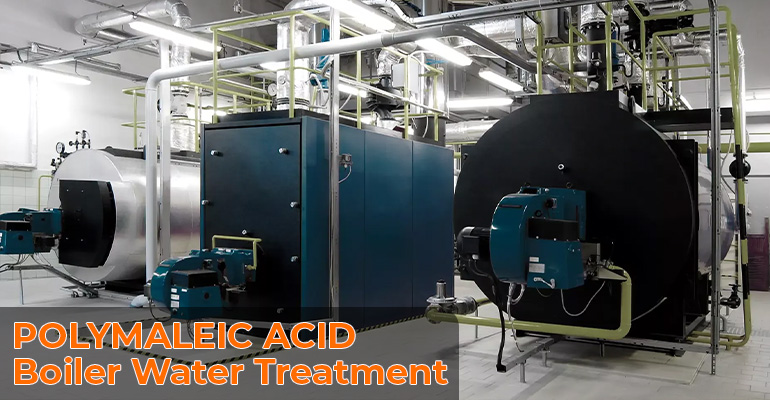
Polymaleic Acid is a material made from maleic acid chemistry. Polymaleic Acid is used in formulations when it is important to control mineral deposits and suspended matter. Polymaleic Acid is not a water-treatment chemical that performs only one direct function. Polymaleic Acid works by influencing how dissolved and dispersed substances behave inside a system. Polymaleic Acid is therefore useful for industries that need control over water chemistry during continuous operation...
POLYMAN-2000: Polymaleic Acid for Mineral Management and Water Treatment in Industry
Polymaleic acid is an acidic polymer used in blends to control the behavior of minerals and dispersed particles and prevent undesirable deposits from forming. Maxwell Additives has categorized POLYMAN-2000 Poly Maleic Acid Homopolymer into its Homo-Polymer range. The company differentiates polymers with homopolymer structures from those with copolymer and terpolymer compositions. Homopolymer materials are different from copolymer and terpolymer materials in that they have only one main monomer unit, rather than two or more.
I find that POLYMAN-2000 is not a mineral remover. Instead POLYMAN-2000 controls how mineral particles and other suspended matter behave in a chemical mixture. The way POLYMAN-2000 works and how well POLYMAN-2000 performs depends on the water chemistry on the operating conditions on the amount of POLYMAN-2000 used and, on how POLYMAN-2000 interacts with additives.
Polymaleic acid is a polymer derived from maleic acid chemistry. Its properties and behavior are different from the original chemical due to the polymerization process. Maxwell Additives lists POLYMAN-2000 as a Homopolymer in its polymer product range. Polymers with homopolymer structures are different from copolymers and terpolymers that comprise two or more monomers.
This difference is essential in polymer blending due to the distinct behavior of homopolymer materials. Therefore a homopolymer with maleic acid structure can be considered in blends for water treatment applications that require managing mineral particles suspended matter and other elements.
The performance of polymaleic acid in a specific formulation depends on several factors including water hardness pH operating temperature mineral content and other conditions. Each aspect of the final blend has a different impact on the selected polymer’s behavior. Therefore it is critical to consider these aspects when evaluating the performance of POLYMAN-2000 in a specific formulation.
Overview of POLYMAN-2000
POLYMAN-2000 belongs to the homo-polymer category according to Maxwell Additives’ polymer classification. Within the company’s specialty-chemical division POLYMAN-2000 Poly Maleic Acid Homopolymer is categorized as a Poly Maleic Acid Homopolymer. The polymer can be used in water treatment because it helps manage how mineral particles act and stops buildups from happening. The polymer can be used in water treatment because it helps manage how mineral particles act and stops buildups, from happening.
Water chemistry is a system. It has parts that need to be looked at when managing mineral levels. Calcium, magnesium, iron, silica and other minerals behave in ways under different operating conditions. Each of these minerals reacts in its way to the conditions that are present. It is important to understand how each one acts. The way each one acts can change depending on the situation. This means that each one needs to be considered on its own. The same is true, for calcium, magnesium, iron, silica and other minerals. Each of them has its reaction. Each of them has its behavior. Each of them must be taken into account. They help build particle deposits in industrial water systems. These deposits can form on heat exchangers stop flow and interfere with parts. A polymer additive such, as POLYMAN-2000 can be part of a mix that controls how mineral particles behave and stops unwanted deposits from forming.
How Polymaleic Acid Assists in Mineral Management
1. Managing Mineral Particle Behavior
The way mineral particles act in water is not always easy to predict. Things like how much mineral is in the water the temperature and other parts of the waters chemistry can make the mineral particles unstable. Lead to bad buildup. Polymaleic acid can help control how the mineral particles behave and keep everything working. This ability can be really helpful, in water treatment situations where a mix of polymers is needed to stop mineral buildup.
2. Controlling Dispersion of Particles
Particle dispersion management is an essential aspect of many industrial water treatment processes. Suspended particles tend to adhere to surfaces and other elements which can disrupt the flow process. A polymer like polymaleic acid can be used to control the dispersion of mineral particles and maintain stable system performance. Such a property is essential in water treatment when a chemical blend must be designed to manage the dispersion of suspended matter.
3. Managing Mineral Deposit Formation
The formation of mineral deposits is a common occurrence in many industrial water treatment processes. Deposition occurs when conditions of an aqueous solution change allowing dissolved minerals to transition into a new state. The objective of a polymer formulation is not to remove all dissolved minerals from water but rather to manage their behavior and prevent undesirable changes. This aspect is essential in the design of chemical blends since the prevention of mineral deposit formation is often more cost-effective and sustainable than the removal process.
4. Polymer Technology in a Broader Chemical Blend
Water treatment processes typically comprise multiple chemical components rather than a singular substance. A homopolymer like POLYMAN-2000 can be used in combination with phosphonates corrosion inhibitors other polymer additives and additional elements. Blending technologies must consider the compatibility of ingredients since the performance characteristics of each component affect the final outcome of a chemical blend.
Key Characteristics of POLYMAN-2000
1. Polymaleic Acid-Based Chemistry
POLYMAN-2000 is a homopolymer that comprises one primary monomer unit of maleic acid. This polymer structure is valuable in water treatment applications for its ability to control the behavior of mineral particles and prevent undesirable deposits from forming.
2. Managing Mineral Content
The selected polymer can be considered for applications that require controlling the interactions of mineral particles. POLYMAN-2000 is not designed to remove minerals from an aqueous solution but rather to manage their behavior and maintain stable solution characteristics.
3. Controlling Dispersion of Particles
According to my experience POLYMAN-2000 can be evaluated for its ability to manage the dispersion of mineral matter. The polymer can be used to maintain the behavior of suspended particles in a chemical blend.
4. Testing Performance in Industrial Formulations
I can offer assistance in testing the performance of POLYMAN-2000 in a laboratory-scale formulation or at an industrial level to ensure that the polymer meets the requirements of your process.
5. Compatibility Evaluation
In accordance with your needs I can determine the compatibility of POLYMAN-2000 with other components of your chemical blend.
6. Considering Homopolymer Option in Formulation Design
When comparing the characteristics of homopolymer copolymer and terpolymer technologies I can assist you in considering a homopolymer option in your formulation.
Applications for POLYMAN-2000
Polymaleic acid can be used in water treatment applications for managing the interactions of mineral particles and preventing undesirable deposits from forming.
1. Industrial Water Treatment
I recognize that industrial water systems comprise various aspects of water chemistry that must be taken into account. The content of minerals and other suspended matter can vary significantly in different water systems and treatment processes.
2. Cooling Water Systems
I note that cooling water systems can experience concentration changes due to evaporation and other mechanisms. Such changes can lead to variations in water chemistry that promote deposit formation. I can consider POLYMAN-2000 in a deposit control program for cooling water systems when the selected polymer is compatible with other aspects of water chemistry.
3. Process Water
I understand that process water systems can comprise a mixture of minerals suspended particles and other components that interact with each other in a solution. I can consider an acid homopolymer in a formulation for its ability to manage the behavior of minerals and prevent undesirable deposits from forming.
4. Heating Equipment
The formation of mineral deposits on heat exchange surfaces can impact the performance of many industrial water systems. I can offer assistance in designing a polymer-based formulation for managing such deposits.
5. Other Industrial Applications
Maxwell Additives has identified its POLYMAN polymer range as suitable for water treatment textile detergent and cleaner formulations desalination ceramic and mineral dispersion processes paint printing-ink preparation pigment-slurry systems pesticide formulations pulp and paper production and other applications. I will assess the performance characteristics of POLYMAN-2000 for your specific industry application separately.
Parameters Affecting Performance of Polymaleic Acid
The polymer’s performance is determined by several factors in addition to its primary characteristics.
1. Water Hardness
My understanding is that the concentration of calcium and magnesium ions affects the behavior of many minerals in aqueous solutions. I will take this aspect into account when evaluating polymaleic acid for mineral management applications.
2. Temperature
I recognize that the effect of polymaleic acid on mineral particles depends on the temperature of an aqueous solution. For this reason I will examine water temperature when assessing the performance of the polymer.
3. pH Level
Within water treatment processes the pH of an aqueous solution determines the behavior of minerals and other suspended matter. I will evaluate polymaleic acid at different pH levels to ensure that I consider all aspects of its performance.
4. Mineral Content
I acknowledge that the concentration of minerals in suspension varies significantly across different water treatment processes. I will take this aspect into account when determining the suitability of polymaleic acid for mineral management applications.
5. Dosage
The amount of polymer added to a solution significantly impacts its performance. I will consider this aspect of polymaleic acid when determining its suitability for a specific application.
6. Compatibility
I will assess the compatibility of polymaleic acid with other components of a chemical formulation to ensure that I fully understand the performance characteristics of the selected polymer.
Polymaleic Acid and Other Polymer Technologies
Formulators can choose from many polymer technologies and homopolymer blends when designing a chemical formulation.
Polymaleic acid technology comprises one primary monomer unit and can be evaluated alongside other polymer technologies like copolymers and terpolymers. I recognize that the structural differences between these polymer technologies can impact the performance characteristics of a formulation. I will consider this aspect when determining the suitability of polymaleic acid for a specific polymer formulation.
I identify several critical aspects that must be taken into account when comparing homopolymer copolymer and terpolymer technologies:
- The impact of each polymer technology on mineral content
- Dispersion characteristics of the selected polymer
- Compatibility of each polymer technology with other formulation components
- Dosage requirements for the selected polymer technology
- Temperature resistance of polymer technology
- pH level requirements for each polymer technology
- Water hardness compatibility
- Performance characteristics of each polymer technology
A comprehensive assessment of polymer technology in accordance with the critical aspects mentioned can enable a formulator to obtain a more accurate perspective on the performance characteristics of different polymer technologies.
Approach to Evaluate POLYMAN-2000 in Industrial Applications
Overview
When considering the application of POLYMAN-2000 it is essential to recognize the aspects of water chemistry that must be taken into account when designing a chemical formulation.
1. Understanding Water Chemistry
When evaluating a polymer for industrial application it is essential to understand the characteristics of process water. I will examine the characteristics of water hardness pH content of minerals suspended matter and other parameters.
2. Recognizing Main Considerations
I will determine the primary concerns when considering a polymer for water treatment applications. For example the main considerations can comprise particle dispersion minimizing undesirable deposits managing content of suspended matter and other aspects.
3. Assessing Operating Conditions
I will take into account the operating conditions of a water treatment process including temperature concentration cycles water flow rate evaporation and other parameters.
4. Considering Chemical Compatibility
If the formulation comprises other chemical components I will determine the compatibility of POLYMAN-2000 with these materials.
5. Evaluating Dosage Requirements
I will consider the dosage requirements for POLYMAN-2000 when assessing the performance characteristics of the polymer in a laboratory-scale formulation.
6. Testing Performance Characteristics
I will conduct laboratory-scale experiments to obtain more information on the performance characteristics of POLYMAN-2000.
The Value of Testing POLYMAN-2000
I recognize that industrial water systems are not identical. Two facilities might use similar equipment but have different water chemistry and operate at different temperatures. Due to the significance of the polymer’s performance there is no alternative to testing POLYMAN-2000 in actual conditions to obtain a more accurate perception of its performance characteristics. Testing POLYMAN-2000 with water allows me to analyze its performance potential compatibility issues and assess whether other polymer technologies would be a better fit for the intended application.
Selecting a Polymaleic Acid Manufacturer
When comparing the offerings of different acid manufacturers it is essential to consider several factors.
I recognize that the following factors are critical when selecting a polymaleic acid manufacturer:
- Product consistency
- Technical documentation
- Manufacturing capabilities
- Quality control
- Application expertise
- Supply chain management
- Packaging and logistics
- Technical communication
- Assistance in application testing
When comparing the offerings of different acid manufacturers, it is essential to keep in mind that a reliable supplier should understand that industrial polymer sourcing is a serious matter for many companies. This is why I offer assistance in application testing and consider product specifications, technical details, and other aspects when comparing potential suppliers.
Why Consider Maxwell Additives When Selecting a Polymaleic Acid Supplier
Maxwell Additives lists POLYMAN-2000 Poly Maleic Acid Homopolymer among Homopolymer products. The company’s polymer portfolio also comprises Acrylic Homopolymer, Carboxylic Copolymers, Ter-polymers, Quad-polymers, and Corin-Polymer technologies, among others. This extensive polymer product range can enable a formulator to find the application fit for the intended polymer technology.
When considering the offerings of Maxwell Additives, I will focus on the unique characteristics of each polymer product rather than assume that every water treatment application requires a homopolymer. POLYMAN-2000 is a maleic acid-based homopolymer that can be used in polymer formulations for mineral management, particle dispersion control, and other applications. This acid-based polymer is ideal for formulators who seek to design a polymer formulation using homopolymer technology. By choosing POLYMAN-2000 the formulator can assess the differences between homopolymer and other polymer technologies when designing an industrial water treatment formulation. The selected polymer can also help to control the behavior of mineral ions and other elements in a chemical formulation.
As I mentioned earlier, polymaleic acid is not designed to remove minerals from water but rather to influence their behavior in a formulation. The final performance characteristics are defined by multiple factors including water hardness, mineral content, temperature, pH level, and compatibility with other formulation components. These factors allow a formulator to choose the best polymer technology for a water treatment application.
For companies that are comparing the offerings of different acid manufacturers , it is essential to recognize that a practical approach should comprise more factors than a polymer’s inherent characteristics. When designing a polymer formulation for an industrial water treatment application, factors such as product consistency, technical documentation, manufacturing capabilities, and other aspects must be taken into account.
Conclusion
POLYMAN-2000 is a maleic acid homopolymer that can be considered for formulations requiring mineral management, particle dispersion control, and other applications. As polymaleic acid is used in polymer formulations, it allows a formulator to obtain a material with a polymer chemistry that is comparable to other polymer technologies like copolymers and terpolymers. This polymer is not designed to remove minerals from water but rather to influence their behavior in a chemical formulation. As a result, the final performance characteristics of POLYMAN-2000 depend on several factors, including water hardness, mineral content, temperature, pH level, and compatibility with other formulation components.
When evaluating the characteristics of this product, I take into account its similarities to other homopolymer products, differences from copolymer and terpolymer technologies, and other factors. For companies that are comparing the offerings of different acid manufacturers, it is essential to consider more than the basic characteristics of a given polymer product. By taking into account such factors as product consistency, technical documentation, manufacturing capabilities, and other aspects, an organization can choose a reliable partner for its polymer sourcing requirements.
FAQs About POLYMAN-2000
1. What is POLYMAN-2000?
POLYMAN-2000 is a Poly Maleic Acid Homopolymer listed by Maxwell Additives within its Homo-Polymers range. POLYMAN-2000 can be evaluated for formulations where mineral management and particle dispersion are important.
2. What is Polymaleic acid used for?
Polymaleic acid can be used in formulations where mineral particles, unwanted deposits, and suspended matter need to be managed. Its exact application depends on the water chemistry and operating conditions.
3. What is the difference between Maleic Acid and Polymaleic acid?
Maleic Acid refers to the chemical, while polymaleic acid refers to a material based on maleic-acid chemistry. The polymer has a structure and should not be treated as identical to the individual acid.
4. What is a Maleic acid homopolymer?
A Maleic acid homopolymer is a polymer that is based on one type of building block associated with maleic-acid chemistry. This makes it structurally different from copolymers and terpolymers.
5. Can Polymaleic acid be used with water-treatment chemicals?
Polymaleic acid may be evaluated with water-treatment chemicals, such as phosphonates, corrosion-control ingredients, and other polymers. Compatibility testing should be performed before combining these materials in a treatment program.
6. How is POLYMAN-2000 dosage determined?
No single dosage fits every system. POLYMAN-2000 dosage depends on such factors as water hardness, mineral concentration, temperature, pH, the treatment goal, and other chemicals
7. Why is application testing important?
Application testing shows how POLYMAN-2000 behaves under the conditions of a system. Application testing can help set the dosage, check compatibility, and evaluate treatment performance.
8. What should I consider when selecting acid manufacturers?
Companies should look at product consistency, manufacturing capability, technical data, quality control, supply stability, and application support when comparing acid manufacturers.
9. Is POLYMAN-2000 suitable for every water system?
No polymer should automatically be considered suitable for every water system. POLYMAN-2000 must be checked against water chemistry, operating conditions, treatment goals, and compatibility needs.
Related Posts