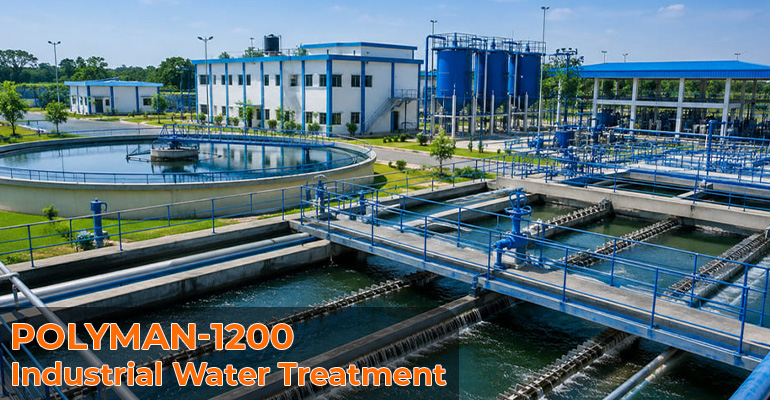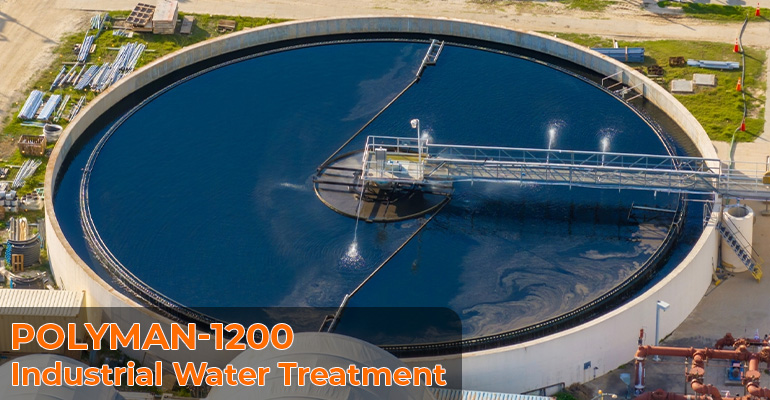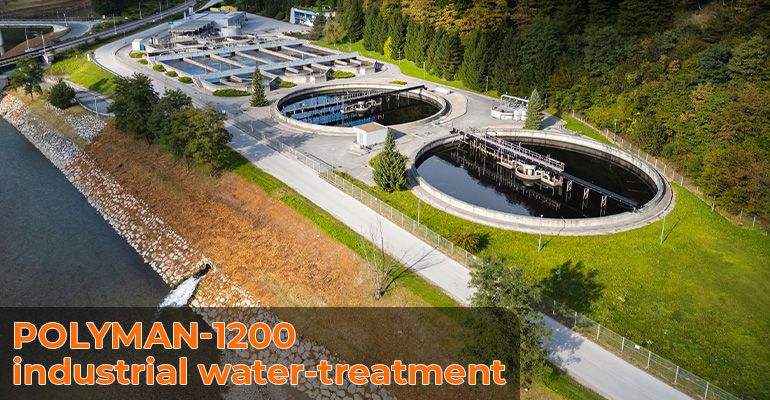
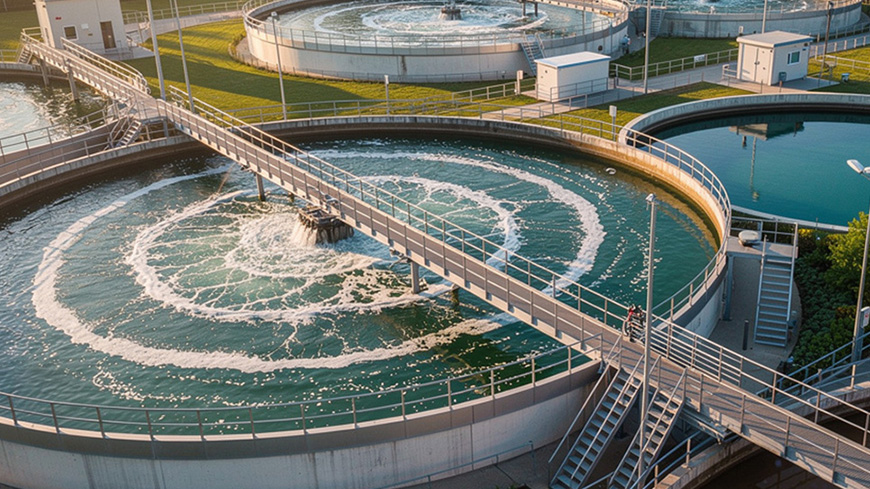
POLYMAN-1200 is a Carboxylic Co-Polymer used in water-treatment and water-based formulations where mineral management, particle dispersion and deposit control play an important role. Maxwell Additives lists POLYMAN-1200 within its co- range as a carboxylic co-polymer...
POLYMAN-1200: Carboxylic Co-Polymer for Industrial Applications
 What is Carboxylic Co-Polymer – POLYMAN-1200?
Carboxylic Co-Polymer – POLYMAN-1200 is a specialty Polymer used in industrial formulations where mineral control, particle dispersion, and water chemistry management are important. Its carboxylic functionality allows it to interact with dissolved mineral species and suspended matter, making it useful for treatment systems that need better control over unwanted deposits and particle behavior.
In industrial water systems, changes in temperature, concentration, hardness, and pH can influence how dissolved substances behave. Minerals that remain dispersed under one condition may begin forming crystals or deposits when the operating environment changes. POLYMAN-1200 can be evaluated as part of a treatment formulation intended to manage these conditions.
The material is not simply selected by its chemical category. Its actual usefulness depends on the water composition, operating conditions, dosage, and other ingredients present in the treatment program. Therefore, application trials are important before establishing a commercial formulation.
For manufacturers sourcing this type of specialty material, working with a reliable supplier can also help maintain consistent production. Companies looking for Carboxylic Co-Polymer in India should consider product quality, technical specifications, supply capability, and batch consistency along with price.
Features
1. Carboxylic Polymer Chemistry
POLYMAN-1200 is based on carboxylic polymer chemistry that can interact with dissolved mineral species in water-based systems. This gives formulators an option for managing mineral behavior and suspended particles. Its performance depends on the water composition, dosage, temperature, pH, and other components used within the treatment formulation.
2. Supports Mineral Deposition Control
The polymer can be evaluated where mineral deposits create difficulties in industrial equipment or process systems. It may influence crystal development and particle behavior, helping reduce the tendency of certain minerals to accumulate under suitable conditions. Actual performance should be confirmed through application-specific testing.
3. Useful Dispersion Support
POLYMAN-1200 can assist formulations that require better control of fine mineral particles. By influencing how particles interact with one another, the polymer may help reduce unwanted agglomeration and settling. This characteristic can be useful in water-treatment formulations where suspended matter needs to remain more evenly distributed.
4. Suitable for Water-Based Formulations
The polymer can be considered for industrial formulations in which water is an important part of the operating environment. Its use allows formulators to develop treatment programs around specific water conditions. The correct concentration should be determined according to laboratory testing and the requirements of the actual process.
5. Adaptable to Different Conditions
Industrial water chemistry can vary significantly from one application to another. POLYMAN-1200 can be evaluated under different temperatures, mineral concentrations, and pH conditions to determine its suitability. This adaptability gives formulators flexibility when developing treatment products for customers with different operating environments.
6. Supports Formulation Development
POLYMAN-1200 can be used as a formulation ingredient when manufacturers are developing specialized industrial treatment products. It can be tested with compatible chemicals to determine the required balance of mineral control and dispersion. Controlled trials can help identify an appropriate dosage before moving to larger production volumes.
7. Useful for Preventive Treatment
Preventing deposits before they become difficult to remove can be more practical than relying entirely on corrective cleaning. POLYMAN-1200 can be considered in preventive treatment programs where mineral behavior is monitored continuously. Its dosage can be adjusted according to water quality and changes in operating conditions.
Benefits
1. Helps Manage Mineral Deposits
POLYMAN-1200 can support treatment programs designed to manage unwanted mineral deposits. Its polymer chemistry can influence crystal growth and mineral particle behavior, potentially reducing accumulation on suitable surfaces. This can help industries maintain cleaner operating conditions when the polymer is correctly matched with the water chemistry.
2. Supports Better Particle Dispersion
Fine particles can become difficult to manage when they begin joining together or settling. POLYMAN-1200 can help influence particle interactions within suitable formulations, supporting more controlled dispersion. This may be useful in systems where suspended mineral matter contributes to deposits or process instability.
3. Can Support Equipment Maintenance
Mineral buildup can increase the frequency of cleaning and maintenance activities. By supporting preventive control of deposit formation, POLYMAN-1200 may help reduce the severity of accumulation in appropriate systems. The actual maintenance benefit depends on equipment design, water chemistry, dosage, and overall treatment performance.
4. Useful in Changing Water Conditions
Industrial water conditions can change as a result of heating, evaporation, recycling, or concentration. POLYMAN-1200 provides formulators with a polymer option for systems where such variations occur. Its performance should be monitored under representative conditions to ensure that the selected treatment remains effective.
5. Provides Formulation Flexibility
POLYMAN-1200 can be evaluated with other compatible treatment ingredients to create application-specific formulations. This flexibility allows manufacturers to adjust their treatment strategy according to customer requirements. Laboratory testing helps determine how the polymer interacts with other components before a formulation is produced commercially.
6. Supports Preventive Process Management
A preventive approach can help industries address mineral problems before deposits become severe. POLYMAN-1200 may form part of a treatment program designed around regular monitoring and controlled dosing. This approach can help manufacturers respond to changing process conditions rather than relying only on corrective cleaning.
7. Helps Maintain Process Efficiency
Unwanted mineral accumulation can affect surfaces, flow paths, and other operating components. Managing deposit formation may help maintain more consistent process conditions. POLYMAN-1200 can contribute to such treatment strategies when the polymer is appropriately selected, tested, and incorporated into the overall chemical management program.
Applications of POLYMAN-1200
Carboxylic Co-Polymer – POLYMAN-1200 can be considered for industrial applications where mineral deposition and particle dispersion need to be controlled. Water-treatment formulations are an important area because circulating water can gradually become concentrated with dissolved minerals.
Cooling-water systems may evaluate carboxylic polymer chemistry when hardness-related deposits are a concern. Industrial process-water applications can also consider the material when repeated water use creates changes in mineral concentration.
The polymer may also be evaluated in specialty formulations requiring particle dispersion and mineral management. Its suitability should always be confirmed through application testing because each industrial system has different water chemistry and operating requirements.
Rather than selecting the polymer solely from a general application list, manufacturers should analyze their actual process conditions and determine the specific performance objective.
Why Product Consistency Matters
Industrial treatment formulations are often produced in repeated batches. If the characteristics of a raw material change significantly from one batch to another, the finished formulation may require adjustments.
Consistent polymer quality can help production teams maintain established processing conditions and reduce unnecessary formulation changes. This becomes increasingly important when a manufacturer supplies treatment products to multiple customers.
For long-term procurement, buyers should establish an approved product specification and conduct periodic quality checks. Clear communication between the manufacturer and customer can help maintain a stable supply relationship.
Conclusion
Carboxylic Co-Polymer – POLYMAN-1200 is a specialty polymer that can be considered for industrial formulations requiring mineral management, particle dispersion, and better control of water chemistry. Its carboxylic functionality gives formulators a useful option when developing treatment products for challenging water-based systems.
The final performance depends on several factors, including water hardness, mineral concentration, temperature, pH, dosage, and compatibility with other chemicals. Application testing is therefore important before establishing a commercial formulation.
For industrial buyers, supplier selection is equally valuable. Consistent quality, technical specifications, documentation, reliable delivery, and responsive support can help manufacturers maintain stable production and predictable formulation performance.
FAQs
1. What is POLYMAN-1200 used for?
POLYMAN-1200 can be evaluated in industrial formulations where mineral deposition and particle dispersion need to be managed. It may be considered for selected water-treatment and process-water applications. The exact use should be determined according to the customer’s water chemistry, operating conditions, formulation requirements, and application testing.
2. What is the difference between carboxylic acid and a carboxylic co-polymer?
Carboxylic acid is a chemical class containing a carboxyl functional group, while a carboxylic co-polymer is a polymeric material containing carboxyl-related functionality within its larger molecular structure. Their properties and applications can therefore be quite different. POLYMAN-1200 should be evaluated according to its specific polymer characteristics.
3. Can POLYMAN-1200 help with mineral deposits?
POLYMAN-1200 can support suitable treatment programs by influencing mineral particle behavior and crystal development. This may help reduce unwanted accumulation under appropriate conditions. The result depends on mineral type, concentration, temperature, pH, dosage, and the other chemicals present in the treatment system.
4. Can POLYMAN-1200 be combined with other polymers?
It may be possible to combine POLYMAN-1200 with other compatible polymers or treatment chemicals, but compatibility should be established through testing. Different polymers can interact differently depending on concentration, water chemistry, temperature, and pH. A laboratory trial is recommended before commercial-scale formulation.
5. How should POLYMAN-1200 dosage be selected?
The dosage should be determined from the actual application rather than using one universal value. Water hardness, mineral concentration, system volume, temperature, circulation rate, and other additives can affect the requirement. Application testing allows manufacturers to identify a suitable concentration for their specific treatment program.
6. Where can I source Carboxylic Co-Polymer in India?
Industrial buyers can contact specialty chemical manufacturers and suppliers in India for product specifications, availability, packaging, and commercial requirements. Maxwell Additives PVT LTD can be approached for information regarding POLYMAN-1200 and related industrial chemical requirements.
7. What should I check before selecting a carboxylic Acid manufacturer in India?
Buyers should check product consistency, technical specifications, quality documentation, packaging, production capability, delivery reliability, and technical support. It is also advisable to test a sample in the intended formulation before regular procurement. Maxwell Additives PVT LTD can be considered by businesses evaluating suppliers for specialty polymers and industrial treatment chemicals.
Related Posts