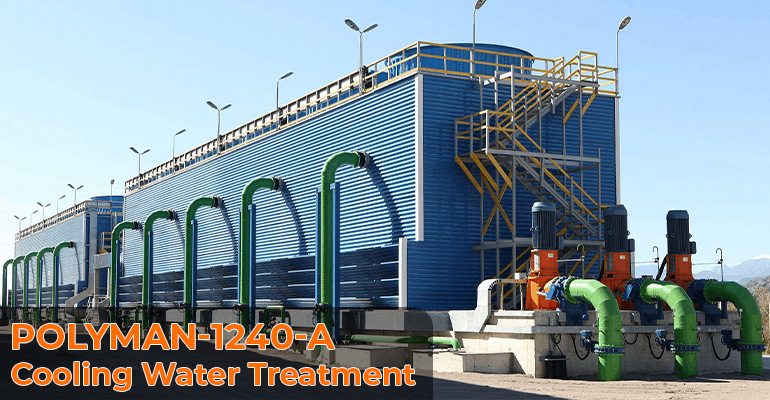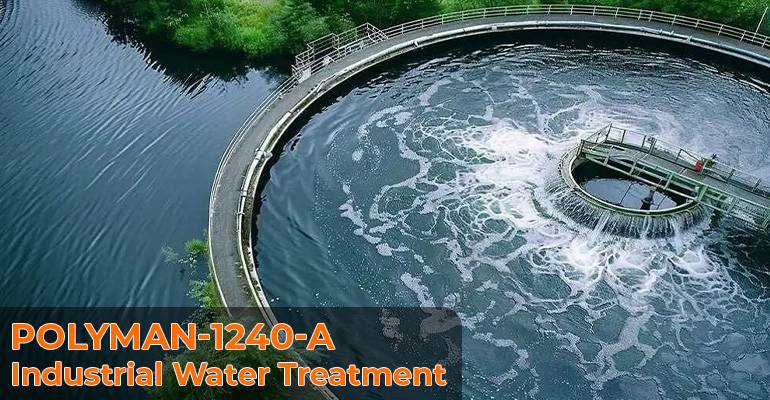
Industrial water treatment formulations are designed to deal with a range of issues such, as minerals, hardness ions and suspended particles. These problems can affect how equipment performs and how smoothly the entire process operates. If left unchecked these problems can lead to deposits of minerals or hardness materials. Such buildup often happens on heat‑transfer surfaces, pipes and other components and such buildup can reduce efficiency and cause problems...
POLYMAN-1240-A: A Guide to Industrial Applications
 POLYMAN–1240-A is a Carboxylic-Sulfonate Ter-Polymer that can be used in industrial water-treatment and water-based formulations. Its terpolymer chemistry makes it relevant for applications where mineral particle management and deposit control are important. The product should be selected according to actual water chemistry and tested under representative operating conditions rather than treated as a one-size-fits-all chemical.
What is Carboxylic-Sulfonate Ter-Polymer – POLYMAN–1240-A?
Carboxylic-Sulfonate Ter-Polymer refers to a polymeric material containing different functional groups that can interact with dissolved minerals and suspended particles. POLYMAN–1240-A is a low-molecular-weight liquid polymer designed for industrial treatment applications. Its chemical structure gives formulators an option when they need polymer support for dispersing particulate matter and managing deposit-forming substances.
The combination of carboxylic and sulfonate functionality is important because different functional groups can influence how the polymer behaves in water. In a practical treatment program, this can help modify particle interactions and reduce the tendency of unwanted material to collect together or attach to surfaces.
POLYMAN–1240-A is particularly relevant to industrial water treatment and cooling-water systems. It can also be considered in other water-based formulations where dispersancy and mineral-control properties are needed. The product information from Maxwell Additives identifies it as a non-phosphorus, non-foaming dispersant and scale-control polymer.
The product is supplied as a liquid and is water soluble. Maxwell Additives lists an approximate average molecular weight of 2,000 and a solid content of 50 ± 2%. These specifications are useful for formulation and purchasing decisions, although the exact current product specification should always be confirmed with the manufacturer before use.
Features :
1. Multi-Functional Polymer Structure
POLYMAN–1240-A contains different functional characteristics within its terpolymer structure, allowing it to interact with mineral particles in water through more than one chemical mechanism. This makes it useful for treatment programs where a simple polymer may not provide the desired balance between particle dispersion and mineral-control performance under changing industrial conditions.
2. Low-Molecular-Weight Design
The relatively low molecular weight of POLYMAN–1240-A supports its use in applications where controlled interaction with suspended particles is required. A low-molecular-weight polymer can behave differently from larger polymer chains, making molecular structure an important consideration when selecting a treatment chemical for a particular industrial water system.
3. Strong Dispersion Support
POLYMAN–1240-A can support the dispersion of fine particles within circulating water. Better dispersion can help prevent particles from easily collecting at localized points. This characteristic is useful in industrial systems where suspended mineral matter or iron-containing particles could otherwise contribute to surface deposits and create additional cleaning or maintenance requirements.
4. Calcium-Handling Capability
Calcium hardness can create difficult conditions for many water-treatment formulations. POLYMAN–1240-A is designed for applications where calcium-containing water needs to be managed. Its ability to maintain useful dispersant behavior under tested hardness conditions makes it an option worth evaluating when conventional polymer chemistry becomes less effective.
5. Water Solubility
POLYMAN–1240-A is supplied as a water-soluble liquid, which can simplify its incorporation into water-based treatment programs. Water solubility is particularly useful for dosing operations because the polymer can be introduced into an aqueous system without requiring a separate solvent-based preparation. Application procedures should follow the manufacturer’s technical guidance.
6. Non-Phosphorus Character
POLYMAN–1240-A provides a non-phosphorus polymer option for treatment programs where phosphorus-containing chemistry needs to be reduced or avoided. This can give formulators greater flexibility when developing water-treatment strategies around discharge requirements, formulation preferences, or broader environmental management goals without removing polymer-based dispersancy from the treatment approach.
7. Non-Foaming Nature
A non-foaming treatment chemical can be useful in industrial systems where excessive foam may interfere with circulation, monitoring, or equipment operation. POLYMAN–1240-A is identified by the manufacturer as a non-foaming dispersant. This characteristic makes it suitable for consideration in applications where maintaining normal water-system behavior is important.
Evaluating Polymer Performance and Compatibility
The best way to evaluate a Carboxylic-Sulfonate Ter-Polymer is to connect its chemistry with the actual operating problem. An industrial water system may have high calcium hardness, iron oxide particles, changing temperature, and several other treatment chemicals working at the same time. Each factor can influence polymer performance.
For example, a cooling-water system may initially appear to have a simple scaling issue. After investigation, the technical team may find that suspended iron oxide is also contributing to fouling. In such a situation, selecting a polymer only for one type of mineral deposit may not provide the desired overall result.
POLYMAN–1240-A can be evaluated through laboratory trials that reproduce important plant conditions. Different dosages can be compared while monitoring particle dispersion, deposit formation, and compatibility with the existing treatment package. This approach gives users practical information before committing to continuous plant dosing.
Compatibility is another important consideration. Cationic polymers, phosphonates, surfactants, and other additives can influence the behavior of an anionic polymer. Maxwell Additives’ published study specifically notes that cationic polymer carryover can adversely affect the performance of anionic dispersants.
Therefore, POLYMAN–1240-A should be considered as part of a complete treatment system. Good results depend not only on the polymer itself but also on dosage, water chemistry, chemical compatibility, equipment conditions, and regular monitoring.
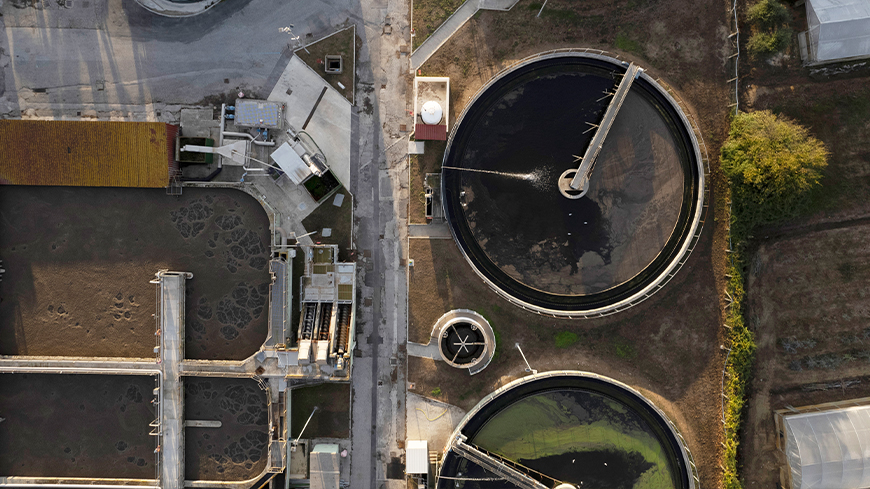 Benefits
1. Supports Mineral Deposit Management
POLYMAN–1240-A can form part of a treatment program designed to manage mineral deposits before they become difficult operating problems. By influencing particle behavior and supporting dispersion, it can help reduce the tendency of unwanted material to accumulate on water-contact surfaces, supporting more consistent operation and easier routine maintenance.
2. Helps Maintain Particle Dispersion
Suspended particles can become problematic when they join together or settle in equipment. POLYMAN–1240-A provides polymeric support for maintaining better particle distribution within water. This can be valuable in systems handling iron oxide and other particulate material, where uncontrolled accumulation may contribute to fouling or reduced process efficiency.
3. Useful for Hard-Water Applications
Water containing substantial calcium hardness can place additional demands on a dispersant. POLYMAN–1240-A can be evaluated in such conditions because its tested dispersancy remained comparatively strong as calcium concentration increased. Actual performance will depend on the complete water chemistry and should be verified through application-specific trials.
4. Supports Cooling-Water Programs
Cooling-water circuits require continuous management because water repeatedly passes through heat-transfer equipment. POLYMAN–1240-A can contribute to a treatment program focused on particle dispersion and mineral-control objectives. Keeping particulate matter better managed can help reduce conditions that contribute to surface fouling and unwanted deposits.
5. Provides a Non-Phosphorus Alternative
Some facilities seek polymer solutions that do not add phosphorus to their treatment formulation. POLYMAN–1240-A gives formulators a non-phosphorus option for deposit-control strategies. This can be useful when developing treatment programs around specific wastewater considerations while still requiring a polymer with useful dispersant characteristics.
6. Helps Support Stable Plant Operation
Uncontrolled deposits can gradually change flow conditions, heat transfer, and equipment performance. A suitable polymer can support preventive treatment rather than waiting for heavy accumulation to develop. POLYMAN–1240-A can therefore be considered as part of a broader strategy aimed at maintaining more stable water-system conditions over time.
7. Can Reduce Unnecessary Chemical Adjustment
Selecting the correct polymer and dosage can help technical teams avoid repeatedly increasing treatment levels without understanding the underlying water chemistry. POLYMAN–1240-A can be evaluated through controlled trials to establish an effective operating range. This supports more rational chemical management and can help balance treatment performance with ongoing consumption.
Storage, Handling and Procurement
Chemical performance begins with proper storage and handling. According to Maxwell Additives, POLYMAN–1240-A should be stored under shade and protected from direct sunlight. The manufacturer’s safety guidance also recommends avoiding eye contact and prolonged skin contact and using appropriate protective equipment while handling the product.
For procurement, buyers should review the current technical specification, packaging, storage instructions, batch information, and delivery requirements. These details become especially important when the product is being used continuously in a large treatment program.
A dependable supply arrangement can also help plants maintain consistent dosing without unnecessary interruptions. Technical documentation should be checked against the current manufacturer’s information before purchasing or using the chemical.
Conclusion
Carboxylic-Sulfonate Ter-Polymer – POLYMAN–1240-A is a useful polymer option for industrial water-treatment programs where mineral particle dispersion and deposit management are important. Its terpolymer structure, water solubility, non-phosphorus character, and performance under tested calcium-hardness conditions make it worthy of evaluation for demanding applications.
The most effective approach is to select the polymer based on the actual water chemistry and operating conditions. Laboratory testing, dosage trials, compatibility checks, and regular monitoring can provide a stronger foundation for deciding whether POLYMAN–1240-A fits a particular system.
It is also important to distinguish the role of a polymer from that of a Corrosion Inhibitor Chemical. A complete treatment program may need several complementary chemicals, and their compatibility should be assessed before full-scale use. With the right formulation and controlled dosing, POLYMAN–1240-A can become a useful part of an industrial water-management strategy.
FAQs
1. What is POLYMAN–1240-A?
POLYMAN–1240-A is a Carboxylic-Sulfonate Ter-Polymer used in industrial water-treatment and water-based formulations. It can be evaluated for applications requiring particle dispersion and mineral deposit control. The suitable dosage depends on water chemistry, temperature, hardness, pH, and other treatment chemicals present in the system.
2. Is POLYMAN–1240-A a scale inhibitor?
POLYMAN–1240-A can be used as part of a scale-control treatment program because its polymer chemistry helps influence mineral particle behavior and supports dispersion. However, it should not be assumed to provide identical results for every type of scale. Application-specific testing is recommended.
3. Can POLYMAN–1240-A be used in cooling-water treatment?
Yes. POLYMAN–1240-A is suitable for evaluation in cooling-water treatment programs where dispersant and deposit-control performance is required. The actual treatment method should be determined after considering cooling-water chemistry, operating temperature, concentration cycles, hardness, and the other chemicals already being used.
4. Is POLYMAN–1240-A a Corrosion Inhibitor Chemical?
POLYMAN–1240-A is primarily a polymer used for dispersant and deposit-control purposes. It should not automatically be treated as a standalone Corrosion Inhibitor Chemical. A separate corrosion-control product may be required when protection of metal surfaces is one of the treatment objectives.
5. Does POLYMAN–1240-A work in high-calcium water?
It can be evaluated for high-calcium systems. Published testing by Maxwell Additives found that POLYMAN–1240-A retained strong iron-oxide dispersancy as calcium hardness increased under the study conditions. Plant performance can differ, so users should conduct application-specific testing before finalizing dosage.
6. Can POLYMAN–1240-A be combined with other treatment chemicals?
It may be combined with other chemicals when compatibility has been established. Phosphonates, corrosion inhibitors, surfactants, biocides, and other polymers can affect overall formulation behavior. Maxwell Additives’ research highlights that cationic polymer carryover can interfere with anionic dispersants, making compatibility testing particularly important.
7. How can I determine the correct dosage of POLYMAN–1240-A?
The dosage should be established from the actual application rather than a general fixed value. Water analysis, hardness, suspended solids, temperature, pH, mineral content, and other chemicals should be considered. A laboratory trial followed by controlled plant testing can help identify a suitable operating range. For product specifications and application guidance, Maxwell Additives PVT LTD should be contacted directly.
Related Posts