It is the task of polymer-based treatments to address such issues. Carboxylate-Sulfonate Copolymer is a polymer that is used in water-treatment formulations where mineral and scale control as well as particle dispersion are aspects of importance. POLYMAN-1400-PN is such a polymer that can be added to compatible water-based formulations...
POLYMAN-1400-PN Carboxylate Sulfonate Copolymer Guide
 What is Carboxylate Sulfonate Copolymer – POLYMAN-1400-PN?
Carboxylate Sulfonate Copolymer – POLYMAN-1400-PN is a specialty polymer designed for industrial formulations where control of mineral deposits, suspended particles, and water chemistry is important. Its combined carboxylate and sulfonate functionality gives formulators a useful material for managing challenging conditions in water-based systems.
The polymer can interact with dissolved mineral species and influence the way deposits develop during industrial operations. Instead of allowing minerals to easily grow into larger deposits or attach strongly to surfaces, an appropriately selected polymer can help keep the system more manageable. This makes the material relevant to formulations where maintaining cleaner equipment and stable process conditions is important.
POLYMAN-1400-PN can be evaluated in different treatment programs depending on water quality, operating temperature, pH, hardness, concentration, and the presence of other additives. Its actual performance therefore depends on the complete formulation rather than the polymer alone.
For companies sourcing this material, selecting a dependable Carboxylate Sulfonate Copolymer supplier is important because consistent raw material quality can help maintain predictable formulation performance.
Features
1. Combined Functional Chemistry
POLYMAN-1400-PN contains carboxylate and sulfonate functionality within its polymer structure, creating a useful balance for industrial water-treatment formulations. This combination allows the material to interact with dissolved mineral species and suspended matter, making it suitable for applications where controlling deposit formation and maintaining cleaner process conditions are important.
2. Mineral Deposition Management
One notable feature of POLYMAN-1400-PN is its potential to influence the formation and behavior of mineral deposits. The polymer can interfere with crystal development and particle growth under suitable conditions. This makes it useful for treatment programs designed to reduce unwanted accumulation on industrial equipment and process surfaces.
3. Useful in Water-Based Systems
POLYMAN-1400-PN can be considered for water-based industrial formulations where mineral control is required. Its polymeric nature provides formulators with another option for managing water chemistry. The appropriate concentration should be determined through testing because water hardness, temperature, pH, and other formulation components can change treatment performance.
4. Supports Dispersant Performance
The polymer can help influence the behavior of fine particles and mineral matter suspended in water. By helping maintain better dispersion under appropriate conditions, it may reduce the tendency of particles to come together and create larger deposits. This characteristic can be valuable in systems with recurring particulate or mineral challenges.
5. Adaptable Formulation Ingredient
POLYMAN-1400-PN can be evaluated as one component of a broader chemical treatment program. Its use may be adjusted according to the process objective, water characteristics, and other additives being used. This gives formulators flexibility when developing treatment products for different industrial environments and customer requirements.
6. Suitable for Continuous Treatment Approaches
Industrial water systems often require ongoing treatment rather than occasional corrective action. POLYMAN-1400-PN can be evaluated for continuous-use programs where mineral and particulate control are part of routine process management. Continuous dosage should be established according to system conditions, monitoring results, and the required treatment performance.
7. Useful for Formulation Development
POLYMAN-1400-PN provides formulators with a polymer option when developing products for demanding water conditions. It can be tested with compatible ingredients to determine the right balance between deposit control, dispersion, and overall formulation stability. Laboratory trials can help identify the most suitable dosage before commercial production.
Benefits
1. Helps Manage Mineral Deposits
POLYMAN-1400-PN can support industrial treatment programs where mineral deposition is a recurring concern. By influencing crystal growth and particle behavior, the polymer may help reduce the formation of persistent deposits. This can contribute to cleaner process surfaces when the product is correctly matched with the operating conditions.
2. Supports Stable Water Treatment
Changing water chemistry can make industrial treatment more difficult. POLYMAN-1400-PN can form part of a treatment strategy intended to maintain better control over dissolved minerals and suspended particles. This can help industries develop more consistent water-treatment practices across changing operating conditions and production cycles.
3. May Reduce Cleaning Requirements
Heavy mineral deposits can increase the need for manual or chemical cleaning. By supporting preventive deposit management, POLYMAN-1400-PN may help reduce the severity of accumulation in suitable systems. The actual cleaning benefit depends on water chemistry, dosage, equipment design, and the overall effectiveness of the treatment program.
4. Helps Improve Particle Dispersion
Fine mineral particles can become difficult to control when they start agglomerating or settling. POLYMAN-1400-PN can help maintain better dispersion under suitable conditions, allowing particles to remain more evenly distributed. This property can support treatment programs where suspended matter and mineral particles contribute to operational difficulties.
5. Offers Formulation Flexibility
POLYMAN-1400-PN can be evaluated in different industrial formulations according to the desired treatment objective. This provides manufacturers with flexibility when developing customized chemical programs. Its dosage and combination with other ingredients should be established through formulation trials to achieve the required balance between stability and performance.
6. Supports Equipment Protection
Mineral buildup can interfere with the performance of heat-transfer surfaces, pipes, and other process components. Incorporating POLYMAN-1400-PN into an appropriate treatment program may help control conditions that encourage deposit formation. Better deposit management can support cleaner equipment surfaces and more reliable process operation.
7. Useful for Preventive Treatment
Preventive chemical treatment can be more practical than waiting for deposits to become severe. POLYMAN-1400-PN can be considered for programs that address mineral and particle behavior before significant accumulation occurs. Regular monitoring and suitable dosage adjustment can help maintain treatment effectiveness as operating conditions change.
Applications of POLYMAN-1400-PN
POLYMAN-1400-PN can be considered for industrial applications where water chemistry and mineral deposition require careful management. Water-treatment formulations are one area where carboxylate-sulfonate polymer chemistry can provide useful functionality.
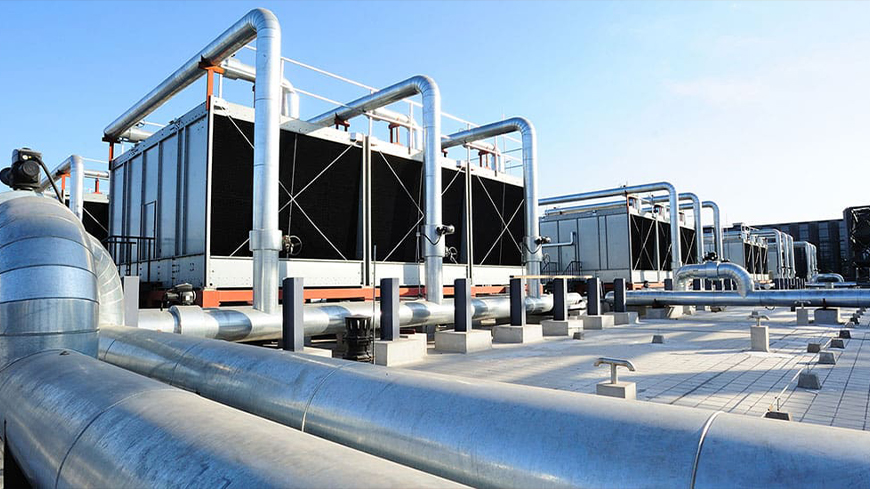
Cooling-water systems may evaluate this type of polymer when hardness minerals create operational concerns. Industrial process-water systems can also consider it when repeated circulation or concentration increases the possibility of mineral accumulation.
The polymer may additionally be evaluated in formulations involving dispersant requirements, industrial cleaning, and other specialty treatment applications. Its use should be based on the specific chemistry of the system rather than a general assumption that the same dosage will work everywhere.
Before commercial use, manufacturers can conduct laboratory compatibility testing to determine how POLYMAN-1400-PN behaves with other formulation ingredients and under actual process conditions.
Choosing a Carboxylate Sulfonate Copolymer Supplier
When purchasing specialty polymers, price should not be the only deciding factor. Consistent product quality is particularly important for manufacturers producing treatment chemicals in repeated batches.
A buyer should review the available product specification, physical characteristics, packaging, quality documentation, batch consistency, supply capacity, and technical support. These factors can influence both production efficiency and the consistency of the final formulation.
Companies looking for Carboxylate-Sulfonate Copolymer in India should also consider delivery capability and long-term supply reliability. A supplier that can support regular requirements can make production planning easier and reduce the risk of raw-material interruptions.
It is also advisable to test a sample before approving a material for regular procurement. Application trials can help confirm whether the polymer performs as expected in the buyer’s specific formulation.
Why Consistent Quality Matters
POLYMAN-1400-PN is used as part of industrial formulations where relatively small changes in raw-material characteristics can influence the finished product. Consistency therefore becomes an important consideration when selecting a supplier.
A stable raw material can help production teams maintain their established formulation parameters instead of repeatedly adjusting dosage or processing conditions. This is particularly valuable for manufacturers supplying treatment products to multiple industrial customers.
For long-term procurement, buyers should establish clear quality requirements and maintain communication with the supplier regarding specifications and delivery schedules. This creates a more reliable purchasing process and helps manufacturers maintain continuity in their production operations.
Conclusion
Carboxylate Sulfonate Copolymer – POLYMAN-1400-PN is a specialty polymer that can provide useful support in industrial formulations requiring mineral deposition management, particle dispersion, and improved control of water chemistry. Its combined functional chemistry gives formulators flexibility when developing treatment solutions for different process environments.
The best results depend on selecting the right dosage and considering the complete operating system. Water hardness, mineral concentration, temperature, pH, circulation conditions, and other formulation ingredients can all influence the final outcome.
For businesses sourcing this material, choosing a reliable Carboxylate Sulfonate Copolymer supplier is equally important. Consistent quality, technical information, supply capacity, documentation, and dependable service can help manufacturers build a more stable long-term raw-material supply chain.
FAQs
1. What is Carboxylate Sulfonate Copolymer used for?
Carboxylate Sulfonate Copolymer is generally considered for industrial formulations where mineral deposition, particle dispersion, and water chemistry need to be managed. It can be evaluated in cooling-water, process-water, cleaning, and specialty treatment formulations. The exact application depends on the system chemistry and the performance required by the manufacturer.
2. How does POLYMAN-1400-PN help control deposits?
POLYMAN-1400-PN can influence mineral crystal growth and the behavior of suspended particles in suitable water systems. This may reduce the tendency of certain minerals to form persistent deposits on equipment surfaces. Performance depends on the type of minerals present, operating conditions, dosage, and other ingredients used in the treatment formulation.
3. Can POLYMAN-1400-PN be combined with other chemicals?
POLYMAN-1400-PN may be used with other treatment chemicals when compatibility has been established. Since different additives can interact differently depending on pH, concentration, temperature, and water composition, laboratory testing is recommended before commercial-scale formulation. This helps manufacturers determine the most suitable combination and dosage.
4. Is POLYMAN-1400-PN suitable for continuous water-treatment systems?
It can be evaluated for continuous treatment programs where ongoing control of mineral and particulate behavior is required. The appropriate dosing strategy depends on water quality, circulation rate, system volume, concentration cycles, and treatment objectives. Regular monitoring can help determine whether dosage adjustments are required during operation.
5. What should I check before purchasing Carboxylate Sulfonate Copolymer?
Buyers should check the product specification, concentration or active content where applicable, physical properties, packaging, quality documentation, batch consistency, and supply capability. It is also useful to discuss the intended application with the supplier. A sample trial can help confirm compatibility before the material is approved for regular industrial procurement.
6. Can I buy POLYMAN-1400-PN from a supplier in India?
Yes, industrial buyers can approach specialty chemical manufacturers and suppliers in India for POLYMAN-1400-PN requirements. Maxwell Additives PVT LTD can be contacted for product-related information, specifications, and commercial requirements. Buyers should provide their application details and required quantity so the appropriate product information can be discussed.
7. How can I select a reliable Carboxylate-Sulfonate Copolymer manufacturer in India?
Look for a manufacturer that can provide consistent product quality, clear technical specifications, suitable packaging, quality documentation, dependable supply, and responsive communication. For regular industrial requirements, it is also helpful to conduct an initial product trial and establish an approved specification before starting long-term procurement. Maxwell Additives PVT LTD can be considered as a potential supplier for businesses evaluating this type of specialty polymer.
Related Posts