It is the task of polymer-based treatments to address such issues. Carboxylate-Sulfonate Copolymer is a polymer that is used in water-treatment formulations where mineral and scale control as well as particle dispersion are aspects of importance. POLYMAN-1400-PN is such a polymer that can be added to compatible water-based formulations...
Polymer: 1400-PN Carboxylate-Sulfonate Copolymer for Industrial Applications
 Industrial water systems are affected by changing mineral concentrations, temperature, water reuse, suspended particles, and operating cycles. These changes can make it difficult to maintain consistent performance with a basic treatment program. Specialty polymers can help formulators build a more controlled approach by addressing the behavior of dissolved and suspended substances within the system.
Carboxylate-Sulfonate Copolymer, particularly POLYMAN-1400-PN, is a polymeric treatment chemical designed for industrial formulations where mineral management and particle dispersion are important. Its chemical structure combines carboxylate and sulfonate functionality, giving the polymer useful interactions with substances present in water-based systems.
Rather than considering this polymer only as a conventional scale-control ingredient, industries can evaluate it according to the actual operating conditions of their process. Water chemistry, temperature, hardness, suspended matter, pH, concentration cycles, and compatibility with other additives can all influence the final treatment performance.
For companies sourcing the material regularly, selecting an experienced Carboxylate-Sulfonate Copolymer manufacturer in India can also help with product consistency, technical communication, and dependable supply planning.
What is Carboxylate-Sulfonate Copolymer – POLYMAN-1400-PN?
Carboxylate-Sulfonate Copolymer – POLYMAN-1400-PN is a water-soluble polymer used in industrial water-treatment and other water-based formulations. It contains functional groups that allow it to interact with mineral ions and particulate matter, making it useful when a formulation needs better control over the behavior of substances that may otherwise contribute to deposits or fouling.
The product is supplied as a liquid and is designed for incorporation into suitable treatment formulations. Its application should be selected according to the chemistry of the particular system rather than by using a fixed dosage for every operation.
One of the practical advantages of using a polymeric treatment ingredient is that it can become part of a broader formulation. Depending on the application, it may be combined with other treatment chemicals to address different requirements within the same process.
The official product information identifies POLYMAN-1400-PN as a carboxylic-sulphonate copolymer and lists it for industrial and water-treatment applications.
For manufacturers that require regular quantities, a reliable Carboxylate-Sulfonate Copolymer supplier in India can be useful for maintaining consistent production and treatment schedules.
Choosing the Polymer According to the Water, Not the Product Name
A common mistake in industrial chemical selection is to start with the product and then search for an application. A more practical approach is to start with the water and process conditions.
For example, two cooling systems may appear similar but have completely different treatment requirements. One may receive hard water with high mineral loading, while another may operate with relatively soft makeup water but experience heavy suspended-particle contamination. The same chemical program may not deliver identical results in both systems.
This is where a Carboxylate-Sulfonate Copolymer can be evaluated as part of a customized treatment approach. Before selecting the polymer, the formulator should understand the water source, hardness, pH, temperature, concentration cycles, and other chemicals already present.
The purpose is not simply to add more treatment chemical. It is to create a balanced formulation where each component has a defined role.
This method can also help industries avoid unnecessary chemical consumption. Laboratory testing, compatibility checks, and controlled trials can provide a better basis for determining the appropriate dosage than relying only on general application guidelines.
Features of POLYMAN-1400-PN
1. Water-Soluble Polymer
POLYMAN-1400-PN is supplied in liquid form and is water soluble, which makes it convenient for incorporation into compatible water-based formulations. Its solubility can simplify preparation and dosing operations where the treatment chemical needs to be distributed throughout a circulating or process-water system.
2. Combined Functional Chemistry
The presence of carboxylate and sulfonate functionality gives the polymer a useful chemical profile for industrial formulations. These groups can contribute to interactions with dissolved ions and particulate substances, allowing formulators to consider the material when developing customized water-treatment programs.
3. Useful for Mineral Management
POLYMAN-1400-PN can be evaluated in systems where dissolved minerals may create operational challenges. Rather than relying on mechanical removal alone, a polymer-based treatment approach can influence mineral behavior within the water and become part of a broader strategy for maintaining cleaner process conditions.
4. Suitable for Formulation Development
The polymer can be incorporated into appropriately designed treatment products along with other compatible ingredients. This gives chemical manufacturers flexibility when developing formulations for different industrial requirements, particularly when several water-quality factors need to be addressed through a coordinated chemical program.
5. Liquid Handling Format
The liquid form of POLYMAN-1400-PN can be advantageous for industrial dosing and formulation preparation. It allows manufacturers to work with the material directly in liquid-treatment systems, subject to suitable equipment, storage practices, handling procedures, and the requirements of the final formulation.
6. Broad Water-Based Application Potential
Carboxylate-Sulfonate Copolymer chemistry can be considered for various water-based industrial formulations. Its usefulness is not restricted to one process, allowing formulators to evaluate the material according to their particular water chemistry, operating environment, and treatment objectives.
7. Designed for Industrial Formulation Needs
POLYMAN-1400-PN is positioned as an industrial polymer rather than a general-purpose consumer chemical. This makes consistency, documentation, batch quality, packaging, and supply reliability important factors for companies planning to use the material repeatedly in commercial treatment formulations.
Where Carboxylate-Sulfonate Copolymer Can Be Considered
POLYMAN-1400-PN can be evaluated in industrial water-treatment and water-based formulations where polymeric dispersion and mineral-control characteristics are required.
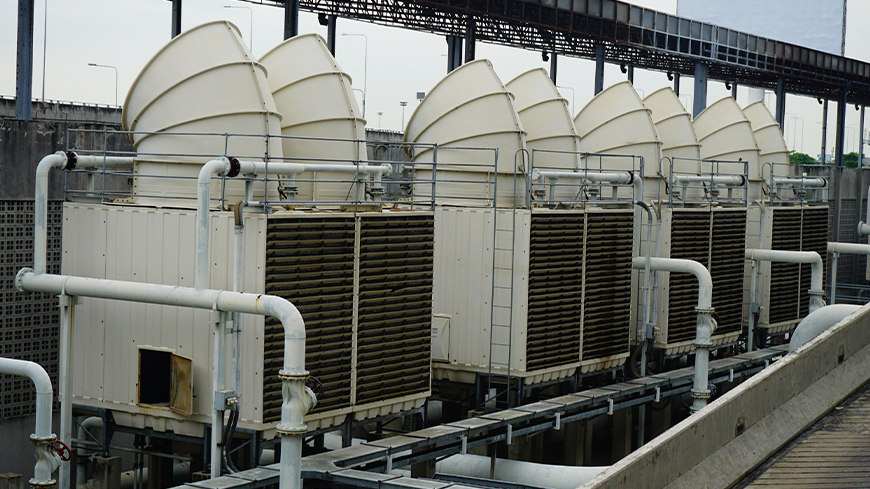
Cooling-water systems are one possible area because water is continuously circulated and may become increasingly concentrated during operation. However, the treatment program should be designed around the specific makeup-water quality and operating cycles.
The polymer can also be evaluated in other industrial water applications where mineral particles or suspended matter need to be managed. Its use should always be determined by testing rather than assuming that one polymer formulation is suitable for every process.
For formulators, this flexibility is valuable because the same polymer chemistry may be considered across different products while still allowing the dosage and formulation design to be adjusted according to application requirements.
Benefits of – POLYMAN-1400-PN
1. Supports Better Process Stability
POLYMAN-1400-PN can become part of a treatment strategy designed to keep mineral and particulate behavior more controlled. Maintaining stable water conditions can help industries reduce unexpected changes in process performance and make routine treatment management more predictable.
2. Helps Reduce Deposit-Related Problems
Unwanted deposits can interfere with equipment operation and increase cleaning requirements. When appropriately formulated and dosed, the polymer can contribute to a treatment program intended to manage the conditions that encourage mineral accumulation, supporting cleaner operating surfaces.
3. Provides Formulation Flexibility
A polymer with carboxylate and sulfonate functionality gives formulators another option when designing industrial treatment products. It can be assessed alongside other compatible ingredients, allowing the final formulation to be adjusted according to water chemistry and specific performance requirements.
4. Supports Efficient Chemical Management
Effective treatment is not necessarily about using the highest possible chemical concentration. A properly evaluated polymer program can help manufacturers establish a more controlled dosage based on actual process conditions, potentially reducing unnecessary chemical consumption while maintaining the intended treatment objective.
5. Useful for Changing Water Conditions
Industrial water quality can vary during production because of evaporation, makeup-water changes, recycling, and concentration effects. POLYMAN-1400-PN can be evaluated for such systems as part of a treatment strategy designed to respond to changing mineral and particulate conditions.
6. Simplifies Liquid Formulation Handling
The liquid nature of POLYMAN-1400-PN can make it convenient for incorporation into compatible water-based formulations. For industrial formulators, this can support practical dosing and blending operations, provided that appropriate equipment and handling procedures are followed.
7. Supports Long-Term Treatment Planning
A consistent polymer supply can make it easier for manufacturers to standardize their treatment formulations. Working with a dependable Carboxylate Sulfonate Copolymer manufacturer can support repeat production, quality consistency, inventory planning, and more predictable procurement.
Conclusion
Carboxylate-Sulfonate Copolymer – POLYMAN-1400-PN is a specialty polymer that can be evaluated for industrial water-treatment and water-based formulation requirements. Its carboxylate and sulfonate functionality gives it a useful profile for applications involving mineral and particulate management.
Its effectiveness should be considered in the context of the complete treatment program. Water chemistry, pH, temperature, hardness, operating cycles, dosage, and compatibility with other chemicals can all influence the final result.
For manufacturers, the most practical approach is to test the polymer under conditions that represent the intended application before moving to full-scale use. This helps establish the appropriate formulation and dosage while avoiding unnecessary chemical consumption.
For regular procurement, selecting a dependable Carboxylate-Sulfonate Copolymer manufacturer in India, Carboxylate-Sulfonate Copolymer supplier in India, or Carboxylate Sulfonate Copolymer manufacturer can also contribute to consistent raw-material availability and smoother production planning.
FAQs
1. What is Carboxylate-Sulfonate Copolymer used for?
Carboxylate-Sulfonate Copolymer is used in industrial water-treatment and other water-based formulations where mineral and particulate behavior needs to be managed. POLYMAN-1400-PN can be evaluated according to the specific process, water chemistry, temperature, pH, and other chemicals already present in the treatment program.
2. What is POLYMAN-1400-PN?
POLYMAN-1400-PN is a liquid Carboxylate-Sulfonate Copolymer intended for industrial and water-treatment applications. It is supplied as a water-soluble polymer and can be incorporated into suitable formulations. Customers should confirm current product specifications and application suitability with the manufacturer before commercial use.
3. How should I select a Carboxylate-Sulfonate Copolymer supplier in India?
When choosing a Carboxylate-Sulfonate Copolymer supplier in India, check product consistency, manufacturing capability, technical documentation, packaging, order capacity, delivery reliability, and customer support. It is also useful to provide the supplier with information about the intended application so that product suitability can be evaluated according to actual operating conditions.
4. Can POLYMAN-1400-PN be mixed with other treatment chemicals?
It may be incorporated into formulations containing other compatible treatment chemicals, but compatibility should be confirmed through laboratory or formulation testing. Factors such as pH, concentration, ionic strength, and the type of other polymers or additives can influence the final formulation. Testing before commercial-scale production is recommended.
5. What information should I give a manufacturer before ordering?
Customers should provide the intended application, approximate quantity, water chemistry where relevant, operating temperature, pH range, existing treatment chemicals, and desired packaging. This information helps a Carboxylate-Sulfonate Copolymer manufacturer in India understand the application and discuss suitable product specifications and supply requirements.
6. Why consider Maxwell Additives PVT LTD for this polymer?
Maxwell Additives PVT LTD is a specialty chemical manufacturer and supplier with a range of polymer and water-treatment chemicals. Companies evaluating a Carboxylate-Sulfonate Copolymer manufacturer can consider factors such as manufacturing capability, product consistency, documentation, supply reliability, and application support when assessing Maxwell Additives PVT LTD or any other potential supplier.
7. Is Carboxylate-Sulfonate Copolymer suitable for every water-treatment system?
No single polymer should automatically be considered suitable for every water-treatment system. Water composition, hardness, temperature, pH, concentration cycles, equipment design, and other treatment chemicals can vary significantly. POLYMAN-1400-PN should therefore be evaluated through appropriate testing and application-specific formulation work before being selected for a particular industrial system.
Related Posts