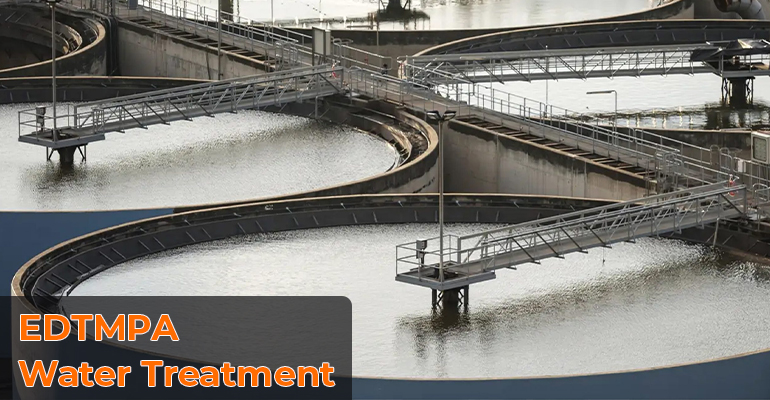
Industrial chemical formulations are rarely made from one ingredient. Industrial chemical formulations may contain active chemicals, water, stabilizing agents, dispersants or other functional additives. HEDP Chemical can be one of the functional chemicals used in such formulations, depending on the intended application and formulation requirements. Industrial chemical formulations can be influenced by the interaction between these ingredients. I believe this interaction can decide whether the final formulation stays stable and performs consistently when actually used. The interaction matters a lot. The final formulation will only shine if the interaction is right...
1-Hydroxyethane-1,1-Diphosphonic Acid: A Practical Guide to HEDP
 What is 1-Hydroxyethane-1,1-diphosphonic Acid?
1-Hydroxyethane-1,1-diphosphonic Acid is the chemical name commonly associated with HEDP, an organophosphonic acid used in industrial water treatment and specialty formulations. It is also widely written as 1-Hydroxy Ethylidene-1, 1-Diphosphonic Acid – HEDP or simply HEDP. Its main value comes from its ability to interact with metal ions and influence the formation of mineral deposits.
In industrial systems, dissolved calcium, magnesium, iron, and other metals can create problems when process conditions encourage precipitation. HEDP can help keep these ions under control and reduce the tendency of certain deposits to develop on equipment surfaces. This makes it useful where water chemistry needs to be managed carefully.
HEDP is commonly supplied as an aqueous liquid. A commercial HEDP grade may be selected according to active acid concentration, physical properties, packaging, and the requirements of the final application. Maxwell Additives’ product specification identifies its HEDP grade as a colorless to pale-yellow liquid, with a minimum active acid content of 60%.
For buyers evaluating an HEDP Supplier, the chemical name alone should not be the only selection criterion. Product concentration, batch consistency, technical documentation, storage conditions, and suitability for the intended process should all be reviewed before procurement.
Why HEDP Is Important in Industrial Water Management
Industrial water systems often operate continuously, which means even a small amount of mineral deposition can become a significant issue over time. Heat exchangers, pipelines, cooling equipment, process vessels, and other surfaces may be exposed to water containing hardness ions and other dissolved substances.
HEDP provides a chemical method for managing part of this challenge. Its phosphonic acid structure gives it an affinity for certain metal ions, allowing it to influence precipitation and deposit formation.
The importance of HEDP also comes from its ability to participate in different treatment strategies. A formulator may use it where scale control is the main objective, while another application may require its metal-ion complexing characteristics as part of a broader chemical system.
For this reason, selecting an HEDP Supplier should involve technical evaluation as well as commercial comparison. A reliable supply of consistent material can help manufacturers maintain repeatable formulation results.
Features of 1-Hydroxyethane-1,1-diphosphonic Acid
1. Effective Metal-Ion Interaction
1-Hydroxyethane-1,1-diphosphonic Acid has a strong ability to interact with selected dissolved metal ions. This characteristic allows it to influence mineral behavior in water-based systems. Its interaction with metals is particularly useful when calcium and other ions may contribute to unwanted precipitation, helping formulators design more controlled treatment programs.
2. Useful Scale-Control Characteristics
HEDP can interfere with the development of certain mineral deposits by affecting precipitation and crystal-growth processes. This makes it a practical component in water-treatment formulations where mineral buildup needs to be managed. Its effectiveness depends on dosage, water composition, temperature, pH, and the complete treatment chemistry.
3. Good Chelating Capability
The phosphonate groups in HEDP provide useful metal-binding characteristics. This can help keep selected metal ions chemically controlled rather than allowing them to participate freely in undesirable reactions. Such behavior is valuable in formulations where metal-ion interference could reduce process efficiency or affect the stability of other ingredients.
4. Suitable for Liquid Dosing
Commercial HEDP is commonly handled as a liquid solution, which can simplify its addition to suitable industrial systems. Metering equipment can be used where controlled dosing is required. Liquid handling can also support formulation blending, although storage, transfer, and personal-protection requirements should always follow the applicable product documentation.
5. Useful in Formulation Combinations
HEDP can be incorporated into treatment programs containing other compatible chemicals. This gives formulators the opportunity to address several process requirements through a coordinated chemical approach. Compatibility should not be assumed, however, particularly when the formulation contains multiple active ingredients, and laboratory trials should be completed before scale-up.
6. Defined Commercial Specifications
Industrial HEDP grades can be supplied against defined quality parameters such as active acid content, specific gravity, pH, iron content, chloride level, and other agreed specifications. Clearly defined parameters give purchasing and technical teams a basis for checking incoming batches and maintaining consistency across repeated production requirements.
7. Useful Across Diverse Processes
HEDP is not restricted to a single industrial operation. It can be evaluated for water treatment, textile processing, sugar-related operations, detergents, oilfield applications, and other specialty formulations. Its suitability should always be assessed according to the specific process rather than assuming that one formulation or dosage will work universally.
What Should You Know Before Buying HEDP?
A common mistake during chemical procurement is to compare suppliers only by price. For a specialty chemical such as HEDP, the quality profile can have a direct effect on formulation performance and process consistency.
Before purchasing, technical teams should identify the required active concentration and the key parameters relevant to their application. For example, Maxwell Additives’ listed HEDP specification includes minimum active acid content, specific gravity, solution pH, iron content, chloride content, and sequestering value.
Packaging is another practical consideration. The quantity required per month, storage capacity at the plant, transportation conditions, and frequency of delivery can all influence the most suitable supply arrangement.
Buyers should also request current batch documentation and, where appropriate, evaluate a sample in their own formulation. A laboratory trial can reveal compatibility issues before a large commercial quantity is introduced.
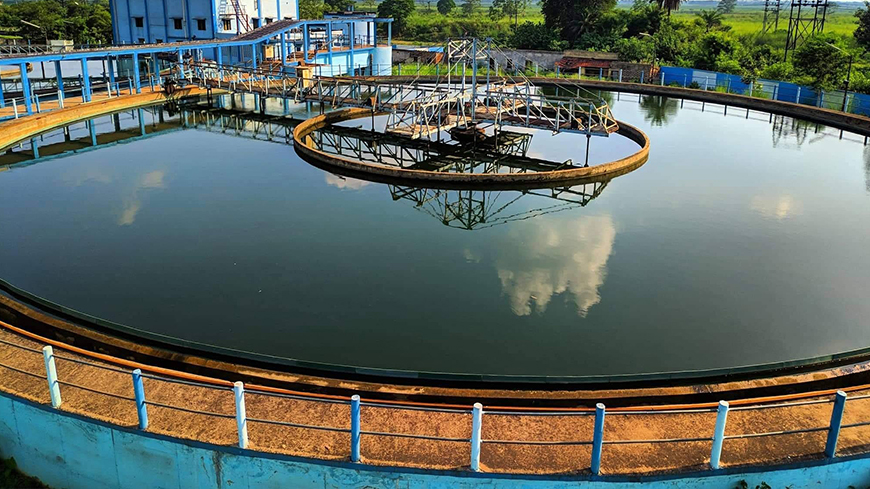 Benefits of 1-Hydroxyethane-1,1-diphosphonic Acid
1. Helps Manage Mineral Deposition
HEDP can help control the behavior of mineral-forming ions in suitable water systems. By influencing precipitation and crystal growth, it can reduce the conditions that encourage unwanted deposits. This can be useful for industrial equipment exposed to hard water or process streams containing significant concentrations of dissolved minerals.
2. Supports Better Process Control
Consistent water chemistry is important in continuous industrial operations. HEDP provides formulators with another method for managing metal-ion activity and mineral behavior. When correctly dosed, it can support a more predictable treatment program and reduce the impact of changing water conditions on the process.
3. Helps Protect Working Surfaces
Mineral deposits can accumulate on heat-transfer and process surfaces, affecting their normal operation. HEDP can help limit deposit formation in appropriate treatment systems. Maintaining cleaner surfaces can support more stable operation, although overall equipment protection still depends on the complete treatment program and operating conditions.
4. Works as Part of Multi-Chemical Programs
Many industrial treatment systems use several chemicals because one ingredient cannot address every operating challenge. HEDP can be incorporated into compatible formulations alongside other treatment components. This gives technical teams greater flexibility when developing a chemical program around specific water chemistry and process requirements.
5. Supports Formulation Flexibility
HEDP can be considered across multiple industrial sectors instead of being limited to one product category. Its metal-ion interaction and scale-control characteristics allow formulators to investigate different applications. This versatility can help specialty chemical manufacturers develop products for varied industrial requirements while using a familiar phosphonate raw material.
6. Convenient for Controlled Addition
Liquid HEDP grades can be incorporated into systems using suitable dosing arrangements. Controlled addition helps operators maintain the intended treatment concentration and avoid unnecessary chemical fluctuations. This can be especially helpful in automated processes where chemical addition needs to remain consistent over extended operating periods.
7. Useful for Long-Term Treatment Strategies
A dependable scale-management program is generally more valuable when it can be maintained consistently rather than applied only after deposits become severe. HEDP can form part of preventive treatment strategies designed around regular monitoring, controlled dosing, and water-quality assessment, helping plants approach mineral management proactively.
How to Select an HEDP Supplier
Choosing an 1-Hydroxyethane-1,1-diphosphonic Acid Supplier should involve several checks before commercial approval. The first is product specification. Buyers should confirm the chemical identity, concentration, physical appearance, pH, density or specific gravity, and any impurity limits relevant to their process.
The second consideration is consistency. A supplier should be able to provide repeat batches that remain within the agreed specification. This becomes especially important for manufacturers using HEDP as a regular raw material in standardized formulations.
Documentation is equally important. Technical data sheets, Safety Data Sheets, certificates of analysis, packaging details, and storage recommendations should be available for review.
Finally, consider supply continuity. A technically suitable chemical is only useful when it can be delivered reliably according to the plant’s production schedule.
A Simple Procurement Checklist for HEDP
Before finalizing an order, buyers can review:
- Chemical identity and grade
- Active acid concentration
- Physical appearance
- Specific gravity
- pH range
- Iron and chloride limits
- Packaging format
- Certificate of analysis
- Storage requirements
- Supplier production capacity
- Delivery schedule
- Application-specific compatibility
This approach helps technical and procurement teams make decisions based on actual requirements rather than relying only on a product name.
Conclusion
1-Hydroxyethane-1,1-diphosphonic Acid, also known as 1-Hydroxy Ethylidene-1, 1-Diphosphonic Acid – HEDP, is a useful phosphonate chemical for industrial applications involving metal-ion management and mineral-deposit control. Its characteristics make it suitable for evaluation in water treatment and several specialty chemical formulations.
The performance of HEDP depends on the complete treatment environment. Water chemistry, dosage, pH, temperature, equipment design, and interaction with other chemicals should all be considered before selecting a treatment strategy.
For businesses looking for an HEDP Supplier, product consistency and technical documentation should be treated as important purchasing criteria. A sample evaluation, current specification, and certificate of analysis can help confirm whether a particular grade is suitable for the intended application.
The right HEDP product is ultimately one that delivers predictable performance within the actual industrial process. Careful formulation, controlled dosing, regular monitoring, and dependable sourcing can make HEDP a valuable part of a broader chemical-management program.
Frequently Asked Questions
1. Is 1-Hydroxyethane-1,1-diphosphonic Acid the same as HEDP?
Yes. 1-Hydroxyethane-1,1-diphosphonic Acid is a chemical name used for HEDP. It is also commonly referred to as 1-Hydroxy Ethylidene-1,1-Diphosphonic Acid or HEDP Etidronic Acid in industrial and technical contexts. Buyers should still verify the exact grade and specification supplied for their application.
2. What is HEDP mainly used for?
HEDP is mainly used where metal-ion management and control of mineral deposits are required. It can be considered for cooling-water treatment, textile processing, detergents, sugar processing, oilfield applications, peroxide-based processes, and other industrial formulations. The appropriate concentration and dosage depend on the specific application.
3. What specifications should I ask for when purchasing HEDP?
A buyer should request the chemical identity, active acid concentration, appearance, specific gravity, pH, impurity limits, packaging information, and certificate of analysis. For example, Maxwell Additives lists active acid, specific gravity, pH, iron, chloride, and sequestering-value specifications for its HEDP grade.
4. Can HEDP be used in cooling-water systems?
Yes, HEDP can be evaluated as part of suitable cooling-water treatment programs. Its ability to interact with metal ions and influence mineral deposition can support scale-management strategies. However, dosage should be determined from the actual water analysis and operating conditions rather than using a standard quantity for every cooling system.
5. Is HEDP available as a liquid?
Commercial HEDP is commonly available as an aqueous liquid. Maxwell Additives describes its HEDP grade as a colorless to pale-yellow liquid with a minimum active acid specification of 60%. Buyers should confirm the latest technical data and certificate of analysis for the specific batch being purchased.
6. What should I consider when choosing an HEDP Supplier?
When selecting an HEDP Supplier, consider product consistency, active concentration, quality documentation, packaging, storage guidance, technical support, and supply reliability. It is also sensible to test a sample in the intended formulation before placing a large order, especially when HEDP will be used as a critical process chemical.
7. Can Maxwell Additives PVT LTD supply HEDP?
Yes. Maxwell Additives PVT LTD lists HEDP under its specialty phosphonate product range as PHOSPHOMAN®-111-C / Maxophos-111-C. Its published specification identifies HEDP as 1-Hydroxy Ethylidene-1,1-Diphosphonic Acid and provides technical parameters for the commercial product. Buyers should contact Maxwell Additives PVT LTD for current availability, specifications, packaging, and commercial requirements.
Related Posts