Issues associated with the industrial water system are deposition of minerals, scaling, and metallic ions. These issues lower heat exchange efficiency and damage equipment performance. Industrial water systems often have problems, such, as scale build-up, mineral deposits and metallic ions. These issues lower heat exchange efficiency and damage equipment performance. The use of water‑treatment chemicals is an effective solution to tackle these problems. HEDP (1‑Hydroxy Ethylidene‑1,1‑Diphosphonic Acid) is a chemical that helps in controlling scale and metal ions in specific applications.
In cases where a supplier for the product is to be searched, it becomes necessary to have a clear idea about the application area, formulation, and grade of the chemical. While looking for an HEDP supplier in India, it is significant to compare the grade with the application and formulation.
What Is HEDP?
HEDP is a chemical known as 1‑Hydroxy Ethylidene‑1,1‑Diphosphonic Acid. This product finds its application in areas where scale control, and management of metallic ions are of significance. In water‑treatment applications, for instance, there is a tendency for calcium scale to deposit on heat‑exchanger surfaces, piping, cooling‑tower tubes, and other apparatus, lowering the efficiency of the process. Such build‑up can also result in maintenance issues. The addition of HEDP in an appropriate amount and under suitable conditions prevents the formation of scale. The efficiency of the treatment, however, depends on a number of variables including water composition, pH, temperature, dose, and the formulation used; therefore, the selection of the grade becomes critical in relation to the application.
Key Properties of HEDP Chemical
1. Scale Control
Scale minerals tend to deposit on heat‑transfer surfaces, reducing the efficiency of the process, increasing maintenance costs, and causing other issues. The chemical HEDP is capable of preventing the formation of scale in a number of applications.
2. Metal‑Ion Interaction
HEDP is effective in formulations that require the prevention of metal ions from precipitating out of the solution. The efficiency of the treatment is dependent on a number of factors such as the type of metal ions, pH, temperature, etc.
3. Compatibility With Treatment Formulations
HEDP can be incorporated into water‑treatment formulations with a combination of other chemicals. Compatibility testing, therefore, becomes a criterion for determining the grade of HEDP to be used.
4. Suitability for Industrial Water Treatment
HEDP is often used in water treatment applications that need to stop scaling. The success of the treatment depends on the quality of the water the temperature, the other factors. A suitable dosage has to be determined, and the performance has to be monitored.
Major Applications of HEDP
1. Cooling Water Treatment
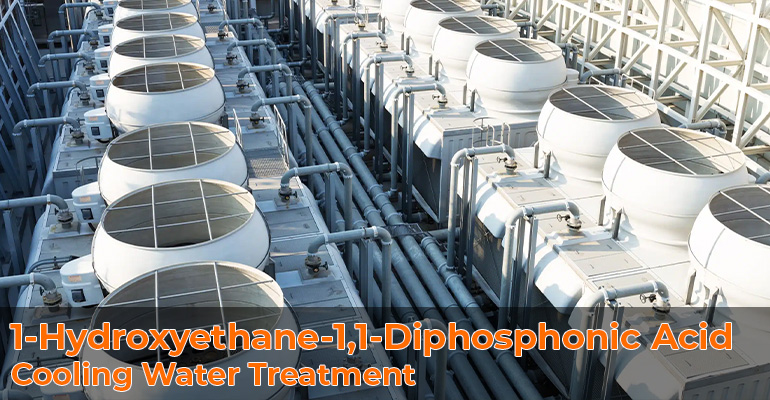
Heat‑exchangers, tower surfaces, and piping in cooling‑water systems tend to accumulate scale deposits and adversely impact the efficiency of the process as well as incur maintenance costs. Using HEDP helps stop scale from forming. It also makes it easier to manage fouling and corrosion. This treatment keeps water quality under control. Allows for proper monitoring.
2. Industrial Water Treatment
Industrial water systems manage processes that involve heating, cooling and other treatment stages in water systems. The water quality can change, leading to the deposition of minerals and affecting the efficiency of the process. HEDP is suitable for such applications where scaling is a concern. Water analysis, and lab trials become important in determining the formulation.
3. Reverse Osmosis Water Treatment
Reverse‑osmosis (RO) water‑treatment plants involve membranes that help in removing ions and molecules from water. The formation of scale on the membrane surface reduces its efficiency. The selection of an antiscalant for use in RO applications involves a detailed analysis of water quality, recovery percentage, and other aspects. HEDP can be a part of an antiscalant blend for RO systems. A compatible blend has to be selected based on its performance on the membrane and water.
4. Industrial Cleaning Formulations
Cleaning formulations sometimes involve blends of chemicals. These blends are used to remove scale deposits from surfaces. They also help to remove ions from surfaces. Cleaning formulations are chosen carefully to tackle both scale deposits and metallic ions. HEDP can be incorporated if the scope of application, chemical composition, and other factors are in accordance. The efficiency of the product can be determined through trials in the blend.
5. Specialty Chemical Formulations
Specialty chemicals and detergents sometimes involve formulations with ingredients for specific applications. HEDP can be used in such formulations.
Before you add the chemical to any mix it is very important to check whether the chemical works well. You should also check whether the chemical meets all the requirements. Before you add the chemical to any mix it is very important to check whether the chemical works well. You should also check whether the chemical meets all the requirements. Look for any things to consider before using it. Always make sure the chemical is compatible. This helps avoid problems. Taking time to check the chemical now can save a lot of trouble.
Benefits of Using HEDP in Proper Industrial Uses
- Scale management: HEDP helps in managing scale deposits in various applications.
- Equipment maintenance: The use of HEDP to manage scale reduces maintenance frequency and cost.
- Process reliability: Formulations that incorporate HEDP ensure reliability in performance depending on the conditions.
- Formulation flexibility: The product is compatible with a variety of formulations as per specifications and operational aspects.
- Treatment specification compliance: The chemical can be incorporated into a blend depending on treatment processes.
- The benefits of using HEDP depend on the application, the water quality, the operational aspects, the grade, the dose and other factors.
What Should Buyers Check Before Buying HEDP?
The purchase of HEDP involves considerations to ensure that the application requirements are fulfilled. Before finalizing the purchase, it is significant for the buyer to go through the specifications to identify the grade.
1. Product strength
The buyer has to indicate the grade and strength of the product needed for the application. Commercial grades can vary significantly; hence clarification of requirements becomes essential.
2. Technical Data Sheet
The TDS contains specifications of the HEDP for the application. It is advisable to go through the document to confirm that the product is suitable for the intended application and that the grade is correct.
3. Safety Data Sheet
The SDS involves information with regard to the safe usage of the product. It is advisable to go through the document to understand the hazardous aspects and the procedure for storage and use.
4. Quality and batch consistency
The quality of HEDP can vary depending on the manufacturers and the production processes. It is advisable to inquire about the quality assurance procedures and obtain the relevant documents. Certificate of Analysis (COA) is a document that can be used to confirm the quality of HEDP.
5. Packaging and storage
The packaging of HEDP has to be compatible with its physical properties as well as the transportation and storage requirements. It is advisable to confirm the packaging and storage requirements as specified by the seller.
6. Delivery
In case of ordering, it is critical to confirm the seller’s capability to deliver HEDP as per the specified requirements. It is advisable to finalize the purchase agreement with the specified terms.
How to Pick the Right HEDP Manufacturer in India
The selection of a HEDP manufacturer involves considerations relating to product specifications, quality assurance, and other aspects. The following criteria can be used to select a HEDP manufacturer in India.
- Review HEDP product specifications: Confirm that the grade and other specifications are suitable for the application.
- Request product documents: Ensure that the seller provides the TDS and SDS for HEDP.
- Quality assurance: Inquire about the quality assurance procedures for HEDP and request the relevant documents.
- Production and delivery: Verify that the manufacturer provides HEDP in the required quantity and on the specified schedule.
- Discuss the application: Clarify the application and request information with regard to the suitability of HEDP.
- Finalize purchasing terms: Consider aspects such as the quality of HEDP, documentation, after‑sales service, supply capability, and other relevant terms in finalizing the purchase.
A suitable seller provides the necessary information and confirms the suitability of the specified grade of HEDP for the intended application.
HEDP Supplier in India: What Industrial Buyers Should Think About
The chemical market in India offers a wide range of products and buyers have to consider a number of aspects before making the purchase. In the search for an HEDP supplier in India, it becomes essential to include such criteria.
- Product specifications: Check the grade, strength and all other requirements of HEDP.
- Support: Make sure the supplier gives the required documents and technical help for HEDP.
- Application suitability: Verify that HEDP works with the intended use and operational conditions.
- Product documentation: I would like to receive the HEDP TDS SDS and any other documents that will help me evaluate the product.
- Supply capabilities: Please tell me if HEDP is available under the terms we talked about. Also let me know about the packaging, delivery schedule and any other supply details.
- Business terms: I need information about the pricing, payment deadlines and all other purchase conditions so we can close the deal.
Consideration of these criteria helps the buyer make a purchase and avoid buying the wrong product.
Why Choose Maxwell Additives, for HEDP Needs?
Maxwell Additives Pvt. Ltd. Is a prominent company based in Vadodara, Gujarat, that offers a wide range of specialty chemicals and water treatment products.
Before making the purchase of HEDP it becomes essential to discuss the application, grade, specifications, and volumes with the seller.
In my evaluation of this seller or any other HEDP supplier, I take a closer look at the availability, specification, documentation, and supply terms of the product. When I set the requirements at the start of the purchase, finding HEDP suppliers is easy.
Conclusion
HEDP is a specialty chemical for specific industrial uses where scale control and metal‑ion management are important. HEDP suitability depends on the formulation, water chemistry, operating conditions and technical needs of the final application.
If a business is looking for an HEDP manufacturer, an HEDP manufacturer in India or an HEDP supplier, in India the purchasing decision should focus on product specifications, documentation, quality practices and supply reliability, not price.
Maxwell Additives Pvt. Ltd. Is located in Vadodara, Gujarat. Businesses that want to use HEDP for work should check the current product availability and specifications directly with the company to see if the product fits their needs.
Frequently Asked Questions About HEDP
1. What is HEDP?
HEDP is a chemical known as 1-Hydroxy Ethylidene-1,1-Diphosphonic Acid. This product is used in water treatment applications and in the production of other chemical products.
2. What is HEDP used for?
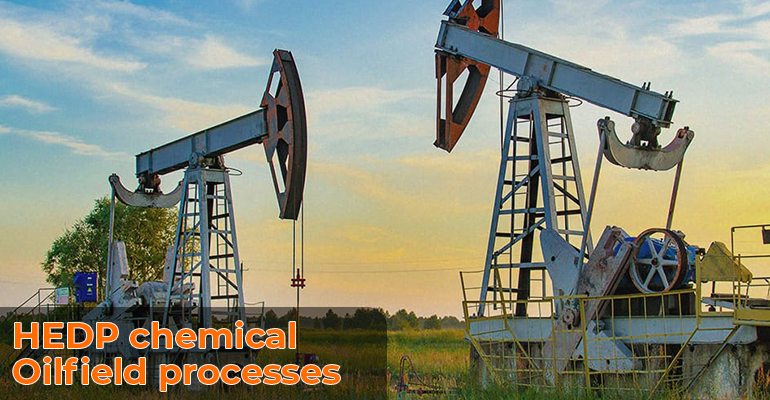
HEDP finds its application in formulations that require management of scale and metallic ions. The product is often used in cooling water applications and other industrial processes. The selection of HEDP depends on the requirements of the application.
3. How do I pick a HEDP Supplier in India?
In picking a HEDP supplier in India, I consider the product specifications, documentation, quality assurance, supply volumes, and purchase terms. I confirm that the grade and other aspects are compatible with the use.
4. What should I look at before buying HEDP?
Before purchasing HEDP, I examine the grade, strength, TDS, SDS, packaging, storage requirements, and other aspects. I confirm that the product is suitable for the intended application before making the purchase.
5. Is HEDP used in osmosis systems?
In certain cases, HEDP can be used in antiscalant blends for osmosis systems depending on water quality, membrane type, and other aspects. It is advisable to consult with water treatment experts and go through the product documentation.
6. What is the difference between an HEDP manufacturer and a supplier?
A manufacturer deals with the production of a chemical, whereas a supplier distributes the product and provides supply chain services. Certain companies specialize in the manufacturing of HEDP, and some in the supply. Always confirm the role played by a seller.
7. Why are technical papers important when buying HEDP?
These documents contain the relevant information with regard to the use of the chemical. I rely on them to establish the suitability of the product for use and make the purchase.