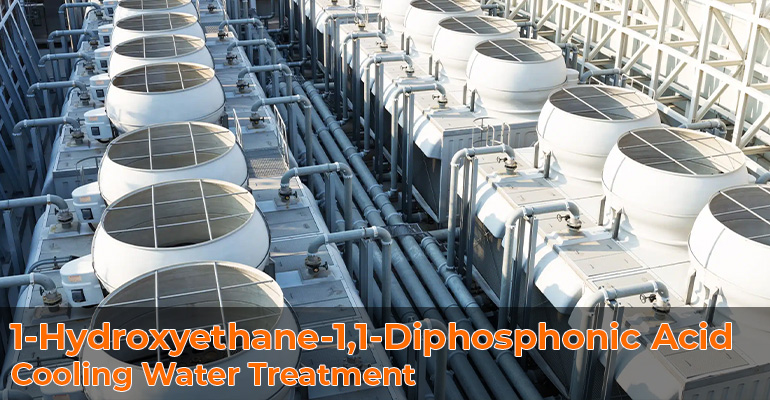
Industrial processes often depend on chemicals that can maintain performance when water quality, temperature, mineral content, and operating conditions change. HEDP Chemical is one such phosphonate-based material used in formulations where control over mineral interactions and metal ions is important. It is commonly identified by several chemical names, including 1-Hydroxyethane-1,1-diphosphonic – HEDP and 1-Hydroxy Ethylidene-1, 1-Diphosphonic Acid.
The chemical is available in industrial liquid formulations and is valued for its ability to interact with metal ions and influence mineral deposition. These characteristics make it relevant to different formulation environments rather than restricting it to one particular industry. For businesses purchasing this material, understanding its chemistry, performance characteristics, handling needs, and application requirements is important before selecting a suitable grade.
What is HEDP Chemical?
HEDP Chemical is a phosphonate compound commonly known as 1-Hydroxy Ethylidene-1, 1-Diphosphonic Acid or etidronic acid. It contains two phosphonic acid groups that give it useful metal-binding properties. The chemical is generally supplied as a liquid and can be incorporated into suitable industrial formulations where mineral and metal-ion management is required.
One of the main reasons industries consider HEDP is its interaction with ions such as calcium and other metals. In water-based systems, dissolved minerals can become problematic when process conditions encourage precipitation. HEDP can interfere with these processes, helping treatment formulations manage mineral deposition more effectively.
Its chemistry also makes it suitable for applications where operating conditions vary. Industrial systems may experience changes in temperature, acidity, alkalinity, or dissolved solids. A phosphonate that remains chemically useful under a broad range of conditions can provide formulators with greater flexibility when developing treatment programs.
The role of HEDP should not be understood as simply removing minerals from water. Instead, it can influence the chemical behavior of dissolved species and help keep certain ions under control. This distinction is important because the required treatment approach depends on the composition of the water, equipment, process conditions, and other ingredients present in the formulation.
For companies searching for an HEDP Manufacturer and supplier in India, technical specifications are just as important as price and availability. Active concentration, physical characteristics, packaging, storage requirements, and application suitability should all be considered before purchasing.
The chemical is also relevant in formulations where metal ions can interfere with other ingredients. By interacting with selected metal species, HEDP can help reduce unwanted reactions and support more consistent formulation performance.
HEDP in Industrial Formulations and Process Stability
HEDP can be viewed as a supporting chemical for maintaining process stability rather than as a solution designed for only one industrial problem. Many industrial systems contain several chemical components that interact continuously. Even small quantities of dissolved metals can sometimes influence the behavior of other ingredients or contribute to unwanted deposits.
This is where phosphonate chemistry becomes useful. HEDP can interact with certain metal ions and influence their availability within the system. The effect can help treatment formulators manage mineral-related problems before they become significant enough to affect equipment or process performance.
Another important point is that HEDP performance is highly dependent on formulation conditions. Two industrial systems using the same chemical may require different treatment strategies because their water chemistry, temperature, pH, mineral concentration, and process objectives are not identical.
For example, a formulation designed for circulating water may focus strongly on deposit management, while a cleaning formulation may use HEDP primarily for metal-ion control. The chemical remains the same, but the reason for including it and the required concentration can differ.
This makes application testing an important part of product selection. Instead of assuming that a standard dosage will work everywhere, formulators can evaluate the chemical under representative operating conditions. Such testing can help determine compatibility, required concentration, and interaction with other treatment ingredients.
For procurement teams, this approach also highlights why the supplier matters. A suitable 1-Hydroxy Ethylidene-1, 1-Diphosphonic Acid supplier in India should provide clear technical information and consistent product quality so customers can assess the material according to their specific requirements.
Features of HEDP Chemical
1. Strong Metal-Ion Interaction
HEDP has phosphonic acid groups that can interact with various metal ions in aqueous environments. This characteristic gives it useful complexing properties in industrial formulations. By influencing the behavior of dissolved metals, HEDP can support treatment programs where uncontrolled metal ions may contribute to deposits, reactions, discoloration, or formulation instability.
2. Effective Mineral Deposit Control
HEDP can interfere with the processes that allow certain dissolved minerals to develop into unwanted deposits. This makes it useful in formulations designed for scale management. Its role is especially valuable when water contains hardness-forming ions that may otherwise accumulate on equipment surfaces during repeated circulation.
3. Good Chemical Stability
HEDP is valued for maintaining useful performance under demanding chemical conditions. Its stability allows formulators to consider it for applications involving changes in temperature and pH. However, actual suitability should always be confirmed through application-specific evaluation because overall formulation behavior depends on the complete operating environment.
4. Water-Soluble Nature
The liquid, water-compatible nature of HEDP makes it convenient for many aqueous formulations. It can be incorporated into suitable treatment solutions without requiring complicated preparation methods. This characteristic can simplify dosing and formulation work for industries that routinely handle water-based chemical systems at different production scales.
5. Chelating Functionality
HEDP provides useful chelating functionality because of its phosphonate groups. It can interact with selected metal ions and help keep them under chemical control. This property makes it relevant to formulations where metals could otherwise affect cleaning performance, deposit formation, product stability, or the behavior of other ingredients.
6. Broad Formulation Potential
HEDP can be evaluated across several industrial applications because its chemistry provides more than one useful function. It may support mineral management, metal-ion control, and related formulation objectives. Its suitability depends on the individual process, dosage, concentration, compatibility requirements, and technical specifications of the final formulation.
7. Suitable for Demanding Industrial Systems
Industrial processes may involve heat, changing water chemistry, and repeated chemical exposure. HEDP’s chemical characteristics allow it to be considered for such environments when properly formulated. This makes it a practical phosphonate option for industries looking for consistent mineral and metal-ion management rather than a chemical limited to mild conditions.
Industrial Applications of HEDP Across Different Processes
HEDP Chemical has potential value wherever dissolved minerals and metal ions can influence process performance. Its chemistry makes it relevant to water-treatment formulations, cleaning products, industrial processes, and other applications requiring control of mineral-related interactions.
In water-based systems, HEDP can be used as part of a broader treatment strategy for managing hardness and mineral deposition. The objective is generally to maintain better control over the chemical conditions that encourage unwanted deposits.
Cleaning formulations represent another area where its metal-binding properties can be useful. Minerals in water can affect the behavior of cleaning ingredients. By interacting with certain metal ions, HEDP can support formulations designed to maintain more predictable cleaning performance.
Textile processing may also involve water containing minerals and trace metals that can influence chemical treatments. In such environments, a suitable phosphonate can help formulators manage these interactions. The exact role, however, depends on the process chemistry and the required product specification.
Industrial processing applications can have similar requirements. When deposits develop on equipment, they can affect heat transfer, flow, cleaning frequency, and maintenance schedules. A properly designed chemical treatment program can help manage these issues before they become major operational concerns.
HEDP is also evaluated in oilfield-related formulations where mineral deposition can affect pipelines and production equipment. Such applications can involve demanding conditions, making chemical stability an important selection criterion.
The important point is that HEDP should be selected according to the actual application rather than simply because it is widely used. Each system has its own chemistry, and testing remains the best way to establish suitable dosage and performance.
 Benefits of HEDP Chemical
1. Helps Control Mineral Deposition
HEDP can influence the behavior of hardness-forming minerals in suitable treatment systems. This helps reduce the tendency of certain dissolved species to form unwanted deposits. Better mineral management can support cleaner equipment surfaces and reduce operational problems associated with recurring scale accumulation.
2. Supports Metal-Ion Management
The phosphonate structure of HEDP gives it useful interaction with metal ions. This can help treatment formulators manage calcium, magnesium, iron, and other selected metals that may interfere with chemical processes. Better control of these ions can contribute to more stable formulation performance.
3. Can Improve Process Consistency
Uncontrolled mineral and metal interactions can cause changes in process behavior over time. HEDP can form part of a treatment program designed to maintain more predictable conditions. Consistent chemical control may help reduce variations associated with deposits and dissolved-metal interference.
4. Useful in Water-Based Formulations
HEDP’s liquid and water-compatible characteristics make it convenient for many aqueous treatment formulations. It can be incorporated into appropriate systems according to the required concentration and process conditions. This makes it practical for industries that regularly prepare or dose liquid chemical treatment products.
5. Supports Equipment Maintenance Planning
Mineral deposits can increase the frequency of cleaning and maintenance activities. By helping control deposit-forming conditions, HEDP may support a more manageable maintenance schedule. Its contribution is most useful when it is included as part of a properly designed treatment program matched to actual water chemistry.
6. Offers Formulation Flexibility
HEDP can be evaluated for different formulation objectives rather than being restricted to one specific process. Its metal-binding and mineral-control characteristics allow technical teams to explore its use in several industrial systems. Final performance depends on compatibility, dosage, concentration, and operating conditions.
7. Suitable for Industrial Applications
The combination of phosphonate functionality, metal-ion interaction, and chemical stability makes HEDP a practical option for industrial chemical formulations. It can be considered where mineral control and process stability are important. Proper technical evaluation helps determine whether it is appropriate for a particular application.
Conclusion
1-Hydroxyethane-1,1-diphosphonic – HEDP, also known as 1-Hydroxy Ethylidene-1, 1-Diphosphonic Acid, is a versatile phosphonate chemical valued for its interaction with metal ions and its role in managing mineral-related problems. Its usefulness comes from its ability to become part of broader industrial treatment and formulation strategies.
The chemical can be considered for water-based systems, cleaning formulations, textile processing, oilfield applications, and other industrial environments where mineral and metal-ion control is required. However, performance depends on the actual process conditions, concentration, water chemistry, and compatibility with other ingredients.
For companies looking for an HEDP Manufacturer and supplier in India, it is important to look beyond basic availability. Consistent quality, technical specifications, packaging, safe handling information, and dependable supply are all important factors when selecting an industrial chemical partner.
FAQ
1. What is HEDP Chemical mainly used for?
HEDP Chemical is mainly used in industrial formulations where control of mineral deposition and metal-ion interactions is required. It can be evaluated for water treatment, cleaning formulations, textile processes, oilfield-related applications, and other systems depending on the specific formulation requirements.
2. Is HEDP the same as 1-Hydroxy Ethylidene-1, 1-Diphosphonic Acid?
Yes. HEDP is the commonly used abbreviation for 1-Hydroxy Ethylidene-1, 1-Diphosphonic Acid. It is also known as 1-Hydroxyethane-1,1-diphosphonic acid or etidronic acid. Buyers should still verify the exact grade and concentration from the supplier’s technical documentation before purchase.
3. Can HEDP be used in hard-water systems?
HEDP can be considered for hard-water treatment because its phosphonate groups interact with mineral ions. It can help manage conditions associated with mineral deposition when used at a suitable concentration. The correct dosage should be established according to water hardness and the complete treatment program.
4. Is HEDP suitable for high-temperature applications?
HEDP is valued for its stability under demanding conditions and can be evaluated for applications involving elevated temperatures. However, the actual performance depends on temperature, pH, concentration, residence time, and other chemicals present. Application testing is recommended before commercial-scale implementation.
5. What should I check before purchasing HEDP Chemical?
Buyers should check active concentration, appearance, density, pH, impurity limits, packaging, storage requirements, and application suitability. Maxwell Additives’ published HEDP specification, for example, provides product information including active acid, specific gravity, pH, iron and chloride limits, and packaging details.
6. How should HEDP be handled and stored?
HEDP should be handled according to the supplier’s safety documentation because it is an acidic chemical. Appropriate protective equipment should be used, and storage should follow the recommended conditions. Customers should consult the current SDS and technical documentation before handling or transporting the product.
7. Why is Maxwell Additives considered for HEDP requirements?
Maxwell Additives PVT LTD lists HEDP within its phosphonate product range and publishes technical information for its HEDP material, including specifications, applications, packaging, and safety information. For buyers, reviewing these details alongside their own application requirements can help determine product suitability.