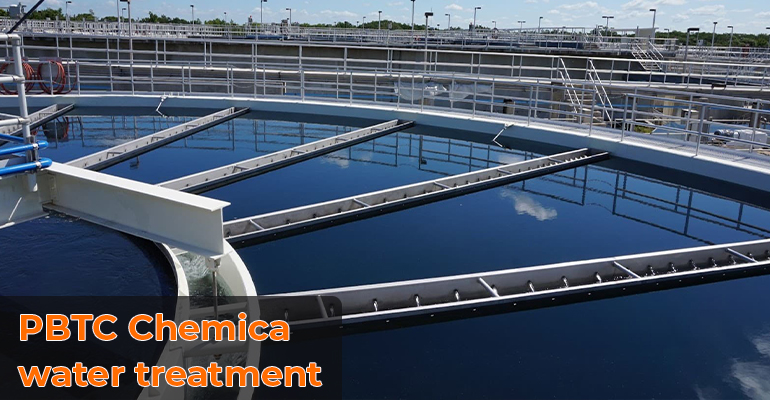

PBTC is a specialty phosphonate used in industrial chemical formulations where controlling mineral deposits, metal interactions, and system stability is important. Its full chemical name is 2-Phosphonobutane-1,2,4-Tricarboxylic Acid. It is also commonly identified as PBTC or PBTCA. The molecule contains phosphonic and carboxylic acid functionality, giving it useful properties for demanding water-based applications. Maxwell Additives lists PBTC as PHOSPHOMAN-333C and specifies a 50–51% active acid grade...
PBTC Chemical: Understanding Specification, Dosage and Formulation Control

2-Phosphonobutane-1,2,4-tricarboxylic acid (PBTC) is one specialty phosphonate used in industrial formulations. Its combination of carboxylate functionality gives it a different chemical profile from many conventional phosphonates. Maxwell Additives identifies its commercial PBTC product as PHOSPHOMAN-333-C. Lists it under the specialty phosphonate range.
For users understanding the specification behind a PBTC chemical can be just as important as knowing its application. A formulation calculated on acid content is not the same as one calculated simply on the weight of the commercial product. Paying attention to this difference can improve dosage accuracy, laboratory testing and consistency between production batches.
What is a PBTC Chemical?
PBTC Chemical refers to 2-Phosphonobutane-1,2,4-tricarboxylic acid an organophosphonate identified by CAS No. 37971-36-1 And molecular formula C₇H₁₁O₉P. Maxwell Additives lists a weight of 270.13 for its PBTC product PHOSPHOMAN-333-C.
The structure of PBTC contains both carboxylic acid groups. This combination contributes to its ability to interact with dissolved metal species and mineral-forming components in formulations. Than considering PBTC only through a single function it can be understood as a specialty chemical whose behavior is influenced by its concentration and the chemical environment in which it is introduced.
Maxwell’s specification for PHOSPHOMAN-333-C lists an acid content of 50.0–51.0% density of at least 1.27 g/cm³ at 20°C and a pH of 1.5–2.0 for a 1% water solution. The product is described as clear and colorless with limits specified for phosphorous acid, phosphoric acid, iron and chloride.
These specifications are useful when preparing formulations because the commercial material is not 100% acid. If a formulation requires an amount of active PBTC the quantity of commercial PBTC solution must be calculated according to its actual active concentration.
PBTC is also known by names such as PBTCA and phosphonobutane tricarboxylic acid. Maxwell lists these synonyms alongside 2-Phosphonobutane-1,2-4-Tricarboxylic Acid and PBTC.
Therefore when purchasing or comparing materials it is useful to verify that the chemical identity, grade, active concentration and specification are clearly defined rather than relying only on the abbreviated name PBTC.
Understanding PBTC Chemical Through Its Commercial Specification
A specialty chemical specification is more than a document kept for reference. It can directly influence how a formulation is prepared, tested and scaled. For PBTC active acid percentage is particularly important because the commercial material contains water and other components in addition to the chemical.
Maxwell Additives specifies PHOSPHOMAN-333-C at 50.0–51.0% acid. If a laboratory formulation is designed around PBTC the commercial product quantity must therefore be adjusted according to this concentration. Using the weight of two products with different active percentages could result in different actual treatment levels.
For example if a formulation requires 5 kg of PBTC and the available product contains 50% active acid, approximately 10 kg of the commercial material would be needed, before considering any further formulation adjustments. If the actual concentration differs the required product weight also changes.
Density provides another reference. PBTC is supplied as a liquid volume-based handling and weight-based formulation can produce different numerical values. Maxwell lists a density of 1.27 g/cm³ at 20°C for PHOSPHOMAN-333-C. For production operations using metering pumps or volume-calibrated equipment density can therefore become relevant to accurate dosing.
The same principle applies to quality-control parameters. Limits for iron, chloride, phosphorous acid and phosphoric acid provide information about the composition of the grade. Maxwell lists values of 10 ppm for iron and 10 ppm for chloride along with limits for phosphorous and phosphoric acid.
For a formulator these values can help establish a raw-material baseline. If a finished product changes unexpectedly the specification history of the PBTC input can be reviewed alongside formulation variables.
This specification-based approach creates a controlled way to work with PBTC Chemical. Of treating every batch as an identical liquid manufacturers can connect active concentration, density, impurities and dosing calculations with the final formulation result.
Features of PBTC Chemical
1. Dual Functional Chemistry
PBTC contains carboxylate groups within its molecular structure. This combination gives the material chemical functionality that’s useful when metal-ion interactions and mineral behavior need to be considered together in an industrial formulation.
2. Defined Active Acid Concentration
PHOSPHOMAN-333-C is specified at 50.0–51.0% acid. This defined range provides a basis for calculating the quantity of commercial PBTC required when a formulation is designed around active chemical concentration.
3. Controlled Physical Appearance
Maxwell describes the PBTC grade as a colorless liquid. A defined appearance specification gives manufacturers a physical reference during incoming-material inspection and routine quality checks.
4. Measurable Density
The product specification lists a density of least 1.27 g/cm³ at 20°C. Density information can be useful when transferring between weight-based formulation calculations and liquid-volume dosing equipment.
5. Defined Acidic Character
A 1% water solution of the listed PBTC grade has a specified range of 1.5–2.0. This provides formulators with a reference point when considering PBTC addition within a formulation and planning suitable handling procedures.
6. Controlled Trace Components
The Maxwell specification includes limits for iron, chloride, phosphorous acid and phosphoric acid. Such parameters help users understand the expected composition of the grade and establish suitable raw-material quality checks.
7. Compatibility With Combination Programs
Maxwell states that PHOSPHOMAN-333-C can be combined with zinc salts, copolymers organophosphines, imidazole and other water-treatment chemicals. Actual compatibility should still be established through formulation- testing.
How Active PBTC Concentration Changes Formulation Calculations
One of the useful ways to understand PBTC Chemical is to separate the commercial product quantity from the active chemical quantity.
Suppose a manufacturer wants to prepare a treatment formulation containing 2% active PBTC. If the available PBTC product contains 50% active acid, the amount of commercial product needed will be higher than 2%. The calculation must account for the concentration rather than simply adding 2 kg of commercial liquid to every 100 kg of formulation.
This distinction becomes increasingly important during scale-up. A laboratory technician may prepare a formulation using a balance while production may use storage tanks, transfer lines and metering pumps. If the original laboratory calculation was based on content but the production instruction was written only as a commercial-product percentage discrepancies can occur.
A simple calculation can help:
commercial PBTC = Required PBTC ÷ Active fraction
For a product containing 50% acid, an active requirement of 5 kg corresponds to approximately 10 kg of commercial material.
This does not mean that every industrial application should use the dosage. The appropriate amount depends on the intended formulation and operating conditions. Maxwell’s product page gives a dosage of 5–15 mg/L when PHOSPHOMAN-333-C is used alone but this should not be treated as a universal dosage for every system.
For formulation developers the useful lesson is to keep the calculation basis consistent. If laboratory testing uses concentration while production uses product volume both values should be documented clearly.
This also helps when comparing different PBTC grades. Two products may carry the chemical name but have different active concentrations or specifications. Comparing them by price per kilogram can therefore give an incomplete picture. A meaningful comparison considers the amount of active chemical delivered per unit of commercial product.
PBTC Chemical and Better Batch-to-Batch Control
A finished formulation can sometimes show variation when the manufacturing procedure appears unchanged. Raw-material differences are one factor. For PBTC active concentration, density, appearance and specified impurity levels can provide checkpoints when investigating such variation.
An effective quality-control routine can begin before the material enters production. The batch documentation can be checked against the required specification, followed by incoming inspection according to the manufacturers quality procedures.
During production accurate measurement is equally important. If PBTC is metered by volume density should be considered when converting the target quantity into a dosing setting. If it is added by weight the formulation record should state whether the target refers to product or active acid.
Storage and transfer practices can also be documented as part of the material-control process. Since PBTC is a liquid handling procedures should account for its chemical nature. Maxwells product page specifically advises avoiding contact with eyes and skin. Recommends flushing with water after contact.
Another useful practice is to keep formulation records that distinguish between raw-material lot number and actual addition quantity. If a later batch behaves differently this information makes it easier to investigate whether the change came from PBTC, another material, water quality, equipment conditions or the production process itself.
In this way PBTC becomes part of a formulation-control system rather than simply another ingredient, on a production sheet.
Benefits of PBTC Chemical
1. Supports Accurate Formulation Planning
A defined active-acid specification allows manufacturers to calculate PBTC requirements using the active component rather than relying only on commercial-product weight. This can make laboratory preparation, production scaling and treatment calculations easier to standardize across formulation stages.
2. Helps Maintain Dosing Consistency
Knowing the concentration and density of the PBTC grade can support more consistent dosing. This is particularly useful when liquid chemicals are transferred through metering systems where volume, weight and active concentration must be connected accurately.
3. Provides Clear Quality-Control Parameters
A clear specification helps users have points to check when they receive materials. Things like acid, density how it looks, iron, chloride, phosphorous acid and phosphoric acid limits can all help create a better way to check the raw materials.
4. Works Well in Mixtures with Ingredients
PBTC can be used in programs that have other treatment ingredients. Maxwell specifically says it is used with zinc salts, copolymers organophosphines, imidazole and other water-treatment chemicals. Only after checking how it works in the mix.
5. Helps Link Lab Work and Production
Using the concentration as the main idea makes it easier to take a lab recipe and make a bigger batch. Writing down the concentration clearly can help avoid confusion when moving from lab to production.
6. Has a Clear Commercial Grade
PHOSPHOMAN-333-C comes with physical and chemical rules. This gives users a guide for testing and checking quality. This is helpful when the materials need to be the same for the production process.
7. Makes Troubleshooting
When a formula doesn’t work the same having the PBTC specifications and amounts written down helps find the problem. Manufacturers can look at concentration how much is used, the batch of materials and the process conditions instead of changing the formula without finding the real issue.
Conclusion
2-Phosphonobutane-1,2,4-tricarboxylic acid (PBTC) is a type of phosphonate. Its value is not just in what it does. For users understanding the commercial grade, active acid percentage, density, pH, impurity limits and how much is used can help make the process more organized.
Maxwell Additives lists PHOSPHOMAN-333-C as a PBTC grade with 50.0–51.0% acid. It has set limits on quality parts and a set density and pH range. These details are important when measuring, diluting, mixing or comparing between batches.
Whether PBTC is being looked at for a mix or added to an existing program the best results come from matching the chemical rules with the real needs of the process. A clear way to calculate and regular checks can help companies use 2-Phosphonobutane-1,2,4-tricarboxylic Acid. PBTC better.
Frequently Asked Questions About PBTC Chemical
1. What is the active concentration of the PBTC Chemical from Maxwell Additives?
Maxwell Additives lists PHOSPHOMAN-333-C as a PBTC grade with 50.0–51.0% acid. The commercial product should be different from active PBTC when calculating how much is needed. For planning users should use the batch details and keep the same way of calculating from lab to production.
2. How is PBTC dosage calculated when the product has 50% acid?
The amount of PBTC needed depends on how much active acid is needed. For example if 5 kg of PBTC is needed and the product has 50% active acid, about 10 kg of the product would be needed. Actual dosing should be based on the mix and conditions not just this example.
3. What quality parts should buyers check for PBTC?
Important things to check can be acid level, how it looks, density, pH, iron, chloride, phosphorous acid and phosphoric acid. Maxwells PHOSPHOMAN-333-C has set values or limits for these. Checking the certificate of analysis and product details can help users make sure the batch meets the grade.
4. Can PBTC be used with water-treatment chemicals?
Yes PBTC can be part of a mix. Maxwell says PHOSPHOMAN-333-C is often used with zinc salts, copolymers organophosphines, imidazole and other water-treatment chemicals.. Compatibility should be tested because the mix, pH, water type and how they are added can affect the final mix.
5. What is the difference between PBTC and PBTC Chemical?
In use PBTC and PBTC Chemical mean the same thing, 2-Phosphonobutane-1,2,4-tricarboxylic acid. PBTC is the name while PBTC Chemical is often used as a commercial or search term. PBTCA and phosphonobutane tricarboxylic acid are also names for the thing.
6. Why does density matter when handling PBTC?
Density is important when switching between measuring by weight and by volume. Maxwell says PHOSPHOMAN-333-C has a density of 1.27 g/cm³, at 20°C. So teams using pumps or volume-based measuring should think about the density when setting up the dosing and moving the product.
7. What should industries think about when picking a PBTC Chemical grade?
Industries should look past the name. Think about the active level the rules, how it looks, how it is packed the documents and if it works for the mix they need. A PBTC grade should be checked in the conditions it will be used. Clear rules also make it easier to calculate the amount compare batches and keep things the same during production.
Related Posts