Industrial water treatment needs chemicals that work well when the water chemistry changes or when the temperature goes up or down or when the amount of minerals in the water changes or when other conditions, at the plant change. These chemicals must stay reliable no matter what the conditions are. These chemicals must adapt to shifting environments without losing effectiveness. That’s why stability and flexibility are key, in water treatment systems. 2-Phosphonobutane-1,2,4-Tricarboxylic Acid is a type of phosphonate chemical used in industrial mixtures to stop scaling and, for similar uses...
PBTC Chemical: A Reliable Phosphonate for Industrial Applications
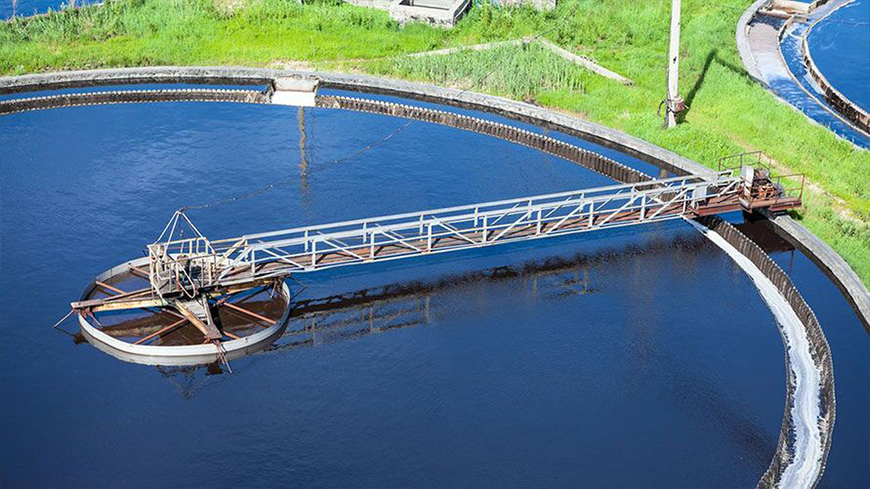
Industrial water chemistry is rarely constant. Temperature changes, water reuse, concentration cycles, dissolved minerals, and contact with metal surfaces can all influence how a treatment system performs. Because of this, chemical selection has become an important part of maintaining predictable industrial operations.
PBTC, chemically known as 2-Phosphonobutane-1,2,4-Tricarboxylic Acid, is a specialty phosphonate used in formulations where mineral control and system protection are important. Its combination of phosphonate and carboxylate groups gives it useful interactions with dissolved metal ions and mineral-forming substances.
Rather than looking at PBTC as simply another water-treatment chemical, it is more useful to understand how it fits into a complete treatment strategy. The correct chemical depends on water composition, operating temperature, pH, equipment material, concentration cycles, and the other additives present in the formulation.
This is why industrial buyers generally look beyond the product name when choosing a supplier. A dependable 2-Phosphonobutane-1,2,4-Tricarboxylic Acid Manufacturer in India can provide consistent material while helping customers understand the practical requirements associated with its use.
What is PBTC?
PBTC stands for 2-Phosphonobutane-1,2,4-Tricarboxylic Acid. It is an organophosphonate compound containing both phosphonate and carboxylic functional groups. This structure gives PBTC the ability to interact with certain metal ions and influence the formation and behavior of mineral particles in water-based systems.
In industrial formulations, this characteristic can be useful when dissolved minerals have the potential to create deposits or interfere with equipment performance. PBTC can help modify the conditions under which these minerals crystallize and accumulate, making it a valuable component of carefully designed treatment programs.
The chemical is particularly interesting for applications where operating conditions are demanding. However, its suitability should not be judged only by one property. The complete formulation, dosage, water chemistry, and process conditions all determine how effectively PBTC performs.
For manufacturers that need regular quantities, working with a reliable PBTC Chemical Manufacturer can provide better control over raw-material consistency and procurement planning.
PBTC as a Formulation-Building Chemical
Many industrial buyers initially compare treatment chemicals only by their scale-control performance. A more useful approach is to consider how a chemical behaves as part of the complete formulation.
PBTC can be valuable because its chemistry allows it to work alongside other treatment ingredients when properly selected. A water-treatment formulation may contain several components, each performing a different function. One ingredient may address corrosion, another may support dispersion, while PBTC can contribute to mineral-control requirements.
This approach is especially useful when the water chemistry is complicated. For example, a plant may deal with changing hardness, varying alkalinity, temperature fluctuations, and repeated water concentration. In such circumstances, selecting a chemical based on only one laboratory property may not provide the desired field performance.
PBTC therefore needs to be evaluated as part of the complete treatment package. Jar testing, compatibility checks, water analysis, and controlled field trials can help determine whether it is appropriate for a particular application.
This practical approach also explains why an experienced PBTC Manufacturer and supplier can be valuable to industrial customers beyond simply supplying the chemical.
How PBTC Fits into Industrial Water Management
Water treatment is essentially a balancing exercise. Industries need to maintain acceptable water quality while keeping chemical consumption, maintenance, and operating costs under control.
As water circulates through industrial systems, dissolved substances can become concentrated. Heating and evaporation can increase the concentration of certain minerals, while fresh-water makeup can introduce additional dissolved salts. These changes can alter the tendency of minerals to form deposits.
PBTC can be incorporated into treatment programs to influence this mineral behavior. Its interaction with dissolved ions can help control the conditions that contribute to unwanted deposition.
The practical objective is not necessarily to remove every mineral from the water. Removing all dissolved minerals may require extensive treatment and may not be economically sensible. Instead, chemical conditioning can be used to keep mineral behavior within a manageable range.
This makes PBTC relevant to treatment programs where industries want to maintain process continuity without constantly depending on aggressive cleaning or frequent system intervention.
Features of PBTC
1. Multifunctional Molecular Structure
PBTC contains phosphonate and carboxylate groups within the same molecule. This combination gives it useful metal-ion interaction characteristics and makes it suitable for formulations where mineral behavior needs to be controlled through more than one chemical mechanism.
2. Effective Mineral Interaction
PBTC can interact with dissolved metal ions involved in mineral formation. This property helps treatment formulators influence crystal development and deposit behavior, making the chemical useful for systems where hardness-related problems need to be managed carefully.
3. Suitable for Complex Water Chemistry
Industrial water can contain several dissolved substances at different concentrations. PBTC can be evaluated for treatment programs operating under such conditions, particularly when the formulation requires a phosphonate capable of contributing to mineral-control performance.
4. Useful at Controlled Dosage Levels
PBTC is commonly considered for treatment formulations where chemical dosage needs to be managed carefully. Proper dosing allows industries to balance treatment performance with chemical consumption, although the ideal quantity must always be established according to actual water and process conditions.
5. Formulation Compatibility
PBTC can be incorporated into appropriately designed treatment systems alongside compatible ingredients. This provides formulators with flexibility to combine mineral-control chemistry with other functions required by a particular industrial process.
6. Broad Industrial Relevance
PBTC can be considered across cooling-water, process-water, membrane, cleaning, and other industrial formulations. Its usefulness across different applications allows manufacturers to evaluate it according to the specific chemistry and operating requirements of each system.
7. Adaptable to Treatment Strategies
PBTC does not have to function as a standalone chemical. It can form part of a wider treatment approach in which different ingredients address different operational problems. This makes it suitable for customized industrial formulations developed around actual site conditions.
Why Supplier Reliability Matters for PBTC
Industrial chemical procurement is closely connected with production continuity. If a required treatment chemical is unavailable, even a well-designed water-treatment program can become difficult to maintain.
A dependable PBTC Manufacturer and supplier should therefore provide more than a product quotation. Consistent quality, repeatable specifications, appropriate packaging, reliable dispatch, and clear product documentation are all important factors for industrial buyers.
Consistency is particularly valuable for formulators producing treatment chemicals on a regular basis. If the raw material changes significantly between batches, the finished formulation may also behave differently.
Indian industries can benefit from working with an established 2-Phosphonobutane-1,2,4-Tricarboxylic Acid Manufacturer in India that can support ongoing requirements and provide dependable supply for both small and large-scale applications.
Why PBTC Is Useful for Modern Water Treatment Strategies
Industrial water treatment is moving toward more controlled and application-specific chemical programs. Instead of depending on a single chemical for every problem, industries are increasingly combining different treatment ingredients according to their water quality, equipment design, and operating conditions.
PBTC can play a useful role in these programs because its molecular structure combines phosphonate and carboxylate functionality. This gives formulators an additional option when managing mineral ions and deposit-forming conditions.
One important consideration is the changing concentration of minerals during water circulation. In cooling systems, evaporation removes water while leaving many dissolved substances behind. As concentration increases, the likelihood of mineral precipitation can also change.
PBTC can help manage this challenge when incorporated into a properly designed treatment program. Its role is to influence mineral behavior before deposits become difficult operational problems.
This approach can support better system reliability, particularly where industries want to increase operating cycles while keeping scaling risks under control. However, dosage and formulation design should always be established through water analysis and application testing.
PBTC and the Importance of Process-Specific Treatment
There is no single chemical dosage that works equally well for every industrial system. Water composition, temperature, pH, equipment material, and concentration levels can vary considerably from one facility to another.
For this reason, PBTC should be selected according to the actual treatment objective. A cooling tower with high cycles of concentration may require a different approach from a membrane system or an industrial cleaning formulation.
Understanding the process also helps avoid unnecessary chemical consumption. Using more chemicals than required does not automatically provide better results. Proper treatment depends on maintaining the right balance between dosage, water chemistry, and operating conditions.
A practical treatment program may involve laboratory testing, compatibility studies, and controlled field trials before commercial-scale application. This allows industries to understand how PBTC behaves alongside other chemicals already being used.
Such evaluation can make PBTC a more effective part of a complete water-management strategy rather than simply adding another chemical to the treatment process.
Benefits of PBTC
1. Helps Manage Mineral Deposition
PBTC can support industrial treatment programs by influencing the behavior of minerals that may otherwise form deposits on equipment surfaces. Better control of mineral precipitation can help maintain cleaner operating conditions and reduce problems associated with scale buildup in water circulation and process systems.
2. Supports Reliable Water-System Operation
Uncontrolled mineral deposition can interfere with circulation, heat transfer, and overall equipment performance. Incorporating PBTC into a suitable treatment program can help maintain more stable system conditions, allowing equipment to operate with fewer interruptions caused by mineral-related problems.
3. Offers Formulation Flexibility
PBTC can be used alongside compatible treatment ingredients, giving formulators greater freedom when designing customized chemical programs. This flexibility is useful for industries that need to address several water-quality challenges simultaneously rather than relying on a single treatment mechanism.
4. Useful Under Changing Water Conditions
Industrial water chemistry can change because of evaporation, makeup water, recycling, and concentration cycles. PBTC can be evaluated for such environments because its chemistry allows it to contribute to mineral-control programs where operating conditions are not completely constant.
5. Supports Membrane Treatment Programs
In suitable antiscalant formulations, PBTC can help manage the precipitation tendency of selected minerals before they accumulate on membrane surfaces. This can support more stable membrane operation and reduce the impact of mineral-related fouling when the chemical program is correctly designed.
6. Helps Reduce Scale-Related Maintenance
Mineral deposits can increase cleaning requirements and contribute to equipment downtime. By supporting scale-control strategies, PBTC can help industries reduce the frequency of intensive cleaning and maintenance activities, allowing maintenance teams to focus more effectively on planned plant servicing.
7. Suitable for Diverse Industrial Applications
PBTC can be considered for cooling water, process water, membrane treatment, industrial cleaning, and other specialty formulations. Its broad applicability allows manufacturers to evaluate the chemical for different processes while tailoring dosage and formulation according to individual operating requirements.
PBTC as Part of a Cost-Conscious Treatment Program
Chemical treatment costs should always be considered together with the costs of equipment maintenance, energy consumption, downtime, and production losses. A low-cost chemical does not necessarily provide the lowest overall operating expense if it delivers inadequate protection.
PBTC can contribute to a more balanced treatment strategy when its performance is matched with the actual operating conditions. Better mineral control can help reduce the buildup that causes equipment inefficiency and additional maintenance.
For example, when deposits accumulate on heat-transfer surfaces, the equipment may require more energy to achieve the same process result. Maintaining cleaner surfaces can therefore contribute to better energy utilization.
Similarly, reducing unexpected cleaning requirements can help production teams plan maintenance more effectively. This does not mean PBTC eliminates all maintenance, but it can become one part of a strategy designed to make maintenance more predictable.
The economic value of PBTC should therefore be assessed through total operating performance rather than only the purchase price per kilogram.
Conclusion
PBTC, or 2-Phosphonobutane-1,2,4-Tricarboxylic Acid, is a versatile phosphonate that can support industrial formulations where mineral control and water-system stability are important.
Its combination of phosphonate and carboxylate functionality makes it useful for influencing the behavior of dissolved minerals in suitable treatment systems. It can be considered for cooling water, process water, membrane treatment, industrial cleaning, and other specialty applications.
The best results depend on more than the chemical itself. Water chemistry, temperature, pH, concentration cycles, equipment design, dosage, and compatibility with other treatment ingredients should all be evaluated before implementation.
PBTC is therefore best viewed as a flexible component of a carefully designed industrial treatment strategy rather than a one-size-fits-all solution.
FAQs
1. What is PBTC mainly used for?
PBTC is mainly used in industrial formulations where mineral deposition and metal-ion behavior need to be controlled. It can be considered for cooling-water treatment, process-water systems, membrane antiscalant formulations, industrial cleaning products, and other specialty applications. Its suitability depends on the water chemistry, operating conditions, dosage, and other ingredients present in the complete treatment program.
2. How does PBTC help control scale?
PBTC interacts with metal ions and influences the formation and growth of certain mineral crystals. Instead of allowing scale-forming substances to easily develop into larger deposits, it can help keep their behavior under control when used at an appropriate concentration. The actual performance depends on the minerals present, water conditions, and the overall treatment formulation.
3. What should I check before buying PBTC?
Before purchasing PBTC, buyers should consider the intended application, water composition, operating temperature, pH, mineral concentration, dosage requirements, packaging, and expected quantity. If PBTC will be used with other treatment chemicals, compatibility should also be evaluated. Discussing these factors with a qualified PBTC Manufacturer and supplier can help identify the most suitable product for the intended process.
4. Why should I choose an experienced PBTC Chemical Manufacturer?
An experienced PBTC Chemical Manufacturer can provide more consistent product quality, clearer specifications, reliable batch performance, and better supply planning. These factors are important for industrial formulators because variations in raw-material quality can affect the performance of their finished products. Manufacturers should also evaluate technical support, documentation, packaging, and delivery reliability before establishing a long-term supplier relationship.
5. Can PBTC be used in RO water-treatment systems?
PBTC can be considered as an ingredient in suitable antiscalant formulations for RO systems. It may help manage the precipitation tendency of certain minerals as water becomes concentrated near the membrane surface. However, RO applications require careful evaluation of feed-water chemistry, recovery, pH, temperature, membrane specifications, and other treatment ingredients before selecting a PBTC-based formulation.
6. Why is Maxwell Additives PVT LTD relevant when sourcing PBTC?
Maxwell Additives PVT LTD provides specialty chemical solutions for industrial applications. Businesses evaluating a PBTC Manufacturer and supplier can consider factors such as product consistency, manufacturing capabilities, supply reliability, technical understanding, and customer support. Before placing an industrial order, buyers should communicate their application requirements and confirm the product specifications needed for their particular treatment program.
Related Posts