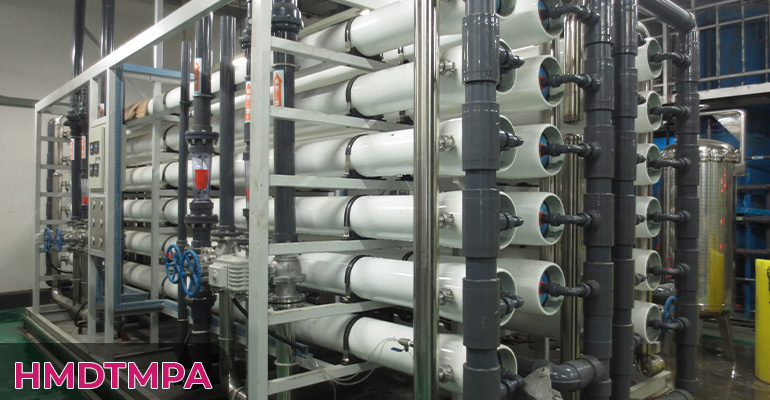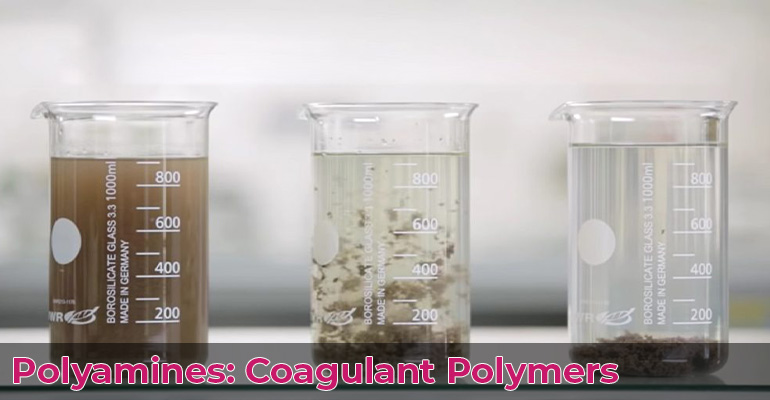
Water can be treated to remove materials. It can also be treated in order to control mineral content and to prevent unwanted chemical reactions. Scale and rust can also cause damage...
Acrylic Polymers: Chemistry, Wastewater Treatment and Applications

Quality of water, as well as the longevity and chemical behaviour of materials, is often an area of interest in industry. Factories may wish to manage scale, enhance effluent processes and formulate coatings and so understanding which Acrylic Polymers to utilise is often an important consideration.
Acrylic polymers are a highly adaptable form of synthetic polymer. Their chemical structure can be manipulated to achieve varying properties including; water solubility, dispersing ability, adhesion, film-forming capability and scale inhibition.
They are synthesised from acid and acrylate, as well as other compatible monomers. There are also a variety of polymer structures and types available.
Whilst some acrylic polymers are created for water, others are for coatings, adhesives, textiles, building materials and chemical products.
Multifunctional acrylic polymers have further broadened the scope of acrylic polymers. Multiple chemical functionalities can be integrated into one polymer.
Knowing the chemistry and properties of acrylic polymers will enable industry professionals to select suitable polymers for particular purposes.
What are Industrial Acrylic Polymers?
Acrylic polymers are synthetic and are synthesised by polymerising acrylic acid, methacrylic acid and/or related monomers.
Polymers are formed from monomer sub-units. Properties are then dependent on the monomers, polymer structure and synthesis process.
Unlike many other materials, acrylic polymers can be specifically designed to have particular properties.
For instance, an acrylic polymer formulated to inhibit scale may have differing properties to an acrylic polymer used for coating.
Key Properties of Industrial Acrylic Polymers
- Structure.
- Variable molecular weight.
- Available in water dispersible formats.
- Selected polymers can disperse particles.
- Polymers can inhibit scale.
- Some polymers can form films.
- Polymers can adhere to materials.
- Properties can be tailored.
- Compatible with selected chemicals.
- Available as homopolymers or copolymers.
- Applicable for industry.
I believe that acrylic polymers can be so widely applied due to the ability to tailor their chemistry.
What is an Acrylate Polymer is a polymer that is polymerised from acrylate monomers. Acrylates are derived from acrylic acid.
Acrylate monomers contain a carbon-carbon double bond and are therefore able to polymerise.
During polymerisation, monomers chemically bond together to produce polymer chains.
Acrylate polymers can be made from one, or a blend of, monomers.
Properties of acrylate polymers can be highly variable, as they are influenced by the functional groups that are attached to the polymer structure.
Common Properties of Acrylate Polymers
- Flexible.
- Adhesive.
- Film forming.
- Differing levels of water resistance.
- Functional.
- Variable surface hardness.
- Compatible with selected materials.
- Available in various structures.
Acrylate polymers are notably used within the industries for coatings, adhesives, latex emulsions, textiles and chemical manufacture.
However, not all acrylate polymers are applicable for water processes.
Typically, water soluble and/or dispersible polymer structures are required for water treatment.
Understanding Industrial Acrylic Polymers
Acrylic acid is an organic compound and is frequently used as a base for acrylic polymers.
It contains a carbon-carbon double bond and a carboxylic acid group.
These features mean that acrylic acid can be polymerised and chemically modified.
Chemical Information
| Parameter | Information |
| Name | Acrylic Acid |
| Also Known As | Propenoic Acid |
| IUPAC Name | Prop-2- acid |
| CAS Number | 79-10-7 |
| Molecular Formula | C₃H₄O₂ |
| Molecular Weight | ~ 72.06 g/mol |
| Structure | CH₂ =CH-COOH |
| Chemical Group | Unsaturated carboxylic acid |
| Functional Groups | Carbon-carbon double bond and carboxylic acid |
| Typical Physical State | Colourless liquid |
| Water Solubility | Water miscible |
| Typical Industry Use | Monomer and chemical intermediate |
| Key Areas of Application | Acrylic polymers, resins, coatings and chemicals |
Acrylic acid differs from its polymer version – polyacrylic acid – in terms of chemistry.
Consequently, it should not be assumed that the monomer will share the handling, physical and hazardous properties of the polymer.
Understanding the Chemistry of Acrylic Polymers
Chemistry is integral in determining the behaviour of acrylic polymers.
Polyacrylic acid is an example of an acrylic polymer.
This polymer has the following structure:
[–CH₂ –CH(COOH)–] nWhere n is the number of sub-units in the polymer chain.

Carbon-Based Polymer Structure
Polymers are constructed from carbon atoms that are chemically bonded together.
This provides the polymer structure.
Both the length and structure of this backbone will influence polymer properties such as weight and flexibility.
Carboxylic Acid Functional Groups
Polyacrylic acid has carboxylic acid functional groups which are attached to the polymer structure.
These can become ionised depending on the surrounding pH.
Ionised groups can then interact with water soluble metal ions and inorganic surfaces.
This functionality is especially valuable for both scale inhibition and for particle dispersion.
Ester Functional Groups
Polymers are synthesised from acid ester monomers and contain ester functional groups.
Such groups can influence polymer properties including;
- Flexibility.
- Water resistance.
- Adhesion.
- Film formation.
- Hardness.
- Compatibility.
The properties of the ester functional group are important in determining the suitability of a polymer for coating, adhesive and other material applications.
Additional Functional Groups
Further functionality can be introduced into acrylic copolymers by selecting appropriate comonomers. Such functionality may include;
- Sulphonate groups.
- Hydroxyl groups.
- Amide groups.
- Extra carboxylic acid groups.
- Specifically cross-linkable functionality.
Enhancing functionality allows for the manufacture of polymers with suitable properties.
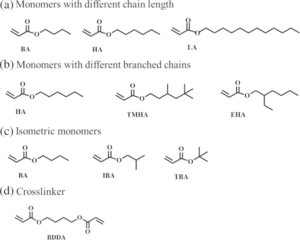
What are Acrylate Monomers?
Acrylate monomers can be polymerised and are derived from acid.
Generally, they have the following structure:
CH₂ =CH-C(=O)-OR
Where R is a group.
The type of group will influence polymer properties.
Different acrylate monomers can be blended and so polymers can be formulated to achieve particular physical and chemical properties.
Common Acrylate Monomers
| Monomer | Molecule Formula | Typical Polymer Property |
| Methyl Acrylate | C₄H₆O₂ | Film formation and flexibility. |
| Ethyl Acrylate | C₅H₈O₂ | Flexibility and adhesion. |
| Butyl Acrylate | C₇H₁₂O₂ | Softness and elasticity. |
| 2-Ethylhexyl Acrylate | C₁₁H₂₀O₂ | Flexibility and adhesion. |
| Hydroxyethyl Acrylate | C₅H₈O₃ | Hydroxyl functionality and reactivity. |
| Hydroxypropyl Acrylate | C₆H₁₀O₃ | Functionalisation and cross-linking. |
Alongside methyl and ethyl acrylate, acrylic and methacrylic acid are also significant monomers for the acrylic polymer sector. However, they chemically differ to acrylate esters.
Importance of Monomer Selection
Monomer choice can impact upon;
- Polymer structure.
- Water compatibility.
- Adhesion.
- Flexibility.
- Film hardness.
- Glass transition temperature.
- Chemical resistance.
- Functional group presence.
- Material compatibility.
- Product applicability.
For instance, flexible monomers can be valuable in formulations. Similarly, monomers that introduce ionic functionality are beneficial for water processes.
How are Acrylic Polymers Manufactured?
Acrylic polymers are manufactured using controlled polymerisation techniques.
Polymerisation is the chemical bonding of monomers to produce polymer chains.
Radical polymerisation is often used for acrylic polymer manufacture.
1. Monomer Selection
Suitable monomers are then selected to achieve the required polymer properties.
Most polymer functionality is determined by the chosen blend of monomers.
2. Polymerisation Initiation
Appropriate initiators are used to generate species that initiate polymer chain production.
The initiation system is dependent on both manufacturing and product requirements.
3. Polymer Chain Extension
Monomer species combine with extending polymer chains.
Polymer weight and weight distribution is influenced by polymerisation conditions.
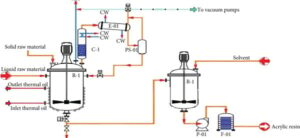
4. Polymer Structure Determination
Whether a product is a homopolymer, copolymer or has a more complex structure is dependent on monomer choice and conditions.
5. Polymerisation Termination
Polymer chain extension is halted by termination and/or similar reactions.
Manufacturing controls are utilised to achieve the required polymer properties.
6. Product Refinement
Depending on application, a polymer may then be further formulated, neutralised and/or concentrated.
7. Quality Assurance
The final product is analysed to ensure that it meets specified criteria.
Key areas for evaluation may include composition, viscosity, pH and weight together with residual monomer content.
Control is essential in acrylic polymer manufacture. Acrylic monomers can be highly reactive and so exothermic reactions can occur.
Main Polymerisation Techniques for Acrylic Polymers
Various polymerisation techniques can be used to manufacture polymers with differing appearances and behaviour.
| Polymerisation Technique | General Description | Typical Applications |
| Solution Polymerisation | Polymerisation occurs in solution or in water. | Water treatment polymers and special blends. |
| Emulsion Polymerisation | Polymerisation occurs in a water dispersed system. | Acrylic latex, coatings and adhesives. |
| Bulk Polymerisation | Polymerisation predominantly occurs within the monomer. | Selected acrylic resins and solid items. |
| Polymerisation in monomer droplets | Selected particulate polymers. |
Manufacture technique is often dictated by desired product type, properties and industry manufacturing facilities.
Major Types of Acrylic Polymers
Polymers can be categorised on the basis of chemistry, structure and type.
1. Polyacrylic Acid
Polyacrylic acid (often abbreviated to PAA) is synthesised from acid.
Its carboxylic acid functionality makes it applicable for applications where there is interaction with metal ions. It is also applicable for scale inhibition and particle dispersion.
Some low molecular weight polymers are used within water treatment products.
2. Sodium Polyacrylate
Sodium polyacrylate is a neutralised acid polymer.
Its properties are affected by molecular weight, neutralisation and cross-linking levels.
Low molecular weight soluble polymers may be used as dispersants.
Cross-linked polymers can absorb water and are applicable for entirely different applications.
3. Acrylic Copolymers
Acrylic copolymers are polymers that are synthesised from a combination of acrylic and one or more additional monomers.
Examples include selected acrylic acid/maleic acid and acrylic acid/sulphonated monomer copolymers.
Such polymers can be formulated to have scale inhibition, dispersing and compatibility properties.
4. Polymethacrylates
Polymethacrylates are synthesised from acid or its derivatives.
They are applicable for selected coating, plastic, adhesive and chemical products.
5. Acrylic Latex Polymers
Acrylic latex polymers comprise polymer particles that are dispersed in a medium.
They are especially applicable for aqueous-based coatings, paints, adhesives and textile finishing.
6. Acrylic Resins
Acrylic resins are formulated for applications where specific properties are needed. These can include adhesion, film formation, transparency, surface and weather resistance.
7. Cross-Linked Acrylic Polymers
Cross-linking exists between polymer chains within these polymers.
Such cross-linking can influence water absorption, expansion and mechanical and dimensional properties.
8. Multifunctional Acrylic Polymers
Multifunctional acrylic polymers have functionality that can offer multiple chemical and/or physical properties.
They are especially relevant for chemical products.
Key Chemical Properties of Acrylic Polymers
Polymer properties are influenced by both structure and formulation.
Water Solubility
Some acrylic polymers are water soluble and are thus applicable for chemical products. Other acrylic polymers are not water soluble and may be provided in stable aqueous dispersions.
Ionicity
Acrylic polymers with carboxylic acid functionality can become ionic.
This can then affect their interaction with ions and ionic surfaces.
Molecular Weight
Molecular weight can influence properties including viscosity, particle interaction and film formation.
Particular applications will require polymers of specific molecular weights.
Particle Dispersion
Selected acrylic polymers can adhere to particles and so prevent them from clumping together.
This property is valuable for water treatment, pigment and chemical product applications.
Mineral Scale Inhibition
Appropriate acrylic polymers can interfere with the nucleation and growth of selected mineral crystals.
Effectiveness will depend on both mineral scale type and water chemistry.
Film Formation
Certain acrylic polymers are able to form films as a dispersing or other medium is removed.
This property is especially relevant for coating and adhesive applications.
Adhesion
Acrylic polymers can be formulated to adhere to selected materials, for example; metals, plastics, paper and building materials.
Chemical Compatibility
Acrylic polymers can be combined with chemicals to further enhance performance.
Chemical compatibility should be assessed for the targeted product.
pH-Responsive Behaviour
The ionicity and solubility of acrylic polymers can be affected by pH.
This is particularly relevant for polymers containing carboxylate functionality.
Thermal Properties
Polymer behaviour is impacted by monomer type, polymer structure and environmental conditions.
Polymers of differing molecular weights are formulated to meet temperature requirements.
Significance of Molecular Weight
Molecular weight is an important factor in acrylic polymer behaviour.
Polymers may be required to have differing molecular weights for use in mineral particle dispersion, flocculation and film formation for instance.
Low Molecular Weight Acrylic Polymers
Selected low molecular weight acrylic polymers are pertinent for;
- Scale inhibition.
- Dispersing inorganic particles.
- Cooling water processes.
- Detergents.
- Industrial cleaning agents.
- Process water processes.
Their molecular properties can facilitate interaction with mineral surfaces. However, they are not necessarily effective at bridging particles.
High Molecular Weight Acrylic Polymers
Depending on their monomer and structure, high molecular weight acrylic polymers may be relevant for;
- Controlling rheology.
- Film formation.
- Adhesive products.
- Coating applications.
- Selected flocculation applications.
- Material strengthening.
Cross-Linked Acrylic Polymers
Cross-linking is important for enabling expansion, water absorption and networking.
| Polymer Property | Possible Application |
| Low Molecular Weight | Scale and dispersing |
| Higher Molecular Weight | Selected rheology and material applications |
| High Molecular Weight and Appropriate Ionicity | Selected flocculation |
| Cross-Linked | Expansion, water absorption and networking |
| Water Dispersible Film Forming | Coating and adhesive applications |
Whilst molecular weight is an important polymer property, so too are functionality, ionicity, structure and application conditions.
Acrylic Polymers for Effluent Treatment
Industrial effluent can contain a variety of materials including suspended solids, dissolved minerals, organic matter, oils and metals, all of which may originate from industrial processes.
Effluent can greatly differ between industries.
Selection of acrylic polymers for effluent treatment will depend on the chemical and operational issues that exist within a treatment plant.
Polymers may be used for scale inhibition, dispersing, deposition management and to aid particular separation processes.
However, the term ‘acrylic polymer’ can encompass a range of different materials.
A low molecular weight acrylic dispersing polymer should not be combined with a molecular weight polymer that facilitates solid separation.
Common Issues in Industrial Effluent Processes
- High levels of suspended solids.
- High concentrations of dissolved minerals.
- Scale formation.
- Variation in effluent pH.
- Accumulation of inorganic particles.
- Metallic deposits.
- Membrane fouling.
- Equipment fouling.
- Alteration in effluent composition.
- Chemical incompatibility.
- Difficulties in managing sludge.
- Increasing demand for water re-use.
An appreciation of the underlying issue is important in selecting a suitable polymer.
Application of Acrylic Polymers within an Effluent Treatment Plant
Effluent Treatment Plants (ETPs) often utilise physical, chemical and biological processes for effluent treatment.
Within each of these processes, different polymers can be applied.
Primary Treatment
Physical processes such as screening are used to remove components from effluent.
Typically, acrylic polymers are not used in place of these physical processes.
Equalisation
Equalisation is used to regulate the flow and composition of effluent.
Analysis of effluent chemistry can then assist in the selection of suitable chemicals.
Chemical Treatment
Appropriately selected polymeric chemicals can alter particle behaviour. This can be to encourage or discourage particle aggregation depending on the requirement.
Biological Treatment
Biological processes are used to remove degradable contaminants.
Prior to treatment, consideration should be given to the compatibility of chemicals with biological organisms.
Clarification
Clarification is used to remove suspended solids from treated effluent.
Good coagulants and flocculants can aid this process.
However, incorrectly applied low molecular weight dispersing polymers can be detrimental.
Tertiary Treatment
Further processes may include filtration and reverse osmosis, amongst other membrane technologies. Acrylic polymers can be selected to assist in scale inhibition and deposition management.
Water Re-Use
Over time, re-used water may contain dissolved minerals.
Appropriate acrylic polymer blends can be utilised to successfully manage mineral precipitation.
| Process | Potential Polymer Function | Key Consideration |
| Equalisation | Assessment | Effluent variation |
| Chemical Treatment | Particle behaviour modification | Choose suitable polymer function |
| Clarification | Flocculation (selected polymers) | Avoid incompatibe dispersing polymers |
| Tertiary Filtration | Deposition management | Filter compatibility |
| Reverse Osmosis | Scale inhibition | Membrane compatibility |
| Water Re-Use | Scale and particle management | Concentration of dissolved minerals |
| Sludge Treatment | Selected high molecular weight polymers | Dewatering efficiency |
Appropriate polymers must be selected for each process.
How do Acrylic Polymers operate in Industrial Water Treatment?
There are several mechanisms by which acrylic polymers can function within water treatment.
1. Threshold Scale Inhibition
Some acrylic polymers can prevent mineral precipitation even if not all water soluble metal ions are bound. This is termed threshold scale inhibition.
Polymers interact with specified mineral nucleation and crystal growth processes.
2. Crystal Growth Manipulation
Acrylic polymer molecules can adhere to mineral crystal surfaces.
Such adhesion may then affect the attachment of further mineral ions.
Crystal growth rate and morphology may then be altered.
3. Particle Dispersion
Selected acrylic polymers can adhere to particles.
This can help to avoid particle aggregation and deposition.
4. Electrostatic Repulsion
Anionic acrylic polymers can increase the surface charge of designated particles.
This can then produce repulsive forces which in turn can reduce particle aggregation.
Both the strength of these repulsive forces and water chemistry will influence the effectiveness of this mechanism.
5. Steric Stabilisation
Attached polymer can form a layer around particles. This can prevent contact between particles and so maintain dispersion.
6. Metal Ion Interaction
Carboxylate functional groups can interact with water soluble metal ions.
Such interaction can affect mineral sedimentation together with metal ion behaviour.
Whilst acrylic polymers can sometimes remove metal ions from water, this is not always the case.
Understanding Acrylic Polymer Dispersion Action
Particle deposition can give rise to issues in water processes.
Floating mineral and/or corrosion particles can accumulate on equipment.
Selected acrylic polymers can be used to manage such situations by dispersing particles.
Stage 1 – Particles are introduced into Water
Industrial water may contain clay, mineral and/or corrosion particles and other inorganic materials.
Stage 2 – Particles Commence to Interact
Depending on surface charge and water chemistry, particles may begin to aggregate and form clusters.
Stage 3 – Acrylic Polymer Adheres to Particles
Appropriate polymer molecules attach themselves to sections of the particle surface.
Stage 4 – Surface Interactions Alter
Adsorption can modify particle charge and also provide steric stabilisation.
Stage 5 – Particle Aggregation is Reduced
Repulsive and steric stabilisation can decrease the likelihood of particle clustering.

Stage 6 – Particles are Better Dispersed
With a well-designed treatment regime, particles can be maintained in suspension and then removed from water by a water management process.
Whilst dispersion does not remove suspended solids, it can modify their behaviour.
Distinction between Acrylic Polymer Dispersants and Flocculants
It is crucial within effluent treatment to recognise the difference between dispersants and flocculants.
Despite both types of polymer chemical being used, their aims are extremely different.
| Parameter | Acrylic Polymer Dispersants | Polymeric Flocculants |
| Function | Prevent particle aggregation | Promote particle aggregation |
| Typical Molecular Weight | Generally relatively low | Usually high |
| Typical Mechanism of Action | Adsorption and stabilisation | Polymer bridging and/or other aggregation methods |
| Particle Behaviour | Dispersed | Floc formation |
| Common Application Area | Scale and deposition management | Solid-liquid separation |
| Typical Industrial Aim | To clean equipment | To improve clarification and dewatering |
| Typical Water Treatment Process | Cooling, membrane and process waters | Clarifiers and sludge |
| Water treatment | Cooling, membrane and process | Clarification and sludge |
| Product Selection | Application specific | Application specific |
Dispersant can also be used in conjunction with flocculants. This can, however, affect the efficiency of the water treatment.
High molecular weight flocculants can also cause issues if they cannot be handled by a membrane.
Acrylic polymers in cooling water
Cooling towers and systems circulate water so that heat can be removed from industrial processes.
As water evaporates, its dissolved minerals become increasingly concentrated.
Such conditions can encourage scaling.
Appropriately selected acrylic polymers can be used within Cooling Water Systems to minimise/minimise scale and scaling.
Potential uses of acrylic polymers in Cooling Water Systems
- Scale inhibition.
- Control of selected calcium phosphate scale.
- Dispersing.
- Control of suspended minerals.
- To enhance heat transfer surfaces.
- Compatibility with selected phosphonates.
- Facilitation of industrial water re-circulation.
Alongside scale inhibition, cooling water treatment must also address corrosion, microbiological issues, water chemistry and blow down.
Whilst acrylic polymers offer many benefits, they cannot suitably address all cooling water system requirements.
Example – mineral concentration and water re-circulation
Water re-circulation can help to reduce fresh water usage. However, it can also lead to greater mineral concentration within water.
Within a reverse osmosis system, the theoretical concentration factor can be calculated using the following equation:
Concentration Factor = 1 / (1 – Recovery Fraction)
| Water recovery | Concentration factor |
| 50% | 2x |
| 60% | 2.5x |
| 70% | 3.33x |
| 75% | 4x |
| 80% | 5x |
| 85% | 6.67x |
| 90% | 10x |
Consider hypothetical feed water containing 150 mg/L of calcium.
If 75% of the water is recovered then theoretically, the calcium concentration within the reject water would be approximately:
150 x 4 = 600 mg/L
This calculation presumes that all salt is rejected and no minerals precipitate.
This example demonstrates how water re-circulation and membrane recovery can increase the need to manage scaling.
Acrylic polymer selection is dependent upon the degree of mineral saturation, feed water analysis and trial testing.
How is a film formed from acrylic latex polymers?
Generally, a number of stages are involved in the formation of a film.
Water evaporation
Following application of the acrylic latex polymer to a surface, water begins to evaporate.
Concentration of polymer particles
As water is evaporated, polymer particles become more concentrated.
Particle consolidation
Particles are brought into proximity and arranged in a closely packed formation.
Particle deformation
Provided that the correct temperature and polymer type are employed, polymer particles can deform.
Polymer fusion
Polymer chains can then fuse together across points of contact between polymer particles. This facilitates the formation of a continuous film.
Film formation is influenced by, for example, temperature, polymer type, particle attributes and formulation.
What are acrylic resins?
Acrylic resins are polymers which are derived from acrylic and methacrylic building blocks.
Such polymers are typically formulated for particular physical, optical and chemical properties.
Depending upon how they are formulated, acrylic resins can be thermoplastics or can form cross-linked networks.
Thermoplastic acrylic resins
Thermoplastic acrylic resins can be softened by heating and hardened by cooling, within their operating temperature range.
Such polymers are used within some coatings, plastics and specialist materials.
Cross-linkable acrylic resins
Cross-linkable acrylic resins contain functional groups which can react together to form polymer cross-linking.
Such polymers Are Important for coatings and for formulations requiring good mechanical and chemical resistance.
Water Based Acrylic Resins
Water based acrylic resin formulations are suitable for applications where water based processing is advantageous.
Solvent Based Acrylic Resins
Solvent based acrylic resins are used within some coatings and specialist chemical formulations.
Image 6: Acrylic Resins and Industrial Applications (Alt text: Acrylic resins used in industrial coatings adhesives and protective materials ), (Image concept: Acrylic resin materials, protective coatings and industrial surface applications. )
Correct solvent compatibility, adequate ventilation and environmental considerations must all be addressed when using such products.
Key features of acrylic resins
- Adhesion.
- Film formation.
- Translucence (for selected acrylic resin types).
- Colour fastness.
- Variable hardness.
- Flexibility.
- Weather resistance.
- Chemical resistance.
- Compatibility with selected pigments.
- Surface protection.
Such properties will vary according to both polymer type and formulation.
Design of multifunctional acrylic polymers
Polymers can be formulated to have differing properties by:
- Selecting monomers.
- Altering functional group composition.
- Controlling molecular weight.
- Fine-tuning molecular weight distribution.
- Specifying polymer structure.
- Introducing functional groups.
I recognise that controlling cross-linking is an important aspect of polymer design.
Regulating neutralisation levels.
Why multifunctional acrylic polymers Are Important for Water Treatment
Industrial water systems commonly experience a range of issues.
For example, a cooling water system may contain dissolved calcium, suspended mineral particles, corrosion by-products and phosphate chemicals.
A multifunctional polymer can be selected to address more than one of these issues.
I recognise that each polymer’s suitability must be demonstrated for particular water chemistry.
Acrylic polymers and polyacrylamide
Both acrylic polymers and polyacrylamide are synthetic polymers. However, they differ chemically and in terms of typical areas of use.
Polyacrylamide is derived from acrylamide and can be formulated to exhibit differing ionic properties.
Parameter Polyacrylic acid Based Polymers
Polyacrylamide based polymers
Primary monomer Acrylic acid. Acrylamide.
Typical functional group Carboxylic acid/carboxylate. Amide.
Typical water treatment function Scale inhibition and dispersing. Flocculation (for selected polymer types). and dispersing.
Typical molecular weight Low (for dispersing polymers). Frequently high (for flocculating polymers).
Ionic nature Generally anionic (when ionised). Non-ionic, anionic or cationic (depending upon formulation).
Typical areas of application Cooling water, anti-scalants and dispersing polymers. Clarification and sludge dewatering.
Selection considerations Mineral chemistry and scaling. Particle separation requirements.
I recognise that both polymer types are available commercially.
Whilst chemical type is a consideration in selecting polymers for particular applications, such applications should also be decided upon through appropriate evaluation.
Key industrial areas of application for acrylic polymers
Due to the variety of polymer structures available, acrylic polymers can be utilised in a wide range of industries.
1. Industrial wastewater treatment
Industrial wastewater treatment: Selected acrylic polymers can be used to control scaling and to address particular wastewater treatment issues. They can also inhibit mineral scaling.
2. Cooling tower water treatment
Cooling tower water treatment: Water soluble acrylic polymers can be used to manage selected mineral scaling and suspended inorganic particles.
3. Reverse Osmosis Desalination
Reverse Osmosis Desalination: Appropriate acrylic polymers can be included within membrane anti-scalant formulations.
4. Industrial water re-circulation
Industrial water re-circulation: Acrylic polymer formulations can be used to address mineral concentration issues.
5. Boiler water treatment
Boiler water treatment: Selected acrylic polymer formulations can be used to manage scaling. Appropriate acrylic polymers can also be used within boiler water treatment to manage suspended materials.
Operating temperature and pressure should be taken into account.
6. Detergent manufacture
Detergent manufacture: Selected acrylic polymers can be used to control mineral scaling and to disperse particles within detergent formulations.
7. Industrial cleaning
Industrial cleaning: Acrylic polymer dispersing polymers can be used to maintain suspended particles during particular cleaning operations.
8. Paint and coating manufacture
Paint and coating manufacture: Acrylic latex polymers and acrylic resins are widely used as binders and for film formation.
9. Adhesive manufacture
Adhesive manufacture: Acrylic polymers can be formulated to provide adhesive, flexible and bonding properties.
10. Textile processing
Textile processing: Selected acrylic polymers are used within textile finishing, coating and specialist textile processing formulations.
11. Paper manufacture
Paper manufacture: Acrylic polymers can be used to disperse pigment and to apply coatings. They can also be used within particular paper process water treatment applications.
12. Construction chemicals
Construction chemicals: Acrylic polymer formulations are used within selected sealants and protective coatings and for modifying construction materials.
13. Pigment dispersion
Pigment dispersion: Appropriate acrylic dispersing polymers can be used to stabilise suspended pigment particles.
14. Oil field water treatment
Oil field water treatment: Selected acrylic polymers can be used to manage mineral scaling and to control scaling within oil field water systems.
15. Specialist chemical manufacture
Specialist chemical manufacture: Multifunctional acrylic polymers can be formulated for specialist chemical formulations requiring specific properties.
Factors affecting acrylic polymer performance
Molecular weight
This can affect viscosity, adsorption and inter-particle and polymer behaviour.
Monomer type
Different monomers provide differing chemical and physical properties.
Functional group density
The density and distribution of functional groups can affect interactions with dissolved ions and surfaces.
Water pH
pH can influence ionisation of carboxylic and other functional groups.
Water hardness
Calcium and magnesium concentrations can affect polymer behaviour and mineral scaling.
Concentration of dissolved salts
High ionic strength may also affect polymer behaviour and conformation.
Operating temperature
Temperature can affect mineral saturation, polymer stability and formulation performance.
Polymer concentration
This will vary according to the water treatment aim and operating conditions.
Suspended solids
Particle concentration, type and surface properties can influence dispersion behaviour.
Presence of Other Chemicals
Coagulants, flocculants, phosphonates, oxidising agents and other chemicals may interact with polymers.
System design
Water flow rate and residence time, and the design of water treatment equipment and stages will all affect performance.
Degree of neutralisation
This can influence polymer solubility and ionic nature.
How to calculate the scale inhibition efficiency of acrylic polymers
Laboratory assessments can be used to investigate the scale inhibition efficiency of selected acrylic polymers.
An example calculation for assessing the scale inhibition efficiency of acrylic polymers for calcium is as follows:
Scale inhibition (%) = [(Ct – Cb) / (Ci – Cb)] x 100
Where:
Ct is the concentration of calcium ions within the treated sample.
Cb = calcium content in the blank.
Ci = calcium content.
Laboratory Example
| Test | Blank | Polymer A | Polymer B |
| Starting Calcium Content | 400mg/L | 400mg/L | 400mg/L |
| Remaining Calcium Content | 150mg/L | 375mg/L | 350mg/L |
| Scale Inhibition (%) | 0% | 90% | 80% |
Polymer A
[(375 – 150)/(400 – 150)] x 100 = 90%Polymer B
[(350 – 150)/(400 – 150)] x 100 = 80%These are example results and are not derived from Maxwell Additives’ laboratory data nor are they representative of any commercial product’s performance.
Correct test conditions, analysis and water chemistry should be used.
Key Characteristics of Acrylic Polymers
Acrylic polymers can display a wide variation in their chemical and physical properties.
Industry should investigate relevant product characteristics to ensure that the correct polymer is selected for a particular application.
Water Treatment Acrylic Polymer Characteristics
- Chemical type.
- Polymer type.
- Active polymer content.
- Molecular weight.
- Molecular weight distribution.
- Physical appearance.
- pH.
- Viscosity.
- Specific gravity.
- Chemical type (ionic).
- Neutralisation level.
- Monomer content.
- Water solubility.
- Compatibility with calcium.
- Storage stability.
- Shelf life.
Acrylic Latex Polymer Characteristics
- Polymer type.
- Polymer content.
- Particle size.
- pH.
- Viscosity.
- Glass transition temperature.
- Minimum film formation temperature.
- Film appearance.
- Physical stability.
- Monomer content.
- Storage requirements.
Acrylic Resin Characteristics
- Polymer type.
- Polymer content.
- Molecular weight.
- Acid value.
- Where appropriate, hydroxyl value.
- Glass transition temperature.
- Viscosity.
- Water compatibility.
- Film properties.
- Cross-linking properties.
- Storage stability.
Product documentation should back up polymer characteristics.
Technical Questions to Ask when Purchasing Acrylic Polymers
Industry can further inform its purchasing decisions by considering the following technical areas.
- What is the polymer’s chemical type?
- Is the polymer a homopolymer or copolymer?
- What is the polymer’s molecular weight range?
- What is the polymer’s chemical type (ionic)?
- Is the polymer for dispersion or flocculation?
- Is the polymer suitable for the target mineral scale?
- What is the polymer’s monomer content?
- What are the polymer’s storage requirements?
- Is the polymer compatible with other chemicals?
- Is there a Certificate of Analysis for the polymer batches?
- What product information is available?
- What packaging is available?
- Is technical support for specific applications available?
- What legislation applies to the polymer?
These areas assist in ensuring that an appropriate polymer is selected.
Environmental Aspects of Acrylic Polymers
Environmental awareness is highly important when choosing chemicals.
Acrylic polymers’ environmental impact is influenced by their chemistry, molecular weight and morphology, as well as their application.
Biodegradability
There are varying levels to which acrylic polymers can biodegrade.
Many commonly available synthetic acrylic polymers may not biodegrade extensively within testing environments.
Monomer Content
Polymers can contain residual monomers from the polymerisation production process.
Monomer content is significant in assessing both product quality and environmental impact.
Wastewater Treatment Compatibility
Industry should investigate the compatibility of acrylic polymers with wastewater treatment processes.
Whilst a polymer may be appropriate for one wastewater treatment process, it may not be for another.
Polymer Discharge
The discharge of water soluble and/or dispersed polymer must be assessed to ensure that it is in line with relevant regulations.
Water Reuse
Good scale inhibition can enable industry to re-use water, and so reduce water usage.
The full environmental impact of an industry’s treatment process should be analysed.
Solid and Particulate Polymers
Compared to water soluble acrylic polymers, solid and cross-linked polymers behave differently within the environment.
Appropriate product documentation should be reviewed in line with individual product characteristics.
Acrylic polymers should not be described as biodegradable, safe or eco-friendly unless this can be evidenced.
The Future for Acrylic Polymers in Industrial Water Treatment
As industry strives to optimise resource use, maintain production efficiency and adopt more environmentally friendly chemical approaches, there continue to be opportunities to develop suitable acrylic polymer solutions.
Increasing Water Re-Use within Industry
As industry develops water re-use initiatives, good control of mineral content and deposits will become even more important.
Developing Multifunctional Acrylic Polymers
Additional components can be included within polymer formulations to allow a single polymer to address multiple treatment concerns.
Advanced Membrane Treatment
Treatments such as osmosis require suitable scale and fouling inhibition strategies to be implemented.
Enhanced Polymer Design
Novel chemistry can be used to control polymer molecular weight, structure and morphology.
Digital Water Quality Monitoring
Regular water quality monitoring enables industry to recognise when a treatment process may require adaptation.
Responsible Chemical Usage
New treatment processes must balance chemical efficacy, cost and environmental impact.
Application Specific Speciality Chemicals
Whilst generic polymers can be utilised, industry may opt for products specifically developed for particular water chemistries and situations.
Conclusion
In summary, acrylic polymers are synthetic materials which are utilised by industry in a diverse range of sectors, including water treatment, coatings and adhesives.
The adaptability of acrylic polymers is underpinned by the fact that acid, acrylate and other compatible monomers can be combined to form Acrylic Polymers with defined functionalities.
From scale inhibition and dispersion, to film formation and surface protection, a variety of Acrylic Polymers can deliver industrial advantages.
Within wastewater treatment, acrylic polymers are particularly valuable for industry seeking to effectively manage mineral deposits, ensure reliable equipment performance and enhance water management.
Currently, acrylic latex polymers and acrylic resins continue to play a key role within the coating, adhesive and material alteration sectors.
The development of Multifunctional Acrylic Polymers demonstrates the potential to customise polymer chemistry to suit industrial requirements.
Successful utilisation requires an understanding of the desired treatment outcome, the appropriate polymer chemistry and assessment of performance under typical operating conditions.
Selecting an appropriate Acrylic Polymer Manufacturer can help industry to source well-suited, consistently high quality products, along with suitable product documentation.
If you are seeking Acrylic Polymers, Industrial Dispersants or Multifunctional Acrylic Polymer Solutions, please contact Maxwell Additives. We can discuss your water treatment, polymer and optimal chemical solution requirements for your manufacturing processes.
Commonly Asked Questions about Acrylic Polymers
1. What are acrylic polymers?
Acrylic polymers are synthetic molecules derived from acrylic acid, methacrylic acid or related monomers. They are used in water treatment, as well as in coatings, adhesives and specialist chemicals.
2. What is an Acrylate polymer?
An Acrylate polymer is derived from acrylate monomers, which are variants of acrylic acid. Polymer properties are determined by both the monomers and the method of polymer molecule construction.
3. What are acrylate monomers?
Acrylate monomers are molecules that are used to form Acrylate polymers.
Acrylate monomers are acrylic acid esters and can be polymerised. Examples of acrylate monomers include methyl acrylate, ethyl acrylate, butyl acrylate and 2-ethylhexyl acrylate.
4. What is acrylic acid?
Acrylic acid is an acid which does not contain double bonds within its molecular chain. It has the formula C₃H₄O₂ . Acrylic acid is a core chemical used to construct acrylic polymers.
5. What is the CAS number for acrylic acid?
Acrylic acid has a CAS number of 79-10-7.
6. How is acrylic acid different to polyacrylic acid?
Acrylic acid is a small molecule. Polyacrylic acid is a long chain structure, constructed from numerous repeating units which are derived from acrylic acid.
7. What are Acrylic Polymers used for in Wastewater Treatment?
Acrylic polymers are selected for particular applications. They can inhibit mineral scale and disperse particles, as well as manage deposits.
8. Can acrylic polymers be used to remove suspended solids?
High molecular weight acrylic polymers can flocculate suspended solids. Typically, low molecular weight acrylic polymers function as dispersants and so prevent particle aggregation.
9. Are polymers used for scale inhibition?
Yes. Appropriately selected acrylic polymers can inhibit the initiation and development of mineral crystals.
10. Can acrylic polymers be used for osmosis?
Acrylic polymers and acrylic polymer copolymers can be added to anti-scalants for osmosis membranes. Suitability is dependent on water chemistry and membrane type.
11. How do acrylic homopolymers and copolymers differ?
Acrylic homopolymers are produced from one monomer type. Copolymers are made from two or more monomer types.
12. Can acrylic polymers be combined with phosphonates?
Yes. Acrylic polymers can be blended with phosphonates. Together, these provide enhanced scale inhibition and particle dispersion. However, chemical compatibility must be confirmed.
13. Are acrylic polymers suitable for cooling towers?
Yes. Water soluble acrylic polymers are selected for and used within cooling tower water treatment to inhibit mineral scale and manage deposits.
14. Why is polymer molecular weight significant?
Molecular weight can influence a polymer’s viscosity, inter-particle interaction, film formation and dispersibility in water.
15. How do polymer dispersants and flocculants differ?
Acrylic polymer dispersants prevent particle aggregation. Acrylic polymer flocculants encourage particle aggregation so that these can then be removed.
16. Are polymers biodegradable?
An acrylic polymer’s environmental biodegradability is affected by its chemical structure and surrounding environmental conditions. Typically, common synthetic acrylic polymers do not biodegrade rapidly within testing environments.
17. How do I select an Acrylic Polymer Manufacturer?
Consider a manufacturer’s production capability, product quality, documentation provision, batch uniformity, sector experience and ability to supply products on time.
18. In which industries are acrylic polymers used?
Acrylic polymers are utilised within water treatment, as well as in the paint, coating, adhesive, textile, paper, detergent, construction and specialist chemical sectors.
Related Posts