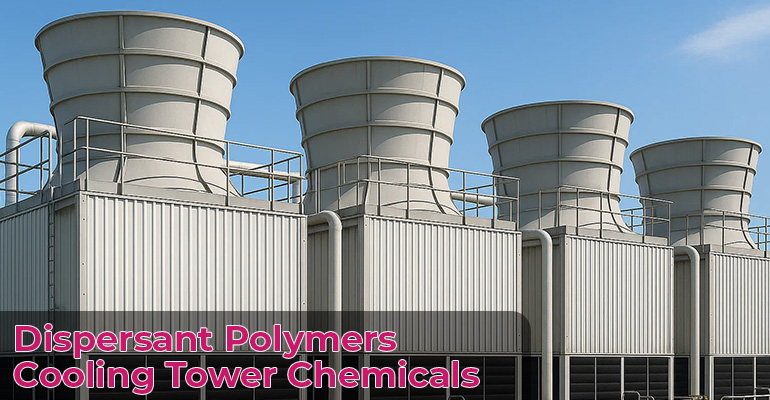
When running industrial waters there can be issues with suspended particles, scaling and deposits. Dispersant Polymers can be added to the water to help manage these issues and keep the water clean and the plant running efficiently...
Acrylic Polymers in Industrial Water Treatment
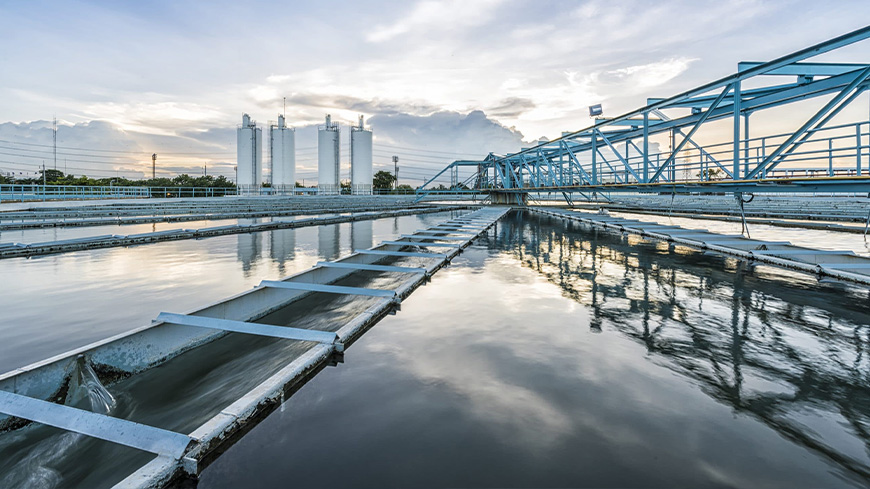
Acrylic Polymers are a range of chemicals used in various Industrial Water Treatment Applications. Depending on the structure and formulation of the Acrylic Polymer, they can help with particle dispersion, control of deposits and suit specific applications. They can be found in some cooling water systems, process water applications and industrial Water Treatment.
Depending on the formulation of the Acrylic Polymer will determine the function. The formulation of the Acrylic Polymer, the water chemistry, the plant running conditions and the aim, for the treatment are all important to understand. Acquiring knowledge on the Acrylic Polymer formulation, the water chemistry, the operation condition of the plant and the objective of the treatment enables the Acrylic Polymer formulation to achieve its results.
Knowing about various forms, usage and the elements that affect the selection of Acrylic Polymer will enable various industrial sectors to make a better decision.
What are Acrylic Polymers?
Acrylic Polymers are those materials which are developed from acrylic acid or related monomers. Depending on the formulation they can have different properties.
In Water Treatment there are many different formulations of Acrylic Polymers available to help with specific applications. Some Acrylic Polymers have been developed to help with particle dispersion whilst others can help with mineral deposits and scale control.
The performance of the Acrylic Polymer will depend on the structure.
Acrylic Polymers are not a one size fits all solution. There are various grades available with different properties. It is important to have a good understanding of the water system and what the treatment requirements are.
How do Acrylic Polymers work in Water Treatment?
Depending on the formulation and what is in the water, Acrylic Polymers will work in different ways. Often they will work by interacting with suspended or dissolved matter.
Some of the ways Acrylic Polymers can help with Water Treatment are:
Particle Dispersion
Some Acrylic Polymers can help keep particles dispersed in water. Depending on the type of particle and Acrylic Polymer chemistry they can prevent clumping.
This can help in systems where suspended matter can cause build up.
Scale Control
Mineral scaling can occur when salts in the water become concentrated and stick to equipment. Some Acrylic Polymer formulations can be added to help prevent scaling. The success of this depends on the salt type, water chemistry, temperature and plant running conditions.
Deposit Control
Deposits can cause build up of mineral particles, suspended matter and other substances. The right Acrylic Polymer can help with controlling deposits.
Supporting Treatment
If the right Acrylic Polymer is chosen it can help improve the chemical treatment. The success will depend on the filtration, chemical compatibility, dosing and monitoring.
Types of Acrylic Polymers in Industrial Applications
Acrylic Polymers are available in various chemical formulations. Depending on the monomers, weight and how they are made they will have different properties.
Some common types are:
Polyacrylic Acid
This polymer is an acid based polymer. It can be used in some Water Treatment applications to help with particle dispersion and mineral deposits.
The performance will depend on the weight, formulation and water conditions.
Acrylic Acid Copolymers
These polymers are created by mixing acrylic acid with monomers. This allows for the creation of polymers that can complete specific tasks.
Depending on the formulation they can be used for scale control, particle dispersion and industrial Water Treatment.
Acrylic Based Dispersant Polymers
Some Acrylic Polymer formulations have been created to help keep suspended particles dispersed. They can be useful in systems where particle build up and deposits need to be controlled.
Modified Acrylic Polymers
These polymers have been modified by changing the formulation to achieve the desired performance.
Depending on the formulation they can be used for specific industrial Water Treatment and process applications.
Key Applications for Acrylic Polymers
Acrylic Polymers are used in industries as the water quality requirements will vary between processes.
Cooling Water Treatment
Cooling water systems are constantly running and can cause changes in temperature, concentration and composition. This can cause issues with mineral scaling and deposits.
The right Acrylic Polymer formulations can be added to the cooling Water Treatment to help control some deposits and suspended particles.
They can be used in systems such as:
- Cooling towers
- Heat exchangers
- Industrial cooling circuits
- Recirculating cooling water systems are used to keep equipment cool in industrial applications.
The Acrylic Polymers will need to be chosen based on the water chemistry and cooling system running conditions.
Reverse Osmosis Water Treatment
Reverse osmosis systems require control of water quality to reduce the risk of membrane fouling and scaling. Some Acrylic Polymers can be used in membrane treatments if the chemistry is compatible. Not all Acrylic Polymers will be suitable.
The product selected will depend on membrane compatibility, feed water composition, pressure and scaling potential.
Industrial Process Water
Water is used in manufacturing industries for cooling, cleaning, processing and other applications. Depending on the source of the water there could be suspended matter, minerals and other impurities present.
The right Acrylic Polymers can help control selected particles and deposits within the Water Treatment.
Boiler Water Treatment
Boiler systems require control of the water chemistry. Deposits can cause issues with heat transfer.
Some Acrylic Polymer formulations may be used within boiler Water Treatment to help control some deposit forming materials.
The chemical selected will depend on the pressure in the boiler, water quality, running conditions and overall treatment.
Industrial Wastewater Treatment
Industrial wastewater can contain suspended matter, minerals and other substances. These will need to be treated. Certain Acrylic Polymers may help with selected stages of treatment where particle dispersion and deposit control is required. However, coagulation and flocculation may also be required to remove suspended matter.
The right function of the Acrylic Polymer will need to be identified.
Textile and Manufacturing Industries
Textile, paper, chemical and other manufacturing processes may use water that contains suspended matter and dissolved substances. Depending on the application, Acrylic Polymers may be considered for selected process Water Treatment. The suitability will depend on the nature of the process and water quality.
Benefits of using Acrylic Polymers
Depending on the chemical composition and application, Acrylic Polymers can provide various benefits.
Some benefits include:
- Particle Dispersion – Some formulations can help keep particles evenly dispersed in water.
- Scale Control – Selected Acrylic Polymers can help with programmes to control mineral scaling.
- Deposit Control – The right formulation can help with controlling deposit forming materials.
- Flexibility – Different Acrylic Polymer formulations can be created for industrial applications.
- Treatment – Acrylic Polymers can be used as part of a Water Treatment programme.
- Consistency – Choosing the right Acrylic Polymer and dosing can help provide consistency in treatment.
The actual performance will depend on the grade of polymer, water composition, dosage and running conditions.
Acrylic Polymers vs Other Water Treatment Polymers
Water Treatment polymers are created to provide different functions. Acrylic Polymers should not be seen as a universal solution.
| Polymer Type | Application |
| Acrylic Polymers | Selected scale control and particle dispersion |
| Epi-DMA Polymers | Coagulation and selected wastewater treatment |
| DCDA Polymers | Colour removal and coagulation in selected wastewater applications. |
| Dispersant Polymers | Keep particles dispersed and control selected deposits. |
| Flocculant Polymers | Help to create larger flocs from suspended particles. |
The exact function will depend on the formulation. The chemical should be chosen based on the treatment requirements rather than polymer type.
Factors to Consider When Choosing Acrylic Polymers
Choosing the right Acrylic Polymer will involve more than just knowing what type of industrial application you require. The product must be suitable for the water conditions and treatment.
Important factors to consider include:
Water Chemistry
The water composition can impact the performance of the polymer. It is important to understand what dissolved minerals, suspended particles, pH and other substances are present.
A Water Analysis can help identify what treatment is required.
Polymer Composition
There are various Acrylic Polymers available with different chemical structures and properties. The right formulation should be chosen based on what application you require, such as particle dispersion, deposit control etc.
Molecular Weight
The molecular weight can impact the behaviour and performance of the polymer. The right range will depend on the formulation and treatment.
Temperature
Industrial water systems may run at certain temperatures. This can impact the behaviour and performance of the treatment. This should be considered when choosing a product.
pH
The pH of the water can impact the performance of Acrylic Polymers. The product should be suitable for the pH range.
Chemical Compatibility
Water Treatment programmes may include antiscalants, corrosion inhibitors, biocides and other specialty chemicals.
It is important to check the compatibility before combining products.
Dosage
The correct dosage will depend on the water quality, polymer formulation and running conditions. Over and under dosing can impact the treatment results.
Lab testing can help determine the right dosage.
Lab Testing
Lab testing can be useful when considering Acrylic Polymers for a Water Treatment application. It can help to:
- Compare Acrylic Polymer formulations.
- Understand what dosage range would be required.
- See how the particle dispersion has changed.
- Check compatibility with other treatment chemicals.
- Evaluate the deposit control performance.
For scale control applications the right lab testing methods should be chosen based on the type of mineral scaling and running conditions.
The results should be reviewed along with the actual performance in the system.
Acrylic Polymers in a Full Water Treatment Programme
Acrylic Polymers are generally chosen as part of an industrial Water Treatment programme. They may be used alongside other chemicals and treatments depending on the system requirements.
A typical approach may include:
- Water Analysis – Understand what the water composition, minerals, suspended solids and pH.
- Identify Issues – Understand what the main issue is, such as scaling, deposits, suspended particles etc.
- Choose Chemical – Identify the right polymer formulation for the treatment.
- Dosage – Lab testing can help determine what dosage is required.
- Apply Chemical – Apply the chosen product.
- Monitor – Regularly monitor the water quality, deposits and equipment.
Having an evaluated treatment programme can help industries adapt to changing water conditions and provide consistency.
Safe Handling and Storage of Acrylic Polymers
Acrylic Polymers should be handled based on the technical data sheet and safety data sheet. The requirements may vary depending on the formulation and concentration of the product.
General considerations include:
- Store in clearly labelled containers.
- Store at the recommended temperature.
- Wear the correct PPE.
- Avoid contact with skin and eyes.
- Ensure the container is sealed when not in use.
- Follow workplace procedures for spillages and disposal of chemicals.
Always refer to the manufacturers documentation.
Choosing a Reliable Specialty Chemical Partner
Choosing the right polymer is part of the Water Treatment process. However it is important to consider the consistency of the product, technical data and support.
Maxwell Additives specialises in specialty chemicals and Water Treatment chemicals. If you are looking for polymer based treatments, our team can help you with our range of chemicals.
Before choosing an Acrylic Polymer it is important to consider the Water Analysis, running conditions and what the treatment is required for.
Conclusion
Acrylic Polymers are used in Industrial Water Treatment Applications depending on the chemical composition and performance. They can help with particle dispersion, selected scale control and deposit control.
Applications can include cooling Water Treatment, reverse osmosis programmes, industrial process water, boiler water and selected wastewater treatments.
Choosing the right Acrylic Polymer will depend on understanding the water chemistry, polymer composition, molecular weight, pH, temperature and compatibility with other treatment chemicals. Lab testing can help to evaluate whether the chosen formulation is suitable.
Choosing the right Acrylic Polymer can help industries have better control over water quality and treatment.
FAQs
1. What are Acrylic Polymers Used for in Water Treatment?
Acrylic Polymers can be used in selected Industrial Water Treatment Applications to help with particle dispersion, scale control and deposit control. The function will depend on the polymer formulation.
2. How do Acrylic Polymers work?
Depending on the chemical structure and water conditions the polymers will work differently. Some formulations will interact with suspended particles or mineral deposits to help with dispersion and deposit control.
3. Are polymers used in cooling Water Treatment?
Yes, the right Acrylic Polymer formulations can be used in cooling Water Treatment programmes to help with mineral deposits and suspended particles.
4. What is acid used for?
Polyacrylic acid can be used in selected industrial applications. It can be used in Water Treatment formulations to help with particle dispersion and mineral deposits.
5. Are all polymers used as antiscalants?
No, different Acrylic Polymer formulations have different functions. Some can be used for scale control whilst others may be formulated for particle dispersion.
6. Can Acrylic Polymers be used in reverse osmosis?
Certain acrylic based formulations can be used in reverse osmosis treatment programmes. Careful consideration should be given to membrane compatibility, feed water quality and scaling potential.
7. How do industries choose the Acrylic Polymer?
They should carefully consider the water chemistry, Acrylic Polymer composition, Acrylic Polymer molecular weight, Acrylic Polymer pH, temperature, Acrylic Polymer compatibility and Acrylic Polymer treatment requirements. Lab testing can help compare Acrylic Polymer formulations.
8. Why is the dosage important?
The dosage will impact how well the chosen Acrylic Polymer works. The right amount will depend on the water quality, Acrylic Polymer formulation and system running conditions.
9. Can Acrylic Polymers be used in wastewater treatment?
Some Acrylic Polymer formulations can be used in wastewater treatment. It will depend on whether you require particle dispersion, deposit control or other functions in your treatment.
10. Are polymers compatible with other Water Treatment chemicals?
This will depend on the polymer formulation and other chemicals being used. Testing should be carried out before using Acrylic Polymer with chemicals in an industrial treatment.
Related Posts