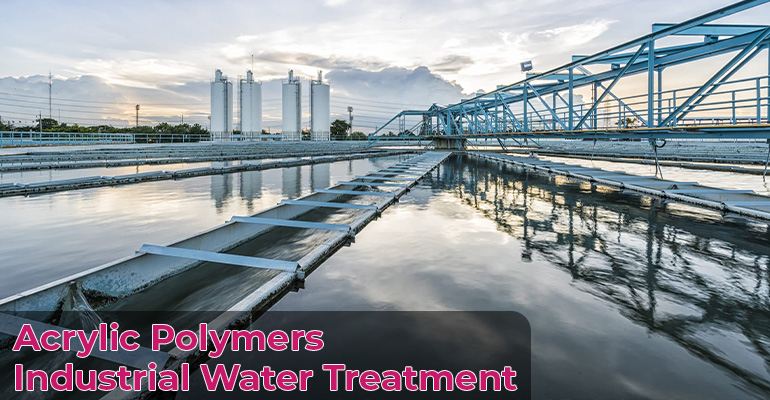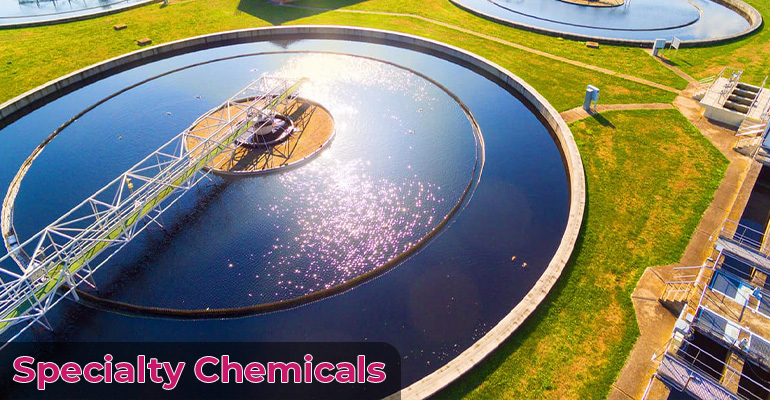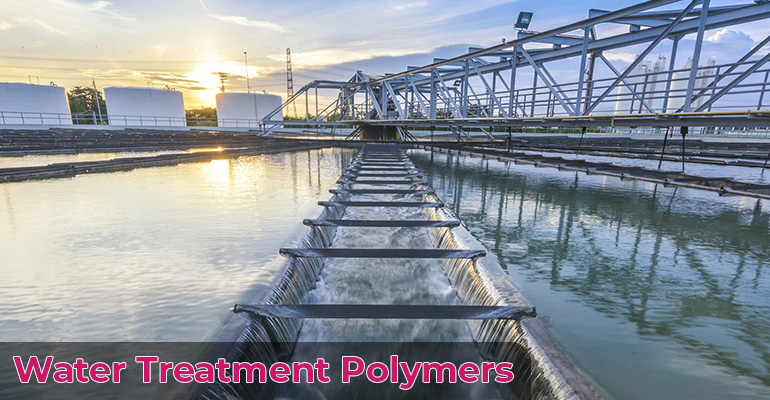
Acrylic Polymers are a range of chemicals used in various Industrial Water Treatment Applications. Depending on the structure and formulation of the Acrylic Polymer, they can help with particle dispersion, control of deposits and suit specific applications. They can be found in some cooling water systems, process water applications and industrial Water Treatment...
Dispersant Polymers in Industrial Water Treatment
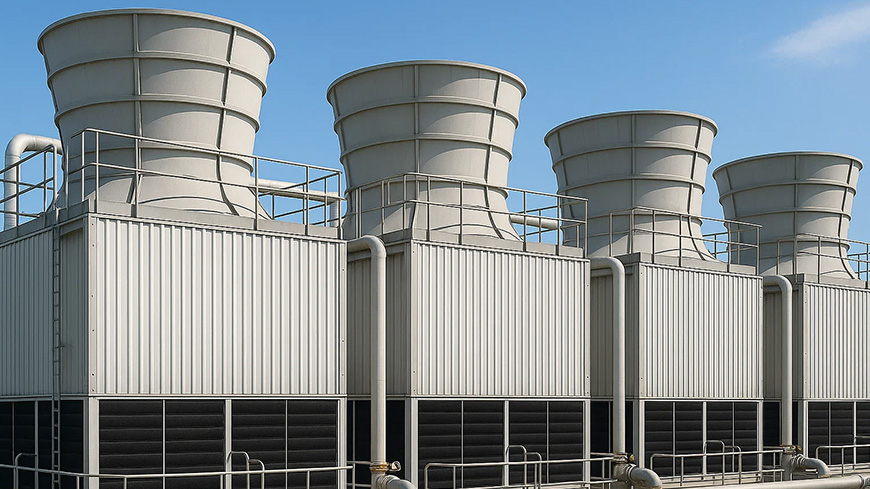
When running industrial waters there can be issues with suspended particles, scaling and deposits. Dispersant Polymers can be added to the water to help manage these issues and keep the water clean and the plant running efficiently.
What are Dispersant Polymers?
Dispersant Polymers can be used to stop particulates from joining together and forming flocs. Dispersant Polymers chemicals help to break up the suspended solids. Dispersant Polymers chemicals also act on the mineral particulates. This way Dispersant Polymers chemicals make the mixture clearer.
Dispersant Polymers can help manage solids, particulates and deposits. The polymers will depend on the water chemistry, conditions and dosage.
The Dispersant Polymers will depend on what type of water system and deposits/suspended particulates are present.
How do Dispersant Polymers work?
Dispersant Polymers will depend on the chemistry of the polymer and particulate. Usually they will help keep particulates suspended by interacting with the surface of the particulates.
Main reasons why Dispersant Polymers work:
1. Stops Floc Formation
Fine particulates can often cause attraction between particles causing flocs to be formed. This can cause build up on surfaces. Dispersant Polymers can help reduce the attraction between the particulates to keep them suspended.
2. Helps Keep Particulates Suspended
Some suspended substances can settle out when the water conditions change or the water is not flowing well. Using Dispersant Polymers can help keep the particulates suspended.
3. Helps Manage Deposits
Some systems can have scaling issues caused by mineral particulates and deposits. Dispersant Polymers can help manage this issue.
4. Helps Provide Stability
Dispersant Polymers can help keep particulates suspended in Water Treatment. However this will depend on the filtration, dosage, water quality and conditions.
Key Applications
Dispersant Polymers can be used in applications where there are issues with suspended particulates and deposits.
1. Cooling Water Treatment
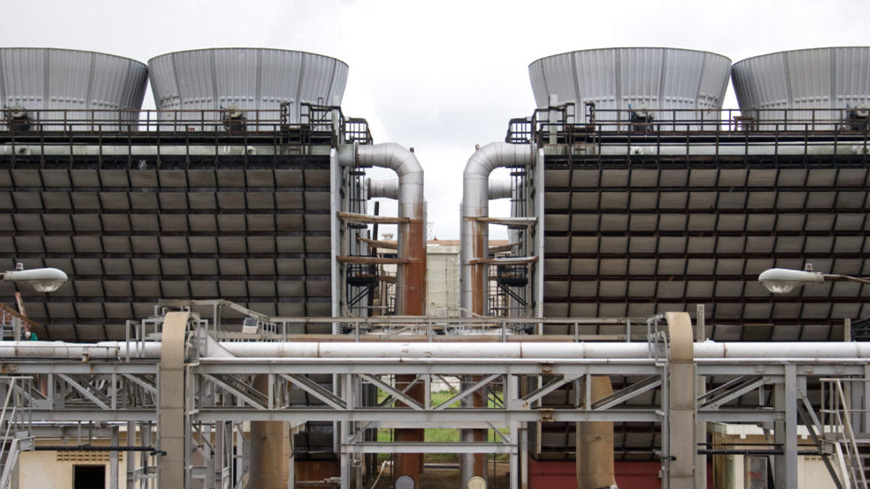
Cooling Water Treatment systems are constantly running. I notice that this can change the temperature, concentration and water quality and that can cause mineral deposits to form. Dispersant Polymers can help manage the suspended particulates in cooling towers, heat exchangers and pipework and Dispersant Polymers help keep the water clean.
2. Industrial Process Water
Manufacturing industries often use water within their processes. Depending on the source of the water and the process there may be suspended solids, minerals and impurities. Dispersant Polymers can help keep the particulates suspended and help Water Treatment.
3. Boiler Water
Water quality can be an issue in boiler systems. Deposits can affect the heat transfer and performance. Dispersant Polymers may be used in treatments however the chemical programme needs to be designed based on the boiler conditions and Water Treatment requirements.
4. Wastewater Treatment
Industrial wastewater often has particles, minerals and other things floating in it. I have seen that Dispersant Polymers can help in treating this kind of water. Dispersant Polymers work by keeping particles from settling down. This makes it easier to handle the waste. Improves the treatment process. However this should be considered carefully as some stages in wastewater encourage coagulation.
5. Industrial Manufacturing
Industries such as textiles, paper, chemicals and other manufacturing processes may have suspended substances in the process water. Dispersant Polymers can be used depending on the requirements of the process to manage the particulates and keep the water quality consistent.
Benefits of Using Dispersant Polymers
Dispersant Polymers can be used in many areas within industrial water management. Key benefits include:
- Particle Suspension – Dispersant Polymers help reduce floc formation of particulates.
- Deposit Management – Dispersant Polymers help manage deposits of minerals and particulates.
- Equipment Protection – Dispersant Polymers help reduce particulate build ups on equipment.
- Stable Conditions – Dispersant Polymers can help provide stable conditions in industrial systems.
- Cooling System – Dispersant Polymers can be used in a treatment programme in cooling towers and heat exchangers.
- Versatile – There are various chemistries available to suit different water conditions.
The benefits of Dispersant Polymers will depend on the polymer formulation, water chemistry, dosage and conditions.
Dispersant Polymers vs Antiscalant Chemicals
Dispersant Polymers and Antiscalant Chemicals are both used in Water Treatment. However they do not always do the same job. It is important to select the correct chemical based on the type of deposits and conditions.
| Dispersant Polymers | Antiscalant Chemicals | |
| Main Use | Help keep particulates suspended | Help manage scaling |
| Targets | Suspended particulates and deposits | Mineral salts |
| Action | Help reduce particulate agglomeration and settling | Interfere with scale formation and crystal growth |
| Used in | Industrial water systems and specific processes | Cooling water systems |
| Scale Considerations | Type of particulate | Potential for scaling |
Some treatments may overlap however the correct chemical should be selected based on the water system.
Considerations
Not all Dispersant Polymers will work in all water systems. It is important to consider:
1. Water Chemistry
Depending on the source of the water there may be minerals, particulates and dissolved substances. A Water Analysis can help determine what treatment is required.
2. Particulate Type
The type, size and amount of particulates can affect how the Dispersant Polymer works. I pick the chemical based on what the chemical needs to keep suspended.
3. Temperature and pH
The temperature and pH can affect how the Dispersant Polymer works. The product should be selected to work in these conditions.
4. Chemical Compatibility
Within Water Treatment programmes there may be other chemicals such as corrosion inhibitors, antiscalants, biocides etc. All chemicals should be checked for compatibility.
5. Dosage
The dosage depends on the water quality on the system conditions and, on the polymer formulation. Much dosage or too little dosage can change how effective the treatment is.
6. System Design
There is need for maintenance of all these things namely cooling towers, heat exchangers, boilers and process water systems. It is imperative that the chemicals used must be compatible with the construction of cooling towers, heat exchangers, boilers and process water systems.
Importance of Jar Testing
Jar testing can show how a Dispersant Polymer will work in controlled conditions. This helps industries understand how the polymer will work with their water sample.
Different dosages can be tested to see how particulates will be suspended, settled and how the water quality will change.
This can help:
- Compare polymer formulations.
- Understand what dosage range is needed.
- Understand how particulates will behave.
- Check chemical compatibility.
- Understand any changes to water clarity.
Once tested in the lab it is important to check how the treatment is working.
Role in Water Treatment Programme
Dispersant Polymers are usually used in a Water Treatment programme.
A full programme may include:
- Water Analysis – Understanding the chemical composition and particulates.
- Chemical Selection – Understanding what Dispersant Polymers are required and what chemicals are required.
- Dosage – Understanding the correct dosage using lab testing and system assessment.
- Chemical Addition – Adding the chemical according to the programme.
- Monitoring – Regularly monitoring the water quality, deposits and equipment.
Having a programme helps industries manage changing water conditions and keep the treatment consistent.
Handling and Storing Dispersant Polymers
Dispersant Polymers should be handled according to the data sheet and safety data sheet. Depending on the formulation the storage and handling may vary.
General considerations:
- Store in labelled containers.
- Store and handle according to recommended temperature and instructions.
- Wear PPE.
- Do not touch skin or eyes.
- Keep containers sealed.
- Follow spillage and chemical disposal according to company procedures.
Always refer to manufacturers documentation.
Choosing a Reliable Specialty Chemical Partner
Choosing the correct chemical is only one part of a successful Water Treatment programme. It is important to consider the consistency of the product, technical data, application requirements and support.
Maxwell Additives specialise in specialty chemicals and Water Treatment chemicals. Take a look at our range of polymers and other treatment solutions. Contact our team.
Always ensure that the correct chemical is chosen based on the Water Analysis, conditions and treatment requirements.
Dispersant Polymers help keep suspended particles evenly suspended and manage deposits. They can be used in cooling water systems, industrial process water, wastewater treatment and other manufacturing processes.
To choose the correct polymer it is important to know the water chemistry, particulate properties, temperature, pH and compatibility with other treatments. Testing and monitoring should be carried out.
To improve Water Treatment programmes Dispersant Polymers can be used in a designed chemical programme to keep operations consistent and efficient.
FAQs
1. What are Dispersant Polymers used for?
Dispersant Polymers are used to keep suspended particles evenly suspended in water. They help reduce floc formation and can be used in Water Treatment and process applications.
2. How do Dispersant Polymers work?
Dispersant Polymers work by contacting the surface of particles to reduce attraction or floc formation. This will depend on the polymer chemistry and water properties.
3. Are polymers used in cooling Water Treatment?
Yes. The correct Dispersant Polymers can be used in a cooling Water Treatment programme to manage the particulates and specific deposits in cooling towers and heat exchangers.
4. What is the difference between Dispersant Polymers and antiscalants?
Dispersant polymers mainly help keep particles separated and distributed in water. Antiscalants are primarily used to control the formation of mineral scale. Some formulations may have overlapping functions.
5. Can Dispersant Polymers be used in wastewater treatment?
From my perspective Dispersant Polymers can be used in wastewater applications. However should be carefully considered as other stages may require particulates to form flocs and settle.
6. How can industries choose the Dispersant Polymer?
Consider the water chemistry, particulate properties, pH, temperature, chemical compatibility and conditions. From my experience lab testing can help determine what Dispersant Polymer and dosage ranges are required.
7. Why is Dosage
The dosage will affect how effective the Dispersant Polymers are with suspended particulates. From my perspective the dosage will depend on the water quality, polymer formulation and system conditions.
8. Can Dispersant Polymers be used as an alternative to Antiscalant Chemicals?
No. Dispersant Polymers and antiscalants have different functions. From my experience the correct chemical for treatment should be chosen based on the scale/particulate management requirement.
Related Posts