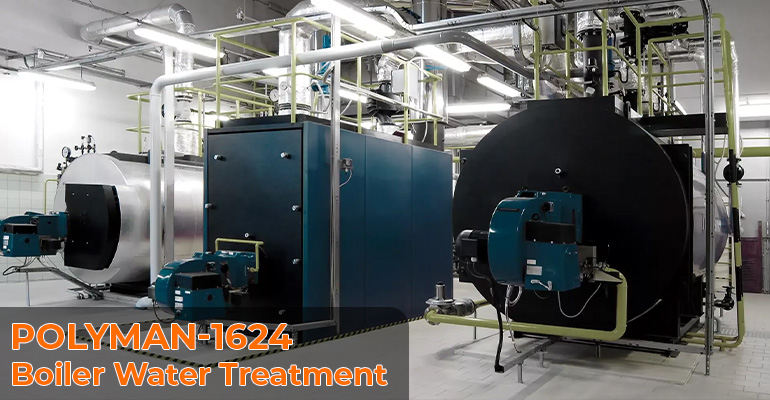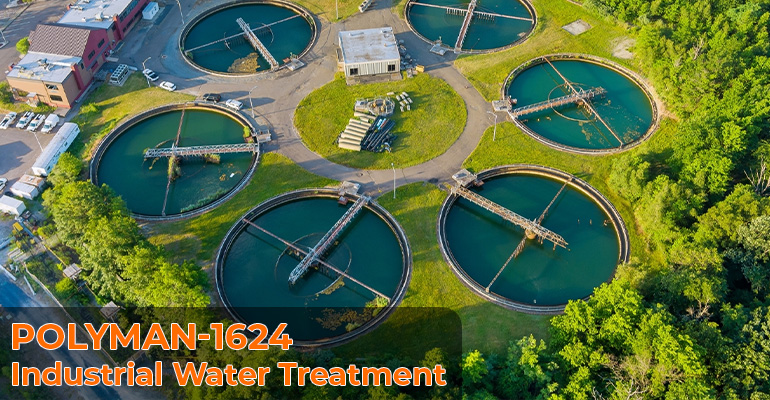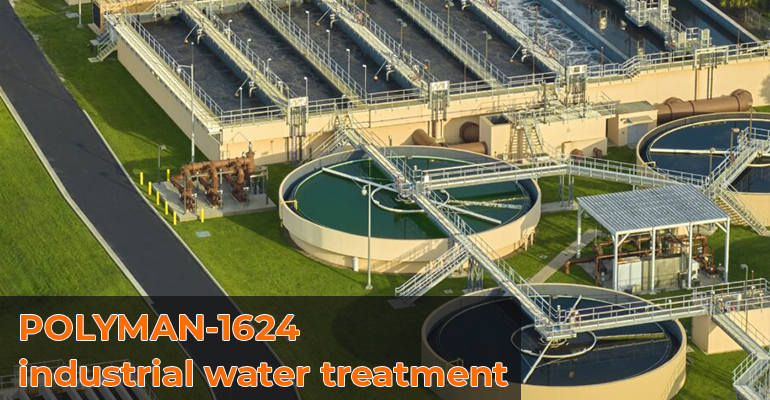
A terpolymer such as POLYMAN-1624 can provide a solution. POLYMAN-1624 is a specialty polymer from MAXWELL ADDITIVES designed for water treatment and water-based applications where mineral control, scale inhibition and particle dispersion are required. It is available as a Carboxylate-Sulfonate-Non-Ionic Ter-polymer. This product comes in a low-molecular-weight water polymer. It is also a low-molecular-weight water- polymer. It is easy to use...
Carboxylate-Sulfonate-Non-Ionic Terpolymers – POLYMAN-1624
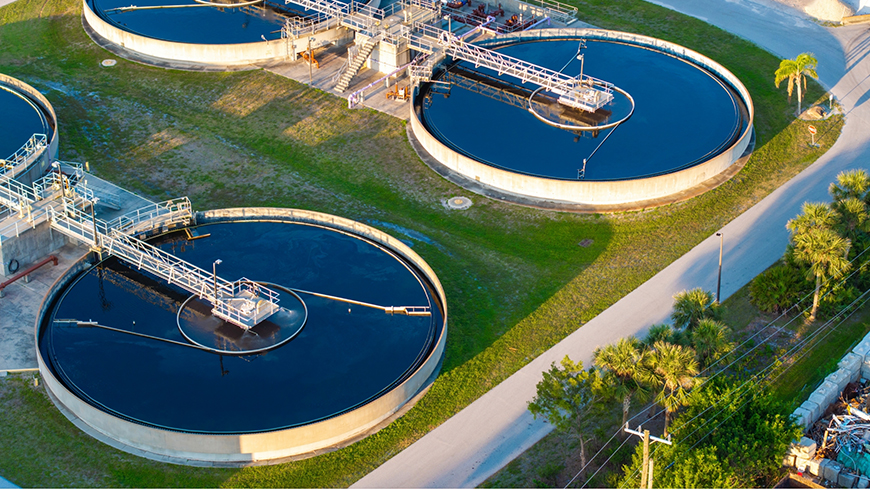 What is Carboxylate-Sulfonate-Non-Ionic Terpolymers – POLYMAN-1624?
POLYMAN-1624 is a specialty polymer designed for industrial formulations where mineral control, particle management, and formulation stability are important. It belongs to the Carboxylic-Sulfonate-Non-Ionic Ter-Polymer category and can be evaluated in water-based systems that operate under changing chemical conditions.
The polymer combines different functional characteristics within one material, allowing formulators to approach mineral and particulate problems from more than one direction. In practical applications, this can be useful when water contains several dissolved salts or when operating conditions change during circulation, concentration, heating, or processing.
Rather than treating POLYMAN-1624 as a universal solution for every water problem, it is better to consider it as a formulation ingredient whose performance depends on the complete system. Water quality, hardness, temperature, pH, dosage, and compatibility with other treatment chemicals should be considered before establishing a working formulation.
This makes product selection and technical evaluation important for industrial buyers. A dependable Carboxylate-sulfonate-non-ionic terpolymers Supplier can help customers obtain consistent material and relevant product information for their intended application.
Features
1. Multi-Functional Polymer Structure
POLYMAN-1624 brings carboxylate, sulfonate, and non-ionic functionality into one polymeric material. This combination gives formulators a broader chemical platform for managing mineral particles and water chemistry. Its multi-functional nature can be useful when a treatment formulation needs more than one type of interaction within the same operating environment.
2. Supports Mineral Control
The polymer can be evaluated where mineral formation creates operational difficulties. By influencing the behavior of dissolved species and developing particles, POLYMAN-1624 can support a treatment program aimed at reducing unwanted accumulation. Actual effectiveness depends on the minerals involved, water conditions, dosage, and the overall formulation.
3. Useful Dispersion Characteristics
POLYMAN-1624 can assist formulations that require better handling of fine mineral particles and suspended matter. Maintaining particles in a more manageable dispersed state can help reduce their tendency to gather into larger deposits. This makes the polymer relevant to industrial systems where particulate behavior affects process consistency.
4. Adaptable to Changing Water Conditions
Industrial water rarely remains chemically identical throughout an operating cycle. Concentration, temperature, hardness, and dissolved salts can change with time. POLYMAN-1624 can be evaluated for such environments because its multi-functional chemistry provides formulators with an option for managing changing mineral and particle conditions.
5. Useful in Water-Based Formulations
The polymer is designed for applications where water forms an important part of the treatment environment. It can be considered when developing industrial formulations that need mineral-control or dispersion support. The final concentration should be selected through testing rather than applying one fixed dosage across unrelated systems.
6. Supports Formulation Flexibility
POLYMAN-1624 can be incorporated into treatment programs according to the specific objective of the formulator. It may be evaluated with compatible ingredients to create a broader chemical approach. This flexibility allows manufacturers to develop application-specific products instead of depending on one treatment method for every operating condition.
7. Suitable for Industrial Treatment Development
The polymer provides formulators with an additional option when designing treatment products for demanding industrial environments. Its performance can be studied through laboratory screening, compatibility testing, and controlled application trials. Such evaluation helps determine whether the material provides the required balance between mineral control, dispersion, and formulation stability.
 Benefits
1. Helps Manage Mineral Accumulation
POLYMAN-1624 can form part of a treatment program designed to manage unwanted mineral accumulation. By influencing crystal and particle behavior, it may reduce the tendency of certain deposits to develop under suitable conditions. This can support cleaner process surfaces and more manageable maintenance requirements.
2. Supports Better Particle Control
Fine particles can become problematic when they agglomerate, settle, or combine with mineral deposits. POLYMAN-1624 can help maintain more controlled particle behavior within suitable formulations. Better dispersion can contribute to improved handling of suspended matter and reduce some problems associated with uncontrolled particle accumulation.
3. Useful for Demanding Water Systems
Industrial systems can experience high mineral loads and changing operating conditions. POLYMAN-1624 gives formulators an option for developing treatment programs suited to such environments. Its performance can be optimized according to water composition, temperature, concentration cycles, and the presence of other treatment chemicals.
4. Can Support Cleaner Equipment
Deposits on equipment surfaces can gradually interfere with normal operation and increase cleaning requirements. A suitable polymer treatment can help manage the chemical conditions responsible for accumulation. POLYMAN-1624 may therefore contribute to maintaining cleaner surfaces when correctly incorporated into a complete and properly monitored treatment program.
5. Provides Formulation Versatility
A multi-functional polymer gives manufacturers another tool when developing specialized treatment formulations. POLYMAN-1624 can be evaluated with compatible chemicals to meet different process objectives. This versatility is useful for companies producing customized treatment products for customers with varying water quality and operating requirements.
6. Supports Preventive Treatment Strategies
Addressing mineral problems before they become severe can be more practical than relying entirely on corrective cleaning. POLYMAN-1624 can be evaluated as part of a preventive chemical program. Regular monitoring can help determine whether the selected dosage continues to provide suitable control as operating conditions change.
7. Helps Improve Process Management
When mineral and particulate behavior is better controlled, treatment teams can work with more predictable process conditions. POLYMAN-1624 can contribute to this approach when properly selected and dosed. The resulting benefit depends on the complete treatment strategy, equipment design, water chemistry, and ongoing system monitoring.
Where Can POLYMAN-1624 Be Considered?
POLYMAN-1624 can be evaluated in industrial water-treatment formulations where mineral deposition and particulate dispersion are important considerations. Cooling-water systems are one possible area because repeated circulation can change the concentration of dissolved minerals.
It may also be considered in other water-based industrial formulations where maintaining controlled particle behavior is necessary. The suitability of the polymer should always be confirmed through application testing, especially when the system contains multiple salts, additives, or unusual operating conditions.
For formulators, the most useful starting point is an analysis of the actual water and process environment. This can help determine whether a polymer treatment is required and what performance characteristics should be prioritized.
Why Supplier Selection Matters
Selecting a polymer supplier is an important part of maintaining consistent manufacturing. A product used repeatedly in industrial formulations should have dependable quality so that production teams do not need to make frequent formulation adjustments.
Buyers should review technical specifications, product consistency, packaging options, quality documentation, supply capacity, and delivery reliability. They should also discuss the intended application before placing a large recurring order.
Companies looking for a Carboxylic-Sulfonate-Non-Ionic Ter-Polymer Supplier should ideally conduct an initial sample evaluation. Testing the polymer in the customer’s actual formulation can provide a clearer understanding of compatibility and performance than relying only on a general product description.
For long-term procurement, establishing an approved specification can further simplify quality checks between different batches.
Understanding the Role of the Non-Ionic Component
The non-ionic functionality is an important part of the broader formulation concept because industrial water chemistry can be affected by the presence of salts and charged species. A polymer containing different functional characteristics can offer formulators additional flexibility when working with complex systems.
However, the presence of a non-ionic component does not automatically guarantee identical performance in every water condition. The interaction between the polymer and the customer’s specific water chemistry still needs to be considered.
This is why controlled testing remains important. A manufacturer can compare the polymer’s behavior at different concentrations and under relevant temperature and water-quality conditions before finalizing the commercial formulation.
Conclusion
Carboxylate-Sulfonate-Non-Ionic Ter-Polymer – POLYMAN-1624 is a specialty polymer that can be evaluated for industrial formulations requiring mineral management and improved control of suspended particles. Its multi-functional structure provides formulators with an additional option when designing treatment systems for changing and demanding water conditions.
The right dosage and application depend on the actual system. Water hardness, dissolved minerals, temperature, pH, circulation, concentration cycles, and other formulation ingredients should all be considered before establishing a final treatment program.
For industrial buyers, choosing a reliable supplier is equally important. Consistent quality, technical information, documentation, supply capability, and responsive communication can help create a more dependable raw-material supply chain.
Maxwell Additives PVT LTD offers specialty polymer and water-treatment chemical solutions, and buyers should evaluate the product specification and application suitability according to their individual requirements.
FAQs
1. What is POLYMAN-1624 used for?
POLYMAN-1624 can be considered for industrial water-treatment and other water-based formulations where mineral control and particle dispersion are required. Its suitability depends on the water chemistry and process conditions. A laboratory trial is recommended to determine the appropriate concentration and compatibility with the customer’s existing treatment formulation.
2. What type of polymer is POLYMAN-1624?
POLYMAN-1624 is described as a Carboxylic-Sulfonate-Non-Ionic Ter-Polymer. It contains different functional characteristics within its polymer structure, allowing it to be evaluated for applications involving mineral and particulate control. Buyers should refer to the current technical documentation for exact product specifications.
3. Can POLYMAN-1624 be used with other treatment chemicals?
It can be evaluated alongside other treatment chemicals when compatibility has been confirmed. Since different additives may interact differently depending on concentration, pH, temperature, and water composition, testing is recommended before commercial-scale use. This helps formulators establish a stable and effective combination.
4. How should the correct dosage of POLYMAN-1624 be decided?
There is no single dosage that is suitable for every industrial system. The required amount depends on water quality, mineral concentration, temperature, process conditions, and the other chemicals being used. Manufacturers should conduct application testing and monitor the system before establishing a regular treatment dosage.
5. Is POLYMAN-1624 suitable for industrial water treatment?
POLYMAN-1624 can be evaluated for industrial water-treatment formulations where mineral deposition and dispersion are important concerns. Its suitability should be determined according to the specific application rather than assumed from the product category. Water analysis and controlled trials can help establish whether it meets the required treatment objective.
6. How can I purchase POLYMAN-1624?
Industrial buyers can contact Maxwell Additives PVT LTD to discuss POLYMAN-1624 requirements, product specifications, quantities, and commercial details. It is advisable to share the intended application and expected consumption so that the appropriate product information can be reviewed before procurement.
7. What should I look for in a Carboxylate-sulfonate-non-ionic terpolymers Supplier?
Look for consistent product quality, clear technical information, reliable supply capacity, suitable packaging, quality documentation, and responsive communication. For regular industrial purchases, an initial sample evaluation is also useful. Maxwell Additives PVT LTD can be considered by businesses looking for a supplier of specialty polymers and related industrial chemicals.
Related Posts