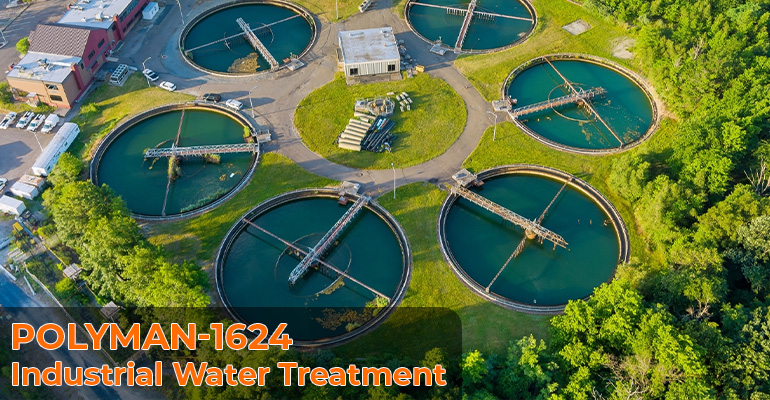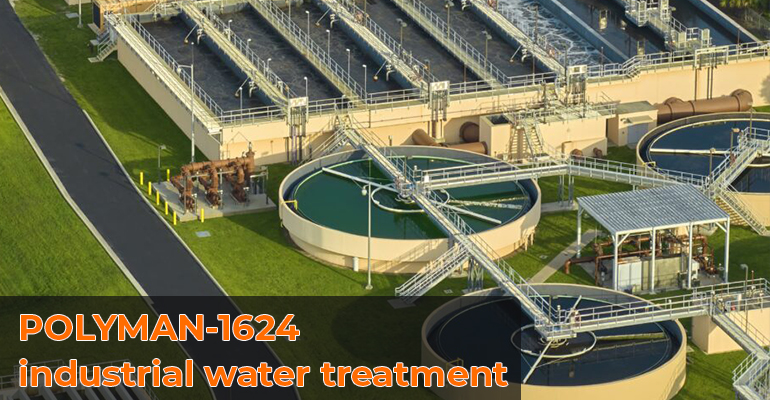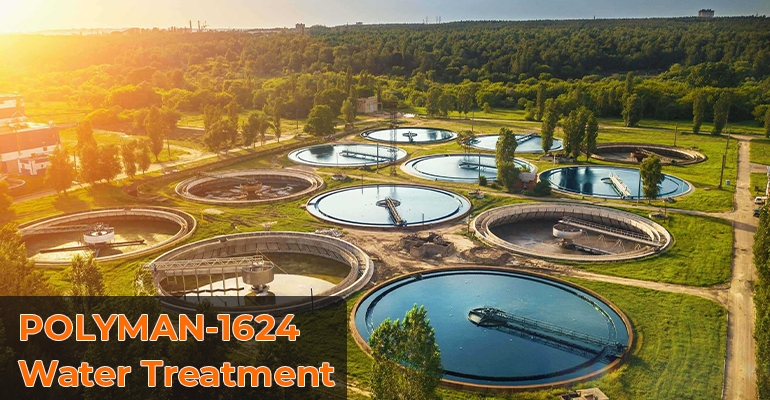
Industrial water treatment becomes more complicated when hardness, dissolved salts, temperature, concentration cycles, and suspended matter change at the same time. In such conditions, the treatment program needs chemicals that can work with the actual water chemistry rather than addressing only one isolated problem. Carboxylic-Sulfonate-Non-ionic Ter-Polymer, represented by POLYMAN-1624, is a specialty polymer used in industrial and water-treatment formulations where scale control and particle dispersion are important...
Ter-Polymers. POLYMAN-1624: Carboxylate-Sulfonate-Non-Ionic Terpolymer for Industrial Water Treatment
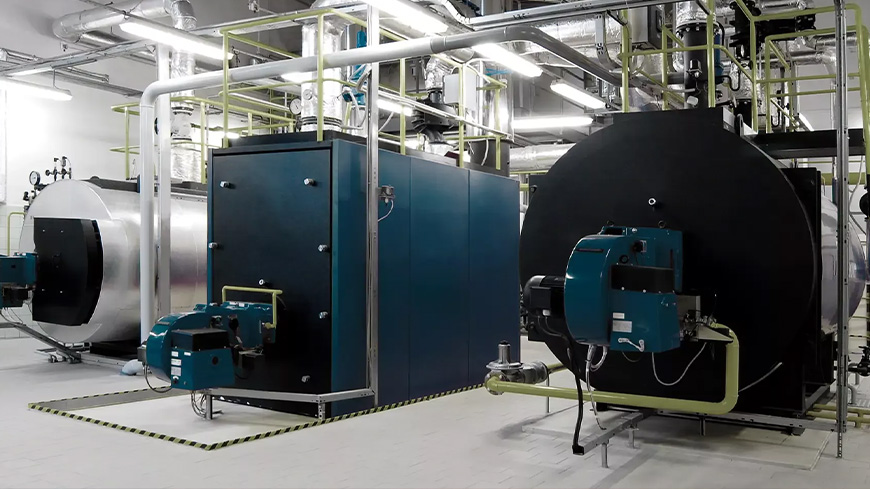
A terpolymer such as POLYMAN-1624 can provide a solution. POLYMAN-1624 is a specialty polymer from MAXWELL ADDITIVES designed for water treatment and water-based applications where mineral control, scale inhibition and particle dispersion are required. It is available as a Carboxylate-Sulfonate-Non-Ionic Ter-polymer. This product comes in a low-molecular-weight water polymer. It is also a low-molecular-weight water- polymer. It is easy to use.
While selecting a polymer on the basis of chemical denomination may seem logical, formulators should consider the way in which the product interacts with the water chemistry and the wider treatment system. This realistic approach can help to determine the polymer for such applications.
What Is POLYMAN-1624?
POLYMAN-1624 is a specialty polymer for water treatment, which operates as dispersant and scale inhibitor. MAXWELL ADDITIVES markets this product for water treatment cooling-water treatment and water-based products. This polymer is a low-molecular-weight type, which has a molecular weight of approximately 2,000 and is water soluble at all proportions.
The polymer combines carboxylate, sulfonate and non-ionic characteristics. This combination offers a range of functions, which would not be available from a polymer, which relies on a single trait.
In such cases, the versatility is advantageous because mineral deposits and suspended particles do not always behave in the same way. A treatment polymer may need to handle things like changes, in the dissolved mineral species altering how crystals grow and keeping particles spread out in the water system.
POLYMAN-1624 should be seen as part of a mix not as the one fix, for all water treatment issues.
Understanding Carboxylic-Sulphonate Non-Ionic Ter-Polymer Chemistry
Carboxylate-Sulfonate-Non-Ionic Ter-polymer is a polymer that brings together useful features.
1. Carboxylate Functionality
Carboxylate groups can allow the polymer to interact with mineral species and surfaces of particles. This is a feature, in water treatment products, where stopping scale and moving particles around is needed.
This feature is especially useful when the water has minerals, which can come out of the water or make the water hard.
2. Sulfonate Functionality
Sulfonate characteristics contribute ionic properties to the polymer. Sulfonated polymers are commonly used in formulations, where mineral particles and suspended matter need to remain within control.
The presence of such traits can therefore add to the functionality of the carboxylate component.
3. Non-Ionic Functionality
The non-ionic portion provides a further chemical characteristic in addition to the charged groups.
This combination is one reason, why a Carboxylate-Sulfonate-Non-Ionic Terpolymer can be specified when the formulation requires more than one method of mineral and particle control.
The performance of the polymer should always be evaluated in relation to the actual water chemistry. The chemical characteristics of the product do not guarantee the outcome in different applications.
How POLYMAN-1624 Helps With Scale Management
Scale forms when the level of dissolved substances reaches a point, where precipitation can occur. In such cases, calcium-based deposits can be particularly problematic because they have the potential to accumulate on heat-transfer surfaces, equipment, pipelines and other components of the water system.
According to MAXWELL ADDITIVES product information, POLYMAN-1624 can inhibit calcium carbonate and calcium phosphate scale, as well as calcium sulphate scale inhibition and iron stabilization.
The polymer operates in a number of ways to prevent the formation of scale deposits and modify the growth of crystals.
1. Calcium Carbonate Scale
Calcium carbonate can form when the amounts of calcium and carbonate, in the water become high enough. This happens in the water chemistry when both components are present, in amounts. The balance of these substances determines whether calcium carbonate will appear. It’s a process that occurs in many aquatic environments. Temperature, alkalinity, hardness and concentration cycles can contribute to the likelihood of this occurring.
An appropriate treatment polymer can prevent the formation and growth of calcium carbonate deposits as part of a comprehensive program.
2. Calcium Phosphate Scale
Calcium phosphate plays a role in systems, which involve phosphate in the treatment. When this substance begins to precipitate, it can contribute to deposits and fouling.
POLYMAN-1624 can inhibit calcium phosphate scale within the formulations.
3. Calcium Sulphate Scale
Calcium sulphate can be a concern where dissolved salts become concentrated, as can occur with higher concentration cycles.
A polymer, which prevents scale and disperses particles, can be evaluated where calcium sulphate control is required.
Why Dispersion Matters in Industrial Water Treatment
Scale inhibition is one aspect of the control of deposits.
In some cases industrial water can have floating particles, mineral bits, iron-heavy stuff and other materials. These can build up. Settle on the surfaces of equipment over time. This buildup might cause problems, like clogging or damage. It’s something that needs to be watched for in systems that use this kind of water. Such materials need to be dispersed effectively to prevent fouling with conventional scale control measures.
POLYMAN-1624 is described as a dispersant and a scale inhibitor. POLYMAN-1624 low-molecular-weight polymer structure is associated with dispersion and modification of crystal growth.
This makes POLYMAN-1624 relevant when a treatment program needs to address mineral precipitation and particulate behavior.
- Scale inhibition
- Crystal growth modification
- Particle dispersion
- Mineral management
- Iron stabilization
- Compatibility with other treatment chemicals
POLYMAN-1624 for High-Stress Water Conditions
Some applications involve water systems, which operate under challenging conditions for the control of deposits. Circulation, heating, evaporation and concentration can cause dissolved minerals to become increasingly concentrated.
MAXWELL ADDITIVES describe POLYMAN-1624 as effective in water systems with high electrolyte concentrations and high cycles of concentration. The product information demonstrates how POLYMAN-1624 performs across a variety of pH levels hardness levels and temperature conditions.
This does not mean that the same dosage or formulation will be appropriate for all high-stress systems. Instead, the actual water chemistry needs to be evaluated prior to selecting the treatment approach.
Important Product Characteristics of POLYMAN-1624
| Property | POLYMAN-1624 |
| Product type | Carboxylic-Sulphonate non-Ionic Ter-polymer |
| Physical state | Liquid |
| Solid content | 40.0 ± 2.0 % |
| molecular weight | Approx. 2000 |
| Water solubility | Soluble in all proportions |
| pH | 4.5 ± 0.5 |
| Density | 1.2 ± 0.02 |
| Odor | odorless |
| Main role | Dispersant and scale inhibitor |
Applications of POLYMAN-1624
A terpolymer with scale-inhibition and dispersion properties can be evaluated for a number of industrial water-treatment applications.
Cooling-water systems can involve the concentration of minerals as a result of the circulation and evaporation of water. Salts of hardness can become concentrated to create conditions for scale formation. POLYMAN-1624 can be considered as part of a treatment formulation where scale control and dispersion are required.
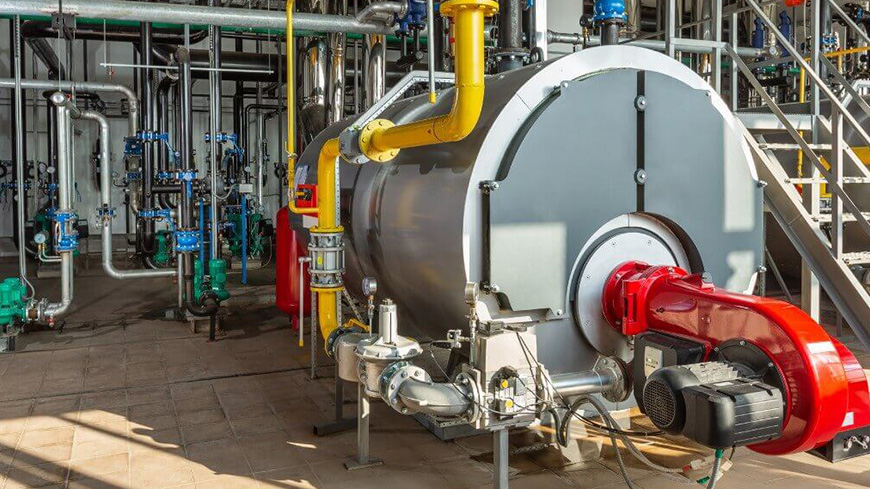
Boiler systems operate at temperatures and can be prone to mineral deposits. Scale on heat-transfer surfaces can interfere with the operation of such equipment. Boiler systems operate at temperatures and can be prone to mineral deposits. Scale on heat-transfer surfaces can interfere with the operation of such equipment.
POLYMAN-1624 is also used in water‑treatment applications, which require control of calcium carbonate and calcium phosphate. In manufacturing water may contain minerals, varying temperatures and suspended solids. A polymeric dispersant helps formulators manage the behavior of minerals and particles in a water‑treatment program. I think a polymeric dispersant is very useful, for keeping water‑treatment programs stable.
The solubility of the product in water makes it suitable for consideration in water-based chemical formulations. However, compatibility should be confirmed with the ingredients prior to commercial use.
When Should You Consider a Terpolymer?
The selection of a Carboxylate-Sulfonate-Non-Ionic Terpolymer can be considered when a treatment program has related requirements, rather than a single issue to address.
- High water hardness
- Calcium-based scale potential
- High concentration cycles
- Suspended mineral particles
- Iron-related deposits
- Changing industrial water chemistry
- High electrolyte concentration
- A requirement for dispersion
- A requirement for scale inhibition
- A water-based treatment formulation
How to Evaluate POLYMAN-1624 Before Commercial Use
- Understand the industrial water chemistry. Begin by examining the hardness, alkalinity, dissolved minerals, pH, temperature, conductivity, suspended solids and other relevant water parameters.
- Identify the deposit. Not all deposits have the same chemical composition. Determining whether calcium carbonate, calcium phosphate, calcium sulphate, iron or mixed deposits are the primary concern can aid the selection of POLYMAN-1624.
- Check existing treatment chemicals. The polymer should be evaluated with phosphonates, biocides, corrosion inhibitors, dispersants and other chemicals present, in the formulation.
- Test concentrations. There is no universal dosage, which will be appropriate for every system. Controlled testing can help to establish the concentration, which is required for the water chemistry and operating conditions.
- Evaluate under operating conditions. Conduct tests under operating conditions to confirm the performance of POLYMAN-1624.
Laboratory testing should be followed by field evaluation, where practical. Temperature, concentration cycles, residence time and other operating conditions can affect the outcome.
Choosing a Carboxylate-sulfonate-non-ionic terpolymers Supplier
When searching for a Carboxylate-sulfonate-non-ionic terpolymers Supplier, buyers should look beyond the price of the product.
Industrial water-treatment polymers become part of a chemical program, where the consistency of the product, technical information, application understanding, packaging, handling guidance and communication can all play a role.
MAXWELL ADDITIVES manufactures specialty chemicals and lists POLYMAN-1624 among its ter-polymer products. The POLYMAN range is intended for water-treatment and other industrial applications. Polymers can be used in combination with treatment chemicals.
For buyers, who work with a supplier, who can provide product information and support application evaluation, can simplify the selection process.
Handling and Storage of POLYMAN-1624
Proper handling is part of the use of any chemical.
MAXWELL ADDITIVES product information recommends avoiding contact with the eyes and prolonged skin contact. Gloves and goggles should be worn while handling POLYMAN-1624. In the case of skin contact, the affected area should be washed with plenty of water. Eye contact requires flushing with plenty of water and prompt attention.
POLYMAN-1624 is described as -flammable and non-combustible. It should be stored, under shade, away from sunlight.
Always follow the product safety documentation and handling instructions, which are provided by MAXWELL ADDITIVES.
Why Choose Maxwell Additives for POLYMAN-1624?
The selection of a polymer involves more than the identification of a chemical category. The knowledge of a supplier, technical documentation, manufacturing capabilities and understanding of application requirements can also affect the purchasing decision.
MAXWELL ADDITIVES offers POLYMAN-1624 as part of its POLYMAN range of specialty polymers for water treatment and industrial applications. The company’s published product information covers POLYMAN-1624 characteristics, intended uses, handling and packaging. This enables industrial buyers to evaluate POLYMAN-1624 against their formulation requirements.
For applications, which involve scale control and mineral management, as well as dispersion, POLYMAN-1624 can be examined on the basis of the water chemistry and operating conditions, rather than as a universal solution.
Conclusion
POLYMAN-1624 is a specialty terpolymer, which is intended for formulations where scale inhibition, mineral management and particle dispersion are of importance. POLYMAN-1624 carboxylate, sulfonate and non-ionic characteristics offer an approach to systems, which need to address calcium carbonate, calcium phosphate, calcium sulphate, iron and suspended mineral matter.
For users, the most effective way to select a Carboxylate-Sulfonate-Nonion Terpolymer is to consider the complete operating environment. Water chemistry, temperature, hardness, concentration cycles, existing treatment chemicals and deposit type should be evaluated prior to determining the formulation and dosage.
With testing and technical evaluation, POLYMAN-1624 can be considered as part of a wider industrial water-treatment strategy, where scale control and dispersion need to work in combination.
Frequently Asked Questions
1. What is POLYMAN-1624?
POLYMAN-1624 is a specialty low-molecular-weight polymer used as a dispersant and scale inhibitor in water-treatment and water-based formulations. MAXWELL ADDITIVES describes POLYMAN-1624 as a Carboxylic-Sulphonate Ter-polymer.
2. What type of polymer is POLYMAN-1624?
POLYMAN-1624 belongs to the Carboxylic-Sulphonate Ter-polymer category. POLYMAN-1624 combines carboxylate, sulfonate and non-ionic characteristics.
3. What types of scale can POLYMAN-1624 help control?
According to MAXWELL ADDITIVES product information, POLYMAN-1624 can inhibit calcium carbonate, calcium phosphate and calcium sulphate scale. POLYMAN-1624 also provides iron stabilization.
4. Is POLYMAN-1624 water soluble?
Yes. MAXWELL ADDITIVES states that POLYMAN-1624 is soluble in water, in all proportions.
5. Is POLYMAN-1624 a dispersant?
Yes. POLYMAN-1624 is described as a dispersant and scale inhibitor for water-treatment applications.
6. How is POLYMAN-1624 dosage determined?
There is no dosage, which is suitable for every application. Dosage should be established according to water chemistry, hardness, temperature, concentration cycles, deposit type and other chemicals present in the treatment program. Controlled testing is recommended prior to implementation.
7. Where can I find a Carboxylate-sulfonate-non-ionic terpolymers Supplier?
Industrial buyers should evaluate suppliers on the basis of product quality, technical documentation, application support, consistency and suitability for the intended treatment system. MAXWELL ADDITIVES lists POLYMAN-1624 among its specialty ter-polymer products.
8. Is POLYMAN-1624 suitable, for every water system?
Not every polymer is automatically suitable, for every water system. POLYMAN-1624 must be evaluated against the water chemistry, operating conditions, treatment chemicals and performance requirements of the application.
Related Posts