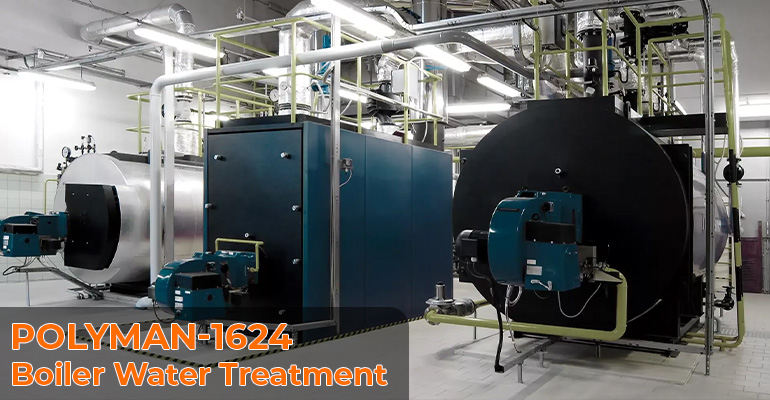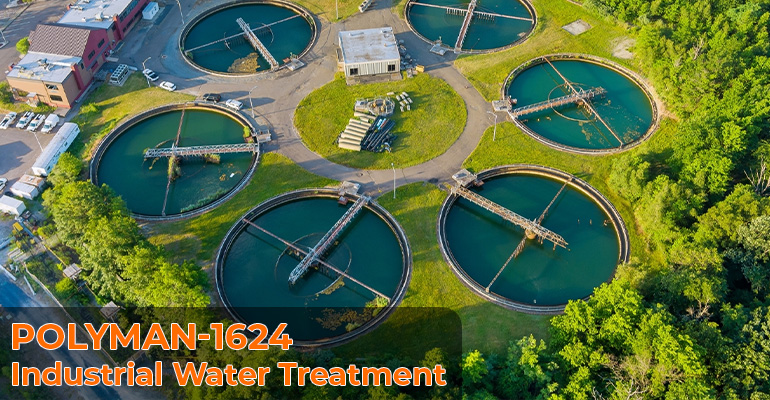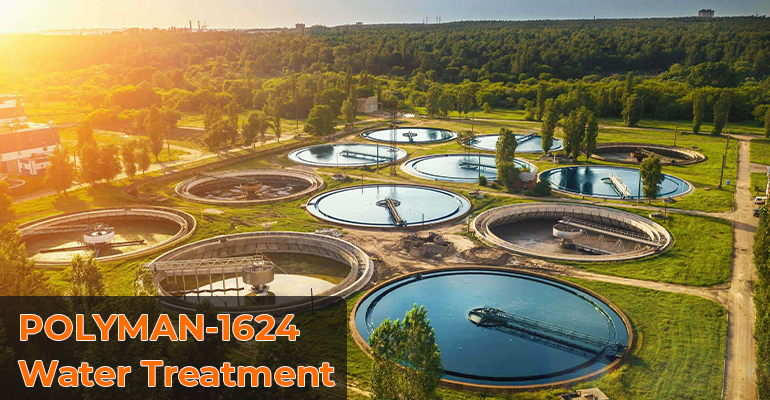
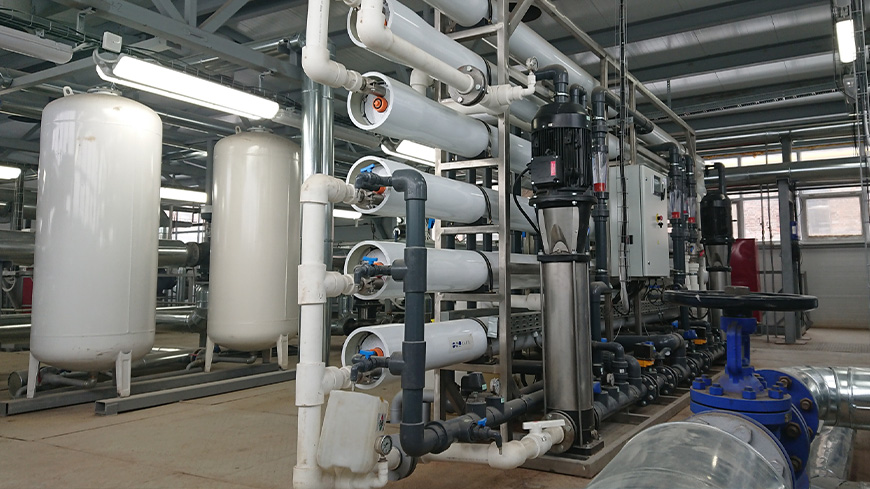
A terpolymer such as POLYMAN-1624 can provide a solution. POLYMAN-1624 is a specialty polymer from MAXWELL ADDITIVES designed for water treatment and water-based applications where mineral control, scale inhibition and particle dispersion are required. It is available as a Carboxylate-Sulfonate-Non-Ionic Ter-polymer. This product comes in a low-molecular-weight water polymer. It is also a low-molecular-weight water- polymer. It is easy to use...
Carboxylic-Sulfonate-Non-ionic Ter-Polymer – POLYMAN-1624 for Industrial Water Treatment
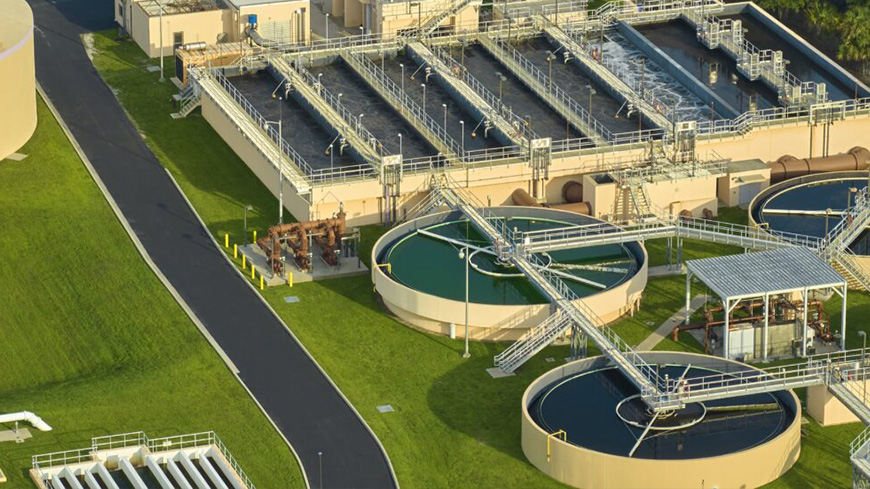
Industrial water systems rarely deal with only one water-quality challenge. Hardness, dissolved salts, suspended particles, temperature, concentration cycles, and changing operating conditions can all influence scale formation and deposit control. A Carboxylic-Sulfonate-Non-ionic Ter-Polymer such as POLYMAN-1624 can be considered when a treatment formulation needs polymeric support for mineral control and dispersion. This article explains what POLYMAN-1624 is, how its chemistry fits into water-treatment programs, its important characteristics, applications, selection considerations, and practical handling points.
What Is POLYMAN-1624?
POLYMAN-1624 is a specialty polymer from Maxwell Additives’ POLYMAN range. It is commercially described as a Carboxylic-Sulphonate non-Ionic Ter-polymer and is intended for water-treatment and industrial applications where scale inhibition and dispersion are important. The manufacturer also identifies it as a low-molecular-weight polymer.
This distinction is useful. In a cooling-water circuit, boiler system, process-water line, or other recirculating system, dissolved minerals can become more concentrated as water is heated, evaporated, or repeatedly circulated. Under suitable conditions, those minerals can form deposits on equipment surfaces. Suspended particles can also agglomerate and contribute to fouling.
Understanding the Carboxylate-Sulfonate-Non-Ionic Ter-Polymer Structure
The name gives a useful indication of the polymer’s chemical character.
1. Carboxylate functionality
Carboxylate groups are commonly associated with the interaction of polymers with dissolved mineral species and particulate surfaces. In water-treatment formulations, this functionality can contribute to deposit control and dispersion.
2. Sulfonate functionality
Sulfonate groups provide strong ionic character and can remain useful across a broad range of water conditions. Sulfonated polymer chemistry is commonly considered when treatment formulations need good dispersion of mineral or particulate material.
3. Non-ionic character
The non-ionic component gives the polymer another type of chemical functionality alongside the charged groups. In a multi-component treatment formulation, this can provide a broader interaction profile than relying on a single polymer functionality.
The exact behavior of a polymer, however, depends on its molecular structure, water chemistry, concentration, temperature, and interaction with other chemicals. Therefore, the chemical name alone should not be treated as a guarantee of performance in every application.
How POLYMAN-1624 Helps With Scale and Deposit Control
Scale control is not always a matter of simply preventing minerals from existing in the water. In many industrial systems, dissolved salts are already present and may become concentrated during operation.
A polymeric treatment can influence the process in several ways.
Crystal growth modification
When scale-forming salts begin to form crystals, polymer molecules can interact with developing crystal surfaces. This can interfere with normal crystal growth and alter the structure or behavior of the developing deposit.
Dispersion of particles
Small mineral or particulate particles can join together and form larger aggregates. A dispersant can help keep these particles distributed through the water rather than allowing them to rapidly settle or attach to surfaces.
Threshold effect
Low-molecular-weight polymers are commonly used in water treatment because they can influence deposit-forming substances at relatively low treatment concentrations. This concept is often referred to as the threshold effect.
Why Choose Maxwell Additives for POLYMAN-1624?
When selecting a Carboxylate-Sulfonate-Nonion Terpolymer, the product itself is only one part of the decision. Consistent product information, technical understanding, application support, and reliable communication with the supplier can also matter when developing an industrial water-treatment program.
Maxwell Additives offers POLYMAN-1624 as part of its specialty chemical and polymer range for industrial applications. The company provides product information covering its intended applications, general properties, handling, and packaging, which can help customers evaluate the polymer before use.
Which Scale-Forming Conditions Can Be Relevant?
According to Maxwell Additives’ product information, POLYMAN-1624 is positioned for control of calcium carbonate and calcium phosphate scale, as well as calcium sulphate, with iron stabilization also identified as a product function.
For example, calcium carbonate may become a concern when hardness and alkalinity conditions favor precipitation. Calcium phosphate can become relevant in systems containing phosphate-based treatment chemistry. Calcium sulphate may become more important as dissolved salts become concentrated.
The actual deposit chemistry should always be determined before selecting a treatment polymer.
Key Features of POLYMAN-1624
Several characteristics make POLYMAN-1624 relevant for industrial formulation work.
1. Combined polymer functionality
The product combines carboxylate, sulfonate, and non-ionic characteristics rather than relying on only one functional group.
2. Low-molecular-weight polymer
Maxwell Additives identifies POLYMAN-1624 as a low-molecular-weight polymer with an approximate average molecular weight of 2,000 in its published product information.
3. Scale inhibition
The product is intended to support control of several mineral scale types, including calcium carbonate, calcium phosphate, and calcium sulphate.
4. Dispersion
Its intended use includes dispersing mineral and particulate material, helping treatment programs manage materials that could otherwise contribute to deposits.
5. Water-compatible liquid form
The published product information describes POLYMAN-1624 as a liquid and states that it is soluble in water in all proportions.
6. Non-phosphorus formulation
Maxwell Additives describes the product as a non-phosphorus dispersant. This can be relevant when developing treatment programs where phosphorus input needs to be considered.
Where Is POLYMAN-1624 Used?
The suitability of a Carboxylic-Sulphonate non-Ionic Ter-polymer depends on the treatment objective and water chemistry. POLYMAN-1624 can be evaluated in several industrial applications where scale control and dispersion are required.
Cooling Water Treatment
Cooling towers and recirculating cooling-water systems can experience increasing concentrations of dissolved minerals because of evaporation.
The polymer should normally be considered together with other components of the treatment program rather than as a stand-alone solution.
Boiler Water Treatment
Boiler systems operate under elevated temperature and often involve concentrated dissolved solids. Deposit formation on heat-transfer surfaces can interfere with efficient operation.
The correct treatment program should therefore be developed for the particular boiler system.
Industrial Process Water
Manufacturing operations may use water in washing, processing, heating, cooling, or other production stages. The water chemistry can change depending on the raw water source and materials entering the process.
Water-Based Formulations
The polymer can also be evaluated in water-based industrial formulations where dispersion and mineral management are relevant. The manufacturer lists POLYMAN polymers for applications extending beyond conventional water treatment, including industrial and formulation-related uses.
POLYMAN-1624 in High-Hardness Water
Hard water contains significant concentrations of dissolved calcium and magnesium. Depending on alkalinity, temperature, pH, concentration, and other conditions, these minerals can contribute to deposit formation.
For a high-hardness system, the treatment designer should look at:
- Calcium concentration
- Magnesium concentration
- Alkalinity
- pH
- Temperature
- Total dissolved solids
- Chloride and sulphate levels
- Silica where relevant
- Concentration cycles
- Existing treatment chemicals
- Suspended solids
- Iron and other metals
A polymer may perform differently when these parameters change substantially.
Why Concentration Cycles Matter
Recirculating water does not remain chemically identical throughout operation.
This means a treatment polymer that works under relatively mild water conditions may need to be evaluated differently when concentration cycles become high.
Even so, actual application performance should be established using the specific water chemistry rather than assuming that one polymer will behave identically in every system.
Factors to Consider Before Selecting POLYMAN-1624
Choosing a polymer should begin with the problem rather than the product.
1. Identify the deposit first
Before selecting an antiscalant or dispersant polymer, determine what is actually causing the deposit.
2. Check the operating temperature
Temperature can influence mineral solubility, reaction rates, polymer behavior, and deposit formation.
3. Review the pH range
The operating pH can influence both the water chemistry and the interaction between treatment chemicals and mineral surfaces.
4. Examine other chemicals
The polymer may be used alongside phosphonates, corrosion inhibitors, biocides, alkalinity-control chemicals, or other formulation components.
5. Consider the concentration cycles
Cooling systems operating at higher concentration may place greater demands on scale-control chemistry.
6. Evaluate suspended solids
If the system contains significant particulate material, dispersion performance becomes an important part of polymer selection.
7. Dosage: Why There Is No Single Universal Number
One of the most common mistakes in industrial chemical treatment is choosing dosage only from a general product recommendation.
Laboratory testing, jar testing, bottle testing, deposit studies, or controlled field trials can be used as appropriate to determine a practical treatment level.
POLYMAN-1624 Compared With a Conventional Single-Function Polymer
A conventional polymer may be designed around a more limited chemical functionality. A multi-functional polymer such as POLYMAN-1624 provides a different approach by combining multiple characteristics within the same polymeric material.
However, “more functional groups” does not automatically mean “better for every application.” A simpler polymer may be more appropriate when the water chemistry and treatment objective are straightforward.
Advantages of Using POLYMAN-1624 in a Treatment Program
When matched correctly to the application, POLYMAN-1624 can provide several practical advantages.
Its low-molecular-weight profile and multiple functional characteristics can also make it useful for systems where both dissolved mineral species and suspended particles need to be managed.
The important point is that these advantages depend on application fit. Product selection should always be linked to the actual water chemistry and process conditions.
Limitations and Practical Considerations
No water-treatment polymer should be treated as a universal answer to every deposit or fouling problem.
For example, if a cooling tower has poor blowdown control, very high suspended solids, or an uncontrolled biological problem, adding more polymer may not solve the underlying issue.
Good water analysis + appropriate chemical selection + correct dosage + proper system operation + regular monitoring
This approach is generally more reliable than relying on chemical dosage alone.
Compatibility With Other Treatment Chemicals
Industrial water-treatment formulations frequently contain several active ingredients.
Before combining POLYMAN-1624 with another product, compatibility should be checked under the actual formulation conditions.
Storage and Handling of POLYMAN-1624
According to Maxwell Additives’ published product information, POLYMAN-1624 is non-flammable and non-combustible and should be stored under shade away from direct sunlight. The manufacturer also recommends avoiding eye contact and prolonged skin contact and using suitable protective equipment such as gloves and goggles when handling the product.
The manufacturer’s published packing information lists 60 kg carboys and 240 kg polydrums.
How to Evaluate a Carboxylate-Sulfonate-Nonion Terpolymer for Your Application
If you are evaluating a Carboxylate-Sulfonate-Nonion Terpolymer, the best starting point is a clear description of the water system.
Choosing a Carboxylate-sulfonate-non-ionic terpolymers Supplier
When looking for a Carboxylate-sulfonate-non-ionic terpolymers Supplier, price should not be the only consideration.
For industrial buyers, it is also useful to discuss the actual water chemistry and intended application with the supplier instead of ordering a polymer solely from its chemical description.
When Should You Consider POLYMAN-1624?
POLYMAN-1624 may be worth evaluating when an industrial water-treatment program has one or more of the following requirements:
- Mineral scale control
- Dispersion of suspended particles
- Calcium-based deposit management
- Iron stabilization
- Treatment under changing water chemistry
- High hardness conditions
- High concentration cycles
- Water-based formulation compatibility
- A non-phosphorus polymer option
The final decision should be based on application testing and the complete treatment chemistry.
Conclusion
A Carboxylic-Sulfonate-Non-ionic Ter-Polymer can be a useful component of an industrial water-treatment program when scale formation and particle dispersion need to be managed together. POLYMAN-1624 combines carboxylate, sulfonate, and non-ionic characteristics and is commercially positioned by Maxwell Additives for scale inhibition, dispersion, and mineral-management applications.
For industrial users, the most practical approach is to treat POLYMAN-1624 as part of a complete treatment strategy rather than as a standalone solution. Proper water analysis, application testing, dosage optimization, and routine monitoring can help determine whether the product is suitable for the specific system.
Frequently Asked Questions
1. What is a Carboxylic-Sulfonate-Non-ionic Ter-Polymer?
A Carboxylic-Sulfonate-Non-ionic Ter-Polymer is a polymeric material combining carboxylic, sulfonate, and non-ionic chemical characteristics. Such polymers can be used in industrial formulations where mineral control and dispersion are required.
2. Can POLYMAN-1624 help control calcium carbonate scale?
Yes. The manufacturer’s published information identifies POLYMAN-1624 as capable of inhibiting calcium carbonate scale, along with calcium phosphate and calcium sulphate scale.
3. Can POLYMAN-1624 be used for iron stabilization?
Yes. Iron stabilization is one of the functions identified in the manufacturer’s product information. The actual treatment result will depend on the form and concentration of iron and the other conditions in the water system.
4. What factors affect POLYMAN-1624 dosage?
Dosage can be influenced by water hardness, alkalinity, pH, temperature, dissolved salts, cycles of concentration, suspended solids, deposit-forming materials, system volume, blowdown, and other treatment chemicals. Testing should be used to establish the appropriate dosage.
5. How should POLYMAN-1624 be stored?
The manufacturer’s published information recommends storing POLYMAN-1624 under shade and away from direct sunlight. Suitable protective equipment should be used during handling, and the current safety data sheet should be consulted for detailed storage and handling requirements.
Related Posts