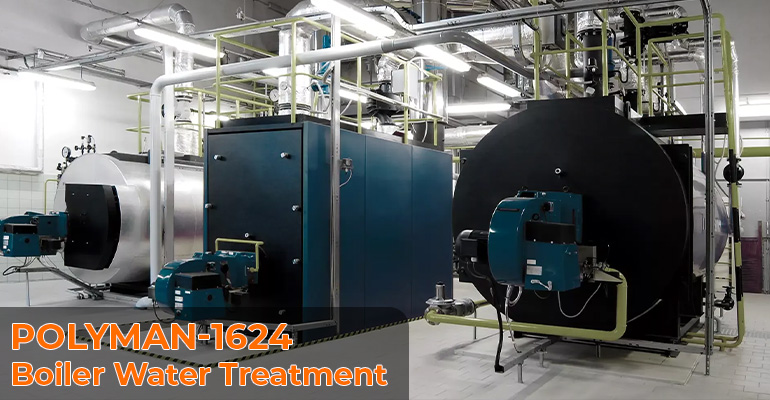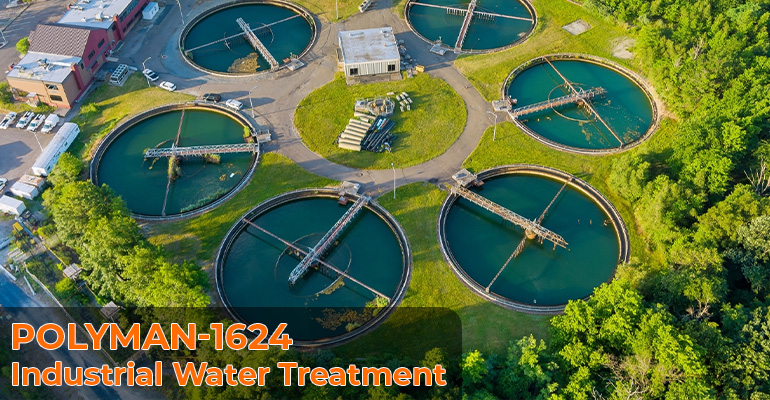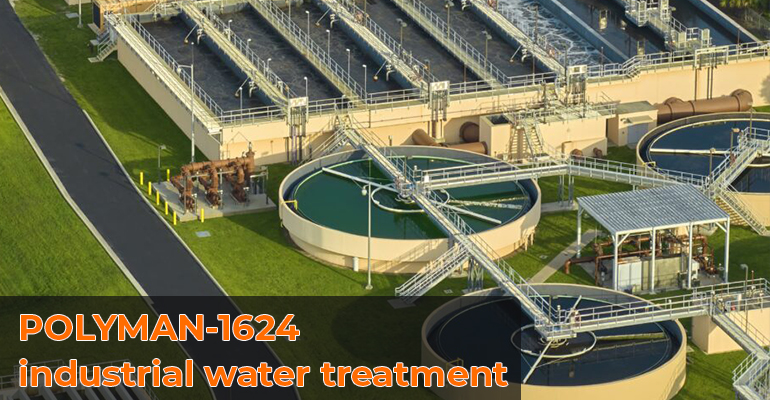
A terpolymer such as POLYMAN-1624 can provide a solution. POLYMAN-1624 is a specialty polymer from MAXWELL ADDITIVES designed for water treatment and water-based applications where mineral control, scale inhibition and particle dispersion are required. It is available as a Carboxylate-Sulfonate-Non-Ionic Ter-polymer. This product comes in a low-molecular-weight water polymer. It is also a low-molecular-weight water- polymer. It is easy to use...
Carboxylate Sulphonate Non Ionic Ter Polymer: POLYMAN-1624 Water-Treatment Use Description
As such,one must take a measured approach to choosing a polymer for application, as a Carboxylate Sulphonate Non Ionic Ter Polymer is a class of chemical that can be used to perform in diverse mixing conditions where preventing undesirable mineral cohesion and suspended matter clustering are a concern.
POLYMAN-1624, from Maxwell Additives, is a specialist polymer that the company classifies as a carboxylic‑sulphonate polymer. POLYMAN-1624 is mainly used for water treatment. Cooling water treatment. It is also used in similar aqueous solutions.
Choosing a polymer by its name feels natural for an user.. A scientific approach is required to evaluate water treatment system performance. First you need to understand the water that is being treated. Then you must set a clear end goal, for the mixture. Finally you should run tests of the polymer in the real conditions that will be used. Water treatment system performance will be judged by how the polymer meets these tests. Those are the steps required to determine if POLYMAN-1624 is right for the given chemical treatment application.
What Is a Carboxylate Sulphonate Non Ionic Ter Polymer?
A Carboxylate Sulphonate Non Ionic Ter Polymer is a class of chemical with specific physicochemical properties that allow it to be used as a dispersant and scale inhibitor for a range of aqueous solutions.
As a product in the POLYMAN series from Maxwell Additives, POLYMAN-1624 is a low molecular weight polymer that is used in the aforementioned applications. It is recommended for water treatment applications and related uses. I find that the ability of this product its ability to disperse particles and its ability to prevent scale buildup makes it especially useful, in these situations.
The value of POLYMAN-1624 depends on the conditions where it is applied. When there is a water suspension changes can happen because of evaporation or re-circulation. These changes can cause the dissolved ions in the solution to reach saturation. When this happens minerals can start to come out of the solution. This can lead to deposits forming on surfaces, like pipes, heat exchangers and other equipment.
Similarly, suspended matter can bind together to form lumps or other undesirable accumulations. A polymer treatment can be necessary to avoid these issues, although the effectiveness of any given treatment can depend on the polymer’s grade, dosage, water properties, and chemical compatibility.
POLYMAN-1624 Overview: What Is It Used For?
POLYMAN-1624 is a dispersant and scale inhibitor that is used in water treatment applications. It performs two crucial roles for many polymer treatment processes, which are as follows:
1. Preventing scale formation
Scale can form when the conditions of a solution change, causing the dissolved minerals in it to precipitate out of the solution. This can occur in cooling water treatment systems where the water is evaporated, leaving behind the minerals dissolved in it.
For a water treatment solution, the relevant ions that can combine to form scale include calcium carbonate, calcium phosphate, and calcium sulphate. POLYMAN-1624, as a scale inhibitor, prevents this undesirable consequence, although its effectiveness will depend on the relevant application conditions as well as the composition of the water being treated.
2. Dispersing suspended particles
In a suspension, there are many particles and other matter that can come together to form undesirable deposits. Dispersants prevent this consequence by ensuring that the suspended matter in a solution remains in its dispersed state.
As a dispersant, POLYMAN-1624 can be used in a variety of applications where such an effect is desirable. It can be used for polymer treatment processes and similar applications that require a dispersant to keep the mixed solution’s suspended matter from binding together.
3. Stabilizing iron deposits
Iron deposits can cause issues in the same manner as other minerals and deposits. As such, they must also be prevented or otherwise controlled in a water treatment application. The manufacturer indicates that POLYMAN-1624 can also be used to stabilize iron deposits, although its effectiveness depends on the water conditions, including the relevant iron content and other factors.
Considering the above three points, it is possible to determine if POLYMAN-1624 is suitable for a specific water treatment application.
Why Water Analysis Matters Before Polymer Selection
One of the most important considerations when formulating a mixture is understanding the water that is being treated.
Without a relevant analysis, one cannot define the issue that a polymer treatment is meant to solve, or effectively assess a candidate polymer’s suitability for the application.
Below are several factors that should be reviewed by a formulator before choosing a polymer treatment product:
1. Checking water hardness
Water hardness can define how much calcium and magnesium a water sample contains. It is essential to understand the level in order to define the scale prevention requirements of the treatment.
2. Review alkalinity
Alkalinity is closely linked to pH levels and will affect the overall properties of the water solution. As such, it should be taken into account when selecting a polymer treatment product.
3. Measure minerals in water
Calcium, phosphate, sulphate, and other minerals can be present in water. Their levels will help define the requirements for a polymer treatment for scale prevention.
4. Examining iron and suspended matter
The level of iron and the amount of suspended matter in water defines its impact on the formation of undesirable deposits. It should also be considered alongside the mineral content to define the requirements for a polymer treatment.
5. Reviewing temperature and concentration cycles
For cooling water systems, evaporation can cause the concentration of minerals in the solution to increase. Temperature changes can also have a considerable influence on the properties of a solution. These factors must be taken into account for a polymer treatment application.
Conducting a general review of system conditions can be essential to determining the requirements for a polymer treatment application.
Evaluating POLYMAN-1624 Performance in Cooling Water Systems
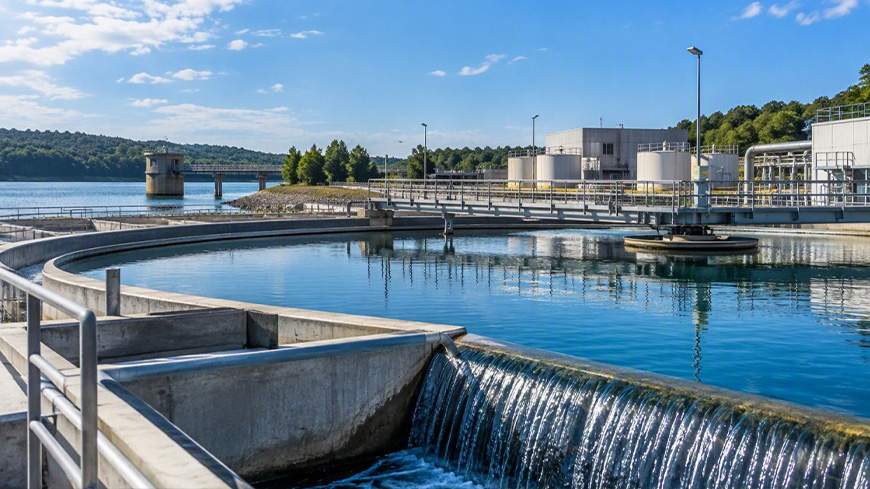
Water cooling systems are among the most challenging applications for a polymer treatment. The evaporation of water can cause a significant increase in the concentration of dissolved ions and minerals, which may lead to undesirable deposit formation.
For POLYMAN-1624, the following parameters should be examined in order to determine its effectiveness in a cooling water treatment application:
- What are the primary scale-forming minerals in the water?
- What is the hardness of the water being treated?
- What are the operating temperature and pH of the system?
- What are the concentration cycles of the cooling system?
- Does the system have suspended matter or iron deposits?
- What other water treatment chemicals are being used?
- Is the current treatment program properly maintained?
By answering these questions, it is possible to determine if POLYMAN-1624 is right for the application.
As a scale inhibitor and dispersant, POLYMAN-1624 is a key ingredient in a water treatment program. The properties of the water, the operating conditions of the system, the other chemicals used in the treatment program, and the maintenance schedule all have an impact on the effectiveness of the polymer.
How to Evaluate Polymer Compatibility Before Using It
Although there are many relevant considerations, a polymer candidate must be evaluated for compatibility with an existing mixture.
In a water treatment program, there are many chemical additives used to achieve the desired effect, and the compatibility between them will define the stability and performance of the final mix.
Prior to adding POLYMAN-1624 to a treatment program, a formulator must consider the following:
1. Reviewing the formulation
A polymer candidate’s compatibility must be tested in a formulation that also includes the other additives that will be used.
2. Understanding compatibility guidelines
A polymer candidate’s compatibility with a chemical formulation must be understood, including any technical and application notes from the manufacturer.
3. Testing in a laboratory setting
A compatibility test must be conducted in a laboratory setting, with relevant conditions to the intended use.
4. Reviewing changes and performance
The changes to the formulation, as well as the performance of the mix as a whole, must be reviewed to ensure that the polymer candidate performs reliably.
5. Assessing overall performance and application readiness
The performance of the polymer candidate must be assessed to ensure that the intended purpose is met before full-scale application in the treatment program.
Compatibility testing is essential. However, it must be supplemented with on-site monitoring and maintenance.
Planning a Practical Evaluation Trial
Conducting a controlled trial can be necessary to determine if a polymer product can meet the requirements of a water treatment program. In practice, vague statements are not appropriate when designing a trial – instead, there must be specific, measurable goals that can be achieved.
Below is a general outline of a practical trial plan:
Step 1: Collecting baseline data
Before a trial can be planned, there must be a baseline understanding of the current water conditions, chemical formulation, and operating conditions of the system.
Step 2: Defining the trial objective
With the baseline data, the objective of the trial can be set. It will define what aspects of the treatment program must be reviewed.
The objective can be as simple as “evaluating the effectiveness of a scale inhibitor”, or it can be multi-faceted, such as “reviewing the effectiveness of a combination of scale inhibitor, dispersant, and iron stabilizer”.
Step 3: Collecting data on recommended trial conditions
Using the information gathered in Step 1, the conditions for the trial can be determined. This will include consulting a polymer product’s technical data to find the relevant laboratory conditions.
Step 4: Comparing results and reviewing goals
The results of the trial must be compared to the baseline data and the objective to determine if the polymer candidate met the requirements.
Step 5: Continuing to monitor the program after launch
If the trial is successful, then the program must continue to be monitored in order to achieve consistent results.
It is vital to remember that the conditions of the water and the system can vary, and if they change significantly, the trial may need to be repeated.
The objective of a trial is to determine if a polymer candidate is suitable for a program, rather than a guarantee that it will perform reliably.
Product Properties To Consider When Buying POLYMAN-1624
When purchasing a polymer product, it is essential to review its technical specifications. The information provided will determine if the product meets the requirements of the application.
According to the product description provided by the manufacturer, Maxwell Additives lists the following properties for POLYMAN-1624:
| Property | Published information |
| Product type | Carboxylic-sulphonate -ionic polymer |
| State | Liquid |
| pH | 4.5 ± 0.5 |
| Density | 1.2 ± 0.02 |
| Solid content | 40.0 ± 2.0% |
| Average molecular weight | 2,000 |
| Water solubility | Soluble in all proportions |
The data above is provided by the manufacturer and should be compared to the technical specification sheet before buying the product, as the actual properties may vary slightly.
The characteristics listed above are helpful in determining the polymer’s general applicability, compatibility, and performance. However, they should not be viewed as an indicator of guaranteed performance in any water treatment application.
How to Choose a Carboxylate Sulphonate Non Ionic Ter Polymer Manufacturer
When choosing a manufacturer for a polymer product, one must consider multiple factors. Price is only one of them – a reliable supplier will be able to provide the required information and support for the application.
Below is a list of considerations when choosing a manufacturer for a Carboxylate Sulphonate Non Ionic Ter Polymer:
1. Product identification
The polymer grade, product code, and product information must be identified to ensure that the correct product is chosen.
2. Quality information
The manufacturer must be able to provide the technical specification sheet and safety data sheet for the polymer product.
3. Consistency information
The supplier must provide quality information on polymer lots, as each batch of the product can have slightly different specifications.
4.Packaging information
The manufacturer must provide packaging information for the polymer product.
5. Supply planning information
The supplier must be able to review the buyer’s requirements and discuss supply planning options, including delivery schedules and lot size options.
6. Application information
The buyer should provide information on the intended application and operating conditions when contacting the supplier.
By following these guidelines, buyers can ensure that they choose a reliable supplier that meets their needs.
Why You Should Choose Maxwell Additives for POLYMAN-1624
Based in Vadodara, Gujarat, Maxwell Additives Pvt. Ltd. is a manufacturer of specialty chemicals with a wide range of products, including the POLYMAN series. POLYMAN-1624, in particular, is a polymer that can be used for scale inhibition, as well as dispersing suspended matter in aqueous solutions.
Those seeking to purchase POLYMAN-1624 can request the technical specification sheet and other documentation from Maxwell Additives prior to buying the product.
By reviewing the application requirements, including the water conditions and intended purpose, prospective buyers can determine if POLYMAN-1624 is suitable for their needs. They can also discuss additional testing and practical trials if needed.
To learn more about POLYMAN-1624 and Maxwell Additives, please visit their website at the link below:
Additional Information on Storing and Handling POLYMAN-1624
Proper storage and handling are essential for many chemical products. For POLYMAN-1624, the product description recommends storing the product in shade, away from direct sunlight. The product should not be exposed to the eyes or skin for extended periods of time, and appropriate protective equipment must be worn when handling the product.
Before receiving or using POLYMAN-1624, one must review the relevant safety information, including the safety data sheet. The guidelines provided by the manufacturer must be followed when storing, handling, and disposing of the product.
Conclusion
When choosing a polymer for a water treatment application, one must consider the conditions that the polymer will be subjected to. Water hardness, mineral content, pH, temperature, suspended matter, and chemical compatibility all play a role in determining the performance of the polymer.
As a Carboxylate Sulphonate Non Ionic Ter Polymer, POLYMAN-1624 from Maxwell Additives is a chemical that can be used for scale inhibition and dispersant applications. To determine its suitability in a given application, its properties must be reviewed, water analysis must be conducted, and compatibility and practical trials must be evaluated.
In practice, an informed decision must be made by understanding the conditions of the water treatment application in order to choose the polymer that will perform reliably.
Frequently Asked Questions About POLYMAN-1624
1. What is a Carboxylate Sulphonate Non Ionic Ter Polymer?
A Carboxylate Sulphonate Non Ionic Ter Polymer is a type of polymer that contains carboxylate, sulphonate, and non-ionic components. It has several useful properties that make it suitable for use as a dispersant and scale inhibitor in aqueous mixtures.
2. What is POLYMAN-1624 used for?
POLYMAN-1624 is used for water treatment and other aqueous applications, where the prevention of undesirable scale and suspended matter cohesion are a concern. The product is primarily a scale inhibitor and dispersant.
3. What kind of scale can POLYMAN-1624 inhibit?
POLYMAN-1624 can be used to inhibit the formation of calcium carbonate, calcium phosphate, and calcium sulphate scale, among others. However, its effectiveness must be evaluated for each application, as it will depend on the relevant water conditions.
4. Why is water analysis important when selecting POLYMAN-1624?
Water analysis helps determine the level of minerals in a water sample, as well as its hardness, pH, iron content, and other characteristics. This information is vital in defining the requirements for a polymer treatment product.
5. Can POLYMAN-1624 be used in combination with other water treatment chemicals?
POLYMAN-1624 can be used alongside other water treatment chemicals in a chemical formulation. However, its compatibility must be established before use in a treatment program. Laboratory and compatibility testing must be performed in accordance with the intended use.
6. What product information should be reviewed before buying POLYMAN-1624?
Before buying the product, one must review the technical and safety sheets, as well as the product specifications, to ensure that the polymer is suitable for the intended application.
7. How can I buy POLYMAN-1624?
To buy POLYMAN-1624 from Maxwell Additives, one must visit their website and review the product specification sheet. The supplier can then be contacted in order to discuss the requirements and purchase terms.
Related Posts