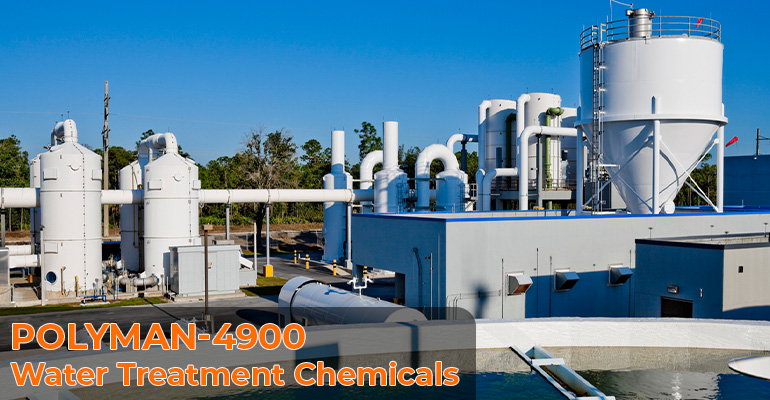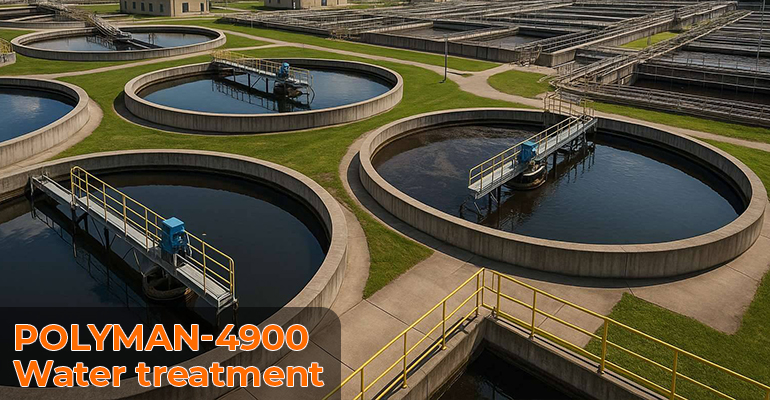
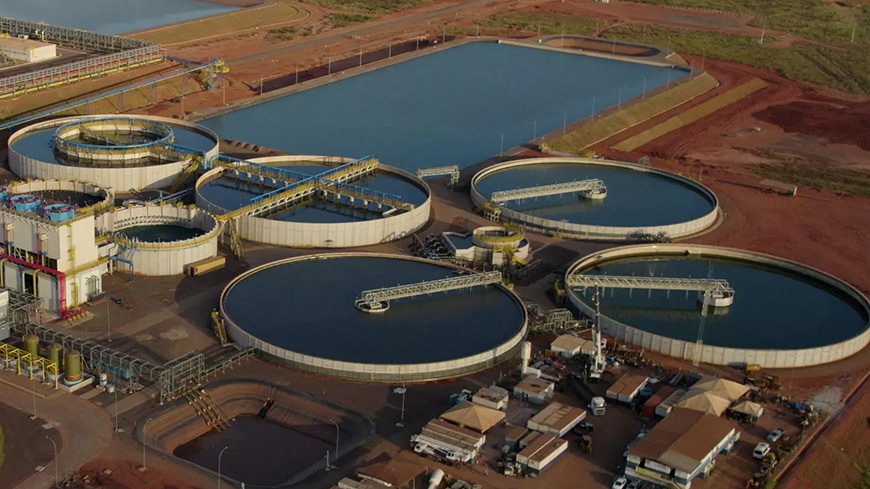
Industrial water treatment formulations are designed to deal with a range of issues such, as minerals, hardness ions and suspended particles. These problems can affect how equipment performs and how smoothly the entire process operates. If left unchecked these problems can lead to deposits of minerals or hardness materials. Such buildup often happens on heat‑transfer surfaces, pipes and other components and such buildup can reduce efficiency and cause problems...
Carboxylic Sulfonate Multi Polymer for Industrial Water Treatment
What is a Carboxylic Sulfonate Multi Polymer?
A Carboxylic Sulfonate Multi Polymer is considered for systems where an industrial treatment formulation encounters the need to manage mineral behavior, dissolved ions and suspended solids in water. The nomenclature reflects unique aspects of the polymer structure. Of considering individual chemical attributes this polymer creates additional opportunities for formulators developing treatment programs for complex water systems.
The carboxylic elements relate to the polymer’s carboxylic-acid chemistry while the sulfonated features contribute sulfonic-acid characteristics to the treatment system. The two elements affect the polymer’s ability to interact with mineral content and suspended particles. The combined functionality is especially relevant when multiple components in water could potentially combine, cluster or deposit.
The term “ polymer” can be misleading since various manufacturers consider different polymer structures. Maxwell Additives currently classifies POLYMAN-4900 within its Quad-Polymer group as a Carboxylic Sulfonate Multi Polymer and the product’s technical data includes carboxylic-sulfonate polymer chemistry.
Of individual polymer components the critical characteristic involves how the chemistry performs within a treatment formulation. Hardness, temperature, pH, salts, concentration levels, suspended solids and other components can all affect performance.
This makes a Carboxylic Sulfonate Multi Polymer especially valuable for formulators seeking to address a range of suspended solids and mineral interactions. Of viewing a scale formation as a singular concern the polymer can be integrated as part of a broader strategy to address mineral dynamics within a water system.
Why Polymer Structure Matters in Industrial Formulations
Industrial water chemistry is rarely consistent throughout a system’s operational cycle. Evaporation can increase mineral content, heat can impact dissolution rates and reused water can concentrate various components. A treatment polymer therefore requires the ability to perform within a dynamic chemical environment of a controlled laboratory setting.
The structure of a polymer becomes increasingly important when mineral content, suspended particles and other components exhibit varied reactivity to chemical interactions. A formulation featuring both sulfonate functionalities enables technical teams to address scale deposits and maintain dispersion within a water system when a homopolymer structure may prove less effective.
Carboxylic acid components are capable of engaging in metal-ion interactions while sulfonic acid components provide ionic characteristics relevant to polymer chemistry. Within the context of a multi polymer these elements can affect the behavior of suspended particles and deposits within a water system.
For example a water system may simultaneously contain calcium ions and suspended iron particles which prove challenging to a formulation. The combination requires a polymer structure capable of addressing both elements without adversely impacting the treatment program. Multi-functional polymer chemistry can therefore become relevant when multiple components require consideration at
The value of a polymer is determined through laboratory analysis within relevant applications. A formulation containing a Carboxylic Sulfonate Multi Polymer may prove successful within a cooling system yet less effective when applied to another water system due to variations in water quality, temperature, concentration levels and treatment requirements.
Features of Carboxylic Sulfonate Multi Polymer
1. Multi-Functional Polymer Chemistry
A Carboxylic Sulfonate Multi Polymer engages multiple elements within a single polymer system. This provides formulators with additional options for managing mineral content and suspended particles beyond the capabilities of individual homopolymer structures.
2. Carboxylic-Based Interaction
The Acid component of the polymer chemistry can react with dissolved metal elements. This can be advantageous when developing formulations for water systems containing hardness and other minerals.
3. Sulfonate Functionality
The Acid elements of the polymer provide ionic characteristics which can be beneficial for suspended particles and formulations seeking to maintain dispersion within a dynamic water system.
4. Designed for Complex Water Chemistry
Industrial water systems often have different dissolved and suspended materials. These can include things like minerals, particles and other substances that together create challenges. Because of this mix it’s important to design the treatment approach. Using a polymer can be helpful when the system needs to handle multiple types of buildup at once. This is especially useful when the problem isn’t one single mineral forming deposits but several combined elements working together. A multi polymer can tackle issues at the same time more effectively, than a single chemical solution.
5. Supports Dispersion-Oriented Formulation
The polymer structure can be considered for applications where dispersion of suspended particles becomes a priority. Enhanced dispersion capabilities prevent the formation of particle clusters within a water system.
6. Adaptable to Formulation Development
A Carboxylic Sulfonate Multi Polymer can be combined with phosphonates, corrosion-inhibiting components, other polymers and compatible elements within a formulation. The final blend should undergo careful analysis since the polymer’s properties can vary depending on the characteristics of other elements.
7. Relevant to Industrial Water Programs
The polymer’s chemistry enables consideration for water-treatment programs where scale management and suspended particle dispersion become priorities.
From Mineral Chemistry to Equipment Performance
Scale accumulation on industrial equipment is rarely the result of a singular occurrence. The phenomenon involves supersaturation of a solution, crystallization, adhesion to a surface and potential combination with other particles. The technical challenge for a treatment formulation lies in its ability to alter any aspect of the process.
A polymer can prove advantageous by altering the behavior of particles, ions or clusters within a water system or by eliminating them through filtration, mechanical means or chemical interaction. The latter is typically less desirable for a continuously operating industrial water system since scale deposits on heat-transfer surfaces or within piping may require system shutdown for removal.
Carboxylic Sulfonate Multi Polymer can be included as part of a treatment program. Its intended purpose is not to replace mechanical or chemical means of deposit removal but to be part of a system which continuously manages scale-forming minerals and suspended particles.
This can be critically important within a closed-loop water system. Water reuse can lead to higher concentrations of dissolved minerals while increasing the likelihood of scale formation. A polymer-based treatment program must consider this aspect of an industrial water system.
The same principle applies to an industrial process which involves elevated temperatures. Increased heat alters the characteristics of minerals within a water system. A polymer which remains effective at elevated temperatures should be considered over one which has only been tested at ambient conditions.
This is one reason why experienced formulators analyze the entire water system and not just the characteristics of a polymer offered by a supplier.
Selecting the Right Polymer for High-Variation Water Systems
One of the most common errors related to chemical selection involves supposing that all water-treatment systems are similar. Two industrial facilities may utilize similar equipment yet contain vastly different water qualities, mineral content, temperatures and concentration levels.
The first step involves determining the nature of the issue. If scale formation is the result of calcium deposits a formulation must be created which can manage this particular mineral. If iron particles or other suspended solids are the source of concern their potential impact on the water system should be analyzed. If a treatment program must address issues of corrosion a separate element should be considered.
Carboxylic Sulfonate Multi Polymer becomes relevant when any combination of the aforementioned issues arises. Of considering individual polymer elements formulators can evaluate the potential of a multi polymer to formulate a complete treatment program.
The characteristics of the polymer should be evaluated within the context of the overall treatment system. A polymer may prove more or less effective when combined with phosphonates, biocides, corrosion inhibitors, surfactants or other polymers. This requires laboratory analysis of the formulated blend rather than individual components.
For the purchasing professional this also alters the evaluation of a potential supplier. A polymer can be selected based on cost alone but other considerations include product quality, uniformity of production batches, application expertise and supply chain reliability.
Where Carboxylic Sulfonate Multi Polymer Can Add Value
1. Cooling Water Formulations
Cooling water systems involve the continuous circulation of water within components which transfer heat. The recirculating nature of the system involves higher levels of minerals, greater potential for scale formation and increased concentration of dissolved ions. An effective polymer can be selected as part of a treatment program which manages suspended particles and deposit-forming ions within such a system.
2. Process Water
Industrial processes introduce a variety of elements into a water system which can alter its mineral content. A polymer-based treatment program can be evaluated as an option for managing the behavior of these elements within the confines of an industrial process.
3. Industrial Formulation Development
Chemical manufacturers can utilize -functional polymers when developing proprietary treatment formulations. Experimentation with various polymer structures enables formulators to observe their impact on dispersion capabilities, mixing attributes, stability and mineral-management effectiveness within a treatment program.
4. High-Cycle Water Systems
Water systems which operate on a high-cycle basis require treatment programs which remain consistently effective. As mineral content increases within such a system a polymer must continue to be effective within the confines of a changing water chemistry.
5. Deposit-Control Programs
Water systems which exhibit consistent scale formation require treatment programs which manage this behavior. Such programs can incorporate a polymer which helps control this issue by evaluating deposit formation, system water quality, mineral concentration and equipment maintenance as relevant aspects.
Benefits of Carboxylic Sulfonate Multi Polymer
1. Broader Formulation Approach
The combination of elements allows formulators to consider a polymer within the context of a comprehensive treatment program. This is especially relevant when mineral management and particle dispersion must be addressed simultaneously within a water system.
2. Supports Mineral Management
The polymer can be considered within treatment formulations which involve scale-forming ions and minerals. Its overall performance depends on the nature of the water chemistry it will be exposed to within a given application.
3. Helps Maintain Dispersion
Suspended particles within a water system can be altered by introducing a polymer which modifies their behavior. This prevents the formation of particle clusters or deposits.
4. Applicable to Dynamic Conditions
Water chemistry can change due to evaporation, temperature, reuse and concentration levels. A multi polymer provides an additional option for a formulation which must remain consistently effective.
5. Supports Preventive Treatment
Of simply reacting to scale formation a polymer can be considered as part of a preventive treatment program which addresses mineral accumulation within an industrial water system.
6. Offers Flexibility, in Formulation
The polymer can be combined with other treatment elements to achieve formulation requirements. Experimentation with blending ratios helps establish effectiveness while ensuring formulation consistency.
7. Facilitates Comparative Analysis
Having a selection of polymer structures allows formulators to compare their effectiveness within a given application. A Carboxylic Sulfonate Multi Polymer can be evaluated against a homopolymer, copolymer, terpolymer or another multi polymer structure within actual process conditions.
How Maxwell Additives Approaches Specialty Polymer Solutions
Maxwell Additives Pvt. Ltd. Operates as a specialist in a range of chemical applications including water treatment, sugar processing and other industrial chemical applications. The current polymer portfolio includes structures such as homo-polymers, co-polymers, ter-polymers quad-polymers and Corin-polymers. Production facilities, research and development, technical personnel and logistics capabilities also support the company’s product offerings.
For industrial facilities considering a Carboxylic Sulfonate Multi Polymer this broader portfolio enables polymer selection based on an application rather than supposing a singular chemistry applies to all potential applications. Maxwell Additives includes POLYMAN-4900 within its Quad-Polymer group while other polymer structures within the portfolio provide alternatives when a specific application requires its properties.
Conclusion
The Carboxylic Sulfonate Multi Polymer provides a combination of elements which enable a comprehensive approach to an industrial polymer formulation. Its carboxylic and sulfonated characteristics allow it to be evaluated for applications where mineral-management properties and suspension-dispersion capabilities are required.
The inherent value of the polymer lies in its application rather than its structural composition. This means that its ability to function effectively depends on its compatibility with a given water chemistry, mineral content, temperature, pH, concentration cycle and other formulation specifics.
For the end-user this means that a consideration of the application rather than the product name becomes the primary selection criterion. Proper water analysis, formulation compatibility, dose evaluation and process observation can determine whether a Carboxylic Sulfonate Multi Polymer is the most advantageous option for a given use.
FAQs About Carboxylic Multi Polymer
1. What is a Carboxylic Sulfonate Multi Polymer used for?
A Carboxylic Sulfonate Multi Polymer is considered for a variety of potential applications. It would generally be considered for a water-treatment program where mineral behavior, suspended solids and deposits require careful management with a treatment program. The application would be considered for water systems where variability of hardness, temperature, concentration and particle suspension would limit the effectiveness of a simpler formulation option.
2. How do Acid and Sulfonic Acid features help the polymer perform?
Both Acid components add individual characteristics to a polymer. The Acid elements can react with metal ions while the Sulfonic Acid elements provide ionic properties to the polymer. Both elements can combine to create a formulation which effectively manages suspended particles. This is important when developing a formulation for a complex water system.
3. Is Carboxylic Multi Polymer the same as a terpolymer?
Not necessarily. Polymers can be classified differently based on both chemistry and the perspective of the manufacturer. Maxwell Additives considers POLYMAN-4900 to be a Carboxylic Sulfonate Multi Polymer within its Quad-Polymer category while other products fall into the ter-polymer classification. The proper evaluation should include a review of technical specifications.
4. Can this polymer be combined with phosphonates and other treatment elements?
It can be included as part of a treatment program based on its compatibility with other elements. Phosphonates, corrosion-inhibiting elements, biocides and other polymers can all affect the final formulation. Laboratory blending becomes more important than a theoretical evaluation of individual components.
5. What water conditions should be considered when evaluating the polymer?
The water conditions include calcium and magnesium hardness, alkalinity, pH, temperature, salt content, suspended solids, concentration cycles and the current treatment program. These factors help technical professionals determine whether the polymer’s properties might benefit a given application.
6. Why is laboratory testing important for a Carboxylic Sulfonate Multi Polymer?
Lab testing helps a formulator determine the possible applications for a polymer. The polymer can be tested for dosing, dispersion, compatibility, formulation stability and mineral-management effectiveness within a controlled setting before being included in an industrial water-treatment program.
7. How can industries identify a potential supplier for a Carboxylic Sulfonate Multi Polymer?
Industries should evaluate manufacturers based on their quality, research and development, formulation experience, supply chain management and understanding of their application. A supplier which appreciates the end-use and provides the necessary technical support can become a valuable partner for a long-term purchasing commitment.
Related Posts