A Carboxylic Sulfonate Multi Polymer is considered for systems where an industrial treatment formulation encounters the need to manage mineral behavior, dissolved ions and suspended solids in water. The nomenclature reflects unique aspects of the polymer structure. Of considering individual chemical attributes this polymer creates additional opportunities for formulators developing treatment programs for complex water systems...
POLYMAN-4900: Understanding Quad-Polymer Chemistry and Water Treatment Applications

I find that industrial water treatment rarely solves one issue. A single water system can contain hardness suspended particles, mineral deposits changes in pH, temperature swings and many other conditions at once. In such a case a Carboxylic Sulfonate Multi Polymer like POLYMAN-4900 can play a role in a well-planned treatment program.
I see that POLYMAN-4900 belongs to the Quad-Polymer series and is used for water treatment and for water-based formulations that need good dispersion and scale control. POLYMAN-4900’s chemistry combines functions so formulators can test one material for many treatment needs instead of relying on a single-purpose polymer.
I always remember that choosing a polymer must always match the water chemistry and operating conditions. A treatment chemical that works well in one system may need a dose or formulation in another.
What Is POLYMAN-4900?
I know that POLYMAN-4900 is a specialty polymer made for water-treatment jobs. POLYMAN-4900 links to carboxylic-sulfonate chemistry and is used when mineral deposits, suspended particles and dispersion must be controlled.
I notice that the product comes as a liquid and is made for water-based treatment mixes. POLYMAN-4900’s low-molecular-weight structure matters for how it disperses and controls scale.
I think it is better to see POLYMAN-4900 as more than a scale-control chemical. Than seeing POLYMAN-4900 merely as a scale-control chemical it is better to grasp how POLYMAN-4900’s different functional groups can cooperate inside a treatment mix.
I believe this wider view matters in industrial systems where many water-quality problems can happen at once.
Understanding the Chemistry Behind POLYMAN-4900
I note that POLYMAN-4900’s performance depends a lot on the groups inside its structure.
I focus on acid and sulfonic acid functions.
I see that carboxylic acid chemistry can help interact with hardness-forming minerals and affect crystal growth. Sulfonic acid chemistry gives strong ionic traits that are useful for handling suspended particles and dispersion.
When POLYMAN-4900 combines these traits the resulting material offers a mix of properties useful for industrial water treatment.
That is why I choose polymers like POLYMAN-4900 when a treatment program must tackle more than one deposit or particle-control problem.
Carboxylic Multi Polymer and Mineral Control
I worry that mineral deposits are a common worry in industrial water systems.
I notice that calcium and other hardness-related minerals can be hard to handle when water chemistry and operating conditions favor precipitation. When deposits start forming on heat-transfer surfaces, pipelines or other equipment system performance can slowly drop.
I think a Carboxylic Sulfonate Multi Polymer can be tested as part of a treatment program that aims to change how minerals behave.
I think the goal is not always to remove every mineral from the water. Instead the treatment plan can aim to control crystal growth boost dispersion and lessen how mineral particles form deposits.
I find that choosing a polymer is a part of developing a water-treatment formula.
How Supports Dispersion
I see that dispersion is another key function in industrial water treatment.
I note that water systems hold particles of minerals, iron compounds and other suspended materials. If these particles stick together and attach to equipment surfaces they can cause fouling and deposit buildup.
I think a suitable polymer can work with these particles and help keep them dispersed.
I especially note that POLYMAN-4900’s sulfonate groups are especially relevant because the strong ionic groups can change how polymer molecules talk to particle surfaces. When particles stay better dispersed they are less likely to form deposits.
I remember that real dispersion performance depends on the exact water chemistry, the amount of POLYMAN-4900, temperature, pH and other chemicals in the system.
The Role of Carboxylic Acid in Polymer Chemistry
I see that carboxylic acid chemistry plays a role in many water-treatment polymers.
I know that carboxylic acid chemistry plays a role, in many water-treatment polymers.
I see that carboxylic groups can touch ions and mineral surfaces. In polymer treatment systems this can help shape how mineral crystals form and behave.
I observe that the real benefit comes from how these groups act inside the polymer instead of alone.
I see that for POLYMAN-4900 the carboxylic part works with groups. This creates a polymer that can be tested for both mineral control and dispersion needs.
Why Sulfonic Acid Matters
I think the sulfonic acid part is another piece of understanding sulfonated polymer chemistry.
I know that POLYMAN-4900’s sulfonic acid part is another piece of understanding sulfonated polymer chemistry.
I see that POLYMAN-4900’s sulfonate groups give ionic traits and can help touch suspended particles. This is especially useful when a water-treatment mix needs dispersion performance.
When iron oxide or other particles are in a system keeping the particles spread out helps reduce deposits.
POLYMAN-4900 has groups, which give it a different performance compared to simple carboxylic polymers.
Carboxylate Sulfonate Nonion Tri Polymer: Understanding the Term
The term Carboxylate Sulfonate Nonion Tri polymer is used in conversations about polymer chemistry and water-treatment formulations.
For buyers and formulators the chemical name alone should not decide which product to choose.
Important questions include:
- What type of depositsre present?
- What is the hardness level of the water?
- What is the operating temperature?
- What is the system pH?
- Are iron or other suspended particles present?
- What other treatment chemicals are being used?
- Is the formulation intended for cooling water, process water or another application?
Answering these questions helps you decide if a specific polymer chemistry is right for the application.
Key Factors That Affect Performance
POLYMAN-4900 should not be evaluated alone; it must be considered within the water system.
1. Water Hardness
Calcium and magnesium levels can change the type and amount of mineral deposits that may form.
2. Temperature
Higher temperatures can alter mineral solubility. Affect deposit formation. Therefore POLYMAN-4900 must be tested at operating temperatures.
3. PH
pH changes can alter mineral behavior. How treatment chemicals interact with dissolved substances.
4. Suspended Matter
Iron oxides and other suspended particles can raise fouling concerns. The dispersion performance of POLYMAN-4900 becomes especially important in conditions.
5. Polymer Dosage
Using POLYMAN-4900 does not automatically mean better treatment. The right dosage must match the water chemistry and the treatment goal.
6. Chemical Compatibility
POLYMAN-4900 may be used in a broader treatment formulation. Check its compatibility with polymers, phosphonates, corrosion-control chemicals and other ingredients before full-scale use.
Where Can POLYMAN-4900 Be Considered?
1. Industrial Water Treatment
Industrial water systems have changing water quality and varying mineral levels. A suitable POLYMAN-4900 can become part of the program to keep the water system clean.
2. Cooling Water Treatment
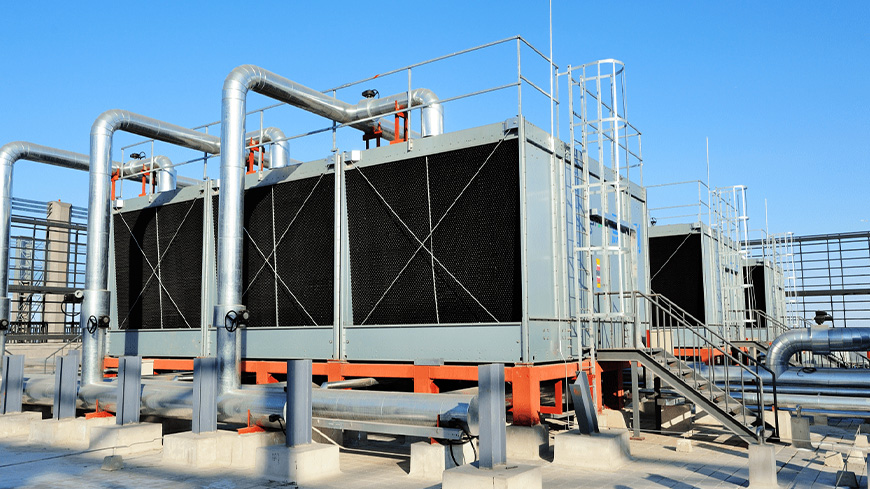
Cooling systems can face hardness suspended particles and deposit problems. POLYMAN-4900 treatment can support a strategy to control mineral buildup and keep heat-transfer surfaces clean.
3. Process Water Systems
Manufacturing processes may use water that promotes mineral precipitation or particle buildup. POLYMAN-4900 treatment can be considered where dispersion and deposit control are needed.
4. Water-Based Formulations
POLYMAN-4900 can also be used as an ingredient in water-based formulations when its functional traits support the goal.
How to Evaluate POLYMAN-4900 Before Industrial Use
Choosing POLYMAN-4900 should be based on testing, not assumptions.
- Analyze the water chemistry.
- Check hardness, pH, dissolved solids, alkalinity, temperature and relevant contaminants.
- Identify the treatment problem.
- Determine if the main concern is scale suspended particles, fouling or a mix of issues.
- Test POLYMAN-4900 under conditions.
- Laboratory tests should mimic the operating environment as closely as possible.
- Check compatibility.
- Evaluate POLYMAN-4900 with the chemicals in the formulation.
- Determine the practical dosage range.
- Find the concentration that delivers the needed performance without use.
- Monitor the system after implementation.
- Track deposit formation, water chemistry, equipment condition and overall performance.
This approach gives a reliable basis for deciding if POLYMAN-4900 fits the application.
Scale Inhibition
Scale inhibition is not just about stopping minerals from being in water.
The real challenge is controlling what those minerals do when water conditions change.
A well-designed POLYMAN-4900 treatment can influence crystal formation. Keep mineral particles dispersed. This can lower the chance of deposits forming on equipment surfaces.
POLYMAN-4900 can therefore be considered when a treatment program needs a polymer that both disperses and controls scale.
The actual result will depend on the water chemistry and the whole treatment program.
POLYMAN-4900 for Industrial Formulators
For manufacturers who develop water-treatment chemicals picking the polymer is part of the formulation design.
A polymer may influence:
- Scale-control performance
- Particle dispersion
- Formulation stability
- Compatibility with other treatment chemicals
- Dosage requirements
- Performance, under water conditions
I think formulators should look at the formulation instead of picking a polymer only by its name.
Lab testing can show if POLYMAN-4900 gives the mix of properties for the intended use.
What to Look for in a Supplier
The quality of a treatment program depends on the chemicals chosen and on how consistent the supply is.
When evaluating a supplier consider:
- Product specifications
- Batch-to-batch consistency
- Quality-control procedures
- Technical documentation
- Packaging options
- Storage recommendations
- Technical support
- Application understanding
- Production capability
- Supply reliability
Industrial users need a supplier who can grasp the intended application and give the technical information not treating every need the same.
Why Choose Maxwell Additives for POLYMAN-4900?
Maxwell Additives lists among its specialty polymers and puts it under Quad-Polymers. The company also makes other polymer chemistries for water treatment and industrial use.
Customers who look at POLYMAN-4900 can benefit from talking with the manufacturer about product details how to use it specs and supply needs.
The best choice depends on the customer’s water chemistry, operating conditions, treatment goal and how well it matches other chemicals.
Safe Handling and Storage
Industrial treatment chemicals must always be handled following the supplier’s technical and safety documents.
Proper protective gear must be worn when handling, transferring or dosing the chemicals.
Store the product as the manufacturer recommends and keep it away from storage conditions.
Before using POLYMAN-4900 for a job users must read the current technical and safety information that comes with it.
Conclusion
POLYMAN-4900 offers a polymer solution for industrial water treatment especially when mineral deposits and suspended particles must be controlled together.
Carboxylic and sulfonate parts give a chemistry for checking dispersion and scale control. Knowing how Carboxylic acid and sulfonic acid parts work helps formulators see why multi-functional polymers act differently than ones.
The phrase Carboxylic Sulfonate Multi Polymer describes the treatment idea but the real product should always be tested under the conditions it will be used.
For industries and formulators the best way is to test the polymer with the water chemistry, operating conditions, dosage needs and how it works with other treatment chemicals.
After testing POLYMAN-4900 can be part of a treatment program built for the needs of the industrial system.
FAQs
1. What is POLYMAN-4900?
POLYMAN-4900 is a specialty polymer used in water treatment especially where dispersion and scale control are needed.
2. What is the role of Carboxylic acid in water-treatment polymers?
Carboxylic acid parts can touch ions and mineral surfaces and they can affect how mineral crystals form and how dispersion behaves in a treatment system.
3. Is POLYMAN-4900 suitable for cooling water treatment?
POLYMAN-4900 can be tested for cooling water treatment where scale control and dispersion matter. Whether it works well depends on the water chemistry, operating conditions, dosage and the whole treatment program.
4. How is the dosage of POLYMAN-4900 determined?
There is no dosage that fits every water system. The dose should be set by looking at the water chemistry, hardness, temperature, pH, mineral levels, treatment goals and lab or field tests.
5. Why is polymer testing important, before application?
Testing tells you if the polymer works with the real water chemistry and operating conditions. It also helps set the dose and spot compatibility problems before use.
Related Posts