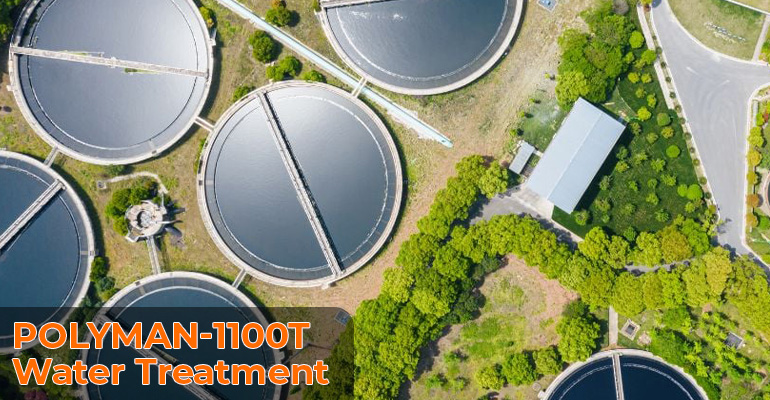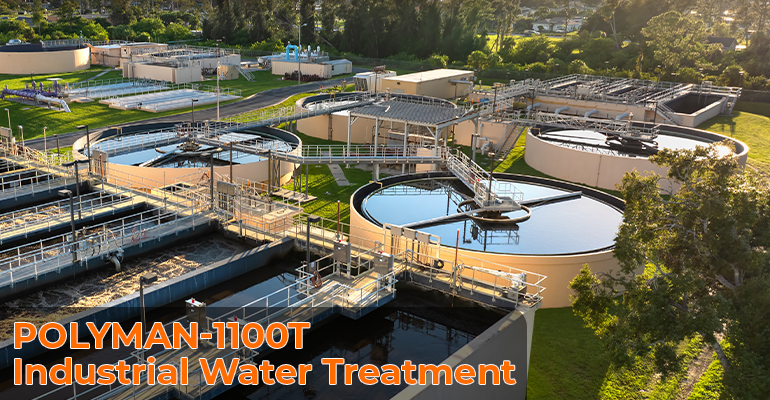
Non Flammable Phosphono and Carboxylic Acid refers to a polymeric substance with relevance to industrial water-treatment chemicals that target mineral control and dispersion. Maxwell Additives’ POLYMAN-1100T falls under the category of phosphino polymers. Products that are Non-Flammable and Non-Combustible are available in a liquid form and are completely water-soluble...
Combustibility and Flammability Chemicals: POLYMAN-1100T Phosphono and Carboxylic Acid for Industrial Water Treatment
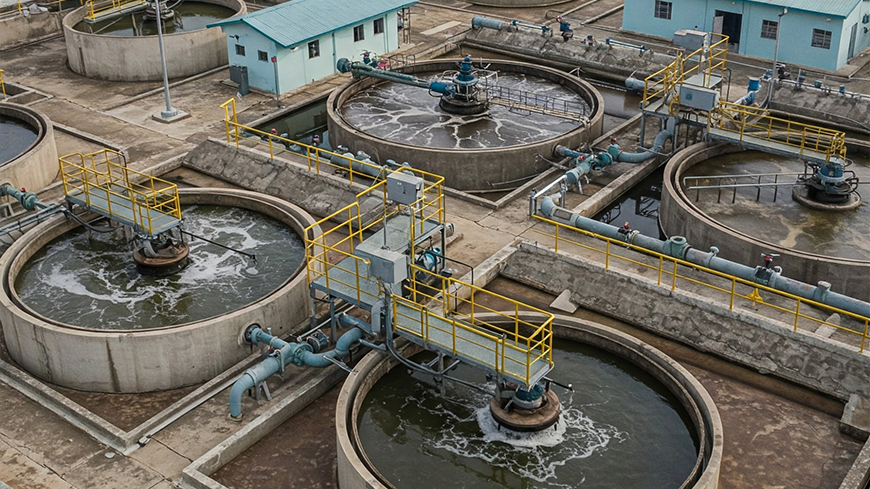
POLYMAN-1100T Phosphono and carboxylic Acid is a specialty polymer used in industrial water-treatment formulations. It belongs to the phosphino-carboxylate polymer family and can be considered when both mineral control and particle dispersion are important.
Unlike a treatment chemical selected only on the basis of its name, a polymer should be evaluated according to the actual water chemistry and operating conditions. Hardness, pH, temperature, dissolved minerals, suspended matter, and the presence of other treatment chemicals can all influence the final result.
What is POLYMAN-1100T Phosphono and Carboxylic Acid?
POLYMAN-1100T is a specialty Phosphino Carboxylate Multi Polymer designed for use in industrial water-treatment and water-based formulations. Its chemical structure contains functional groups that can interact with mineral particles and dissolved metal species, making it useful in treatment programs focused on controlling deposits and maintaining dispersion.
The material is commonly discussed under names such as Phosphino carboxylic acid and Phosphino carboxylic acid – PCA. These terms describe the polymer chemistry associated with this type of treatment material.
The role of the polymer is not simply to remove minerals from water. Instead, it can influence the way mineral particles behave in the system. By affecting particle interactions, it can support a treatment strategy designed to reduce uncontrolled deposition.
POLYMAN-1100T can therefore be evaluated where industries need a polymeric component for cooling-water or other industrial water-treatment formulations.
The product should always be assessed according to the actual application because different water sources can have very different mineral compositions and operating conditions.
How POLYMAN-1100T Supports Industrial Water Treatment
The main purpose of a polymeric treatment ingredient is to influence the behavior of particles and mineral-forming substances within the water.
During industrial operation, evaporation and circulation can increase the concentration of dissolved minerals. Temperature changes can further alter the conditions under which deposits develop.
POLYMAN-1100T can be incorporated into a treatment formulation to help control these changes through its polymeric action.
The polymer can interact with mineral surfaces and influence particle growth and dispersion. Instead of allowing particles to easily combine into larger masses, the treatment program can be designed to keep them in a more manageable condition.
This approach can be useful in cooling-water systems, industrial process-water applications, and other water-based formulations.
The final result depends on correct formulation design. A polymer should not be treated as a universal solution for every type of deposit. Laboratory screening can help determine whether POLYMAN-1100T is suitable for a particular water chemistry.
Understanding the Role of Phosphino Carboxylic Acid
Phosphino carboxylic acid chemistry is interesting because it combines polymeric behavior with functional groups capable of interacting with mineral species.
In a water-treatment system, dissolved calcium and other metal ions can contribute to the formation of deposits under suitable conditions. A polymer can influence these interactions and help the treatment formulation manage mineral particles.
The term Phosphino carboxylic acid – PCA is therefore relevant when discussing polymer-based dispersant and scale-control technologies.
The objective is not necessarily to eliminate every dissolved mineral from the water. Removing useful minerals completely would often be impractical. Instead, the treatment program aims to control their behavior so they are less likely to create operational problems.
This distinction is important when designing an industrial treatment program.
 Features of POLYMAN-1100T
1. Multi-Functional Polymer Chemistry
POLYMAN-1100T combines phosphino and carboxylate functionality within a polymeric structure. This gives formulators a treatment option that can be evaluated for both mineral-control and dispersion requirements. Its performance can be studied under different water compositions, temperatures, hardness levels, and pH conditions to identify suitable industrial applications.
2. Useful Dispersion Characteristics
The polymer can influence the interaction between suspended mineral particles and the surrounding water. This makes it suitable for formulations where maintaining particle dispersion is important. The actual result depends on mineral type, concentration, water chemistry, dosage, and the presence of other ingredients in the treatment program.
3. Suitable for Industrial Water Formulations
POLYMAN-1100T can be considered during the development of industrial water-treatment products. Rather than being limited to one specific process, it can be evaluated for applications where scale and particulate management are required. Formulators can adjust the treatment system according to the conditions found at the customer’s facility.
4. Supports Mineral Deposition Control
Mineral deposits can develop when dissolved substances become concentrated or when particles begin growing on equipment surfaces. POLYMAN-1100T can form part of a treatment program designed to influence these processes. Its effectiveness should be confirmed using the actual water chemistry and operating conditions of the intended application.
5. Useful Across Changing Operating Conditions
Industrial water conditions can change throughout the operating cycle. Temperature, concentration, hardness, and dissolved solids may fluctuate regularly. POLYMAN-1100T can be tested under these changing conditions to understand how consistently it performs and whether dosage adjustments are required for practical operation.
6. Can Be Evaluated With Other Treatment Chemicals
POLYMAN-1100T may be incorporated into broader chemical treatment programs. Formulators can study its compatibility with other polymers, phosphonates, corrosion inhibitors, and supporting ingredients. Such testing is important because the interaction between multiple chemicals can influence stability, appearance, dosage requirements, and the overall performance of the finished treatment product.
7. Suitable for Dosage Optimization
The correct polymer concentration depends on the application rather than a fixed universal value. POLYMAN-1100T can be evaluated at different dosage levels to identify a practical operating range. This helps formulators balance treatment performance with chemical consumption and avoid using more material than the system actually requires.
POLYMAN-1100T and Cooling-Water Management
Cooling-water systems are among the applications where polymeric treatment chemistry can play an important role.
Water continuously circulates through heat exchangers, cooling towers, pipelines, and related equipment. As part of this process, evaporation can increase the concentration of dissolved minerals.
If mineral particles are not properly managed, they may accumulate on surfaces or form larger deposits.
POLYMAN-1100T Phosphono and carboxylic Acid can be evaluated as part of a cooling-water treatment formulation to influence mineral particle behavior and support deposit control.
However, the polymer should be selected after considering the complete water profile. Calcium hardness, magnesium, alkalinity, chloride, silica, temperature, pH, and cycles of concentration may all affect the treatment requirement.
A well-designed program combines chemical treatment with regular water monitoring.
This makes it possible to identify changes early and adjust the treatment approach before deposits become a serious operational concern.
Benefits of POLYMAN-1100T
1. Supports Better Mineral Management
POLYMAN-1100T can contribute to treatment programs designed to manage mineral particles in industrial water. By influencing particle behavior, it may help reduce the tendency of certain deposits to develop under suitable conditions. Performance should always be confirmed against the specific water chemistry and operating environment.
2. Helps Maintain Particle Dispersion
Keeping mineral particles dispersed can make them easier to manage within a circulating-water system. POLYMAN-1100T can support this requirement when used at an appropriate concentration. Laboratory testing helps determine whether its dispersion characteristics match the mineral composition and operating conditions of the intended application.
3. Useful for Cooling-Water Programs
Cooling systems can experience increasing mineral concentration as water circulates and evaporates. POLYMAN-1100T can be considered as one part of a broader treatment strategy for such systems. Its use can be optimized through water analysis, dosage trials, and regular monitoring of system conditions.
4. Offers an Alternative Polymer Chemistry
Industrial formulators often compare different polymer structures before choosing a treatment ingredient. POLYMAN-1100T provides a phosphino-carboxylate approach that can be compared with other polymer families. This gives formulation developers greater flexibility when looking for chemistry suited to particular mineral-control and dispersion requirements.
5. Can Support Cost-Conscious Treatment Design
Chemical treatment costs depend on both product price and dosage. Testing POLYMAN-1100T across different concentrations can help identify an effective operating range. A properly optimized formulation can avoid unnecessary chemical consumption while still providing the treatment performance required by the industrial water system.
6. Supports Customized Treatment Programs
Every industrial water system has its own chemical profile. POLYMAN-1100T can be incorporated into treatment programs developed around specific hardness, temperature, pH, mineral concentration, and operating conditions. This makes application testing useful for creating a formulation that responds to the customer’s actual requirements rather than a generic water profile.
7. Can Contribute to Equipment Protection
Uncontrolled deposits may interfere with heat transfer and increase cleaning requirements. By supporting mineral dispersion and deposit management, POLYMAN-1100T can form part of a treatment strategy intended to keep water-contact equipment operating more consistently. The level of protection depends on the complete treatment program and system conditions.
Conclusion
POLYMAN-1100T Phosphono and carboxylic Acid is a specialty polymer that can be considered for industrial water-treatment formulations requiring mineral management and dispersion support.
Its phosphino-carboxylate chemistry provides a different formulation approach compared with simpler polymer structures. It can be evaluated for cooling-water systems and other water-based industrial applications where controlling particle behavior is important.
However, successful treatment depends on more than selecting a chemical. Water chemistry, operating temperature, hardness, pH, concentration, dosage, and compatibility with other treatment ingredients all need to be considered.
The best way to establish suitability is through laboratory evaluation followed by controlled application testing.
For industries exploring Phosphino carboxylic acid, Phosphino carboxylic acid – PCA, or Phosphono and carboxylic Acid technologies, POLYMAN-1100T can be evaluated as part of a carefully designed treatment strategy.
FAQs
1. What is POLYMAN-1100T used for?
POLYMAN-1100T is a polymeric water-treatment chemical that can be used in formulations where mineral deposition and particle dispersion need to be managed. It is particularly relevant to industrial and cooling-water treatment programs, although the appropriate application and dosage should be determined through testing.
2. What does Phosphino carboxylic acid – PCA mean?
Phosphino carboxylic acid – PCA refers to a phosphino-carboxylate polymer chemistry used in water-treatment applications. The functional groups within this type of polymer can interact with mineral-containing particles and support dispersion and deposit-control strategies.
3. Is POLYMAN-1100T suitable for cooling-water treatment?
POLYMAN-1100T can be evaluated for cooling-water treatment because these systems often require control of mineral particles and deposits. The correct treatment concentration depends on factors such as hardness, alkalinity, temperature, pH, cycles of concentration, and other chemicals already present in the system.
4. How should the dosage of POLYMAN-1100T be selected?
There is no single dosage that applies to every industrial system. The recommended concentration should be established through laboratory testing using representative water. Several dosage levels can be compared to identify the balance between treatment performance, water chemistry, and chemical consumption.
5. Can POLYMAN-1100T be used with other polymers?
Compatibility should be confirmed before combining POLYMAN-1100T with other polymers or treatment chemicals. A complete formulation test can check whether mixing causes precipitation, changes in viscosity, instability, or reduced performance. This is especially important when developing a multi-component commercial treatment product.
6. Where can customers obtain POLYMAN-1100T?
Customers looking for Phosphino Carboxylate Multi Polymer can contact Maxwell Additives PVT LTD for current product specifications, availability, packaging, and commercial information. Maxwell Additives lists POLYMAN-1100T within its specialty polymer range for industrial applications.
7. Why is testing important before using POLYMAN-1100T commercially?
Testing helps determine how the polymer behaves with the actual water and other treatment chemicals. Conditions such as hardness, temperature, pH, mineral concentration, and dosage can change performance significantly. A laboratory trial followed by controlled field evaluation provides a more reliable basis for commercial application.
Related Posts