Industrial water treatment isn’t about stopping one kind of deposit. Water can carry hardness, dissolved minerals, floating particles and other stuff that changes how it behaves when temperature, pH or concentration shifts. In these situations a Phosphino Carboxylate Multi Polymer like POLYMAN-1100T can be part of a plan to stop scale and keep particles from clumping...
POLYMAN-1100T: Phosphino Carboxylate Multi Polymer for Industrial Water Treatment
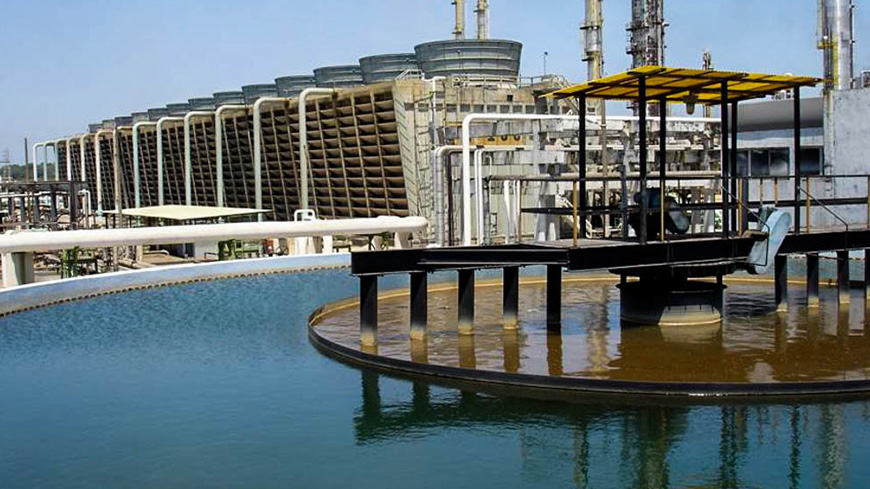
When I look at water‑treatment systems I notice industrial water‑treatment systems often face more, than one problem at the same time. Minerals can collect in the water leading to scale that blocks pipes. Makes things less efficient. Particles that create scale and material that stays in the water can also stop water from moving. Cause damage to equipment, over time. These issues together make it harder to keep systems running smoothly. The choice of polymer can then become a crucial element of the treatment plan.
POLYMAN-1100T is a Phosphino Carboxylate Multi Polymer suitable for water-treatment and water-based formula use. It acts as a dispersant and scale inhibitor, making it compatible with programs that require mineral control and particle spread. Maxwell Additives claims to offer POLYMAN-1100T as a polymer with low molecular weight that traps calcium well and offers performance over a range of pH, hardness and temperature.
Manufacturers and water-treatment experts can look into using the product when they need a polymer that helps control scale and keeps particles from clumping.. The amount to use and how to apply it must always be checked based on the water chemistry, the conditions under which it will be used and the full treatment plan.
What Is POLYMAN-1100T?
POLYMAN-1100T is a phosphino polymer that comes in liquid form for industrial water treatment and water-based formulas. Maxwell Additives mentions that the polymer serves as a dispersant and scale inhibitor for cooling-water treatment.
The polymer is part of the phosphino- chemistry family. It has features that help control mineral deposits and airborne particles in water.
In real-world use POLYMAN-1100T should not be seen as a chemical. Instead it should be considered as part of a treatment program. Water chemistry, temperature, pH, hardness, dissolved salts and other ingredients can all influence how well the polymer works.
That’s why testing the polymer, in the application is very important. It helps determine if the product will work properly in an industrial system.
Understanding Phosphino Carboxylic Acid. PCA
Phosphino acid – PCA refers to a polymer chemistry where phosphino or phosphonic groups integrate with carboxylic ones.
This chemistry plays a role, in water treatment. The groups can connect with dissolved metals and mineral particles. These connections can affect how scale forms, how crystals grow and how particles spread out in the water.
The actual performance of a PCA-based polymer depends on the water-treatment setting. A formulation designed for one water system may require testing or dosing than another due to varying water quality and operating conditions.
As such, manufacturers should view a PCA as a part of a treatment plan and not rely on the name when selecting the product.
How Does a Phosphino Carboxylate Multi Polymer Work?
A Phosphino Carboxylate Multi Polymer can support water treatment in different ways.
1. Scale Inhibition
The polymer can prevent the formation and growth of mineral deposits. Maxwell Additives states that POLYMAN-1100T is a scale inhibitor used in water treatment.
2. Particle Dispersion
A water-treatment polymer can ensure particles are dispersed to prevent them from sticking to equipment surfaces.
3. Calcium Management
POLYMAN-1100T is claimed by Maxwell Additives to trap calcium to help with the management of calcium-rich water to control scale formation.
4. Crystal Growth Modification
Scale control is not limited to the removal of deposits. Controlling the growth of mineral crystals can also reduce the formation of hard deposits in operation.
5. Deposit Control
By combining scale inhibition and dispersion the polymer supports a treatment plan that handles mineral deposits and particles. It works with methods to keep systems clean and running well. This way things don’t pile up. Operations stay smooth. The polymer plays a role, in maintaining performance over time.
Key Features of POLYMAN-1100T
POLYMAN-1100T offers characteristics that you can consider when choosing the product and formulating.
1. Low-Molecular-Weight Polymer
The product is claimed to be a low-molecular-weight polymer, supporting its dispersing and mineral-managing performance.
2. Liquid Form
POLYMAN-1100T comes in a liquid form, making it suitable for testing, in water-based treatments. Maxwells published spec lists it as a liquid.
3. Water Solubility
The product data states that POLYMAN-1100T dissolves in water at all levels, facilitating treatment formulation and testing.
4. Non-Foaming Dispersant
POLYMAN-1100T is claimed to be a non-foaming dispersant, which is essential in water-treatment applications where excessive foaming can hinder functions.
5. Broad Application Conditions
The product is claimed to perform across a broad range of pH, hardness and temperature levels. Testing in the application is required for confirmation.
6. Industrial Water-Treatment Use
POLYMAN-1100T is designed for water treatment, including cooling-water treatment and water-based formulations.
Applications of POLYMAN-1100T
1. Industrial Water Treatment
POLYMAN-1100T can be tested in water-treatment programs that require management of scale and suspended particles.
2. Cooling Water Treatment
Mineral deposits and scaling can be expected as cooling water systems become aged. The polymer can be a part of a treatment plan that keeps these problems from getting worse.
3. Scale Inhibitor Formulations
POLYMAN-1100T can be incorporated into formulations where the prevention of scale is central to the application.
4. Dispersant Formulations
POLYMAN-1100T’s dispersant properties make it a viable option for formulations that require particle dispersion.
5. Water-Based Formulations
As POLYMAN-1100T comes in a liquid polymer form, it can be tested in various water-based treatment formulations.
6. Industrial Process Water
Process-water systems can vary with mineral content, and operating conditions. POLYMAN-1100T can be selected for treating scale control and dispersion in such applications.
Polycarboxylic Antiscalant and Dispersant: What Does It Mean?
Polycarboxylic Antiscalant and Dispersant is one of the compounds of polymers which help in stopping the development of scales and aggregation of solid particles in water.
Antiscalant component of the product inhibits scaling. The dispersant part makes sure that particles stay separated in water of clumping together and forming deposits.
POLYMAN-1100T contains phosphine and carboxylic groups, and the chemical is offered by Maxwell Additives for both scale inhibition and dispersing applications.
The combination is effective when mineral management assistance is needed in the water treatment process.
Factors to Consider Before Selecting POLYMAN-1100T
Select a polymer based on the actual treatment requirement and not the name.
1. Hardness of Water
Amount of calcium and magnesium could affect the deposits of minerals. A test must be done to find this parameter.
2. PH
The pH level, in the water can change how the reaction happens.
3. Temperature
Operating temperature is essential as treatment performance can vary in process conditions.
4. Dissolved Minerals
I believe the minerals, in water must be examined before we go ahead with the treatment approach.
5. Suspended Particles
In the case of a system with suspended matter, ensure to evaluate the dispersion functionality during product evaluation.
6. Existing Treatment Chemicals
POLYMAN-1100T may be combined with chemicals for treating water. Compatibility testing will illustrate the overall formulation behavior.
7. Dosage
The correct dosage is not determined based on one system. It is crucial to establish the dosage through testing for the application.
Testing POLYMAN-1100T Before Industrial Application
The test in the laboratory is necessary for checking whether POLYMAN-1100T is compatible with a water system.
Step 1: Water Sample Analysis
An analysis of water samples needs to be carried out first taking into account such parameters as water hardness, pH value of water, its mineral and suspended contents.
Step 2: Concentration Setup
Conduct tests with varying concentrations of one fixed dosage.
Step 3: Observation of Scale Formation
Observe the change in scale formation in the treated samples as compared with the untreated ones.
Step 4: Observing Dispersion
Observe if the particles get dispersed or start to settle and deposit.
Step 5: Check Compatibility
If POLYMAN-1100T is incorporated with chemicals, check the chemical compatibility of the mix.
Step 6: Confirm Under Practical Conditions
Lab results should be weighted against the operating conditions of the application before finalizing the treatment program.
Benefits of Using POLYMAN-1100T
1. Supports Scale Control
POLYMAN-1100T can complement a treatment program that aims to limit mineral scale formation.
2. Provides Dispersant Function
POLYMAN-1100T offers features that support the management of particles in water-treatment systems.
3. Supports Calcium Management
POLYMAN-1100T traps calcium, which can be beneficial in situations where calcium causes issues with scale-control.
- Suitable for Water-Based Formulations
POLYMAN-1100T’s liquid, water-soluble nature enables it to be tested in water-based treatment formulations.
5. Non-Foaming Characteristics
POLYMAN-1100T is a non-foaming dispersant, suitable for industrial applications where foam control is a consideration.
6. Supports Industrial Water-Treatment Programs
POLYMAN-1100T can be integrated into cooling-water treatment where both dispersion and scale inhibition are required.
POLYMAN-1100T, as a Carboxylic Phosphine Acid. PCA Polymer
POLYMAN-1100T is suitable when a formulation requires phosphino-polymer chemistry to manage minerals.
The term Carboxylic Phosphine Acid. PCA is often linked with polymer treatment materials that enable scale control and dispersion. In the industry, one can consider the chemistry based on water quality, operating conditions and other chemicals in the treatment.
The choice of a polymer should not be made according to its general class. Manufacturers must test the material in the conditions that it will face to determine an understanding of dosage, compatibility and treatment performance.
Why Choose Maxwell Additives for POLYMAN-1100T?
Maxwell Additives lists POLYMAN-1100T in its specialty polymer line and refers to it as a Phosphino Carboxylate Multi Polymer for water treatment.
When selecting a Phosphino carboxylic acid manufacturer in India, buyers can consider factors such as:
- Product specifications
- Application information
- Manufacturing capability
- Quality-control practices
- Packaging requirements
- Supply planning
- communication
- Application-specific needs
Maxwell Additives has a specialty chemical range consisting of polymers, phosphonates, and other water treatment chemicals. The company’s range includes homo-polymers, co-polymers, ter-polymers, and quad-polymers.
Conclusion
POLYMAN-1100T is a Phosphino Carboxylate Multi Polymer that can be used for water treatment and water-based formulations where scale inhibition and particle dispersion are required.
Its low-molecular-weight structure, ability to trap calcium, water solubility and non-foaming dispersant traits make POLYMAN-1100T worthy of testing for the treatment programs.
The dosage and application must always be determined through testing. Water hardness, pH, temperature, dissolved minerals, suspended particles, and compatibility with other chemicals can all influence the outcome.
For manufacturers seeking Phosphino acid. PCA, the best option is to compare product specs and test the polymer under the conditions that it will face.
Frequently Asked Questions
1. What is POLYMAN-1100T?
POLYMAN-1100T is a phosphino polymer used in industrial water treatment and water-based formulations. It serves as a dispersant and scale inhibitor.
2. What is a Phosphino Carboxylate Multi Polymer?
A Phosphino Carboxylate Multi Polymer is a polymer-based water-treatment material that features phosphino and carboxylic components. It is used for mineral management, scale inhibition and particle dispersion.
3. What is Phosphino carboxylic acid. PCA used for?
Phosphino carboxylic acid. PCA is used in water-treatment applications where scale inhibition and dispersion are important. The exact application and dosage depend on water chemistry and operating conditions.
4. Is POLYMAN-1100T suitable for treatment?
Yes. Maxwell Additives lists POLYMAN-1100T for cooling-water treatment, industrial water treatment and water-based formulations.
5. What does Polycarboxylic Antiscalant and Dispersant mean?
Polycarboxylic Antiscalant and Dispersant refers to a polymer-based chemical used to facilitate mineral scale management and sustain particle dispersion in water-treatment systems.
6. How should POLYMAN-1100T dosage be selected?
The dosage should be established through testing. Water hardness, pH, temperature, mineral concentration, suspended matter, and other treatment chemicals can influence the required amount.
7. Is POLYMAN-1100T water soluble?
Maxwell Additives lists POLYMAN-1100T as soluble in water in all proportions.
8. Is POLYMAN-1100T a dispersant?
Yes. Maxwell Additives describes POLYMAN-1100T as a dispersant and scale inhibitor for water-treatment applications.
9. Where can I find a carboxylic acid manufacturer, in India?
Manufacturers and buyers should evaluate suppliers based on product specifications, quality information, application requirements, supply capability and technical support before selecting a material.
Related Posts