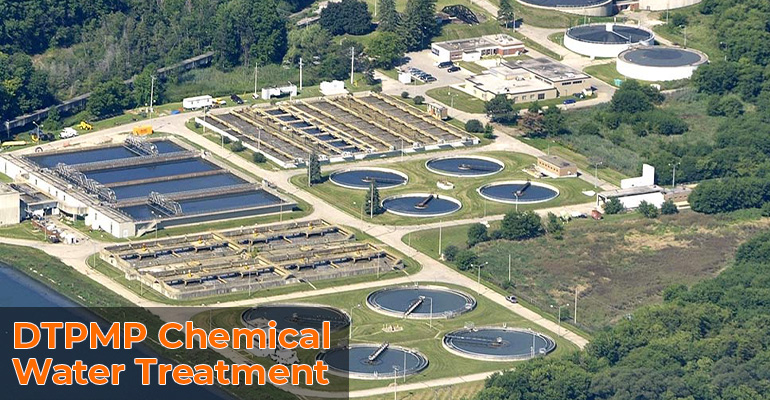
Diethylene Triamine Penta Methylene Phosphonic Acid DTPMPA, commonly called DTPMP or DTPMP Chemical, is an organophosphonate used in industrial formulations where metal-ion control, mineral-deposit management, and dispersion are important. Its molecular structure contains multiple phosphonic acid groups that contribute to its interaction with metal ions. Maxwell Additives identifies DTPMPA as PHOSPHOMAN-235 and lists applications including water treatment, detergents, oil-field chemicals, paints, pigments, paper, textiles, and industrial cleaning...
Diethylene Triamine Penta (Methylene Phosphonic Acid): Understanding DTPMPA for Industrial Applications
 Diethylene Triamine Penta Methylene Phosphonic Acid, commonly known as DTPMPA or DTPMP, is one of the phosphonate-based chemicals used in industrial formulations. It is valued for its ability to interact with metal ions and influence mineral deposition. The chemical can be incorporated into different treatment systems depending on the water chemistry, temperature, pH, and application requirements.
This article explains DTPMPA from a practical industrial perspective, including its chemistry, features, applications, benefits, and factors that users should consider before selecting a Supplier of DTPMPA Chemical.
What is Diethylene Triamine Penta Methylene Phosphonic Acid?
Diethylene Triamine Penta Methylene Phosphonic Acid is an organophosphonate compound containing multiple phosphonic acid groups attached to a nitrogen-containing molecular structure. Its chemical identity allows it to interact strongly with various metal ions present in industrial water and process streams.
DTPMPA is commonly considered for applications where controlling mineral precipitation, stabilizing metal ions, and maintaining cleaner process conditions are important. It can be particularly useful when several types of dissolved minerals are present and a treatment program requires a chemical with strong metal-binding characteristics.
One reason DTPMPA has gained attention is its ability to remain useful under demanding operating conditions. Depending on the formulation and system chemistry, it can be considered for high-temperature or alkaline environments where some conventional treatment materials may not provide the required performance. Maxwell Additives’ published product information also describes DTPMPA as a phosphonate with strong sequestration and threshold-inhibition characteristics.
How DTPMPA Works in Industrial Systems
DTPMPA works primarily through its ability to interact with metal ions and interfere with the conditions that encourage mineral precipitation.
When a water system contains scale-forming ions, they may combine under suitable conditions and create insoluble mineral compounds. Once these compounds begin growing, they can attach to heat-transfer surfaces, pipelines, membranes, and other equipment.
DTPMPA can bind with selected metal ions and help keep them in a more controlled chemical state. At low concentrations, phosphonates can also provide threshold inhibition, meaning they can influence precipitation without needing to bind every ion present in the system. Maxwell’s product information identifies both sequestration and threshold inhibition as important characteristics of its DTPMPA grade.
This makes the chemical useful in formulations where preventing the early stages of mineral deposition is more practical than dealing with heavy deposits later.
DTPMPA can also contribute to dispersion by influencing the behavior of solid particles. The exact mechanism and effectiveness depend on the mineral involved and the surrounding water chemistry.
Why DTPMPA is Considered for Difficult Water Conditions
Industrial water treatment becomes more challenging when systems operate at high temperatures, high alkalinity, or elevated cycles of concentration.
Under these conditions, mineral-forming substances can become more concentrated and the risk of deposition may increase. A treatment chemical must therefore maintain suitable activity while working alongside other formulation ingredients.
DTPMPA has characteristics that make it suitable for evaluation in such demanding environments. It is reported to provide useful scale and corrosion inhibition under high-alkali and high-temperature conditions, including applications involving carbonate, sulfate, and phosphate scales.
Features :
1. Strong Metal-Ion Interaction
DTPMPA contains multiple phosphonic acid groups that provide several sites for interaction with metal ions. This characteristic allows it to participate in metal-ion control within industrial formulations. Its strong binding behavior makes it useful when calcium, magnesium, iron, barium, or other metal ions need to be managed.
2. Effective Threshold Inhibition
DTPMPA can influence mineral precipitation even when used at relatively low concentrations. This threshold-inhibition behavior is useful in water-treatment formulations because the objective is often to prevent crystal growth rather than remove every dissolved mineral from the water.
3. High Thermal Stability
The chemical is suitable for evaluation in processes where elevated temperatures are involved. Its stability under demanding thermal conditions allows formulators to consider it for applications where water treatment chemicals must continue functioning as temperatures rise during industrial operation.
4. Useful in Alkaline Conditions
Certain industrial water systems operate with elevated pH and alkalinity, creating additional challenges for scale-control chemistry. DTPMPA can be considered in such environments because its phosphonate structure provides useful performance under alkaline operating conditions when properly formulated.
5. Supports Scale Management
DTPMPA can help control the conditions that encourage mineral deposits to develop on equipment surfaces. It can be used as part of a broader treatment strategy for carbonate, sulfate, and phosphate scale concerns, with performance depending on water composition and treatment dosage.
6. Versatile Formulation Ingredient
The chemical can be incorporated into different industrial formulations rather than being limited to one specific application. It can work alongside selected treatment ingredients, making it useful for formulators developing products for water treatment, cleaning, detergents, oilfield operations, and other process industries.
7. Useful for Complex Water Chemistry
DTPMPA can be considered when water contains several dissolved metal ions and mineral-forming substances at the same time. Its multifunctional phosphonate structure provides formulators with a treatment option that can address more than one aspect of metal-ion and precipitation control.
 Benefits :
1. Helps Control Mineral Deposits
DTPMPA can help reduce the tendency of scale-forming minerals to precipitate and develop into larger deposits. This makes it useful for treatment programs where mineral buildup could interfere with equipment operation. Its effectiveness should always be established according to the actual water chemistry and operating conditions.
2. Supports Better Equipment Performance
Uncontrolled deposits can affect heat transfer, fluid movement, and equipment cleanliness. By forming part of an appropriate scale-control program, DTPMPA can support cleaner operating surfaces and more stable process conditions, potentially reducing the frequency of interventions required to manage mineral-related operational problems.
3. Works Under Demanding Conditions
Industrial treatment systems may experience elevated temperature, alkalinity, and mineral concentration. DTPMPA is valued for its ability to remain useful under challenging conditions, making it an option for applications where treatment chemistry must perform beyond mild laboratory environments.
4. Helps Manage Metal Ions
Metal ions can participate in unwanted precipitation and chemical reactions. DTPMPA provides a practical way to influence their behavior through phosphonate chemistry. This can be particularly helpful in formulations where calcium, magnesium, iron, or other metal ions need to be kept under better control.
5. Offers Multiple Industrial Uses
One of the advantages of DTPMPA is its broad industrial relevance. It can be evaluated in water treatment, detergents, oilfield applications, pigments, paper, textiles, and cleaning formulations. This allows chemical formulators to use the same basic ingredient across different product-development requirements.
6. Can Support Treatment Efficiency
A well-designed treatment program aims to control mineral problems without unnecessarily increasing chemical consumption. DTPMPA can be tested at different concentrations to identify an effective working range. Such optimization can help manufacturers balance treatment performance with practical operating costs.
7. Provides Formulation Flexibility
DTPMPA can be incorporated into different chemical systems depending on the intended application. Its ability to interact with metal ions and influence precipitation gives formulators flexibility when designing specialized treatment products. Compatibility testing remains essential before combining it with other active ingredients.
Testing DTPMPA Before Commercial Use
Choosing a phosphonate solely from a product description can lead to disappointing results. Industrial water systems differ widely, even when two facilities appear to have similar applications.
A better approach is to test Diethylene Triamine Penta Methylene Phosphonic Acid using representative process water.
Important parameters can include hardness, alkalinity, pH, temperature, dissolved solids, iron, silica, sulfate, and other minerals relevant to the process.
The chemical can then be evaluated at several concentrations. Results can be compared against an existing treatment product or another candidate chemical.
This testing can reveal whether the chemical provides the expected scale-control or metal-management performance.
Compatibility should also be checked when DTPMPA is going to be mixed with other ingredients. A stable chemical in isolation may behave differently when incorporated into a multi-component formulation.
Conclusion
Diethylene Triamine Penta Methylene Phosphonic Acid, commonly known as DTPMPA or DTPMPA Chemical, is a versatile phosphonate used in industrial applications where metal-ion control, mineral precipitation management, and formulation stability are important.
Its multiple phosphonic acid groups give it strong interaction with metal ions, while its threshold-inhibition characteristics make it valuable in scale-control programs. The chemical can be considered for cooling-water treatment, boilers, oilfield applications, detergents, industrial cleaning, textiles, pigments, paper, and other process industries.
The most suitable use depends on the actual chemistry of the system. Water analysis, laboratory testing, dosage evaluation, and compatibility checks should therefore be part of the product-selection process.
For industrial buyers, finding the right Supplier of DTPMPA Chemical is equally important. Consistent quality, technical information, dependable supply, and appropriate handling guidance can make a significant difference when DTPMPA becomes part of a long-term industrial formulation.
FAQs
1. What is DTPMPA used for?
DTPMPA is mainly used in industrial formulations where controlling metal ions and mineral precipitation is important. Common areas include water treatment, cooling systems, boilers, oilfield operations, detergents, industrial cleaning, textiles, pigments, and paper processing. The exact application depends on the formulation and operating conditions.
2. Is DTPMPA the same as Diethylene Triamine Penta Methylene Phosphonic Acid?
Yes. DTPMPA is the commonly used abbreviation for Diethylene Triamine Penta Methylene Phosphonic Acid. DTPMP and DTPMPA are also used as short forms for this phosphonate chemical. Buyers should compare the technical specification of the supplied grade rather than relying only on the abbreviated name.
3. Can DTPMPA be used in cooling-water treatment?
Yes, DTPMPA can be evaluated for cooling-water treatment formulations where scale and metal-ion control are required. Its suitability and dosage depend on factors such as water hardness, alkalinity, pH, temperature, dissolved minerals, and the other chemicals present in the treatment program.
4. Does DTPMPA work in high-temperature systems?
DTPMPA is known for useful stability under demanding temperature conditions and can be considered for high-temperature industrial applications. However, actual performance depends on the complete treatment formulation and process environment. A controlled laboratory or field trial is recommended before establishing operating conditions.
5. How do I choose the right DTPMPA Chemical?
Start by identifying the application’s water chemistry and treatment objective. Check parameters such as hardness, pH, alkalinity, temperature, mineral concentration, and compatibility with other chemicals. Then compare suitable grades and conduct performance testing before selecting a commercial dosage and formulation.
6. Where can I find a Supplier of DTPMPA Chemical Vadodara India?
Industrial buyers searching for a Supplier of DTPMPA Chemical Vadodara India should evaluate suppliers based on product consistency, specifications, safety documentation, packaging, production capability, and delivery reliability. Maxwell Additives PVT LTD is one company buyers can contact to discuss DTPMPA Chemical requirements, product specifications, and supply options.
7. Can DTPMPA be used with other treatment chemicals?
DTPMPA may be combined with compatible scale inhibitors, dispersants, corrosion-control chemicals, or other formulation ingredients. However, compatibility should never be assumed. Manufacturers should perform formulation testing to check stability, precipitation, pH changes, and performance before commercial production.
8. What should be checked before purchasing DTPMPA?
Buyers should check active content, physical form, appearance, relevant quality parameters, packaging, storage requirements, batch consistency, technical documentation, and safety information. It is also useful to discuss the intended application with the supplier so the selected DTPMPA grade matches the actual process requirements.
9. Why is DTPMPA useful for industrial formulations?
DTPMPA combines metal-ion interaction with mineral precipitation control, giving it a broader role than a chemical selected for only one narrow function. This makes it useful for formulators developing products for different industrial environments where mineral deposits and metal-ion behavior can affect process performance.
Related Posts