Scale can form because of temperature, pressure and water availability...
Polyamines in Industrial Chemistry: Uses, Benefits and Safety
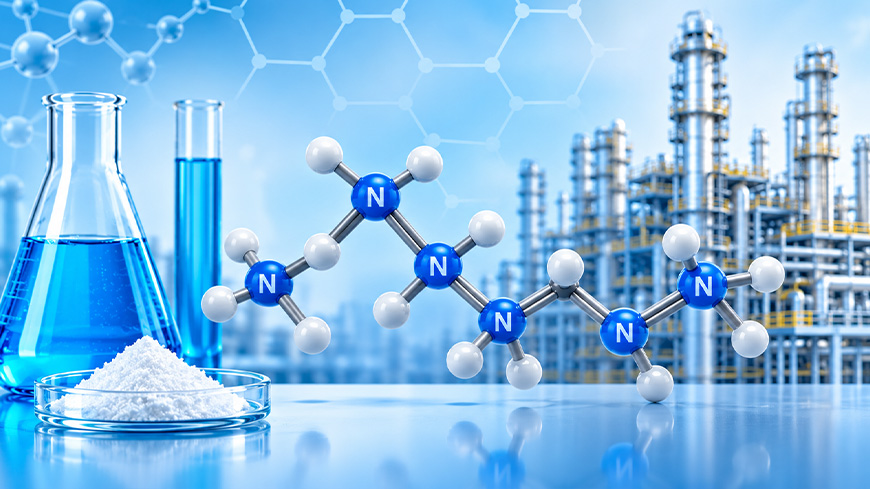
Polyamines may be used in water treatment, chemical production, polymer production and certain chemical formulations.
Depending on structure, molecular weight and the number and location of amine groups, different polyamines exist.
Some polyamines may be useful as intermediates. Others may be used in water treatment applications to help produce coagulation, clarification and removal of particles.
Knowing the differences in these types of polyamines is important in selecting a suitable product.
This article has described polyamines, including their properties, types, applications, advantages and considerations when deciding on a product.
What are Polyamines?
Polyamines contain two or more amine groups.
As these contain nitrogen atoms, polyamines can be reactive with other compounds.
Depending on the structure of the polyamine, polyamines may contain tertiary amine groups.
Different polyamines may be molecular, or polymer chains in which many nitrogen atoms are present.
Therefore different chemical properties may be associated with different polyamines.
Some polyamines may be useful in chemical production, while polyamino polymers are often useful in water treatment applications.
If a charged polyamine is added to water, it may cause charged particles in suspension to join together and thus can be removed from the water. Therefore polyamines can be found in water cleaning applications.
The effectiveness of polyamines in water treatment will depend on the composition of the product, concentration, molecular weight, charge and application.
Types of Polyamines
Different types of polyamines exist.
Despite containing amine groups, different polyamines have different structures and applications.
Low Molecular Weight Polyamines
These polyamines contain amine groups.
Ethylenediamine, diethylenetriamine and triethylenetetramine are examples. (Ethylenediamine)
Low molecular weight polyamines may be useful as intermediates or raw materials in chemical production.
Low molecular weight polyamines may be useful in the production of resins, additives, specific chemicals or other industrial materials.
Depending on the reaction and requirements, low molecular weight polyamines may be suitable.
Polymeric Polyamines
Polymeric polyamines contain amine like groups.
Some polyamino polymers may be useful in water or waste water treatment.
Depending on structure, polymeric polyamines may have a charge.
This allows interaction with charged particles.
Therefore, coagulation and separation of mixtures may occur.
Depending on the structure, polymeric polyamines may have different charges, molecular weights and properties to be useful in water treatment.
Epichlorohydrin Based Polyamines
Some polyamines used in industry are based on Epichlorohydrin and suitable amine compounds.
Epichlorohydrin based polyamines may be used as cationic coagulants in water/waste water treatment.
Depending on how they are polymerised and chemical structure, epichlorohydrin based polyamines will have differing levels of effectiveness.
Typically, epichlorohydrin based polyamines may be tested on their ability to remove particulates in suspension, decrease turbidity and break down particles.
Speciality Polyamine Derivatives
Some polyamines may be altered to have specific chemical properties.
Derivative polyamines may be useful in speciality chemical production, resin production, coating production and chemical formulation.
Depending on the amine groups contained in the polyamine, and requirements of the final product, different applications may be performed.
Not all derivatives will be suitable for all processes.
Why Important in Industrial Chemistry
Polyamines contain nitrogen groups and therefore are useful in reactions.
In production processes, polyamines may be involved in producing complex molecules.
In water treatment, charged polyamines may interact with particulate matter in solution, as well as other negative substances.
Therefore polyamines are useful in clarification and coagulation processes.
Polyamines may be useful as intermediates in producing chemicals and polymers.
Depending on the chemical structure, polyamines can be very versatile. It is important to choose the correct type of polyamine depending on the application.
For example, low molecular weight polyamines may not be suitable for waste water treatment as opposed to polyamines.
Main Applications in Industry
Depending on chemical structure, composition and conditions, polyamines can be used in a wide variety of processes.
Water Treatment
Some polymeric polyamines may be used in water treatment.
Water in industry may contain particulate matter in suspension, small particles and other impurities.
Some of these may be hard to remove due to charges preventing them from joining together.
Polyamines can reduce or neutralise charges.
This means groups of larger particles may form which can be removed by filtration.
Polyamines may be used in water treatment processes in industry to decrease:
- Particulate matter in solution.
- Turbidity.
- Coagulation.
- Clarification.
- Solid/Liquid separation.
- Overall improved water treatment.
The type of water treatment required will depend on the nature of the water.
Waste Water Treatment
In industrial waste water, particulate matter, coloured matter and other contaminants may be present.
Specific polyamine based coagulants may be used to help remove particles from water.
If the correct product and concentration is used in waste water, coagulation may be improved and particulate matter may be easier to remove.
Polyamines may be considered for waste water treatment in textile production, paper production and other industrial processes.
However, effectiveness of a product will depend on contents of the waste water and conditions.
It is important to test polyamines for different waste waters as they may be effective in one waste stream, but not another.
Paper/Pulp Production
Chemicals are used in paper and pulp production to aid production and water treatment.
Some cationic polyamines may be used during water treatment in production to aid clarification.
Polyamines may be useful in controlling particulate matter in solution and removing substances.
Depending on the process and properties of the formulation, some polyamine products may be useful in chemical processes in paper production.
Waste Water Treatment in Textile Production
Dye, particulate matter and other substances may be present in waste water from textile production.
Some specific polyamine based formulations may be used in water treatment processes.
Cationic polyamines may interact with charged dyed substances so that they can be removed using coagulation and separation.
However, this may not happen with all dyes.
Effectiveness of treatment will depend on the type of dye, chemical content of the waste water and concentration of chemicals.
Depending on the nature of the waste water, different polyamines may be used.
Production of Speciality Chemicals
Polyamines are important in production of speciality chemicals.
Some low molecular weight polyamines may be useful as intermediates.
I have seen polyamines in reactions to produce resins, additives and other industrial chemicals.
As they contain amine groups, they can be involved in many reactions.
Depending on their structure and production process, different applications may be possible.
Production of Resins / Polymers
Some polyamines may be useful in producing/altering materials.
They may be used as reactants, intermediates or in formulations.
For example, amine containing chemicals may be used in curing processes for epoxy resins.
Depending on the chemical structure of polyamines, different properties may be given to the final material.
Not all polyamines may be suitable for producing resins. Products should be carefully selected according to desired reaction and material properties.
Clarification of Process Water in Industry
Water is often treated in processes.
Particulate matter in solution may cause issues in processes. Requirements for treatment may be increased.
By adding polyamine based coagulants, separation of particles within the system may be improved.
Polyamines may be used in water treatment in conjunction with clarification, filtration or other water treatment methods.
Effectiveness of treatment will depend on type of particulate matter, chemical content of water and equipment used.
Role of Polyamines in Water Treatment
Understanding the role of polyamines in water treatment can help with determining a suitable product for an industrial application.
Fine particulates in water may have a charge.
This can make it difficult to remove particulate matter from water by sedimentation.
In some instances, cationic polyamines may be used to remove particulate matter.
Under certain conditions, addition of polyamines can reduce electrostatic repulsions between particles.
This is often due to charge neutralization and coagulation.
Once particles are destabilised, aggregations of particles can form.
Aggregations can be separated by treatment.
Charge Neutralisation
I have seen charge neutralisation occur with some polyamines.
Charged polymers interact with charged particulate matter in solution.
This causes less repulsion between the particles.
As a result, it may be easier to cause aggregation of particles.
Concentration of Chemical
The concentration of polyamines may be important.
If too few polyamines are present, poor coagulation may occur. If too many polyamines are present, treatment may be less effective.
Correct concentrations should be determined by testing.
Charge Density
Charge density refers to the amount of charge in a polymer.
In polyamines, charge density can affect how they interact with particulate matter in solution.
Depending on the application, different charge properties in polyamines may be required.
Molecular Weight
Depending on the application, the molecular weight of the polyamines chosen may alter effectiveness.
Some polyamines may be chosen to neutralise charges in particulates, or encourage aggregation.
Chemical composition of water
Industrial water may contain salty particulates and other compounds.
This can affect effectiveness of polyamines.
Depending on the water source a polyamine product may be very effective in one water source, but not in another.
Mixing Conditions
These polyamines must be mixed into solution.
The correct mixing conditions should be used.
If polyamines are not evenly distributed or mixed incorrectly, effectiveness may be reduced.
Contact Time
Depending on the process, polyamines may be reacted with particulates to encourage aggregation. The contact time will depend on the product and process.
Key Chemical Properties
As polyamines can be of different structures and formulations, they can have different properties. There is no specific chemical or physical property common to all polyamines.
Chemical Structure
Polyamines contain amine groups.
These may be in molecular structures, polymer chains or complex structures.
This will alter the chemical properties of the polyamine.
Molecular Weight
Polyamines can be of different molecular weights.
This can alter the viscosity, reactivity and effectiveness of products in applications.
Charge Properties
Some polyamines have charge properties in water treatment.
As they have positive charges, they can interact with charged particles.
Depending on structure and pH of water, other polyamines may have charge properties.
Solubility
Some polyamines are soluble in water, however others may require solvents or formulations to be soluble. It is important to ensure that the product is soluble.
Appearance
Depending on the type and concentration of polyamines they may be in liquid, solid or other forms.
Viscosity
Depending on weight, concentration and temperature, polyamines may have different viscosities. Viscosity is important in storage, pumping and dosing polyamines.
Stability
Depending on the polyamine and storage, stability may be different.
Temperature, pH and mixing with Other Chemicals may change the quality of polyamines.
Reactivity
As amines are present in polyamines, if they are used as intermediates in reactions, or as part of a chemical process, reactivity is very important.
Advantages of Using Polyamines in Industry
If the correct polyamine product is selected, advantages can be given in an industrial application.
Clarification of Water
Some polyamines may cause dispersion of particulate matter in solution meaning solid matter can be removed.
Waste Water Treatment
Can be used in waste water treatment to cause coagulation and separation.
Applications in Water Treatment
Polyamines can be used in water treatment methods
Variety of Forms
A wide range of polyamines can be used in industry due to different structures, concentrations and molecular weights.
Relevant to Speciality Chemical Production
Some polyamines may be useful as intermediates in speciality chemical production. As they contain amine groups they can be useful in chemical reactions.
Increased efficiency in processes
If polyamines are used in treatment processes, clarification and separation may be increased meaning increased efficiency in processes within industry.
Important to production of Resins/Polymer materials
Some polyamines are key in producing or modifying resins/polymer materials. Depending on reaction and required properties of product, they may be useful. Specific benefits depend on type of polyamine and application.
Comparison to Other Chemicals in Water Treatment
Industrial buyers often compare different chemical families when selecting products for water treatment.
However, each chemical family may perform a different function.
Understanding these differences can help prevent incorrect product selection.
Polyamines
Certain polymeric Polyamines are used as cationic coagulants.
They can help destabilise suspended particles and support water clarification.
Other Polyamines are used in chemical manufacturing rather than water treatment.
Dispersant Polymers
Dispersant polymers are used in selected industrial systems to help keep particles dispersed.
Their function is generally different from that of Polyamine coagulants, which may be used to encourage particle aggregation.
Epi-DMA Polymers
Epi-DMA Polymers are a particular family of cationic polymers associated with epichlorohydrin and dimethylamine chemistry.
They are used in certain water and wastewater treatment applications.
These products are related to the broader category of polymeric amine-based treatment chemicals, but the terms should not automatically be treated as interchangeable.
DCDA Polymers
DCDA-based polymers are another category of specialty polymers used in selected industrial treatment applications.
Certain formulations may be used for colour removal or coagulation.
Their performance depends on their chemical structure and the characteristics of the wastewater.
Phosphonates
Phosphonates are used in selected industrial water treatment applications.
Certain phosphonate compounds can help manage scale formation and metal ion interactions.
Their primary functions differ from those of Polyamine coagulants.
Quaternary Ammonium Compounds
Quaternary ammonium compounds, commonly called Quats, are a family of nitrogen-containing chemicals.
Certain Quats are used in antimicrobial formulations, disinfectants and industrial cleaning products.
They should not be assumed to perform the same functions as Polyamines.
Conclusion
Polyamines are an important group of nitrogen-containing chemicals used in a variety of industrial applications.
Their chemical structures make them relevant to water and wastewater treatment, specialty chemical manufacturing and selected resin and polymer production processes.
Certain cationic Polyamines are particularly useful in coagulation and clarification applications because they can interact with suspended particles and support solid-liquid separation.
However, not all Polyamines have the same properties or applications.
Before choosing a Polyamine, industrial buyers should review technical specifications, evaluate process conditions and consider chemical compatibility and safety requirements.
Working with a suitable specialty chemical manufacturer or supplier can help businesses identify products that meet their industrial requirements.
Looking for Polyamines or specialty chemicals for your industrial applications? Explore our chemical product range or contact our team to discuss your requirements.
Frequently Asked Questions About Polyamines
1. What are Polyamines used for?
Polyamines are used in several industrial applications, including water treatment, wastewater clarification, specialty chemical manufacturing and certain resin and polymer production processes. Their applications depend on the specific compound.
2. What are Polyamines in chemistry?
Polyamines are organic compounds containing two or more amine groups. They may be relatively small molecules or larger polymeric compounds.
3. Are Polyamines used in water treatment?
Yes. Certain cationic polymeric Polyamines are used as coagulants in industrial water and wastewater treatment.
4. How do Polyamines work in wastewater treatment?
Some cationic Polyamines interact with negatively charged suspended particles. This can reduce particle repulsion and support coagulation, allowing particles to become easier to separate from water.
5. Are Polyamines and Epi-DMA Polymers the same?
Epi-DMA Polymers are a particular category of cationic polymers associated with epichlorohydrin and dimethylamine chemistry. They are related to polymeric amine-based treatment chemicals, but not all Polyamines are Epi-DMA Polymers.
6. What factors affect Polyamine performance?
Important factors include pH, water composition, molecular weight, charge density, chemical dosage, mixing conditions and contact time.
7. Can Polyamines help remove colour from industrial wastewater?
Certain Polyamine-based formulations may support colour removal from specific wastewater streams. Their effectiveness depends on the type of colour-causing substances and treatment conditions.
8. What is the role of molecular weight in Polyamines?
Molecular weight can influence the physical properties and treatment behaviour of polymeric Polyamines. The most suitable molecular weight depends on the application.
9. Can Polyamines be used in different industries?
Yes. Different Polyamines are used in industrial water treatment, wastewater processing, chemical synthesis, resin manufacturing and other specialty chemical applications.
Related Posts