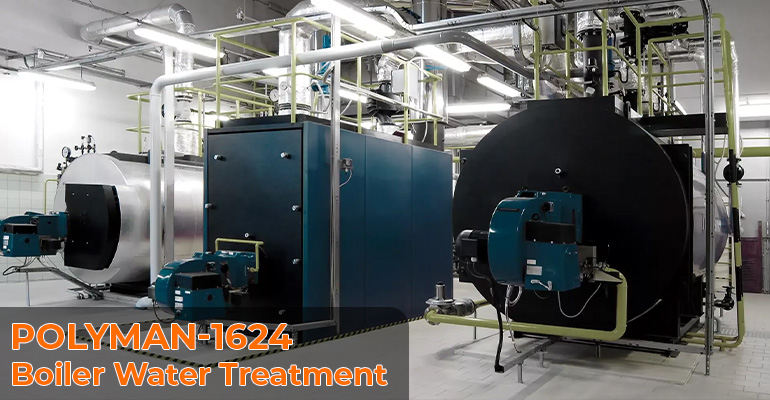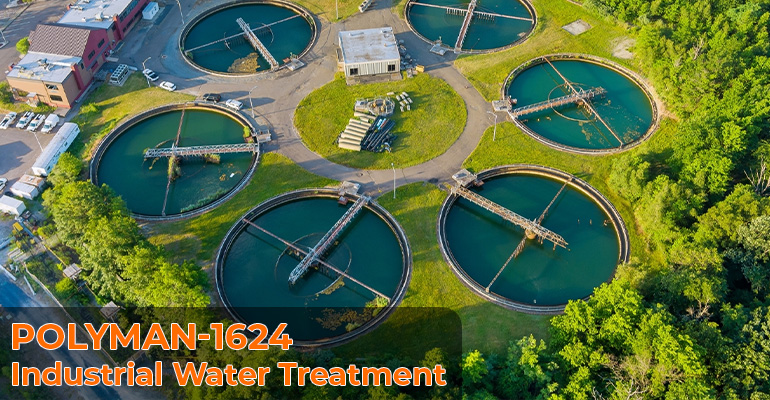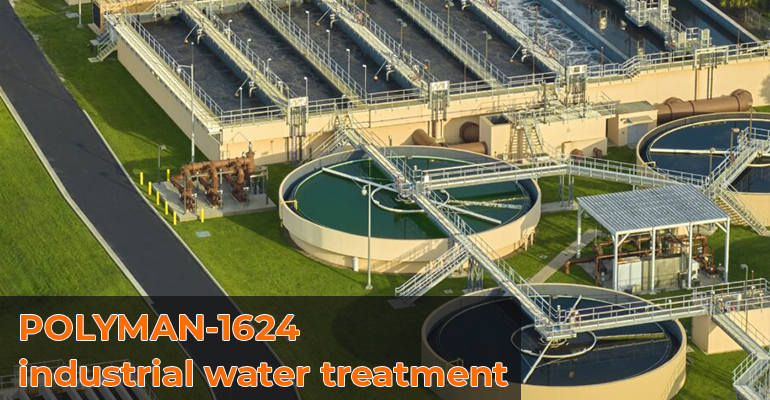
A terpolymer such as POLYMAN-1624 can provide a solution. POLYMAN-1624 is a specialty polymer from MAXWELL ADDITIVES designed for water treatment and water-based applications where mineral control, scale inhibition and particle dispersion are required. It is available as a Carboxylate-Sulfonate-Non-Ionic Ter-polymer. This product comes in a low-molecular-weight water polymer. It is also a low-molecular-weight water- polymer. It is easy to use...
Terpolymer – POLYMAN-1624 Carboxylate Sulphonate Non Ionic Polymer
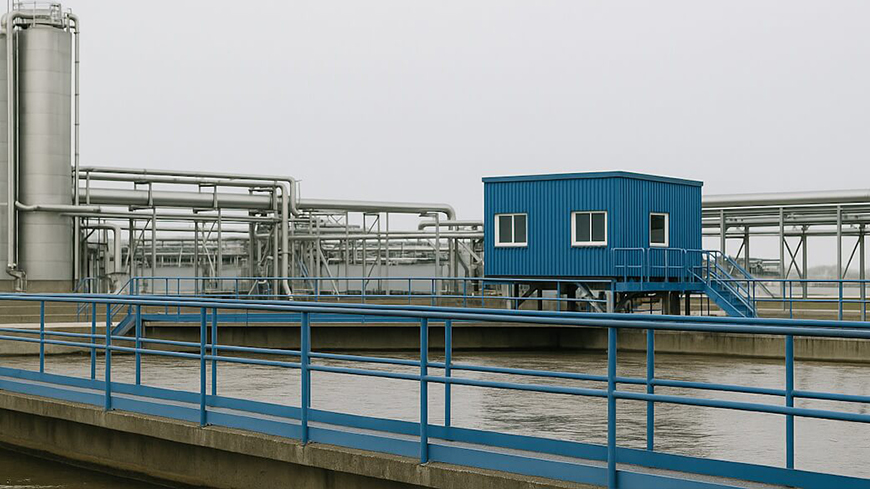 Industrial water systems rarely operate under perfectly stable conditions. Water quality can change with evaporation, recycling, temperature, concentration cycles, and variations in makeup water. These changes can influence the way dissolved minerals and suspended particles behave inside equipment and pipelines.
For this reason, modern treatment formulations often use specialty polymers that can perform more than one function. Carboxylate Sulphonate Non Ionic Ter Polymer – POLYMAN-1624 is a specialty polymer developed for industrial and water-treatment formulations where mineral management and particle dispersion are important considerations.
Its chemical structure combines different functional characteristics within one polymeric material. This makes it possible for formulators to evaluate the product as part of a wider treatment program rather than depending on a single chemical mechanism.
The important point is that POLYMAN-1624 should be selected according to the actual process. Water hardness, temperature, pH, dissolved salts, suspended matter, concentration cycles, and the presence of other treatment chemicals can all affect the final performance of a formulation.
The official product information identifies POLYMAN-1624 as a Carboxylic-Sulphonate non-Ionic polymer and describes it for water-treatment and industrial applications.
What is Carboxylate Sulphonate Non Ionic Ter Polymer – POLYMAN-1624?
Carboxylate Sulphonate Non Ionic Ter Polymer – POLYMAN-1624 is a specialty water-soluble polymer used in industrial treatment formulations. It belongs to a category of polymers containing carboxylate and sulfonate functionality along with non-ionic characteristics.
The term terpolymer generally refers to a polymer formed from three different monomer components. In commercial descriptions, however, product classification can depend on the manufacturer’s specific polymer architecture. POLYMAN-1624 is presented by Maxwell Additives as a carboxylic-sulphonate non-ionic polymer.
This type of polymer can be considered when a treatment program needs to manage the behavior of dissolved minerals and suspended materials. Instead of allowing certain particles to readily gather and settle onto equipment surfaces, the polymer can influence their interaction within the water phase.
POLYMAN-1624 is supplied in liquid form. According to the manufacturer’s published information, it has a nominal solid content of about 40% and is soluble in water in all proportions, while its actual properties may vary by product batch.
For industrial buyers, the product is best evaluated as a formulation ingredient whose effectiveness depends on the complete operating environment.
POLYMAN-1624 as a Formulation-Balancing Tool
A water-treatment chemical should not be selected only because it has a particular technical label. A more useful approach is to ask what is happening inside the system and which chemical functions are actually required.
For example, an industrial plant may have high mineral concentration but relatively low suspended solids. Another plant may have moderate hardness while receiving significant particulate contamination. Although both systems require water treatment, their chemical requirements can be quite different.
A Carboxylic-Sulphonate non-Ionic Ter-polymer such as POLYMAN-1624 can be evaluated according to these differences. The objective is to build a formulation in which each ingredient has a defined purpose.
This approach can also make chemical programs easier to optimize. Instead of increasing the dosage whenever performance decreases, operators can investigate whether the change is related to water chemistry, temperature, concentration cycles, equipment condition, or interaction between treatment ingredients.
Laboratory testing and controlled trials are therefore valuable before introducing a polymer into a large industrial system.
Features of Carboxylate Sulphonate Non Ionic Ter Polymer – POLYMAN-1624
1. Multi-Functional Polymer Chemistry
POLYMAN-1624 combines carboxylate, sulfonate, and non-ionic characteristics within its polymer structure. This gives formulators a flexible material for treatment programs where dissolved minerals and suspended particles need to be managed through a coordinated chemical approach rather than a single-function additive.
2. Water-Soluble Liquid Form
POLYMAN-1624 is supplied as a liquid and is designed for use in water-based formulations. Its water solubility can make preparation and dosing more convenient for suitable industrial systems, subject to appropriate handling practices and compatibility with the other components used in the treatment formulation.
3. Suitable for Variable Water Conditions
Industrial water quality can change during circulation and reuse. POLYMAN-1624 can be evaluated for systems experiencing changing mineral concentration, temperature, and operating cycles, allowing formulators to consider a polymeric approach where water conditions are not completely constant throughout the production process.
4. Useful for Formulation Development
The polymer can be considered as one component of a broader treatment formulation. This gives manufacturers the opportunity to combine it with compatible chemicals that perform different functions, allowing the final product to be designed around the specific chemistry and operating requirements of the intended application.
5. Non-Phosphorus Treatment Option
POLYMAN-1624 is described by the manufacturer as a non-phosphorus polymer. This characteristic can be relevant for treatment programs where formulators are looking to manage mineral and particulate behavior without relying on phosphorus-containing polymer chemistry in the same manner as conventional phosphonate-based approaches.
6. Low Molecular Weight Polymer
The published product information identifies POLYMAN-1624 as a low molecular weight polymer. This characteristic can influence how the material interacts with dissolved and suspended substances and can be considered when developing formulations intended for controlled dispersion and mineral-management requirements.
7. Applicable to Industrial Formulations
POLYMAN-1624 is intended for industrial and water-treatment use, giving formulators an option for different water-based treatment requirements. Its suitability should still be established through application testing because water composition, temperature, dosage, and other chemicals can vary significantly from one process to another.
Why Operating Conditions Matter When Using POLYMAN-1624
The performance of any specialty polymer depends heavily on the environment in which it is used. A treatment product that performs well in one facility may require a different dosage or formulation in another facility because the water chemistry is not identical.
Important parameters include hardness, alkalinity, pH, temperature, conductivity, dissolved solids, iron, silica, and concentration cycles. The type of equipment also matters because cooling systems, boilers, membranes, heat exchangers, and process lines can have different treatment requirements.
For POLYMAN-1624, the correct approach is therefore to evaluate the complete operating picture before establishing a final dosage.
This can begin with laboratory testing using representative water samples. If the results are satisfactory, a controlled plant trial can provide additional information before the treatment program is expanded to regular operation.
Such testing can help identify whether the polymer is addressing the intended problem and whether its dosage is compatible with the overall treatment budget.
 Benefits of Carboxylate Sulphonate Non Ionic Ter Polymer – POLYMAN-1624
1. Helps Maintain Better Mineral Control
POLYMAN-1624 can contribute to treatment programs designed to manage mineral behavior in industrial water. By influencing the interaction of dissolved substances and developing particles, it can help keep deposit-forming materials more manageable and support cleaner conditions across appropriately treated process systems.
2. Supports Particle Dispersion
When mineral or particulate matter begins to gather, it can become more difficult to maintain stable water conditions. POLYMAN-1624 can support dispersion-oriented formulations by helping keep certain particles distributed through the water, reducing their tendency to collect together under suitable operating conditions.
3. Offers Multi-Functional Treatment Chemistry
The combination of carboxylate, sulfonate, and non-ionic characteristics provides formulators with a broader chemical profile than a simple single-function polymer. This can be useful when one treatment formulation needs to address several related water-quality concerns without relying on completely separate polymer products.
4. Supports Flexible Formulation Design
POLYMAN-1624 can be evaluated with compatible treatment ingredients to create application-specific products. This flexibility allows formulators to adjust the composition according to water hardness, temperature, pH, concentration cycles, and the particular mineral or particulate challenges encountered during industrial operation.
5. Can Support Reduced Cleaning Pressure
Uncontrolled mineral and particulate accumulation can increase the frequency of cleaning and equipment intervention. When POLYMAN-1624 is appropriately incorporated into a treatment program, it can help manage deposit-related conditions and potentially make routine cleaning schedules more predictable.
6. Useful for Changing Industrial Conditions
Industrial water chemistry can change throughout the operating cycle because of evaporation, recycling, fresh-water addition, and temperature variation. A Carboxylate-Sulfonate-Nonion Terpolymer can be evaluated for such environments where treatment performance needs to remain useful despite changes in the water system.
7. Provides a Non-Phosphorus Polymer Option
For industries developing treatment programs with specific phosphorus-management requirements, POLYMAN-1624 provides a polymer option described as non-phosphorus. This can give formulators another route for developing mineral-management systems while considering the overall chemical composition of their treatment program.
Importance of Choosing a Consistent Polymer Supplier
Raw-material consistency is an important consideration for companies manufacturing industrial treatment formulations. A polymer with changing characteristics can affect the stability and performance of the finished product.
When evaluating a Carboxylate-Sulfonate Copolymer manufacturer, customers should therefore consider manufacturing controls, product specifications, batch consistency, packaging, storage recommendations, and supply capacity.
For POLYMAN-1624, businesses should also confirm the current technical specifications and commercial terms before placing an order. Product documentation can help manufacturers establish appropriate quality checks for incoming material.
A reliable supply chain becomes especially important when the polymer is used continuously. Delayed deliveries can affect formulation production, customer commitments, and industrial treatment schedules.
For Indian buyers, establishing a relationship with a dependable supplier can simplify repeat procurement and make inventory planning easier.
Conclusion
Carboxylate Sulphonate Non Ionic Ter Polymer – POLYMAN-1624 is a specialty polymer that can be evaluated for industrial water-treatment and water-based formulations where mineral management and dispersion are important.
Its combination of carboxylate, sulfonate, and non-ionic characteristics gives formulators a useful option when designing treatment programs around changing water chemistry and operating conditions.
The most effective way to use POLYMAN-1624 is through application-specific evaluation. Water analysis, laboratory testing, compatibility checks, dosage optimization, and controlled field trials can help determine how the polymer fits into a particular system.
For manufacturers and industrial buyers, supplier reliability is equally important. Consistent product quality and dependable availability can support uninterrupted formulation production and treatment operations.
FAQs
1. What is POLYMAN-1624 used for?
POLYMAN-1624 is a specialty polymer used in industrial and water-treatment formulations. It can be evaluated where mineral management, particle dispersion, and control of deposit-forming substances are important. Its actual application should be determined according to water chemistry, process conditions, dosage requirements, and compatibility with the other chemicals used in the treatment program.
2. What makes POLYMAN-1624 different from a conventional polymer?
POLYMAN-1624 is described as a carboxylic-sulphonate non-ionic polymer, giving it a combination of different functional characteristics. This allows formulators to consider it for treatment programs requiring both mineral-management and dispersion-related properties. The exact performance will depend on the formulation and operating conditions in which the material is used.
3. Can POLYMAN-1624 be used with other water-treatment chemicals?
It can be evaluated alongside compatible treatment chemicals, but compatibility should always be checked before commercial use. The presence of phosphonates, corrosion inhibitors, biocides, surfactants, or other polymers may affect formulation stability. Laboratory testing under representative conditions can help determine whether the complete formulation remains stable and performs as required.
4. How do I select a reliable supplier for POLYMAN-1624?
When selecting a supplier, customers should check manufacturing capability, batch consistency, product specifications, quality-control procedures, packaging, delivery schedules, and technical support. A dependable Carboxylate-Sulfonate Copolymer supplier in India should also be able to discuss regular quantity requirements and provide the documentation needed for industrial procurement.
5. Why is water analysis important before using POLYMAN-1624?
Water analysis helps identify the actual conditions that the treatment chemical must handle. Parameters such as hardness, alkalinity, pH, temperature, dissolved solids, iron, silica, and concentration cycles can influence polymer performance. Without understanding these conditions, it can be difficult to establish an appropriate dosage or determine whether the formulation addresses the actual operational problem.
6. Can Maxwell Additives PVT LTD supply POLYMAN-1624?
Maxwell Additives PVT LTD provides specialty chemicals for industrial applications, including polymer-based water-treatment products. Customers interested in POLYMAN-1624 should contact the company to confirm current availability, specifications, packaging, minimum order requirements, and application details before placing an order. Product suitability should be assessed according to the customer’s actual treatment conditions.
7. Is POLYMAN-1624 suitable for every industrial water system?
No. Different water systems have different mineral compositions, temperatures, pH levels, concentration cycles, and equipment requirements. A Carboxylate-Sulfonate-Nonion Terpolymer should therefore be evaluated for the specific application rather than assumed to provide identical results everywhere. Laboratory testing and controlled trials are recommended before implementing a new treatment program on a large scale.
Related Posts