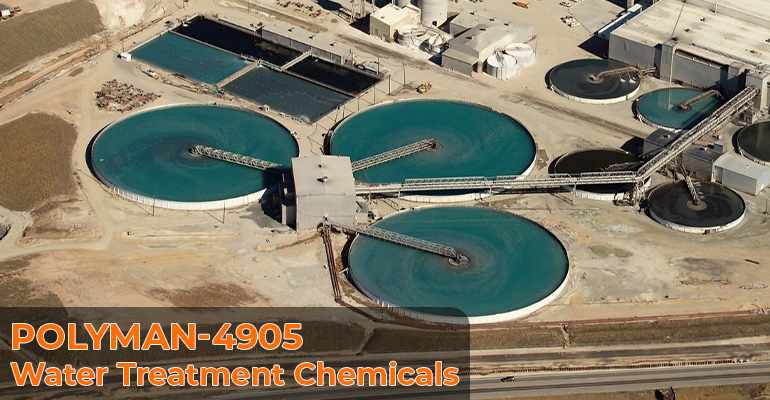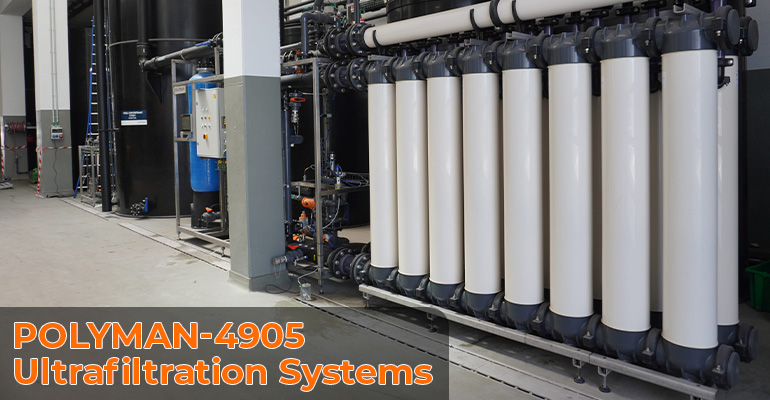
POLYMAN-4905 is a specialty polymer made for situations where mineral control, dispersion and deposit prevention matter a lot. Maxwell Additives shows POLYMAN-4905 in its line and calls it a Carboxylic AMPS Co-polymer...
AMPS Copolymer Supplier: POLYMAN-4905 for Industrial Water Treatment
 Industrial water systems deal with changing conditions every day. Temperature, mineral concentration, pH, water circulation, and the quality of incoming water can all influence how dissolved substances behave inside a system. When these conditions are not managed properly, deposits and suspended particles can create maintenance and efficiency challenges.This is why specialty polymers are commonly considered when developing industrial water-treatment formulations. Co-Polymers – POLYMAN-4905 is a polymeric treatment material that can be evaluated for applications where mineral management and dispersion are important.
Rather than looking at a polymer as a standalone solution, it is more useful to understand how it fits into the complete treatment program. The water chemistry, operating conditions, formulation composition, dosage, and compatibility with other ingredients all influence the final result.
For chemical manufacturers, POLYMAN-4905 can be considered during the development of application-specific treatment products. For industrial users, the polymer can be evaluated as part of a treatment strategy designed around the actual conditions of their water system.
What is Co-Polymers – POLYMAN-4905?
Co-Polymers – POLYMAN-4905 is a specialty polymer used in industrial water-treatment formulations. It belongs to the Carboxylic AMPS co-polymer category and can be considered when a treatment program requires polymeric support for managing mineral particles and maintaining better dispersion.
AMPS refers to 2-acrylamido-2-methylpropane sulfonic acid, a monomer widely used in specialty polymer chemistry because of its sulfonic functionality. When AMPS-based chemistry is combined with carboxylic functionality in a co-polymer, the resulting material can offer a different performance profile from a simple carboxylic polymer.
POLYMAN-4905 is therefore relevant to formulators looking for an AMPS Copolymer supplier for industrial water-treatment applications.
The actual performance of the polymer depends on the complete operating environment. Hardness, alkalinity, pH, temperature, dissolved solids, concentration cycles, suspended matter, and other treatment chemicals can all affect how the product performs.
For this reason, the best way to assess POLYMAN-4905 is through application-specific laboratory testing followed by controlled field evaluation.
Why AMPS Chemistry Matters
The presence of AMPS functionality can be important when a polymer needs to operate under challenging water conditions. Sulfonate-containing chemistry is known for maintaining useful ionic characteristics across a broad range of conditions, which is one reason AMPS-based polymers are considered in demanding industrial formulations.
However, simply selecting an AMPS-containing polymer does not guarantee the same result in every water system.
The final polymer architecture, molecular characteristics, dosage, water composition, and interaction with other treatment ingredients all influence performance.
This makes Carboxylic AMPS Co-polymer in India a useful category to explore when developing customized treatment formulations rather than treating every industrial water problem with the same chemical approach.
For example, a system with high calcium hardness may require a different formulation strategy from a system where iron contamination or suspended particles are the primary concern.
POLYMAN-4905 can therefore be evaluated according to the specific problem rather than selected only because of its chemical classification.
How POLYMAN-4905 Can Fit into a Formulation
Industrial water-treatment products often contain several different ingredients. A formulation may include a polymer, phosphonate, corrosion inhibitor, biocide, surfactant, or another supporting chemical depending on the application.
Each ingredient has a particular role, and the finished product must remain stable during manufacturing, storage, dilution, and use.
POLYMAN-4905 can be evaluated as one component within such a formulation. The purpose is not necessarily to replace every other treatment chemical but to determine whether the co-polymer can improve the overall balance of the formulation.
Compatibility testing is particularly important when multiple polymers are combined.
A laboratory formulation should be checked for appearance, stability, precipitation, viscosity, pH changes, and performance before it is introduced into commercial production.
Features of Co-Polymers – POLYMAN-4905
1. Carboxylic and AMPS-Based Polymer Chemistry
POLYMAN-4905 belongs to the Carboxylic AMPS co-polymer category, combining characteristics associated with carboxylic and sulfonate-containing polymer chemistry. This makes it an option for formulators investigating polymeric materials where mineral management and dispersion performance need to remain effective under varying industrial water conditions.
2. Designed for Industrial Formulation Development
POLYMAN-4905 can be evaluated as a raw material during the development of customized water-treatment products. Rather than depending on one universal formulation, manufacturers can investigate its behavior alongside compatible ingredients and adjust the final product according to the specific requirements of their intended industrial application.
3. Supports Dispersion-Oriented Treatment
The co-polymer can be considered where fine mineral particles need to remain more evenly distributed within the water phase. By influencing particle interactions, the polymer may help reduce the tendency of certain substances to gather together, subject to suitable dosage and the chemistry of the treated water.
4. AMPS Functionality for Challenging Conditions
AMPS-based polymer chemistry is valued in specialty formulations because sulfonate functionality can maintain useful ionic characteristics across changing conditions. POLYMAN-4905 can therefore be evaluated when formulators need a co-polymer for applications involving variations in temperature, dissolved salts, concentration, or other demanding process parameters.
5. Suitable for Customized Treatment Programs
Different industries face different water-quality problems. POLYMAN-4905 can be investigated as part of customized formulations designed around particular mineral loads, operating temperatures, pH conditions, and treatment objectives. This application-based approach allows manufacturers to develop products for specific customer requirements instead of relying on a fixed formulation.
6. Flexible Co-Polymer Approach
A co-polymer provides a broader chemical structure than a single-monomer polymer. This can give formulators additional flexibility when evaluating performance, compatibility, and dosage. POLYMAN-4905 can therefore be assessed alongside other treatment ingredients to determine whether its inclusion improves the overall performance of the finished formulation.
7. Useful for Industrial Water Applications
POLYMAN-4905 can be considered for industrial water-treatment applications where polymeric control of mineral and particulate behavior is required. Its suitability should be confirmed through laboratory and field testing because actual performance can vary according to water composition, temperature, concentration cycles, equipment design, and treatment chemistry.
 Benefits of Co-Polymers – POLYMAN-4905
1. Supports Mineral Management
POLYMAN-4905 can be incorporated into treatment programs designed to manage mineral particles within industrial water. By influencing the way certain dissolved substances form and interact, the polymer may help keep deposit-forming material more manageable and support cleaner system operation when used at an appropriate concentration.
2. Helps Maintain Better Particle Dispersion
Fine particles can become problematic when they combine and settle onto equipment surfaces. POLYMAN-4905 can be evaluated for dispersion-oriented applications where maintaining particles in a more distributed condition is desirable. Its effectiveness depends on the particle type, water chemistry, dosage, temperature, and other treatment ingredients.
3. Suitable for Application-Specific Formulations
Every industrial water system has its own chemistry and operating pattern. POLYMAN-4905 gives formulators another option for creating products around specific requirements. Manufacturers can adjust the overall formulation according to hardness, pH, temperature, dissolved solids, concentration cycles, and the expected treatment objective.
4. Offers AMPS-Based Polymer Chemistry
The inclusion of AMPS-related functionality provides a different chemical approach from a basic carboxylic polymer. This can be useful when formulators are testing materials for water systems exposed to changing salt concentrations or demanding process conditions. Actual suitability should always be established through application testing.
5. Can Support More Consistent Treatment Performance
Changes in water chemistry can affect the behavior of mineral particles during industrial operation. A suitable co-polymer can become part of a treatment strategy intended to maintain more predictable particle management. POLYMAN-4905 can therefore be evaluated where stable performance is important across changing operating conditions.
6. Provides Formulation Flexibility
POLYMAN-4905 can be tested with other compatible treatment ingredients, giving chemical manufacturers flexibility during product development. Instead of relying on a single polymer chemistry, formulators can compare different combinations and determine which composition provides the desired balance between performance, stability, dosage, and overall formulation cost.
7. Can Help Support Equipment Reliability
Deposits and accumulated particulate matter can interfere with the normal operation of industrial equipment. When POLYMAN-4905 is properly selected and incorporated into a suitable treatment program, its dispersion-related contribution may help manage conditions associated with particle accumulation and support a more controlled maintenance environment.
Importance of Dosage Optimization
The correct polymer dosage depends on the water and the treatment objective.
Using too little material may result in inadequate dispersion or mineral management. Using substantially more than necessary can increase chemical costs without providing a proportional improvement in performance.
A dosage study can therefore compare several concentrations under controlled conditions.
The results can then be used to identify a practical treatment range.
For industrial customers, dosage optimization can also have a direct effect on operating costs. A treatment program that achieves the desired result with an efficient chemical consumption rate is generally more attractive than one that depends on unnecessarily high dosing.
What Buyers Should Ask an AMPS Polymer Supplier
Before purchasing POLYMAN-4905, buyers can ask practical questions rather than focusing only on the product name.They may want to understand the available grade, physical form, active content, storage requirements, packaging, recommended handling practices, and compatibility considerations.
Application information can also be useful. Buyers should explain the type of water system, approximate water chemistry, operating temperature, treatment objective, and existing chemical program.
This allows technical teams to evaluate whether the product is appropriate for the intended use.A good supplier relationship should involve both product supply and clear technical communication.
Conclusion
Co-Polymers – POLYMAN-4905 provides a Carboxylic AMPS co-polymer option for formulators and industrial users investigating polymer-based approaches to water treatment.
Its value should be judged according to the actual application rather than simply its chemical classification. Water chemistry, operating temperature, mineral concentration, suspended matter, treatment dosage, and compatibility with other ingredients all influence the final outcome.
For chemical manufacturers, POLYMAN-4905 can be investigated during the development of customized treatment products. For industrial users, it can be evaluated as part of an integrated water-management program.
Selecting a reliable Carboxylic AMPS Co-polymer manufacturer or AMPS Copolymer supplier is also important for maintaining consistent raw-material quality and dependable production.
FAQs
1. What is POLYMAN-4905 used for?
POLYMAN-4905 is a specialty Carboxylic AMPS co-polymer that can be evaluated for industrial water-treatment formulations. It is relevant where mineral and particulate behavior needs to be managed through polymeric chemistry. The appropriate application and dosage depend on water composition, operating conditions, treatment objectives, and the other chemicals present in the formulation.
2. What is a Carboxylic AMPS Co-polymer?
A Carboxylic AMPS Co-polymer combines carboxylic and AMPS-related polymer chemistry within the same polymeric material. Such polymers can be considered when formulators need a combination of characteristics for industrial water treatment. The actual behavior depends on the polymer structure, dosage, water chemistry, temperature, and formulation composition.
3. Can POLYMAN-4905 be used with other polymers?
It may be possible to combine POLYMAN-4905 with compatible polymers, but this should be established through testing. Different polymers can interact with one another and may affect formulation stability or performance. A laboratory compatibility study is recommended before using multiple polymeric ingredients in a commercial treatment product.
4. How do I choose an AMPS Copolymer supplier?
When choosing an AMPS Copolymer supplier, check product consistency, technical documentation, manufacturing capacity, quality-control procedures, packaging, supply reliability, and technical support. It is also useful to discuss your application and expected consumption so the supplier can confirm the appropriate product information and commercial availability.
5. Is POLYMAN-4905 suitable for cooling-water systems?
POLYMAN-4905 can be evaluated for cooling-water treatment where its polymeric properties match the requirements of the system. Cooling-water chemistry varies considerably between plants, so a general dosage should not be assumed. Water analysis and controlled testing are recommended before adopting the product for continuous operation.
6. Why should POLYMAN-4905 be tested before commercial use?
Testing helps establish whether the polymer works effectively under the customer’s actual conditions. Laboratory studies can compare dosage levels, compatibility, dispersion behavior, and formulation stability. A controlled plant trial can then confirm how the material performs when temperature, water chemistry, flow, concentration cycles, and operating conditions change.
Related Posts