Industrial water-treatment systems often face a combination of scale formation, particulate fouling, high dissolved solids, hardness, and changing operating conditions. A suitable polymer can help formulators manage these challenges more effectively. Carboxylic AMPS Co-polymer supplier in India is therefore an important search for industries and chemical manufacturers looking for a polymer that can support scale control and particle dispersion. POLYMAN-4905 from Maxwell Additives is a Carboxylic AMPS Co-polymer designed for industrial water-treatment applications, particularly where mineral scale and particulate fouling need to be controlled. Maxwell lists POLYMAN-4905 within its specialty polymer range...
POLYMAN-4905: Understanding Its Role in Industrial Water Treatment
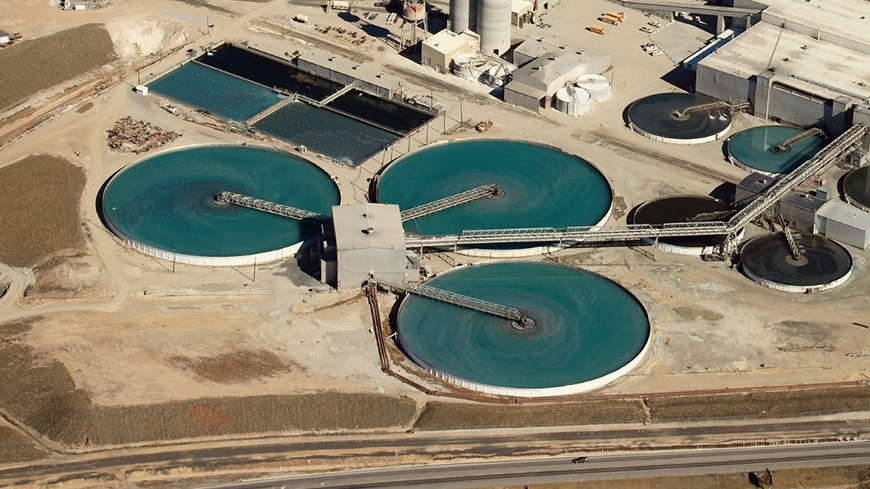
POLYMAN-4905 is a specialty polymer made for situations where mineral control, dispersion and deposit prevention matter a lot. Maxwell Additives shows POLYMAN-4905 in its line and calls it a Carboxylic AMPS Co-polymer.
Of thinking of POLYMAN-4905 as a single-purpose chemical it is better to see how POLYMAN-4905 can fit into a full treatment plan. Whether POLYMAN-4905 works well depends on the water chemistry, the operating conditions how much is used and how it mixes with ingredients.
What Is POLYMAN-4905?
POLYMAN-4905 is a co-polymer that belongs to the Carboxylic AMPS family. It is made for jobs where keeping mineral deposits low and keeping particles spread out are key.
AMPS means 2-acrylamido-2-methylpropane acid, a building block used in specialty polymers. AMPS chemistry adds groups to polymer chains and the carboxylic part adds another useful feature for water-treatment formulas.
Because POLYMAN-4905 has both parts it is not a single-component polymer. POLYMAN-4905 offers formulators a choice when designing treatment plans for industrial water that faces tough conditions.
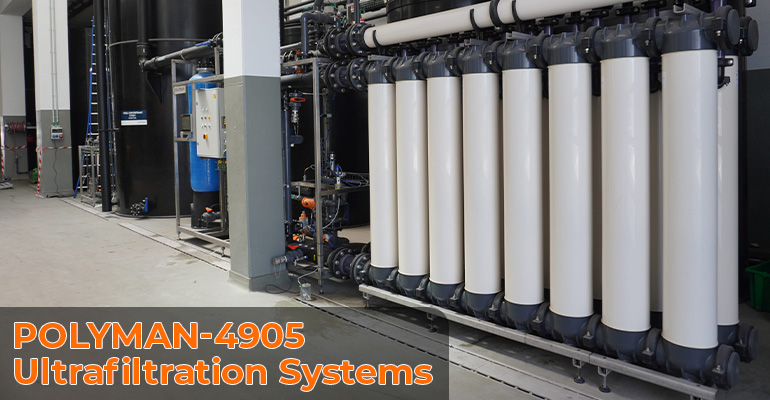
Maxwell Additives also labels POLYMAN-4905 as an antiscalant and dispersant polymer for membrane jobs like reverse osmosis, nanofiltration and ultrafiltration.
Why Carboxylic AMPS Co-Polymer Chemistry Matters
Water chemistry is rarely the same at every plant. Two plants with similar machines can have different hardness, TDS, chloride, suspended matter, temperature and operating cycles. These differences change how dissolved minerals and particles behave.
A polymer that has functional parts can give formulators more flexibility when making treatment products. The aim is not just to drop a polymer into water but to pick a chemistry that fits well with the treatment plan.
AMPS chemistry is especially useful when a formula must work under shifting water conditions.. Having AMPS by itself does not decide how a product will perform. The polymer’s structure, how much is used the water chemistry and how it reacts with chemicals all matter.
Therefore POLYMAN-4905 must be checked for the application not just picked because of its chemical type.
How POLYMAN-4905 Works Within a Treatment Program
A water-treatment formula can contain parts. Depending on the job these can be polymers, phosphonates, corrosion-control chemicals, biocides, surfactants or other specialty additives. Each part helps with a part of the plan.
POLYMAN-4905 can act as the polymer part when dispersion and mineral control are needed. POLYMAN-4905 can touch particles and mineral species in the water helping formulators build a plan that cuts down on build-up and keeps particles behaving better.
The real outcome depends on the system.
For example a formula made for a membrane job may need things than one for a general industrial cooling-water system. The amount of POLYMAN-4905, the water mix, the operating temperature and the other chemicals can all shift how the formula works.
Key Features That Make POLYMAN-4905 Useful
1. Carboxylic AMPS Co-Polymer
POLYMAN-4905 is a Carboxylic AMPS Co-Polymer mixing AMPS chemistry. This provides formulators with another polymer choice when making water-treatment formulas.
2. Antiscalant and Dispersant Role
Maxwell Additives calls POLYMAN-4905 an antiscalant and dispersant polymer. POLYMAN-4905 can be used in programs that must control both buildup and particle fouling.
3. For Challenging Water Conditions
Industrial water often has high hardness, TDS, chloride and other dissolved parts. Maxwell says POLYMAN-4905 works well for conditions like hard water, high TDS and high chloride.
4. Supports Particle Dispersion
Keeping particles spread out is important when they might gather on equipment or membranes. POLYMAN-4905 can be used when better dispersion is a goal.
5. Useful, for Formulation Development
Chemical manufacturers can evaluate POLYMAN-4905 with other compatible treatment chemicals while developing customized products. Testing can help determine the concentration, compatibility and performance for the intended application.
6. Application-Specific Selection
No single polymer dosage works for every water system. Water composition, temperature, pH, mineral concentration suspended matter equipment design and operating cycles all need to be considered before determining the treatment approach.
POLYMAN-4905 in Membrane Water Treatment
Membrane systems are especially sensitive to mineral deposits and particulate fouling. When unwanted material builds up on membrane surfaces the system may experience changes in operating conditions. Require additional cleaning or maintenance.
POLYMAN-4905 is identified by Maxwell Additives for controlling scale deposition and particulate fouling in membrane separation systems, including RO, NF and UF applications.
In these applications an antiscalant and dispersant polymer can become part of a broader pretreatment strategy. The objective is to manage scale-forming minerals and particulate material before they create problems for membrane operation.
However membrane systems differ greatly in composition and operating conditions. Therefore product suitability and dosage should be established through evaluation rather than assuming one fixed treatment rate.
Understanding Dispersion in Industrial Water Treatment
Dispersion is a part of many water-treatment programs.
When mineral or particulate matter begins to aggregate larger particles become more difficult to keep suspended. These particles may eventually. Attach to equipment surfaces, heat-transfer surfaces, pipelines or membranes.
A dispersant polymer can help influence the interaction between particles and the surrounding water.
Maxwell’s own technical material includes POLYMAN-4905 among the polymers evaluated for dispersant performance including iron-oxide dispersion studies.
This illustrates why polymer selection should be based on the treatment problem. A product that performs well for one type of particle or water chemistry may require a dosage or formulation approach under another set of conditions.
Factors That Can Affect POLYMAN-4905 Performance
The performance of a Carboxylic AMPS Co-polymer can change according to the conditions in which it is used. Important factors include:
1. Water Hardness
Calcium and magnesium levels can influence mineral formation and treatment requirements. Higher hardness may require a designed scale-control strategy.
2. Temperature
Temperature can affect mineral precipitation, chemical interactions and the overall behavior of a treatment formulation. Therefore testing under operating temperatures can provide more useful information than testing under unrelated laboratory conditions.
3. pH
Changes in pH can influence dissolved minerals, particle surfaces and the behavior of treatment chemicals. The operating pH should be considered when evaluating the polymer.
4. Total Dissolved Solids
High TDS conditions can create challenges for industrial water-treatment systems. A polymer should be assessed under the concentration conditions expected during operation.
5. Suspended Particles
The type and concentration of suspended particles can affect dispersion requirements. Iron oxide, mineral particles and other solids may behave differently within the water system.
6. Other Treatment Chemicals
POLYMAN-4905 may be used as one component of a formulation. Compatibility with phosphonates, corrosion inhibitors, biocides, surfactants and other polymers should be tested before combining ingredients.
How to Evaluate POLYMAN-4905 Before Commercial Use
A practical evaluation can begin with identifying the water-treatment problem.
Of starting with a fixed dosage manufacturers and users can first review:
- Water hardness and mineral composition
- pH and alkalinity
- TDS and chloride levels
- Operating temperature
- Suspended and particulate matter
- Concentration cycles
- Existing treatment chemicals
- Equipment or membrane type
- Desired treatment objective
- Expected operating dosage
After collecting this information laboratory testing can be used to compare different concentrations and formulation combinations.
Compatibility should also be checked. A mixture may appear acceptable initially. Develop precipitation, separation, viscosity changes or stability problems during storage or use. Controlled testing can identify these issues before the formulation is moved into production.
Field evaluation can then provide information under actual operating conditions.
Applications of POLYMAN-4905
POLYMAN-4905 can be considered for applications where antiscalant, dispersant and polymer-based deposit-control performance are required.
Potential areas of evaluation include:
- Reverse osmosis membrane systems
- Nanofiltration systems
- Ultrafiltration systems
- Industrial water-treatment formulations
- Membrane pretreatment programs
- Mineral deposit control
- Particulate fouling management
- Customized water-treatment chemical formulations
- Industrial systems exposed to high-TDS water
The exact suitability should always be confirmed according to the specific water chemistry and operating conditions.
Choosing a Carboxylic AMPS Co-polymer Supplier in India
Choosing the supplier involves more, than comparing product prices.
Companies looking for a Carboxylic AMPS Co-polymer supplier in India must consider factors. These factors include product consistency, technical documentation, manufacturing capability, packaging, storage information, supply reliability and technical support.
The supplier must also understand how the Carboxylic AMPS Co-polymer is intended to be used. Sharing details about the application, water chemistry, expected consumption and treatment objective helps make technical discussions more productive.
This is particularly important for specialty polymers. The same Carboxylic AMPS Co-polymer may be evaluated for applications that have different performance requirements.
Finding a Carboxylic AMPS Co-polymer Manufacturer in India
Buyers looking for a Carboxylic AMPS Co-polymer manufacturer in India must value manufacturing consistency.
POLYMAN-4905 is part of Maxwell Additives’ portfolio under its co-polymer range. Maxwell lists POLYMAN-4905 as a Carboxylic AMPS Co-polymer with other polymer products such as POLYMAN-1200 and POLYMAN-1400.
Maxwell Additives is based in Vadodara, Gujarat, India. Operates as a specialty-chemical manufacturer.
When evaluating a manufacturer buyers can discuss product specifications, application requirements, packaging, expected quantities and technical requirements before setting up a supply arrangement.
Why Choose Maxwell Additives for POLYMAN-4905?
Maxwell Additives lists POLYMAN-4905 in its specialty polymer portfolio as a Carboxylic AMPS Co-polymer. The company’s polymer range contains homo-polymers, co-polymers, ter-polymers, quad-polymers and other specialty polymer chemistries.
For customers evaluating POLYMAN-4905 the broader polymer portfolio can be useful when a treatment formulation requires comparison of polymer chemistries.
Maxwell’s product information identifies POLYMAN-4905 for antiscalant and dispersant applications. Discusses its use in membrane-related water-treatment systems.
The final product selection must still be based on the customer’s application, water chemistry, dosage requirements and compatibility testing.
Conclusion
POLYMAN-4905 is a Carboxylic AMPS Co-polymer designed for use in water-treatment formulations where mineral management, dispersion and deposit control are important.
Its relevance becomes clear in applications where water chemistry changes mineral deposits can build up. Particulate fouling creates operating challenges. The POLYMAN-4905 can be evaluated as part of a broader treatment program of being seen as a universal solution.
For businesses looking for a Carboxylic AMPS Co-polymer supplier in India or a Carboxylic AMPS Co-polymer manufacturer in India product consistency, technical information, application support and supply capability must be considered along with factors.
Importantly POLYMAN-4905 should be evaluated under the actual conditions of the intended application. Water chemistry, hardness, TDS, pH, temperature suspended matter dosage and compatibility with chemicals can all influence the final treatment performance.
Frequently Asked Questions
1. What is POLYMAN-4905?
POLYMAN-4905 is a Carboxylic AMPS Co-polymer used in water-treatment formulations. Maxwell Additives identifies POLYMAN-4905 within its range and describes it as an antiscalant and dispersant polymer.
2. What is a Carboxylic AMPS Co-polymer?
A Carboxylic AMPS Co-polymer is a polymer category that combines functionality with AMPS-related chemistry. AMPS stands for 2-acrylamido-2-methylpropane acid and is used in specialty polymer chemistry.
3. Where can POLYMAN-4905 be used?
POLYMAN-4905 can be evaluated in water-treatment applications, especially where scale control and particle dispersion are important. Maxwell also lists membrane applications such as RO, NF and UF systems.
4. Can POLYMAN-4905 be used in osmosis systems?
Yes Maxwell specifically describes POLYMAN-4905 for controlling scale deposition and particulate fouling in membrane separation systems such as osmosis. Application-specific testing must be carried out to determine the treatment conditions.
5. Does POLYMAN-4905 have a fixed dosage?
There is no dosage for every application. The appropriate dosage depends on water chemistry, hardness, TDS, temperature, suspended matter, equipment type and other chemicals used in the treatment program.
6. How do I choose a Carboxylic AMPS Co-polymer supplier in India?
Consider product consistency, technical documentation, manufacturing capability, packaging, supply reliability, application support and the supplier’s ability to understand your treatment requirements.
7. How can I evaluate a Carboxylic AMPS Co-polymer manufacturer, in India?
Review the manufacturer’s product information, manufacturing capabilities, technical support, quality practices, supply capacity and ability to provide information to your intended application. Application testing should also be performed before large-scale use.
8. Can POLYMAN-4905 Be Used With Other Treatment Chemicals?
The polymer may be incorporated into a broader treatment formulation. Compatibility must be established through laboratory testing. Interactions with phosphonates, corrosion inhibitors, biocides, surfactants or other polymers should not be assumed.
9. Why is application testing important, for POLYMAN-4905?
Application testing helps determine how the polymer behaves under the water chemistry and operating conditions. Application testing can help establish a dosage evaluate compatibility and identify formulation or treatment issues before commercial implementation.
Related Posts