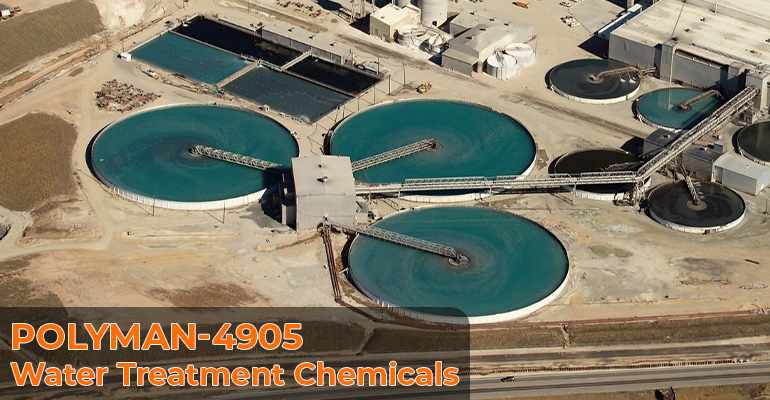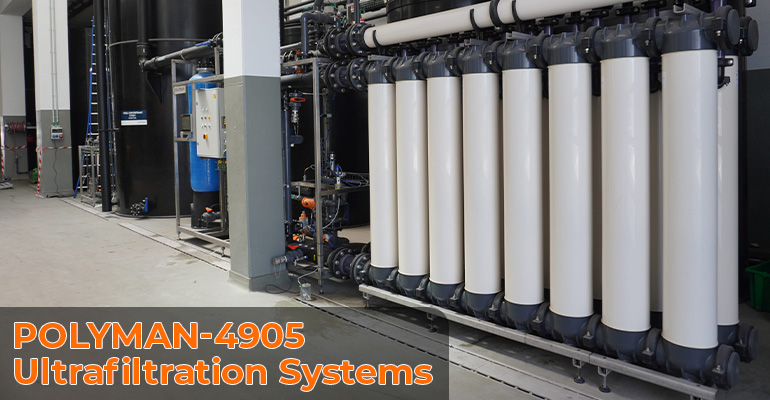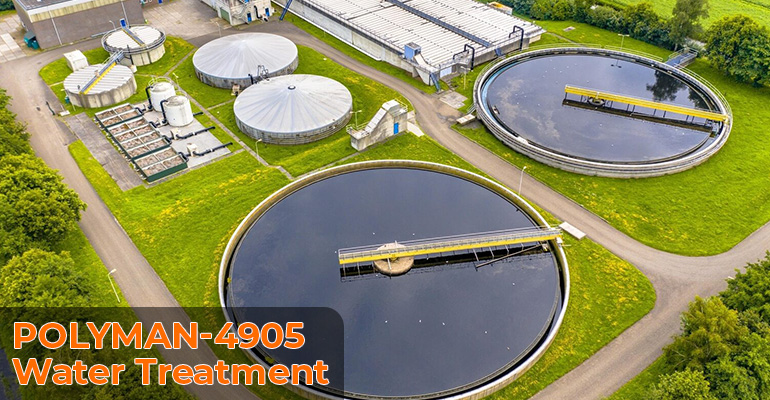
POLYMAN-4905 is a specialty polymer made for situations where mineral control, dispersion and deposit prevention matter a lot. Maxwell Additives shows POLYMAN-4905 in its line and calls it a Carboxylic AMPS Co-polymer...
POLYMAN-4905: Carboxylic AMPS Co-Polymer for Water Treatment
 What is Carboxylic AMPS Co-polymer POLYMAN-4905?
Carboxylic AMPS Co-polymer POLYMAN-4905 is a specialty polymer designed for use in industrial water-treatment formulations where mineral deposits, suspended particles, and water chemistry can create operating difficulties. It belongs to a polymer family that combines carboxylic functionality with AMPS-based chemistry, giving formulators an additional option when conventional polymeric treatments are not sufficient for a particular application. The product is listed by Maxwell Additives within its polymer range as a Carboxylic AMPS Co-polymer.
The importance of this type of polymer comes from the changing nature of industrial water. A treatment system may experience variations in hardness, dissolved salts, temperature, pH, suspended matter, and concentration levels during regular operation. These changes can influence the formation and movement of mineral particles. A suitable polymer can help manage these conditions as part of a carefully designed treatment program.
POLYMAN-4905 can therefore be considered by chemical formulators and industrial users looking for a Carboxylic AMPS Co-polymer supplier in India. Its role should be decided according to the chemistry of the application rather than simply selecting a polymer based on its name. Laboratory evaluation, dosage trials, compatibility checks, and actual operating conditions are important when developing a reliable treatment formulation.
The product can be particularly relevant when the treatment objective involves controlling the behavior of particles in water. Instead of allowing certain substances to gather, settle, or interact in an unwanted manner, polymeric treatment chemistry can influence their dispersion. The final result depends on the polymer concentration, water quality, temperature, competing ions, and other chemicals used in the treatment program.
For buyers searching for a Carboxylic AMPS Co-polymer manufacturer in India, product consistency is also an important consideration. Industrial formulations often require repeatable raw-material quality because changes in polymer characteristics can affect the performance of the finished treatment product. Proper technical discussions with the supplier can help determine whether POLYMAN-4905 is suitable for a particular water-treatment requirement.
Understanding POLYMAN-4905 in Industrial Applications
POLYMAN-4905 is best viewed as a formulation ingredient rather than a universal treatment solution. Industrial water systems are different from one another, even when they appear to have similar operating purposes. A cooling-water circuit, boiler system, reverse-osmosis pretreatment arrangement, or process-water application may have completely different mineral loads and operating conditions.
For this reason, the selection of a polymer should begin with understanding the actual problem. If unwanted particles are forming rapidly, the treatment requirement may be different from a system where the primary concern is mineral deposition. Similarly, water containing high levels of calcium, magnesium, iron, silica, or other dissolved components can behave differently under changing temperature and concentration conditions.
The Carboxylic AMPS Co-polymer category provides formulators with a chemistry option that can be studied for demanding applications. AMPS-based functionality is widely used in specialty polymer chemistry because sulfonate-containing groups can contribute useful ionic behavior under changing aqueous conditions. However, the performance of any finished polymer depends on its complete molecular structure and the environment in which it is used.
POLYMAN-4905 may also be considered during the development of formulated products. A finished treatment chemical can contain several ingredients, with each component contributing to a different part of the overall performance. The polymer may be used alongside other compatible treatment chemicals when laboratory testing shows that the combination provides the desired result.
This approach is useful for manufacturers that produce customized water-treatment chemicals for different industries. Instead of depending on one fixed recipe, formulators can evaluate polymer concentration, supporting chemicals, water chemistry, and operating parameters to develop a formulation suitable for a particular customer requirement.
Features of POLYMAN-4905
1. Carboxylic AMPS Polymer Chemistry
POLYMAN-4905 combines carboxylic and AMPS-related polymer chemistry, creating a material suitable for investigation in specialized water-treatment formulations. This combination gives formulators an alternative to simpler polymer structures when they need to study mineral control, particle behavior, and formulation performance under demanding aqueous operating conditions.
2. Useful for Dispersion Applications
The polymer can be considered where maintaining better dispersion of suspended or mineral particles is an important treatment objective. Its polymeric structure may influence interactions between particles and the surrounding water, helping formulators develop treatment programs intended to reduce unwanted aggregation under suitable application conditions and dosage levels.
3. Adaptable to Water Chemistry
Industrial water rarely remains completely constant throughout operation. Changes in dissolved salts, hardness, temperature, concentration, and pH can affect treatment performance. POLYMAN-4905 can be evaluated under these changing conditions to determine whether its characteristics match the requirements of a particular industrial water-treatment formulation.
4. Suitable for Formulation Development
POLYMAN-4905 can be incorporated into laboratory studies when manufacturers are developing or improving water-treatment products. Its performance can be compared at different concentrations and alongside compatible ingredients. Such evaluation helps formulators understand how the polymer behaves before selecting an appropriate commercial treatment approach.
5. Relevant to Mineral Management
Mineral-containing water can create challenges when dissolved substances begin interacting, concentrating, or forming unwanted deposits. POLYMAN-4905 can be investigated as part of a broader mineral-management strategy where polymeric treatment is required. The final effectiveness depends on water composition, dosage, temperature, and the complete treatment formulation.
6. Appropriate for Application-Based Selection
The polymer should be selected according to the requirements of the intended application rather than by relying on a general assumption about polymer performance. Factors such as hardness, suspended solids, temperature, operating cycles, and other chemicals should be reviewed before deciding whether POLYMAN-4905 fits the treatment program.
7. Supports Flexible Product Development
A specialty co-polymer gives chemical manufacturers another material to evaluate when developing treatment formulations for different industrial customers. POLYMAN-4905 can be studied through controlled laboratory work and field trials, allowing formulators to determine suitable concentrations and combinations based on the actual performance requirements of each application.
A Practical Approach to Using POLYMAN-4905
Choosing a polymer only because it is classified as an AMPS copolymer may not provide the desired outcome. A more practical approach is to first identify the water problem, then evaluate how the polymer behaves under those exact conditions. This can include checking hardness, alkalinity, dissolved solids, temperature, suspended particles, pH, and concentration cycles.
Compatibility is another important consideration. A treatment formulation may contain phosphonates, corrosion-control ingredients, biocides, surfactants, or other polymers. These components should not be assumed to work together simply because they are commonly used in water treatment. Laboratory mixing and stability studies can identify unwanted precipitation, viscosity changes, separation, or other formulation issues before commercial production.
For industrial users, dosage should also be determined through testing instead of applying a fixed quantity to every system. Too little polymer may not provide the desired treatment effect, while unnecessary excess can increase formulation cost without providing a proportional improvement. A controlled dosage study can help identify a practical operating range.
This application-focused method makes Carboxylic AMPS Co-polymer POLYMAN-4905 more useful as a development tool for formulators. It allows the product to be assessed against real water conditions instead of relying only on theoretical expectations.
Why the Right Supplier Matters
When purchasing specialty polymers, the supplier is an important part of the overall sourcing decision. Buyers should consider consistency, technical information, packaging, storage guidance, production capability, quality procedures, and supply reliability. These factors can become especially important when the polymer is used continuously in industrial formulations.
A reliable Carboxylic AMPS Co-polymer supplier in India should be able to communicate clearly about product specifications and help customers understand the appropriate application conditions. Buyers can also discuss their intended use, water characteristics, expected consumption, and formulation requirements before placing regular orders.
For companies searching for a Carboxylic AMPS Co-polymer manufacturer in India, technical communication can make product selection easier. It also gives the manufacturer an opportunity to understand whether the requested material is being considered for cooling water, process water, membrane-related treatment, formulation manufacturing, or another industrial purpose.
 Benefits of POLYMAN-4905
1. Helps Manage Particle Behavior
POLYMAN-4905 can be evaluated when a treatment program needs better control over suspended or mineral particles. By influencing particle interactions within the aqueous phase, the polymer may help maintain a more manageable dispersion and reduce problems associated with unwanted particle accumulation during industrial operation.
2. Supports Industrial Water Treatment
The polymer provides an additional formulation option for industrial water-treatment applications where mineral and particulate behavior needs attention. It can be assessed alongside other treatment ingredients to create a program suited to the specific chemistry, temperature, hardness, concentration cycles, and operating conditions encountered by the user.
3. Offers Formulation Flexibility
Different customers require different treatment products because their water systems do not operate under identical conditions. POLYMAN-4905 can be tested at different concentrations and with compatible ingredients, allowing manufacturers to adjust their formulations according to the actual requirements of individual industrial applications.
4. Can Assist Deposit-Control Programs
Unwanted deposits can develop when mineral-containing water experiences concentration, heating, or changes in chemical conditions. POLYMAN-4905 can be investigated as part of a deposit-management formulation where polymeric action is required. Its contribution should be verified through application testing under representative operating conditions.
5. Provides an AMPS-Based Option
The AMPS component gives formulators another chemical route when developing specialty water-treatment products. This can be valuable when a simple carboxylic polymer does not provide the required formulation characteristics. Actual performance should still be confirmed through laboratory work and controlled application trials.
6. Useful for Customized Treatment Products
POLYMAN-4905 can be considered during the development of treatment products intended for particular industries or water conditions. Instead of treating every application identically, manufacturers can evaluate the polymer alongside other ingredients and establish a formulation that matches the intended operating environment.
7. Helps Support Consistent Treatment Planning
A properly evaluated polymer can become one part of a structured water-treatment program. POLYMAN-4905 allows formulators to investigate polymer dosage, compatibility, and performance before commercial use, supporting a more measured approach to treatment planning and reducing dependence on assumptions about chemical behavior.
Choosing POLYMAN-4905 for the Right Application
The suitability of POLYMAN-4905 depends on what the customer expects from the treatment formulation. Some systems may need stronger attention toward mineral deposition, while others may have greater concern about suspended matter or changing water chemistry. Therefore, the product should be assessed against measurable treatment goals.
A useful evaluation can include laboratory screening followed by a controlled field trial. During this process, the formulator can compare different dosage levels and observe changes in particle behavior, deposit formation, formulation stability, and compatibility with other treatment chemicals.
This method also helps identify whether the polymer provides a meaningful improvement compared with an existing treatment program. Such comparisons are valuable for industrial users because chemical selection should ultimately support reliable operation rather than simply add another ingredient to the formulation.
For businesses sourcing from an AMPS Copolymer supplier in India, discussing these application details in advance can make procurement more effective. The supplier can better understand the intended use, while the buyer receives information relevant to the actual requirement.
Conclusion
POLYMAN-4905 is a Carboxylic AMPS Co-polymer that can be considered for industrial water-treatment formulation and polymer-based management of mineral or particulate behavior. Its value lies in giving formulators another chemistry option when developing treatment products for changing and demanding water conditions.
The right way to evaluate this material is through application-specific testing. Water composition, hardness, pH, temperature, suspended matter, concentration cycles, dosage, and compatibility with other chemicals can all influence the final result. A laboratory study followed by controlled field evaluation can provide a more reliable basis for product selection.
For businesses looking for a Carboxylic AMPS Co-polymer manufacturer in India or a dependable Carboxylic AMPS Co-polymer supplier in India, product consistency and technical communication should be considered alongside commercial factors. A carefully selected polymer can become a useful part of a broader water-treatment strategy when its performance matches the actual needs of the system.
Frequently Asked Questions
1. What is POLYMAN-4905 used for?
POLYMAN-4905 is a Carboxylic AMPS Co-polymer that can be considered for industrial water-treatment formulations. It may be evaluated where mineral particles, suspended matter, or deposit-related concerns require polymer-based treatment support. The suitable application depends on the water chemistry, operating conditions, formulation design, and required treatment objective.
2. What does AMPS mean in an AMPS copolymer?
AMPS refers to 2-acrylamido-2-methylpropane sulfonic acid, a monomer used in specialty polymer chemistry. AMPS-based polymers are considered for applications where sulfonate functionality can provide useful ionic characteristics. In a Carboxylic AMPS Co-polymer, AMPS-related chemistry is combined with carboxylic functionality within the polymer structure.
3. Can POLYMAN-4905 be used directly in every water-treatment system?
No single polymer should automatically be considered suitable for every water system. Water hardness, temperature, pH, dissolved salts, suspended particles, dosage, and other treatment chemicals can influence performance. POLYMAN-4905 should be evaluated under representative conditions before being selected for continuous industrial operation.
4. How should the dosage of POLYMAN-4905 be decided?
The dosage should be established through application testing rather than using one fixed value for every system. Laboratory screening can compare different concentrations, while field trials can provide additional information under operating conditions. The final dosage should reflect the water chemistry and the objectives of the complete treatment program.
5. Can POLYMAN-4905 be combined with other water-treatment chemicals?
It may be compatible with selected treatment ingredients, but compatibility should be verified before formulation. Different chemicals can influence stability, appearance, viscosity, precipitation, or overall performance. A laboratory compatibility study is a practical way to check the interaction between POLYMAN-4905 and other components.
6. What should buyers check when selecting a Carboxylic AMPS Co-polymer supplier in India?
Buyers should consider product consistency, technical documentation, manufacturing capability, quality procedures, packaging, storage information, supply reliability, and technical assistance. It is also useful to share the intended application and expected consumption with the supplier so the product can be assessed according to the customer’s actual requirements.
7. Why is application testing important before purchasing POLYMAN-4905 in bulk?
Application testing reduces uncertainty by showing how the polymer behaves under actual or simulated operating conditions. It can help compare dosage levels, compatibility, dispersion behavior, and formulation stability. This information allows buyers to make a more informed decision before moving from laboratory evaluation to regular commercial consumption.
Related Posts