POLYMAN-4905 is a specialty polymer made for situations where mineral control, dispersion and deposit prevention matter a lot. Maxwell Additives shows POLYMAN-4905 in its line and calls it a Carboxylic AMPS Co-polymer...
Carboxylic AMPS Co-polymer supplier in India – POLYMAN-4905 for Industrial Water Treatment
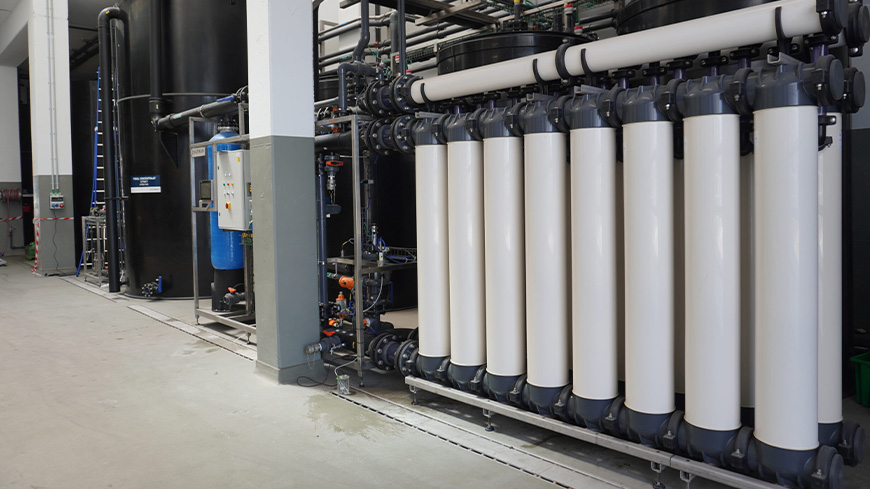
Industrial water-treatment systems often face a combination of scale formation, particulate fouling, high dissolved solids, hardness, and changing operating conditions. A suitable polymer can help formulators manage these challenges more effectively. Carboxylic AMPS Co-polymer supplier in India is therefore an important search for industries and chemical manufacturers looking for a polymer that can support scale control and particle dispersion. POLYMAN-4905 from Maxwell Additives is a Carboxylic AMPS Co-polymer designed for industrial water-treatment applications, particularly where mineral scale and particulate fouling need to be controlled. Maxwell lists POLYMAN-4905 within its specialty polymer range.
What Is POLYMAN-4905?
POLYMAN-4905 is a Carboxylic AMPS Co-polymer used as an antiscalant and dispersant polymer in industrial water-treatment applications. Its formulation is intended to help control scale-forming mineral salts and disperse particulate foulants, making it particularly relevant to membrane-based water-treatment systems such as reverse osmosis and other separation processes.
The importance of this type of polymer becomes clearer when considering how industrial water behaves. As water passes through a treatment system, dissolved minerals can become concentrated. Changes in pressure, temperature, recovery, pH, and concentration can increase the possibility of mineral deposition or particulate fouling.
How Does a Carboxylic AMPS Co-polymer Work?
The role of a treatment polymer is not simply to “remove” minerals from water. Instead, the polymer can influence the behavior of scale-forming substances and suspended particles within the treatment environment.
POLYMAN-4905 is designed to help control several common scale-forming mineral salts, including calcium carbonate, calcium sulphate, barium sulphate, and strontium sulphate. It also supports the dispersion of particulate foulants, helping maintain cleaner membrane surfaces when used under appropriate conditions.
This is why application-specific evaluation remains an important part of selecting a Carboxylic AMPS Co-polymer manufacturer in India.
Key Features of POLYMAN-4905
1. Carboxylic AMPS Co-polymer Chemistry
POLYMAN-4905 belongs to the Carboxylic AMPS Co-polymer category. The combination of carboxylic and AMPS-related chemistry makes it a specialty polymer option for industrial water-treatment formulations where both mineral management and dispersion are important.
2. Antiscalant and Dispersant Function
POLYMAN-4905 is positioned as an antiscalant and dispersant polymer. It is intended to address both scale-forming mineral salts and particulate foulants within suitable treatment systems.
3. Designed for Membrane Applications
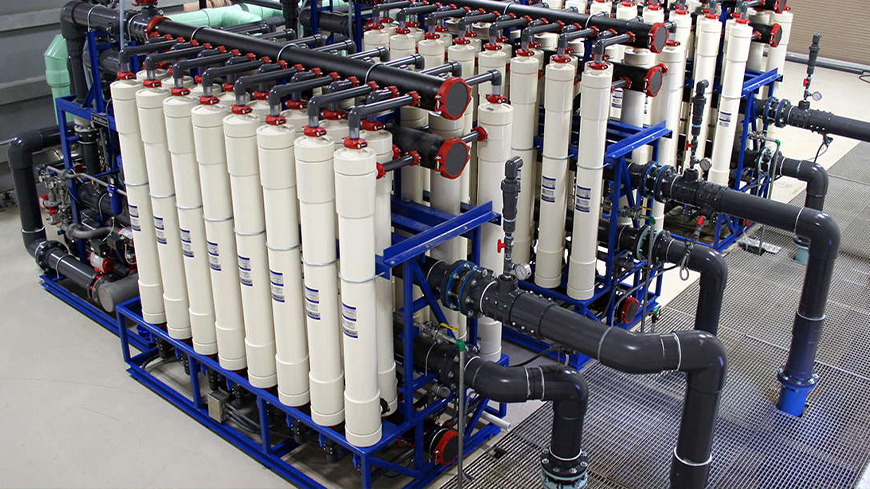
One of the key applications of POLYMAN-4905 is membrane separation. Maxwell specifically identifies the product for controlling scale deposition and particulate fouling in systems such as reverse osmosis (RO), nanofiltration (NF), and ultrafiltration (UF).
4. Effective Across Challenging Water Conditions
Industrial water can contain high hardness, TDS, chloride and other dissolved components. POLYMAN-4905 is described by Maxwell as being designed for severe conditions including hard water and high-TDS environments.
5. Controls Multiple Scale Types
A single water system may experience more than one type of mineral deposition. POLYMAN-4905 is specified for controlling calcium carbonate, calcium sulphate, barium sulphate and strontium sulphate scales.
6. Supports Cleaner Membrane Surfaces
Particulate fouling can reduce membrane performance even when conventional scale control is being addressed. POLYMAN-4905 is designed to disperse particulate foulants and help maintain cleaner membrane surfaces.
7. Suitable for Application-Based Treatment
The product should not be treated as a universal chemical with one dosage for every installation. Feed-water chemistry and operating conditions should be considered when determining how the polymer should be used.
Benefits of Using POLYMAN-4905
1. Better Scale Management
Scale deposits can gradually interfere with water flow and membrane performance. By helping control specified scale-forming mineral salts, POLYMAN-4905 can form an important part of an antiscalant program.
2. Improved Particulate Dispersion
Particles entering a membrane system can contribute to fouling when they accumulate on membrane surfaces. POLYMAN-4905 supports particulate dispersion, helping reduce the tendency of certain foulants to accumulate under suitable operating conditions.
3. Reduced Cleaning and Maintenance Pressure
When scale and particulate fouling are properly managed, the need for frequent cleaning and servicing may be reduced. Maxwell specifically states that POLYMAN-4905 can help decrease frequent shutdowns, periodic cleaning and servicing requirements.
4. Support for Consistent Membrane Operation
Membrane systems depend heavily on stable feed conditions and effective pretreatment. A properly selected antiscalant and dispersant can support more consistent operation by addressing mineral and particulate challenges before they become severe.
5. Potential Operating-Cost Benefits
Fouling and scale can increase energy consumption, maintenance requirements, chemical consumption and downtime. Effective treatment can help reduce these pressures, although the actual economic benefit depends on the individual plant and operating conditions.
Applications of POLYMAN-4905
1. Reverse Osmosis Systems
Reverse osmosis systems are particularly sensitive to scale deposition and particulate fouling. POLYMAN-4905 is designed for use in RO applications and can help manage specified mineral scales and particulate foulants.
2. Nanofiltration Systems
NF systems can also experience concentration-related mineral deposition and fouling. POLYMAN-4905 can be evaluated as part of an antiscalant and dispersant program where the water chemistry requires such treatment.
3. Ultrafiltration Systems
Particulate fouling is an important consideration in membrane filtration. POLYMAN-4905 can be considered where polymeric dispersion support is required as part of the overall treatment strategy.
4. Industrial Water Treatment
Beyond individual membrane processes, the product can be considered in industrial water-treatment programs where mineral scale and particulate matter need to be managed.
Why Scale Control Is Important in RO and Membrane Systems
Membrane systems continuously concentrate certain dissolved substances. As water passes through the membrane, the concentration of rejected materials in the feed-side stream can increase.
The consequences may include:
- Reduced membrane performance
- Increased pressure requirements
- Higher energy consumption
- More frequent cleaning
- Increased maintenance
- Shorter cleaning intervals
- Reduced overall process efficiency
The exact mechanism and severity depend on the feed-water chemistry, recovery, temperature, membrane characteristics and operating conditions.
Factors to Consider Before Using POLYMAN-4905
Choosing a Carboxylic AMPS Co-polymer should begin with understanding the actual water system.
1. Feed-Water Analysis
Before determining dosage, important parameters should be reviewed, including:
- Calcium
- Magnesium
- Bicarbonate
- Carbonate
- Sulphate
- Barium
- Strontium
- Silica
- TDS
- Chloride
- pH
- Temperature
- Suspended solids
Not every parameter will have the same importance in every application.
2. Recovery Rate
Higher recovery can increase the concentration of dissolved substances in the system. This can change the scaling potential and may influence the required treatment approach.
3. Membrane Type
Different membrane systems can have different operating requirements. Compatibility with the membrane and the complete treatment program should therefore be considered before commercial use.
4. Dosage
POLYMAN-4905 product information gives a typical dosage range of approximately 3–6 mg/L, with 3–5 mg/L identified more precisely on Maxwell’s product page. However, the correct dosage should be established according to the actual water chemistry and operating conditions rather than applying a fixed number to every plant.
5. Feed Point
Maxwell recommends adding POLYMAN-4905 before the static mixer or cartridge filter housing for maximum effectiveness in the stated application.
POLYMAN-4905 Dilution and Handling
The product’s dilution requirements can depend on temperature. Maxwell’s product information provides maximum dilution guidance related to temperature and recommends referring to the applicable product and safety information before handling.
Chemical dilution should also be carried out using appropriate equipment and procedures rather than assuming that the same dilution practice is suitable for every installation.
How to Select a Carboxylic AMPS Co-polymer Manufacturer in India
Selecting a manufacturer is about more than finding a product name online.
When evaluating a Carboxylic AMPS Co-polymer manufacturer in India, buyers can consider:
1. Product Consistency
Consistent product quality is important when a polymer is used continuously in industrial water treatment. Variation in raw-material characteristics can affect formulation and dosing decisions.
2. Manufacturing Capability
A supplier with established manufacturing infrastructure can provide greater confidence when regular industrial quantities are required.
3. Technical Information
The supplier should provide clear information about product specifications, recommended applications, handling, packaging and other relevant technical details.
4. Application Understanding
A technically capable supplier should be able to understand the intended application and discuss factors such as water chemistry, dosage, feed point and treatment objectives.
5. Supply Reliability
For continuous industrial operations, consistent availability can be an important part of chemical procurement planning.
Why Choose Maxwell Additives for POLYMAN-4905?
Maxwell Additives includes POLYMAN-4905 in its specialty-chemical portfolio under Co-Polymers, identifying it as an antiscalant and dispersant polymer. The company’s specialty-chemical range also includes other polymer categories, allowing customers to evaluate different polymer chemistries according to their application requirements.
For buyers looking for a Carboxylic AMPS Co-polymer manufacturer in India, this combination of product range and established specialty-chemical manufacturing experience can provide a practical starting point for discussing product requirements.
POLYMAN-4905 vs. a Basic Polymer: Why Chemistry Matters
Not all water-treatment polymers perform in exactly the same way.
The objective should not simply be to choose the most advanced-sounding chemistry. Instead, the polymer should be selected according to the actual problem.
For example:
If the main concern is mineral scaling:
The relevant scale-forming species should be identified and the antiscalant performance evaluated.
If particulate fouling is important:
Dispersion behaviour and the source of the particles should be investigated.
If both problems occur together:
An antiscalant and dispersant polymer such as POLYMAN-4905 can be evaluated as part of an integrated treatment program.
Practical Dosage Optimization for POLYMAN-4905
Dosage optimization should ideally follow a structured process.
Step 1: Analyse the feed water
Determine the important mineral and physical characteristics of the water.
Step 2: Identify the primary treatment problem
Establish whether scale, particulate fouling, or a combination of both is responsible for the operating difficulty.
Step 3: Review the membrane and system design
Consider membrane type, recovery, flow, temperature, pressure and pretreatment.
Step 4: Conduct laboratory evaluation
Compare different polymer concentrations under representative conditions.
Step 5: Evaluate compatibility
Check interaction with other treatment chemicals used in the plant.
Step 6: Confirm the injection point
Ensure that the chemical is introduced at a suitable point for proper mixing and treatment.
Step 7: Monitor plant performance
Track parameters such as differential pressure, normalized permeate flow, cleaning frequency and other relevant operating indicators.
Conclusion
POLYMAN-4905 is a Carboxylic AMPS Co-polymer designed for industrial water-treatment applications where scale control and particulate dispersion are important. Its positioning as an antiscalant and dispersant makes it particularly relevant to membrane-based applications such as RO, NF and UF systems.
However, successful water treatment depends on more than selecting a polymer. Feed-water chemistry, membrane characteristics, recovery, temperature, pH, dosage, injection point and compatibility with other chemicals should all be considered.
Frequently Asked Questions
1. What is POLYMAN-4905?
POLYMAN-4905 is a Carboxylic AMPS Co-polymer positioned as an antiscalant and dispersant polymer for industrial water-treatment applications. Maxwell specifically identifies it for managing scale deposition and particulate fouling in membrane separation systems.
2. Where can POLYMAN-4905 be used?
POLYMAN-4905 can be evaluated for membrane-based water-treatment applications including RO, NF and UF, particularly where scale deposition and particulate fouling are concerns.
3. What is the dosage of POLYMAN-4905?
Maxwell lists a typical dosage range of approximately 3–6 mg/L, with 3–5 mg/L given as a more precise range. The actual dosage should be optimized according to feed-water chemistry and system operating conditions.
4. Where should POLYMAN-4905 be injected?
For the stated membrane-treatment application, Maxwell recommends adding POLYMAN-4905 before the static mixer or cartridge filter housing. The final injection arrangement should be evaluated according to the specific plant design.
5. Why is dosage optimization important?
Both insufficient and excessive dosing can affect treatment performance and operating cost. The appropriate dosage depends on feed-water chemistry, scaling potential, membrane configuration, recovery and other operating conditions. Controlled testing is therefore recommended before establishing a long-term dosage.
Related Posts