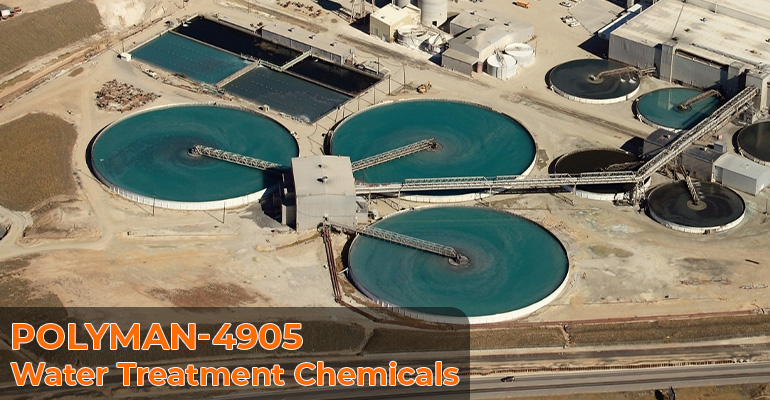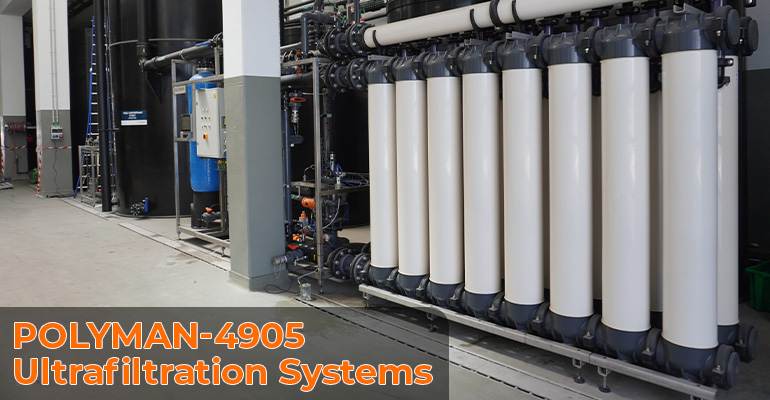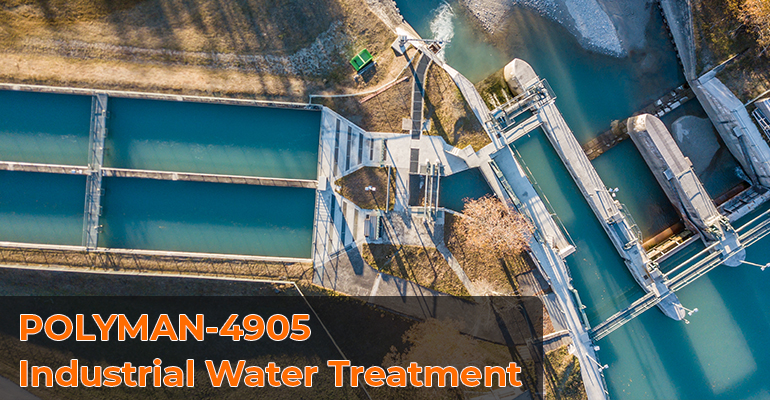
POLYMAN-4905 is a specialty polymer made for situations where mineral control, dispersion and deposit prevention matter a lot. Maxwell Additives shows POLYMAN-4905 in its line and calls it a Carboxylic AMPS Co-polymer...
Co-Polymers – POLYMAN-4905

Industrial water-treatment systems are not always used under the conditions. Fluctuations in water quality, minerals that have been dissolved, temperature, recovery rate and suspended particles can impact the performance of a treatment plan. In membrane-based treatments changes can cause the formation of scale and the blockage of particles which means that it is vital for the chemists to select the treatment system for the plant.
A Carboxylic AMPS Co-polymer is a type of polymer that should be reviewed when planning water treatments to control minerals and distribute particles. The idea is not to add another chemical into the process. The aim is to choose a product that matches the water chemistry, membrane use and the system’s necessities.
POLYMAN-4905 from Maxwell Additives is marketed as an antiscalant and dispersant POLYMER for membrane separations applications, such as osmosis (RO) nanofiltration (NF) and ultrafiltration (UF). POLYMAN-4905 suitability should be reviewed for the usage. I have seen that the software is not guaranteed to work for all configurations. This means that different configurations can behave differently.
For organizations that wish to select a Carboxylic AMPS Copolymer manufacturer in India or a Carboxylic AMPS Co-polymer supplier in India a clear understanding of choice, compatibility and operational requirements can guide buyers.
What Is a Carboxylic AMPS Co-polymer?
A Co-polymer is a form of polymer that utilizes two or more monomer units. Combining monomers allows a polymer to be formed that has chemical properties based on the combination and organization.
In a Carboxylic AMPS Co-polymer CARBOXYLIC groups are combined with AMPS chemistry. AMPS is an abbreviation for 2-acrylamido-2-methylpropane acid a monomer that is used in polymer chemistry.
These POLYMER chemistries are applied within water-treatment formulations where dissolved minerals. Suspended particles need to be addressed. However, the performance of a polymer is not reliant on its type but also the formula, concentration, water chemistry and compatibility with other treatment chemicals.
This is why buyers must consider the details of the product grade than expect that all Carboxylic AMPS Co-polymers will have the same features and usages.
Understanding POLYMAN-4905 in Membrane Water Treatment
POLYMAN-4905 is promoted by Maxwell Additives as an antiscalant and dispersant polymer for membrane-related water-treatment applications. The product details point to the control of scale formation and blockage of particles as the issues.
When a membrane system is applied water runs through a membrane that contains dissolved and suspended components according to the system’s design and operation. When scale-forming materials accumulate or particles build up on the membrane surface problems can occur.
A sound treatment plan aims to address these threats that maintain the performance of the water-treatment at the required level. POLYMAN-4905 can be reviewed as part of the plan to see if it meets the needs of the application.
The product should not be assumed to handle all membrane problems. Water testing, system setup and appropriate testing are necessary to establish if it is effective.
Three Important Factors in Membrane Treatment
1. Managing Mineral Scale
Industrial feed water can contain calcium, sulfate, barium, strontium and other mineral components. Under conditions some of these can form mineral scale.
The type of scale relies on what’s present in the water and what is taking place within the treatment system. Recognizing which scale-forming materials exist is a step towards selecting an antiscalant.
POLYMAN-4905 is declared by Maxwell Additives’ product details to assist with controlling calcium carbonate, calcium sulfate, barium sulfate and strontium sulfate scales. Its effectiveness should be tested with the water sample and likelihood of scaling.
2. Coping with Particulate Fouling
Not all membrane buildup originates from minerals. Suspended particles and other small materials can accumulate on the membrane surface as a blockage.
A dispersant polymer can address the behavior of particles in a treatment plan. However the type and amount of particles, in the filtration setup and the way the system operates can influence how effective the filtration is.
Before choosing a polymer it is essential to determine whether the main issue is mineral scaling, particulate blockage or a combination of the two. This assists the treatment team to establish the aim and method of testing.
3. Thinking about Changes, in Operating Conditions
Water quality and how the system works can change over time. Temperature, pH, mineral levels, how fast things. The amount of particles, in the water can all influence what is needed for treatment.
A polymer that works in one situation might not work the way if the conditions change. The review needs to consider the range of operating conditions, not one water sample or one lab test.
A good treatment plan also needs monitoring so that issues can be seen before they get worse.
How to Observe POLYMAN-4905 Before Using It
Selecting a Carboxylic AMPS Co-polymer requires testing. These steps can support teams and buyers to evaluate POLYMAN-4905 for their needs.
Step 1: Review the Feed Water
First I suggest starting by looking at the water test report. The water test report holds details such, as hardness, alkalinity, pH, total dissolved solids, temperature and the amounts of materials that can cause scaling. These details will help understand the condition of the water.
If there is a worry about blockages, from particles you should check the levels of suspended matter. Review the current pretreatment process. This information can show whether the system is handling solids properly.
The goal here is to identify the treatment issue. After understanding the problem should you choose a chemical solution. Taking this step makes sure the right treatment is used for the reason. It helps avoid mistakes. When you check things carefully you pick the option. This is important, for results. Everyone should do this before starting. It’s not hard. It is very important.
Step 2: Establish the Treatment Aim
I need to find out whether the main aim is to stop scale from forming so we can stop scale and handle particles and handle particles or if the plan’s to help with a membrane treatment plan.
The aim must be clearly defined so that evaluation becomes possible. For instance, the team may need to assess the risk of scaling, understand repeated membrane blockage or establish if a suggested treatment matches the process.
Having an aim allows buyers to make easy comparisons and determine if the selected product is suitable.
Step 3: Review the Product Details
Prior to buying POLYMAN-4905 request information and the Safety Data Sheet.
Read about the product name, its use, handling, storage requirements and any compatibility information. Ensure that the information matches the grade that is considered.
Technical documents must guide the evaluation. Buyers must not assume that descriptions of a polymer type or details about the product are adequate.
Step 4: Review the Dose and Placement
The dose must be determined from the water chemistry, system setup and the treatment aim. The correct place to place the chemical and the method of addition also rely on the setup.
Maxwell Additives offers guidance on how to use POLYMAN-4905. The quantity and way in which it should be added should be verified from the seller or an expert in water treatment before its usage. Something that fits one system may not fit another system. One should always carry out a trial before usage.
Step 5: Conduct Tests
Lab tests can identify how the polymer is performing. Depending on the use testing may cover scale inhibition, particle dispersion mixing with chemicals and formula stability.
If required controlled plant tests can follow to establish if lab results apply to operating conditions.
Testing must be conducted. Results must be recorded so that the team knows whether to proceed with POLYMAN-4905.
What Should Buyers Review in a Carboxylic AMPS Copolymer Supplier, in India?
Selecting a product is part of buying a chemical. Buyers must also understand the product secure a supply and discuss the use of the product.
When reviewing a Carboxylic AMPS Copolymer supplier in India consider the following areas.
1. Product. Paperwork
The supplier must declare the product grade. Provide the safety papers to minimize confusion about products or specifications.
2. Quality and Batch Consistency
Ask how the product quality is verified and if batch documents are provided. Consistency is essential for companies applying specialty polymers in treatment or commercial formulations.
3. Understanding the Use
Share information about how the product will be used, water quality and the treatment aim. This enables the conversation to focus on the need than the product name.
4. Packaging and Supply Plans
Review packaging order quantity, delivery and storage prior to finalizing a purchase.
These details can impact how much is stocked and how well work is conducted.
5. Technical Communication
A good supplier relationship allows buyers to ask questions about product details, handling instructions and use.
Clear communication helps to discover what else is required prior to product approval.
Finding a Carboxylic AMPS Co- Manufacturer in India
For companies and formulators considering a Carboxylic AMPS Copolymer manufacturer in India the decision involves more, than price.
Buyers must consider the manufacturer’s product range, quality management, technical papers, supply capability and how they describe product information.
These factors help to establish if the product and supplier meets the expected use.
Maxwell Additives Pvt. Ltd., located in Vadodara, Gujarat, India supplies POLYMAN-4905 as part of its specialty polymer range.
Contact Maxwell Additives to learn how POLYMAN-4905 will be used.
I have worked with Maxwell Additives. Know that POLYMAN-4905 is a choice.
Before buying POLYMAN-4905 buyers should review the product specifications, packaging, availability and usage instructions, with Maxwell Additives.
Why Choose Maxwell Additives for POLYMAN-4905?
Maxwell Additives claims that POLYMAN-4905 is a chemical that reduces scaling and maintains particle distribution in membrane water treatment. This POLYMAN-4905 option provides companies with an alternative, when they wish to invest in specialty polymers for cleaning programs. I believe that POLYMAN-4905 reduces scaling in systems.
If you wish to buy POLYMAN-4905 the next step is to compare POLYMAN-4905 data with the water system that will use POLYMAN-4905. Review the water composition observe scaling and blockage risks set the dose and confirm that POLYMAN-4905 matches the treatment plan. I suggest matching POLYMAN-4905 with the water system.
Companies can visit the Maxwell Additives website to view POLYMAN-4905 details and ask questions: https://maxwelladditives.com/. I recommend visiting the Maxwell Additives website for information.
Common Mistakes to Avoid When Choosing a Water-Treatment Polymer
1. Choosing Based on Cost
Choosing a polymer based on the price does not prove that POLYMAN-4905 will work in a system. Buyers must compare specifications, compatibility with the job, quality of documentation and delivery necessities against the price. I advise against choosing based on cost.
2. Assuming All Polymers Work the
Polymers are not all the same. A polymer that is successful for one purpose may not work for another. POLYMAN-4905 must be chosen based on its grade and the treatment needs. I caution against assuming all polymers are the same.
3. Using a Standard Dose Without Checking
Water chemistry and system conditions vary at each location. Using a dose that has worked elsewhere without testing POLYMAN-4905 can lead to results. Review the dose range. Adjust correctly with tests. I recommend testing the dose.
4. Ignoring Compatibility
A water program can require a mixture of chemicals. You must review how they work together not assume that POLYMAN-4905 will fit everything. Compatibility testing helps, when a new formulation or program is being considered. I suggest checking compatibility.
5. Skipping Performance Monitoring
Choosing POLYMAN-4905 at first does not mean to stop monitoring. If feed-water quality, pressure, flow or fouling changes the program must be reviewed again. I stress monitoring.
Conclusion
Choosing a polymer for membrane water treatment requires an understanding of the water, the system settings and the purpose of the treatment. Scale build-up and particle fouling present challenges. I believe that POLYMAN-4905 must be evaluated against the needs of the system.
POLYMAN-4905 from Maxwell Additives is promoted as a Carboxylic AMPS Co-polymer for antiscalant and dispersant applications, in membrane water treatment. I think that POLYMAN-4905 suitability should be established through product document review, water analysis, compatibility assessment and application-specific testing.
Businesses looking for a Carboxylic AMPS Copolymer manufacturer in India or a Carboxylic AMPS Co-polymer supplier in India should not base the decision on price. They must consider how the Carboxylic AMPS Copolymer fits the use, the documentation of the Carboxylic AMPS Copolymer, the quality consistency of the Carboxylic AMPS Copolymer, how the Carboxylic AMPS Copolymer supplier talks and how the supply of the Carboxylic AMPS Copolymer works.
A clear evaluation process can help buyers to select the Carboxylic AMPS Copolymer. Decide if POLYMAN-4905 is right, for the intended water-treatment job.
Frequently Asked Questions
1. What is a Carboxylic AMPS Co-polymer?
A Carboxylic AMPS Co-polymer is a polymer that uses AMPS groups. Whether it works depends on its structure, blend and intended use.
2. What is POLYMAN-4905 used for?
POLYMAN-4905 is an antiscalant and dispersant polymer that Maxwell Additives sells for membrane water treatment. POLYMAN-4905 can be used, when scale buildup and particle fouling are problems.
3. Can POLYMAN-4905 be used in osmosis systems?
Maxwell Additives states that POLYMAN-4905 works for membrane separation, such as osmosis (RO) nanofiltration (NF) and ultrafiltration (UF). Whether POLYMAN-4905 fits an RO system must be reviewed by observing the water type and system necessities.
4. What factors affect POLYMAN-4905 performance?
Factors that change how POLYMAN-4905 works include water composition, hardness, scale-forming ions, pH, temperature, suspended solids, dose and chemical compatibility. What factor is the most influential relies on the job.
5. How should the dosage of POLYMAN-4905 be chosen?
Choose the amount of POLYMAN-4905 according to the product instructions and review of the water system. Lab tests and field tests can establish a dose range. Buyers should talk to Maxwell Additives or a water-treatment expert of using a one-size-fits-all dose.
6. How do I choose a Carboxylic AMPS Copolymer supplier in India?
To choose a Carboxylic AMPS Copolymer supplier in India review the documents, batch consistency, quality steps, technical support, packaging, supply stability and how it fits your use. Ensure that the supplier can provide all the information needed to evaluate the product.
7. What should I ask a Carboxylic AMPS Copolymer manufacturer, in India?
Ask the Carboxylic AMPS Copolymer maker for the specification, Safety Data Sheet, recommended use, handling and storage instructions, packaging details and the correct dose. Also discuss your water test and treatment aim to see if more testing is needed.
8. Where can I enquire about POLYMAN-4905?
Visit https://maxwelladditives.com/ to view information. Ask Maxwell Additives questions.
Related Posts