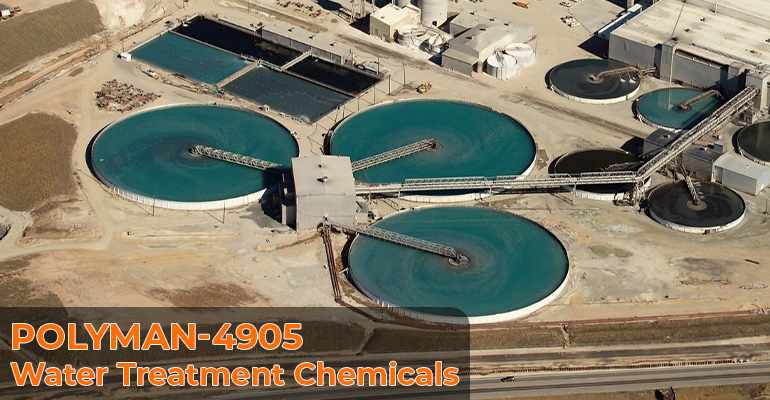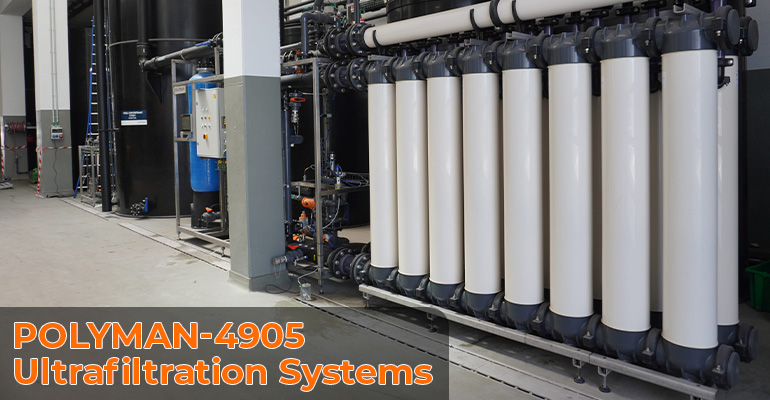

POLYMAN-4905 is a specialty polymer made for situations where mineral control, dispersion and deposit prevention matter a lot. Maxwell Additives shows POLYMAN-4905 in its line and calls it a Carboxylic AMPS Co-polymer...
Carboxylate Copolymer POLYMAN-4905: Industrial Guide
 Carboxylate copolymers are increasingly used in industrial formulations where controlling deposits, maintaining dispersion, and improving process consistency are important. POLYMAN-4905 belongs to the polymer category and is identified by Maxwell Additives as a Carboxylic AMPS Co-polymer.
Unlike a simple single-purpose additive, a copolymer can be selected when a formulation needs more balanced performance across changing operating conditions. This makes it useful for industries dealing with water quality variations, mineral deposits, suspended particles, and demanding process environments.
What is Carboxylate Copolymer POLYMAN-4905?
Carboxylate Copolymer POLYMAN-4905 is a polymeric treatment chemical designed for industrial formulations where deposit control and particle dispersion are important. It can be considered a specialized Carboxylic AMPS Co-polymer, combining polymer chemistry with functional groups that help manage unwanted interactions between dissolved minerals and process surfaces.
In practical terms, the polymer works within the formulation rather than simply acting as a basic cleaning ingredient. It can influence how mineral particles behave, helping them remain dispersed instead of easily collecting on equipment or process surfaces. This characteristic makes the material relevant for water-treatment and other industrial systems where maintaining stable operating conditions is important.
The performance of any polymer depends on dosage, water chemistry, temperature, equipment design, and the other chemicals used in the formulation. Therefore, POLYMAN-4905 should be selected according to the actual application rather than treating every industrial system in the same way.
For companies looking for an AMPS Co-polymer manufacturer, understanding the chemical’s intended function is important before choosing a grade. A proper technical evaluation can help determine whether the product matches the required operating conditions.
Features
1. Balanced Polymer Performance
POLYMAN-4905 is designed as a functional polymer for applications where mineral control and dispersion need to work together. Its carboxylate-based chemistry can support consistent treatment performance in demanding formulations. This balanced approach makes the polymer useful when a single formulation must handle several water-quality challenges without becoming overly complicated.
2. Useful Dispersion Characteristics
A major advantage of this type of polymer is its role in keeping fine mineral particles more evenly distributed throughout a formulation. Instead of allowing particles to quickly gather together, the polymer can help modify their behavior. This property supports cleaner process operation and more predictable chemical treatment performance.
3. Suitable for Industrial Formulations
POLYMAN-4905 can be considered when developing treatment formulations for industrial environments where deposits and suspended particles create operational concerns. Its polymeric nature allows it to become part of a broader chemical program. Actual suitability depends on the process, dosage, water composition, temperature, and compatibility with other ingredients.
4. Functional AMPS Chemistry
The AMPS component gives the copolymer an important functional characteristic for demanding industrial formulations. Such chemistry can help maintain performance when process conditions change. For formulators, this can provide an additional option when designing treatment programs that must remain effective across variations in mineral content and operating parameters.
5. Support for Deposit Management
POLYMAN-4905 can contribute to controlling the behavior of materials that might otherwise accumulate within a process system. Rather than relying only on mechanical removal after deposits form, the treatment approach focuses on managing particle interactions during operation. This preventive approach can support better process continuity and reduce unnecessary cleaning requirements.
6. Compatibility with Treatment Programs
A copolymer is often used as one part of a complete chemical treatment strategy. POLYMAN-4905 can be evaluated alongside other compatible ingredients according to the application. This allows formulators to build a treatment program around actual water chemistry and equipment conditions instead of depending on one chemical for every performance requirement.
7. Consistent Industrial Handling
For industrial users, product consistency is as important as the chemical’s basic function. A reliable AMPS Co-polymer manufacturer should provide material with consistent quality and appropriate technical information. Proper storage, handling, dilution, and dosing practices should also be followed to maintain predictable performance during regular plant operations.
Another Important Point About POLYMAN-4905
Choosing a polymer should not be based only on the highest claimed performance. In real industrial use, the right product is the one that works efficiently under the customer’s specific conditions.
Water chemistry can vary considerably between plants. Calcium, magnesium, iron, silica, phosphate, temperature, pH, and other dissolved or suspended materials may influence treatment results. Even two plants performing similar operations may therefore require different chemical programs.
This is where testing becomes valuable. A formulation team can examine the polymer at different concentrations and compare its behavior under representative operating conditions. Such testing can help identify an appropriate dosage and determine whether the polymer works well with other chemicals already being used.
For procurement teams, working with a dependable AMPS Co-polymer manufacturer also makes technical communication easier. Information about specifications, packaging, storage, quality control, and application guidance can help users make a more informed purchasing decision.
Benefits
1. Helps Manage Mineral Deposits
POLYMAN-4905 can help industrial formulations manage the behavior of mineral-forming substances. By influencing particle interactions, it may reduce the tendency of unwanted material to settle or attach strongly to process surfaces. This can support smoother operation where mineral deposits are a recurring concern.
2. Supports Better Particle Dispersion
Maintaining good particle dispersion can make a significant difference in industrial water systems. The polymer can help keep fine particles distributed through the liquid instead of allowing them to quickly combine into larger masses. This supports more stable treatment performance and can simplify overall process management.
3. Useful for Changing Water Conditions
Industrial water quality is not always constant. Mineral concentrations and other characteristics may change during operation. A suitable copolymer can provide formulation support under these variations, helping treatment programs remain more dependable. This makes POLYMAN-4905 worth evaluating for processes where water conditions fluctuate regularly.
4. Can Support Longer Equipment Operation
Uncontrolled deposits may interfere with heat transfer, water circulation, and equipment efficiency. By helping manage deposit-forming materials, POLYMAN-4905 can contribute to a cleaner operating environment. When combined with proper maintenance and a complete treatment program, this may help equipment operate more consistently between cleaning cycles.
5. Improves Formulation Flexibility
A specialized polymer gives formulators another tool when designing industrial treatment products. POLYMAN-4905 can be assessed with other compatible chemicals to create a program suited to particular process requirements. This flexibility is useful when standard treatment approaches do not provide sufficient control under actual operating conditions.
6. Supports Consistent Process Control
A stable chemical treatment program can make plant operation easier to manage. By assisting with dispersion and deposit control, POLYMAN-4905 may help reduce sudden changes caused by mineral accumulation. Consistent performance can be especially valuable in continuous processes where unexpected interruptions can affect productivity and maintenance schedules.
7. Suitable for Technical Evaluation
POLYMAN-4905 can be evaluated according to specific application needs rather than being restricted to one general-purpose use. This allows users to test the polymer against their actual water chemistry and process conditions. Such application-based selection can help companies achieve better value from their chemical treatment investment.
Why Product Selection Matters for Industrial Users
Selecting a polymer involves more than comparing prices between suppliers. A lower-cost product may not always provide the expected result if its dosage requirement is higher or if it performs poorly under the plant’s operating conditions.
Industrial buyers should consider product quality, consistency, technical support, supply reliability, packaging, storage conditions, and application guidance. It is also useful to discuss the intended application with the supplier before placing a large order.
For companies searching for an AMPS Co-polymer manufacturer, technical support can be particularly valuable because polymer performance can depend strongly on formulation conditions. A supplier that understands the intended application can help customers evaluate the appropriate grade and usage approach.
POLYMAN-4905 can therefore be considered as part of a carefully designed treatment strategy rather than as an isolated solution. The best results generally come when chemical selection, dosing, monitoring, equipment maintenance, and water analysis are handled together.
Conclusion
Carboxylate Copolymer POLYMAN-4905 is a specialized polymer that can be considered for industrial formulations requiring better control of mineral interactions and particle dispersion. Its Carboxylic AMPS Co-polymer chemistry gives formulators another option when developing treatment programs for challenging operating environments.
The practical value of the product depends on how well it matches the application’s water chemistry, temperature, dosage, equipment, and other treatment ingredients. For this reason, testing and technical evaluation should be part of the selection process.
Companies looking for a reliable AMPS Co-polymer manufacturer should consider not only product quality but also consistency, technical assistance, supply capability, and application understanding. With the right formulation and operating approach, POLYMAN-4905 can become a useful component of an industrial chemical treatment program.
Frequently Asked Questions
1. What is POLYMAN-4905 used for?
POLYMAN-4905 is a Carboxylate Copolymer designed for industrial formulations where dispersion and control of mineral deposits are important. Its actual application depends on the process conditions and the other chemicals used in the treatment program.
2. Is POLYMAN-4905 a Carboxylic AMPS Co-polymer?
Yes. POLYMAN-4905 is identified as a Carboxylic AMPS Co-polymer. Maxwell Additives lists POLYMAN-4905 under its polymer range as a Carboxylic AMPS Co-polymer.
3. Can POLYMAN-4905 be used in water treatment?
It can be evaluated for industrial water-treatment formulations where dispersion and deposit management are required. However, the correct dosage and suitability should be established according to water chemistry, temperature, operating conditions, and compatibility with the complete treatment program.
4. How should the correct dosage be decided?
There is no single dosage that is suitable for every system. The requirement can change according to mineral concentration, temperature, pH, equipment design, and other treatment chemicals. Laboratory testing or application trials are recommended before finalizing the operating dosage.
5. What should I check before purchasing this polymer?
Buyers should check product specifications, quality consistency, packaging, storage requirements, technical documentation, supply capability, and application support. It is also helpful to share the intended application with the supplier so the product can be evaluated against the actual operating conditions.
6. Can POLYMAN-4905 be combined with other water-treatment chemicals?
A copolymer may be used as part of a broader treatment formulation, but compatibility should not be assumed. The complete formulation should be tested before commercial use, particularly when several polymers, phosphonates, corrosion inhibitors, or other specialty chemicals are being combined.
7. Why should I choose Maxwell Additives PVT LTD for this product?
Maxwell Additives PVT LTD lists POLYMAN-4905 in its specialty-chemical portfolio as a Carboxylic AMPS Co-polymer. Buyers can discuss their application, required specifications, packaging needs, and technical requirements with the company before finalizing their purchase.
Related Posts