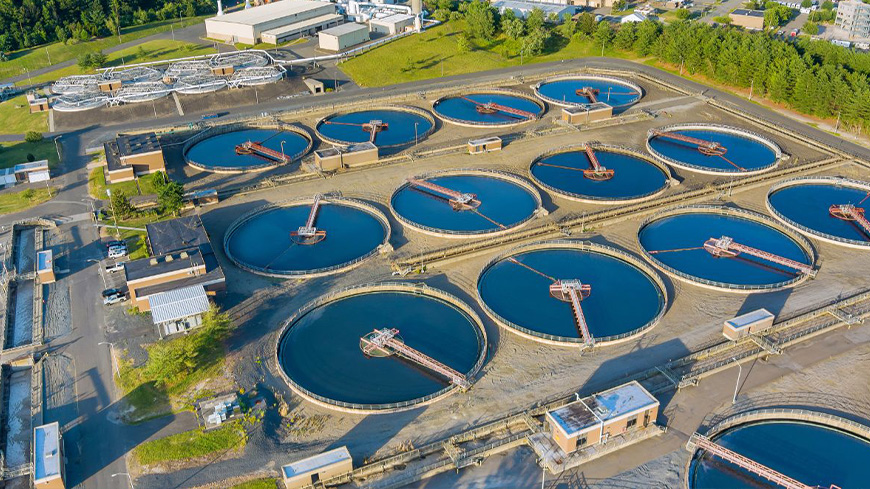
Water treatment in industrial applications is an important process. Water can be used for cooling, cleaning, manufacturing and processing. Throughout these processes, water can become contaminated with dissolved minerals, suspended solids and chemical compounds...
DCDA Polymers for Wastewater Treatment: Uses and Key Benefits

DCDA polymers can be used in treating industrial effluent. In industrial processes, large volumes of water can be used. As a result, the water may contain particulate matter, soluble matter and other pollutants.
In some cases, it may be difficult to remove the pollutants from the water.
DCDA polymers can be used as specialty chemicals in industrial effluent treatments. They can be used to remove colour, and aid in coagulation and removing organic pollution.
DCDA polymers are related to dicyandiamide. They are used in formulated products to treat particular types of effluent.
However, different products will have different properties.
Different formulations will have different chemical structures, concentrations, charges and suitability for industrial processes.
Understanding the differences between different products can help manufacturers choose the correct product for use in effluent treatment.
What are DCDA Polymers?
DCDA polymers contain dicyandiamide (a nitrogen containing compound, also known as cyanoguanidine).
The chemical formula is C 2H 4N 4.
DCDA polymers are polymers or resins related to reactions with dicyandiamide.
Within water treatment, DCDA polymers can be formulated to remove colour, and aid coagulation.
Some DCDA polymers are produced by reacting dicyandiamide with formaldehyde. Additional modifying components may be used.
Functional groups may be present within these products, allowing interactions with negatively charged matter within the effluent.
This can aid in destabilising and separating dissolved/ particulate matter within the water.
However, depending on the formulation of the polymer, different properties can be achieved.
As such, it is important to understand the properties of DCDA polymers in relation to their technical specifications, as not all products will act in the same way.
Types of DCDA Polymers
DCDA polymers can be produced by chemical formulation.
Despite all of these polymers being related to dicyandiamide, they may have different properties and applications.
DCDA Formaldehyde Polymers
Some DCDA polymers are produced by reactions between dicyandiamide and formaldehyde.
These polymers are commonly used to remove colour and aid coagulation.
Within some formulations, they may have properties which allow them to interact with the negatively charged dye molecules (or other substances). Effectiveness of these polymers depends on the chemical composition of the effluent and polymer properties.
Modified DCDA Polymers
Some DCDA polymers may be modified during production to give certain properties.
Modifications can alter charge properties of the polymer, solubility, stability and performance in treatment.
These products may be suitable for industrial effluent treatment. However, the benefits of modifying the polymers should be investigated.
Liquid DCDA Polymer Formulations
Some DCDA polymers are in liquid form.
Liquid formulations can be convenient to use within dosing equipment to mix with effluent.
Depending on the formulation, concentration, viscosity and storage requirements may differ.
Industrial users should refer to technical information from suppliers.
Specialist DCDA Based Treatment Products
Some DCDA based formulations have been developed to suit certain treatment requirements.
This may be for reducing colour, treating dyes in effluent, or aid in coagulation.
Not all DCDA based products will be suitable for removing pollutants in all effluent. It is important to match the product to the treatment requirements, and to the properties of the effluent.
Why are DCDA Polymers Used in Effluent Treatment?
In industrial effluent, there may be Different Types of pollutants present.
Some pollutants may be in particulate form, or may be soluble.
In some cases, removing coloured substances may be difficult through sedimentation.
In dyeing processes for textiles, dyes may be present in solution. These may be difficult to remove via filtration without treatment.
Suitable DCDA polymers can be used to aid in removal of these substances.
Depending on the formulation, DCDA based chemicals may be able to interact with charged dye molecules/ pollutants within the effluent. This can make separation easier.
As such, DCDA based chemicals may be suitable for certain effluent treatment processes. However, the effectiveness of the product may vary depending on the nature of the contaminant.
In some cases, a product may be efficient at removing one type of dye, but may not be efficient at removing another type. Therefore, it is important to conduct analysis of the effluent before choosing a DCDA polymer.
Common Industrial Applications
DCDA polymers may be used in industrial effluent treatment. Depending on the formulation of the polymer and effluent properties, they may be suitable.
Textile Industry
Within the textile industry, DCDA based treatment products may be used. Processes such as dyeing, washing, printing and finishing take place within the industry. These processes may produce effluent containing dyes, salts, surfactants and other chemicals.
Certain dyes may be difficult to remove from effluent, as they may be in solution.
Cationic DCDA polymers may interact with charged dye molecules. This may allow complexation and/or aggregation to occur. As a result, suitable separation methods may be used to remove the dyes. Therefore, DCDA based products may be suitable for reducing colour in certain types of textile effluent.
However, effectiveness may depend on the type of dye, effluent composition, pH and chemical dosage.
Dye Manufacture
Wastewater from dye manufacture may contain coloured substances. These may be difficult to remove via sedimentation.
Certain DCDA based formulations may be considered for colour removal. Effectiveness may depend on the chemical properties of the dyes and other substances. Industrial users should conduct some trials in order to choose the best product.
Paper and Pulp Industry
Water is used in production processes in the paper and pulp industry. The wastewater may contain particulate matter, and coloured substances.
Certain DCDA based treatment products may be used to aid clarification and colour removal in certain instances. In combination with suitable treatment equipment, they may be able to aid in contaminant removal. However, depending on the composition of the effluent and treatment requirements, DCDA polymers may or may not be suitable.
Printing Industry
Wastewater may be created from printing processes within industry. This may contain inks, dyes and other chemical substances. Certain DCDA based formulations may be able to help remove coloured substances. Effectiveness of the treatment may depend on the type of ink/dye and chemicals within the effluent. As such, DCDA polymers should be considered as part of a treatment process.
Effluent Clarification
Some DCDA based products can aid in coagulation and clarification. In industrial effluent, particulate matter may be in suspension due to charge. Adding a suitable cationic polymer may reduce the effects of charge on the particles, allowing aggregation. This may mean that certain contaminants may be easier to remove via sedimentation, flotation and/or filtration.
However, DCDA based products are not coagulants. The correct formulation should be chosen based on effluent properties.
Specialty Chemical Manufacture
DCDA related chemistry can be used in specialty chemical manufacture. Dicyandiamide can be used to create chemical compounds and resins. Some DCDA based products are made for applications outside of effluent treatment. Depending on the chemical structure and final formulation, different industrial applications may be possible.
How do DCDA polymers work within effluent treatment?
Understanding how DCDA polymers work can allow industrial users to select the most suitable products.
Some DCDA based polymers have charged functional groups. This allows interactions with negatively charged substances.
Many coloured substances within effluent (particularly anionic dyes) may have negative charges. Adding a suitable DCDA based treatment chemical may allow interactions between the polymer and these substances. This may reduce the stability of these substances in water, encouraging aggregation.
Charge neutralisation
Some DCDA polymers may allow for neutralisation of charges. Electric charges may prevent particles or soluble substances from
By reducing the repulsion caused by charges, aggregation may be easier. This can aid treatment.
Interaction with Dyes
Some dyes may interact with DCDA based formulations. Depending on the chemistry of the dyes, complexation or less soluble aggregation may occur. These substances may be removed via separation methods. However, not all dyes may interact with DCDA polymers in this way.
Coagulation
Coagulation occurs in suspended/ dispersed matter within water. Suitable DCDA products may be used to aid coagulation. Once destabilised, particles may form aggregates.
Separation of Contaminants
Aggregates/ complexes may be separated from water. Depending on the system, this may be via:
- Sedimentation
- Dissolved air floatation
- Filtration
- Further flocculation
- Or other suitable separation methods.
The overall effectiveness of this treatment depends on the process, not just the polymer.
Factors affecting effectiveness
Several factors may affect the effectiveness of DCDA polymers.
Type of dye/ contaminant
Dyes can have different chemical structures, and charges. Whilst some DCDA based products may be effective at removing anionic dyes, they may not be so effective at removing other coloured substances. Understanding what contaminants are present is important.
pH
The efficiency of the treatment may depend on the pH of the effluent. In high pH environments, a formulation may not be as effective. The suitable pH will depend on both the formulation and the effluent.
Dosage
If too little polymer is added, the treatment may not effectively remove colour, or cause coagulation. If too much polymer is added, it can cause inefficiencies, high costs, or issues with the treatment. The correct dosage should be established by experimentation.
Polymer concentration
There may be varying concentrations of polymer in DCDA based products. Therefore, the concentration of polymer in the product may affect the dosage calculations and total chemical usage. Before establishing a correct dosage, industrial users should refer to the product specification.
Effluent content
Industrial effluents may contain various substances such as salts, surfactants, solids, dissolved substances and other chemicals. This can affect the efficiency of DCDA based treatment products. A formulation may be effective in one effluent but not another.
Agitation
Agitation ensures even dispersion of chemical in the effluent. If the effluent is not well agitated, the polymer may not interact with the pollutants. Agitation should be suitable for the particular coagulation/ separation process.
Contact time
Depending on the formulation and conditions, some systems may require contact time between the chemicals and the pollutants to facilitate aggregation.
Contact time required will depend on formulation and process conditions.
Other chemicals
In some cases, DCDA polymers may be used in conjunction with other chemicals. It is important that these chemicals are compatible. Interactions between different chemicals may effect the efficiency of treatment.
Key Properties
Depending on formulation, DCDA polymers can have a variety of physical and chemical properties. Consider the following properties:
Chemical composition
DCDA based polymers are related to dicyandiamide. In some formulations, formaldehyde and other components may be used. The final chemical composition depends on formulation.
Charge
Some DCDA polymers have charge properties. This can allow interaction with charged dye/ pollutants. The degree of charge may affect effectiveness of treatment.
Solubility
Some DCDA based formulations are soluble in water, or in aqueous solution. Solubility is important for adding the chemical. Industrial users should consider the solubility of the product.
Appearance
DCDA based products can be in different forms. Some products for wastewater treatment are provided in liquid form. The appearance can depend on concentration and formulation.
Viscosity
Viscosity will affect how easily a liquid polymer can be pumped, stored and added. Viscosity can depend on strength, formulation and temperature.
Stability
Stability of the chemical depends on formulation and storage. If exposed to certain temperatures or other chemicals, the quality of the product may be affected.
Reactivity
Some DCDA based formulations are chosen for their ability to react with pollutants within the effluent. Reactivity and function depends on chemical structure.
Concentration
Products may have different concentrations of active ingredients. When comparing products, and determining costs of treatment, this should be considered.
Benefits of using DCDA polymers in Industrial effluent treatment
If the correct DCDA polymer is chosen, benefits can be achieved.
Reduction in colour
Some DCDA based formulations can reduce colour within effluent containing dyes. This is useful in certain textile and dye manufacturing processes.
Help with Coagulation
Some DCDA polymers can destabilise charged pollutants. This can improve coagulation within treatment.
Improved effluent clarity
By aiding aggregation, the correct formulations can improve the clarity of water. Effectiveness depends on effluent type and equipment.
Variety of formulations
DCDA based treatment products can be in different strengths and chemical formulations. As such, they may be suitable for a variety of industrial requirements.
Can be used in combination with other chemicals
Some DCDA based products can be used in combination with compatible chemicals. If there are a variety of pollutants to treat, a combined treatment plan may be used.
Useful for controlling colour in industry
In many industries, reducing colour may be a key aim. DCDA based products can be used to treat coloured effluents.
Improvement in treatment
If the correct product and amount is used, DCDA polymers can improve treatment. However, the actual benefits should be confirmed via laboratory and practical testing.
Comparisons with Other Industrial Water Treatment chemicals
To allow industrial users to make the best decision, it is important to understand differences between different chemicals.
DCDA Polymers
Some DCDA based formulations can reduce colour and aid coagulation. They can be very useful in effluents containing anionic dyes.
Polyamines
Some polymeric Polyamines are used as cationic coagulants in water and wastewater treatment.
They can help destabilise suspended particles and support clarification.
Although certain DCDA-based products and Polyamines may perform related functions, their chemical compositions and treatment characteristics can differ.
Epi-DMA Polymers
Epi-DMA Polymers are cationic polymers associated with epichlorohydrin and dimethylamine chemistry.
They are used in selected water and wastewater treatment applications.
Their performance depends on charge characteristics, formulation and wastewater conditions.
They should not automatically be considered interchangeable with DCDA Polymers.
Dispersant Polymers
Dispersant polymers are used in certain industrial systems to help keep particles dispersed.
Their function generally differs from coagulation chemicals, which encourage particle aggregation.
Phosphonates
Certain phosphonates are used in industrial water treatment to help manage scale formation and metal ion interactions.
They serve different treatment objectives from DCDA-based colour removal chemicals.
Quaternary Ammonium Compounds
Quaternary ammonium compounds, often called Quats, are another family of nitrogen-containing chemicals.
Certain Quats are used in disinfectants, antimicrobial formulations and industrial cleaning products.
Their applications should not be confused with those of DCDA Polymers.
Conclusion
DCDA Polymers are an important category of specialty chemicals used in selected industrial wastewater treatment applications.
Certain DCDA-based formulations are particularly relevant to colour removal, coagulation and the treatment of dye-containing wastewater.
They may be used in textile manufacturing, dye production, printing and other industrial processes where suitable wastewater treatment is required.
However, different DCDA Polymers can have different chemical properties and treatment characteristics.
Before selecting a product, industrial buyers should review the technical specifications, conduct suitable testing and consider chemical compatibility and safety requirements.
Working with an experienced specialty chemical manufacturer or supplier can help businesses identify appropriate DCDA-based treatment products for their applications.
Looking for DCDA Polymers or specialty chemicals for industrial wastewater treatment? Explore our chemical product range or contact our team to discuss your requirements.
Frequently Asked Questions About DCDA Polymers
1. What are DCDA Polymers?
DCDA Polymers are polymeric or resinous chemicals associated with dicyandiamide chemistry. Certain formulations are used in industrial wastewater treatment, particularly for colour reduction and coagulation.
2. What does DCDA stand for?
DCDA stands for dicyandiamide, a nitrogen-containing organic compound also known as cyanoguanidine.
3. What are DCDA Polymers used for?
Certain DCDA-based polymers are used in textile wastewater treatment, dye-containing wastewater treatment, colour removal, coagulation and industrial clarification processes.
4. How do DCDA Polymers remove colour from wastewater?
Some cationic DCDA-based formulations interact with negatively charged dye molecules. These interactions can help form aggregates or complexes that may be separated from water.
5. Are DCDA Polymers and Polyamines the same?
No. DCDA Polymers and Polyamines are different chemical categories, although some products may have related coagulation applications. Their properties and performance depend on their chemical structures.
6. What factors affect DCDA Polymer performance?
Important factors include dye type, wastewater composition, pH, chemical dosage, polymer concentration, mixing conditions and contact time.
7. Can DCDA Polymers remove all types of dyes?
No. Their effectiveness varies depending on the chemical structure and charge characteristics of the dye. Laboratory testing is important before selecting a product.
8. What is the role of dosage in DCDA Polymer treatment?
Dosage influences coagulation and colour removal performance. Insufficient or excessive dosage may reduce treatment efficiency. The correct amount should be determined through testing.
Related Posts